
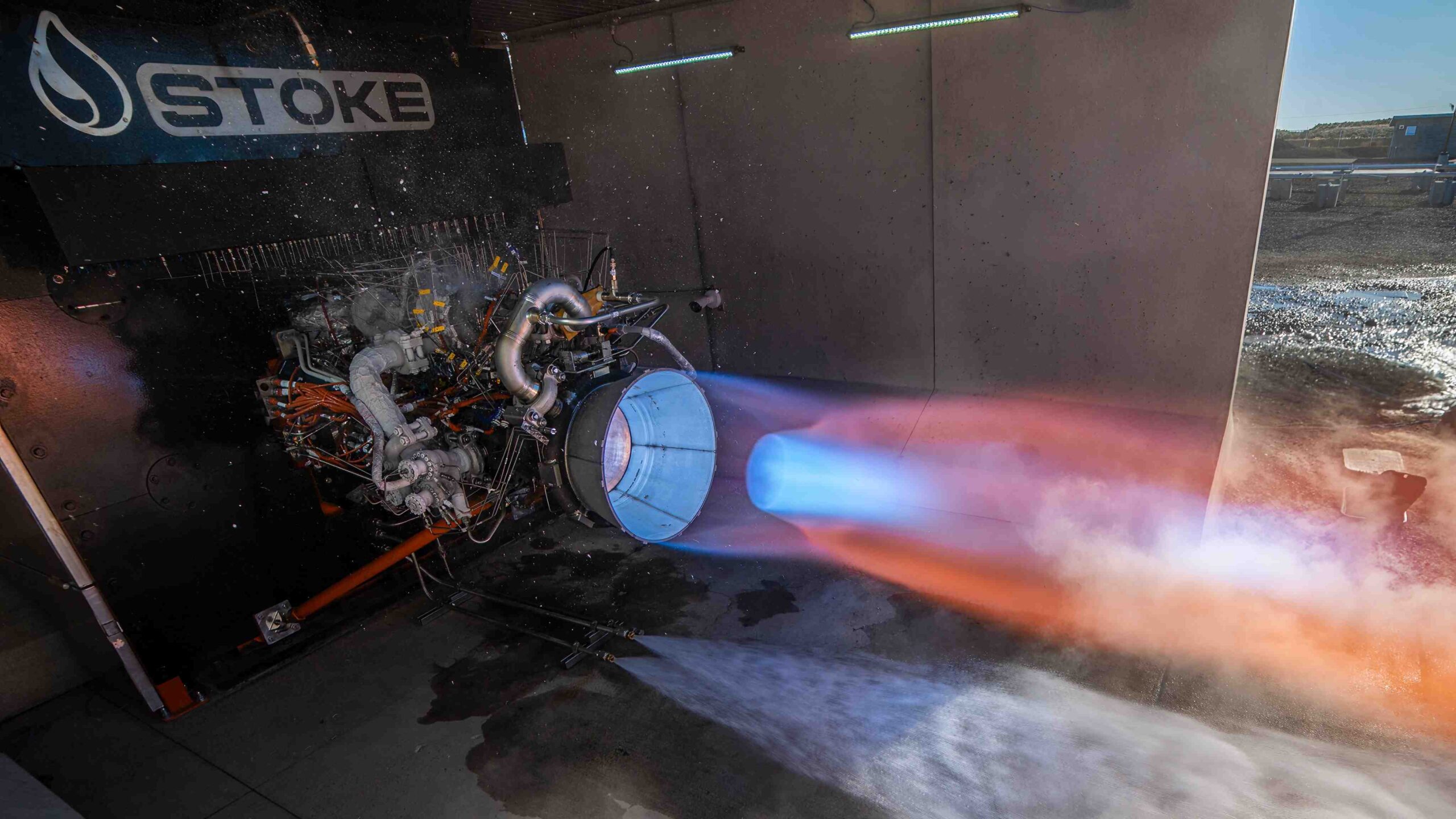
The modern space race is heating up again — but this time, the competition isn’t just between the usual giants. A new contender is rising fast, quietly building the tools and technology that could soon place it among the biggest names in aerospace innovation.
That company is Stoke Space — a young but ambitious firm preparing for its first orbital mission, armed with advanced engineering, bold vision, and a growing list of achievements that are turning heads across the industry.
While SpaceX, Blue Origin, and United Launch Alliance (ULA) have dominated headlines for years, Stoke Space is emerging as a formidable challenger. Their latest milestone — the construction of a powerful flame trench system at their historic launch site — showcases just how serious they are about competing with the world’s leading space companies.
Let’s dive into how this breakthrough could change the game — and whether Stoke Space might one day stand shoulder to shoulder with SpaceX itself.
A New Challenger Enters the Space Race
When we talk about Stoke Space, the comparisons to SpaceX come naturally. Much like Elon Musk’s early work on Starhopper — the prototype that eventually evolved into Starship — Stoke Space started small.
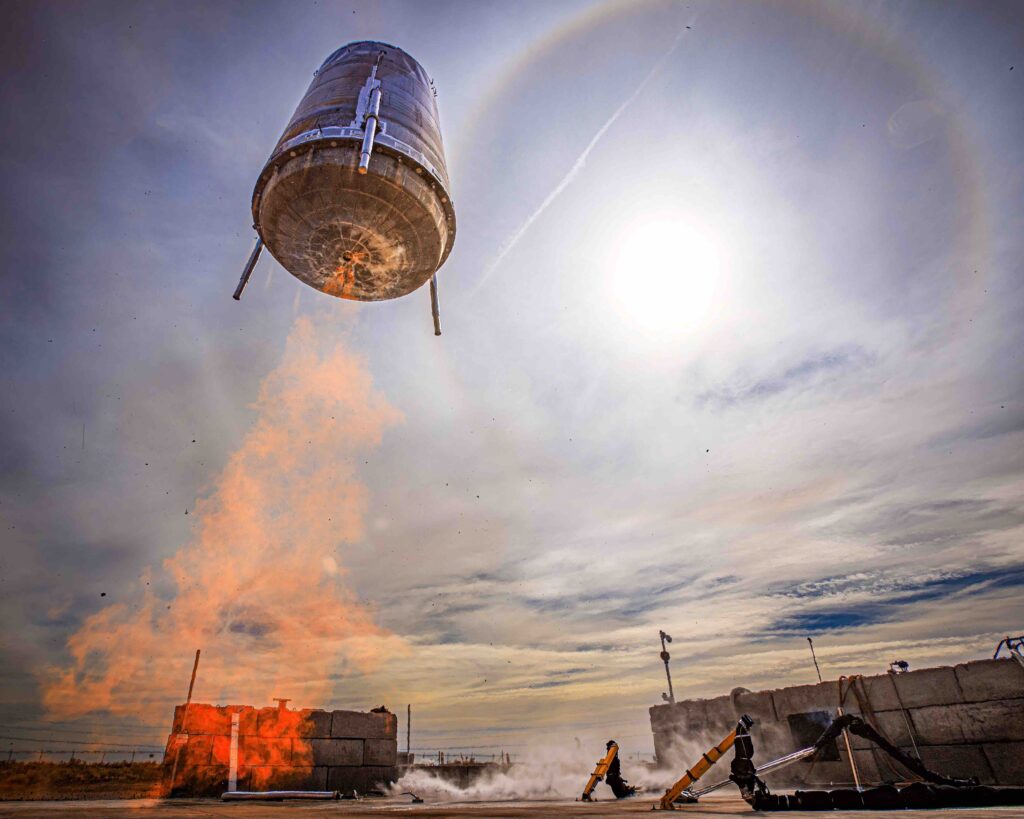
Their hopper prototype allowed them to test key systems like guidance, propulsion, and heat shielding in real-world flight conditions. These initial flights were essential steps in validating their vision: a fully reusable rocket that could dramatically lower the cost of accessing space.
After years of testing and iteration, the company is now preparing for a major leap — the first orbital test flight of its Nova rocket.
And the place where this historic mission will begin couldn’t be more symbolic: Launch Complex 14 (LC-14) at Cape Canaveral, Florida — the same site where the legendary Atlas rockets once carried America’s first astronauts to orbit.
Breathing New Life Into History: LC-14 Reborn
LC-14 was once a relic of the Cold War space era, but today it’s being reborn. Stoke Space is transforming this historic pad into a state-of-the-art launch complex — and at the heart of this transformation lies its most impressive feature yet: a brand-new flame trench system.
The first signs of progress appeared in early summer, when construction crews completed the flame trench frame. By mid-September, Stoke announced that the flame bucket had been successfully installed — a massive structure responsible for safely redirecting rocket exhaust during launch.
This isn’t a minor update — it’s a major engineering feat. A flame trench must withstand extreme temperatures, shockwaves, and acoustic forces generated by rocket engines at liftoff. Without it, even a small miscalculation can destroy the launch pad infrastructure in seconds.
Why a Flame Trench Matters — and What Makes Stoke’s Unique
A flame trench directs a rocket’s fiery exhaust sideways or downward, preventing it from bouncing back toward the vehicle or damaging the pad. It’s an essential component of any modern launch facility.
Interestingly, SpaceX initially avoided using flame trenches at its Starbase facility in Texas. Instead, it relied on water-cooled steel plates to handle the blast. However, after multiple test flights damaged the pad infrastructure, SpaceX adopted the flame trench design for its newer sites, including Pad 2 at Starbase and LC-39A in Florida.
Stoke Space, learning from these lessons, decided to start with a flame trench from day one — a sign of both strategic planning and technical maturity.
Their design features an L-shaped flame bucket made from interconnected metal tubes for durability and cooling efficiency. While SpaceX uses dual flame buckets for its massive Starship rocket, Stoke’s single flame trench is perfectly scaled for the smaller but powerful Nova rocket.
This system not only protects the pad but also minimizes acoustic vibrations and heat exposure, allowing for rapid turnaround and long-term launch pad reusability — key components of a sustainable launch model.
“SLC-14 Coming to Life” — A Test of Power
By mid-October, Stoke Space had begun testing its water suppression system, a vital part of any flame trench. During one dramatic trial, powerful jets of water blasted through the trench, simulating the conditions of an actual launch.
CEO Andy Lapsa shared his excitement, declaring, “SLC-14 coming to life.” Observers were amazed by the intensity of the test — with high-pressure water streams surging through the flame bucket and cooling nozzles mounted at each corner of the launch mount.
These nozzles serve dual purposes: protecting both the launch infrastructure and the rocket’s lower section from heat and debris.
With every test, Stoke Space demonstrates a level of precision and readiness rarely seen in a company this young. It’s not just about building rockets — it’s about building reliable systems that can launch again and again without catastrophic pad failures or long downtime.
Massive Funding and Momentum
In October 2025, Stoke Space announced a $510 million Series D funding round, bringing total investment close to $1 billion.
This infusion of capital is a clear sign of investor confidence. The funds are being used to accelerate the Nova rocket’s development, complete heat shield production, expand engine manufacturing, and finalize the activation of LC-14.
With this level of financial backing, Stoke Space now has the resources to turn its ambitious concepts into flight-ready hardware.
Cape Canaveral — once dominated by government launches — is seeing a new kind of energy. A new commercial launch hub is emerging, carrying the legacy of the past and the promise of the next generation of innovators.
The Nova Rocket: Reusability Reimagined
At the core of Stoke Space’s vision is the Nova rocket, a fully reusable two-stage launcher designed to minimize cost and turnaround time.
While SpaceX’s Starship aims for massive payloads and interplanetary missions, Nova focuses on the medium-lift class — a growing market segment ideal for satellite constellations, space station logistics, and scientific payloads.
The Andromeda Upper Stage: A Game-Changer
The Nova’s upper stage, called Andromeda, is a masterpiece of engineering. Its defining feature is a reusable metallic heat shield, a revolutionary step toward rapid reusability.
Unlike traditional ceramic tiles — which require hours of inspection and replacement — Stoke Space’s metallic shield can withstand reentry heat and be reused almost immediately.
This innovation offers a potential 10× reduction in turnaround time, making Andromeda one of the most efficient upper stages ever built.
Moreover, its ring-shaped thruster cluster, embedded within the heat shield, provides remarkable control and redundancy. Instead of relying on a single engine, Andromeda uses multiple smaller thrusters, allowing for fine-tuned maneuvering and vertical landing capabilities — a direct nod to the SpaceX Starship concept, but in a more compact, agile design.
The Zenith Engine: Power and Precision
Under the hood, Stoke Space’s Zenith engine is equally impressive. It uses a full-flow staged combustion cycle — the same advanced architecture that powers SpaceX’s Raptor engines.
Running on liquid methane (CH₄) and liquid oxygen (LOX), Zenith achieves exceptional efficiency, thrust, and reusability while producing fewer contaminants. Each engine delivers about 100 tons of thrust, and with seven engines on the Nova’s first stage, the rocket reaches 700 tons of total liftoff thrust.
While smaller than Starship’s 33-engine behemoth, Nova’s configuration is perfect for its class. Its design philosophy emphasizes simplicity, reliability, and scalability — the same qualities that made the Falcon 9 a success story.
Testing Toward Perfection
Stoke Space isn’t cutting corners. The company has been running intense engine tests and cryogenic structural trials since late 2024, pushing its systems to their limits.
According to their engineers, the goal is simple: “Peak performance, peak reliability, and peak efficiency.”
With each milestone, Stoke Space inches closer to a 2026 orbital flight, a realistic and exciting target that could mark the arrival of a new major player in orbital launch services.
Smart Design Choices: Stainless Steel and Sustainability
In a move that echoes SpaceX’s Starship design, Stoke Space chose stainless steel as the primary material for its Nova rocket.
Why stainless steel? It’s heat-resistant, durable, affordable, and surprisingly easy to shape into aerodynamic forms. It can handle reentry heating without excessive coatings and provides natural structural strength under pressure and temperature extremes.
By pairing stainless steel with methane fuel and modular reusability, Stoke Space is positioning itself as part of a new generation of sustainable aerospace companies.
Even China’s latest reusable rocket prototypes have begun adopting similar design philosophies, showing just how influential this new approach has become globally.
Can Stoke Space Really Compete with SpaceX, Blue Origin, and ULA?
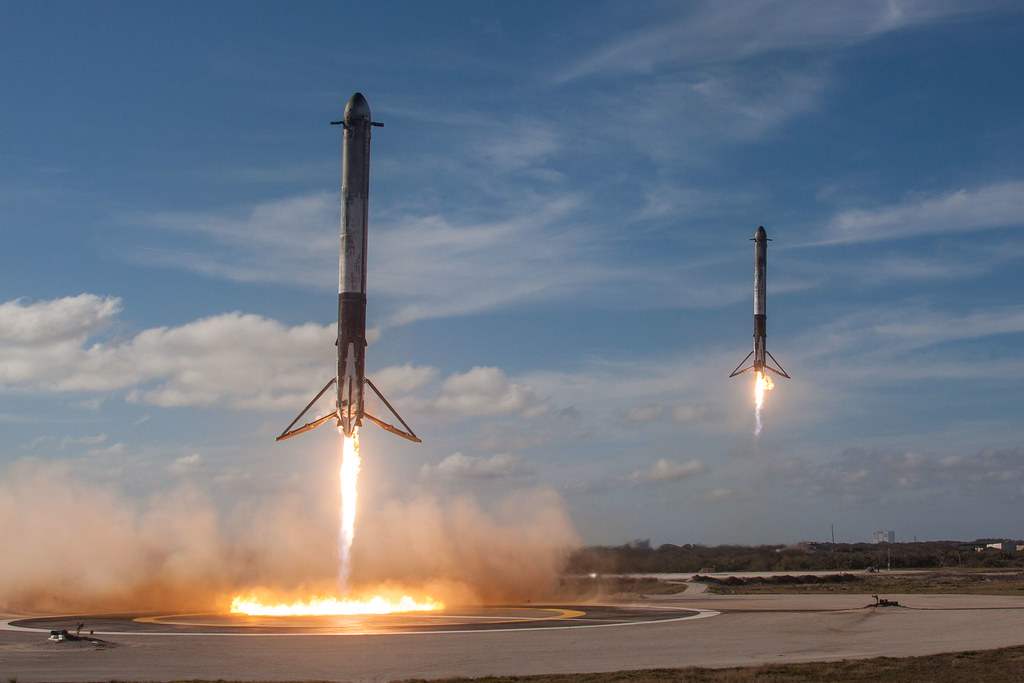
Let’s be realistic: SpaceX remains the undisputed leader in reusable rocketry. With Falcon 9 dominating global launches and Starship on the verge of deep-space missions, catching up won’t be easy.
However, Stoke Space doesn’t necessarily need to beat SpaceX — it needs to compete effectively and carve out its niche.
Surpassing ULA and Blue Origin? Absolutely Possible
While ULA (United Launch Alliance) and Blue Origin are often labeled as industry titans, much of their status comes from legacy and funding, not consistent launch cadence.
ULA’s Vulcan rocket and Blue Origin’s New Glenn have both experienced delays and cost overruns. Their cautious, traditional development models contrast sharply with Stoke’s agile, iterative approach.
If Stoke Space can deliver on its promise of rapid reusability and competitive pricing, it could surpass ULA and Blue Origin in launch frequency and efficiency within just a few years.
Government and commercial customers crave reliable, affordable, and reusable launch services — and Stoke Space is perfectly positioned to provide them.
Challenging SpaceX? That’s the Long Game
Even if Nova eventually rivals Falcon 9, by that time SpaceX may already be operating Starship for lunar and Martian missions.
Still, competition drives progress — and Stoke’s rise ensures that the reusability revolution will continue accelerating.
A more fitting comparison might be with Rocket Lab, whose Neutron rocket shares similar goals of full reusability in the medium-lift class. The rivalry between Nova and Neutron could define the next decade of private spaceflight.
A New Era of American Aerospace Innovation
Whether or not Stoke Space eventually catches SpaceX, one thing is certain: the company is pushing the industry forward.
By combining advanced propulsion, cutting-edge manufacturing, and smart infrastructure, Stoke is shaping the future of space access.
Its work at LC-14, its breakthrough metallic heat shield, and its stainless-steel Nova rocket all showcase a deep understanding of what modern rocketry demands: efficiency, reliability, and reusability.
The Bottom Line: A Rising Star Among the Giants
Stoke Space is no longer an underdog — it’s a serious contender. The company has proven that it can design, build, and test systems that stand up to the best in the world.
With its flame trench now operational, its engines approaching flight readiness, and funding nearing the billion-dollar mark, Stoke Space is poised for a breakout moment in 2026.
It may not dethrone SpaceX anytime soon, but it doesn’t need to. Its success will strengthen the entire U.S. aerospace ecosystem, fostering innovation and keeping the spirit of competition alive.
In the end, the more rockets we build, test, and fly — the faster humanity advances toward its next great frontier.
Final Thoughts
As CEO Andy Lapsa once said, “Reusability is not a feature — it’s the foundation.”
Stoke Space embodies that philosophy completely. With each milestone — from the flame trench ignition tests to the Nova rocket’s first flight — they bring us closer to a future where space is open, sustainable, and within reach for all.
So, could Stoke Space truly compete with SpaceX, Blue Origin, and ULA?
It’s not just possible — it’s already happening.
FAQs
1. What is Stoke Space?
Stoke Space is an American aerospace company developing fully reusable rockets designed to reduce the cost of space launches. Founded by former Blue Origin engineers, the company aims to create a sustainable and rapidly reusable launch system called Nova.
2. Where is Stoke Space located?
Stoke Space is headquartered in Kent, Washington, with major test and launch operations at Cape Canaveral’s Launch Complex 14 (LC-14) in Florida — a historic pad once used for early U.S. space missions.
3. What is the Nova rocket?
The Nova rocket is Stoke Space’s two-stage, fully reusable launch vehicle. It’s designed to carry medium-lift payloads to orbit and return safely for rapid reuse, minimizing launch costs and turnaround time.
4. How is Stoke Space different from SpaceX?
While SpaceX focuses on large-scale rockets like Starship, Stoke Space is targeting the medium-lift market. Its metallic heat shield, compact design, and rapid reusability model make it more agile and cost-effective for smaller missions.
5. What is special about Stoke Space’s flame trench?
Stoke Space built a new flame trench system at LC-14 to safely redirect rocket exhaust during liftoff. The design improves pad durability, reduces acoustic damage, and allows for faster launch reuse — similar to systems SpaceX adopted after learning hard lessons at Starbase.
6. Why is the flame trench important?
A flame trench protects the rocket and pad from extreme heat and pressure. It channels exhaust gases sideways, preventing infrastructure damage and ensuring safer, more consistent launches.
7. What is the Andromeda upper stage?
Andromeda is the upper stage of the Nova rocket, featuring a reusable metallic heat shield and a ring of embedded thrusters. It’s designed for rapid turnaround between missions and precise reentry control — a major innovation in upper-stage design.
8. What engines does Stoke Space use?
Stoke’s Zenith engines power the Nova rocket. Each engine uses a full-flow staged combustion cycle and runs on liquid methane and liquid oxygen (methalox) — the same clean, efficient fuel combination used by SpaceX’s Raptor engines.
9. How powerful is the Nova rocket?
The Nova rocket uses seven Zenith engines producing a combined 700 tons of thrust at liftoff. This makes it a medium-class launcher, ideal for commercial, scientific, and satellite missions.
10. When will Stoke Space launch its first orbital mission?
Stoke Space is targeting early 2026 for its first orbital test flight of the Nova rocket. Preparations are well underway at LC-14, with key systems like the flame trench and water suppression system already tested.
11. How is Stoke Space funded?
In 2025, Stoke Space raised $510 million in a Series D funding round, bringing total funding to nearly $1 billion. Major investors include venture capital firms specializing in aerospace and deep-tech innovation.
12. What is the purpose of the metallic heat shield?
Stoke’s metallic heat shield allows for rapid reuse by eliminating the need for lengthy inspections or replacements between missions. It resists high temperatures, reduces maintenance costs, and supports back-to-back launches.
13. Why did Stoke Space choose stainless steel for Nova?
Stainless steel is strong, heat-resistant, and affordable. It simplifies manufacturing, withstands reentry heat without heavy coatings, and makes reusable rocket design more practical — similar to SpaceX’s approach with Starship.
14. Could Stoke Space surpass Blue Origin or ULA?
Yes. Stoke Space has the agility, funding, and innovation to outpace Blue Origin and ULA in the next few years. Both competitors have struggled with delays and costs, while Stoke’s focus on rapid reusability gives it a significant edge.
15. Can Stoke Space compete with SpaceX?
While SpaceX remains the global leader in reusable rockets, Stoke Space is quickly rising as a serious competitor. It may not overtake SpaceX soon, but it could become a strong second player in commercial launch services.
16. What market is Stoke Space targeting?
Stoke Space is focused on the medium-lift orbital market, catering to satellite constellations, space station resupply missions, and commercial payloads — a segment underserved by large vehicles like Starship.
17. How does Stoke Space support sustainability in spaceflight?
By developing fully reusable rockets and using clean methane fuel, Stoke Space reduces both space debris and launch-related emissions. Its goal is a sustainable, high-frequency launch system for the future of space access.
18. What makes Stoke Space a company to watch?
From its reusable heat shield to its advanced flame trench and powerful methane engines, Stoke Space demonstrates innovation at every level. Backed by strong funding and bold engineering, it’s one of the most promising space startups of the decade.
Read More:
- Tesla Model Y Performance is rapidly moving toward customer deliveries
- Tesla Cybercab sightings on public roads are becoming more frequent
- $6,789 Tesla Flying Car Is Finally HERE & It’s Easy To Drive Than You Think
- 2026 Tesla Model 2 $15,990 Finally DELIVERY! Elon Musk Shocked by What’s Inside
- Elon Musk Reveals New Plan to Build a Supercomputer in Space
1 thought on “Stoke Space just Revealed Flame Trench on First Launch Pad! Ready to Beat BO, ULA, even SpaceX”