
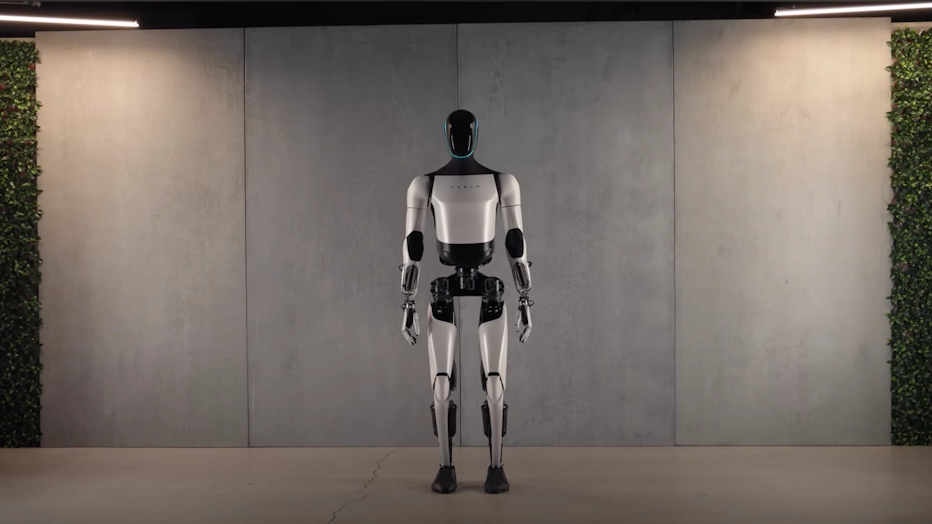
The world of automation is undergoing a dramatic transformation. What was once limited to rigid industrial machines is now evolving into intelligent, adaptable systems capable of functioning seamlessly in human environments. At the center of this revolution is Tesla, a company redefining both robotics and transportation with two groundbreaking innovations: the Optimus Gen 3 humanoid robot and the Tesla Semi truck.
These technologies are not just incremental upgrades—they represent a complete rethinking of engineering, focusing on AI integration, manufacturing efficiency, and long-term economic impact. In this in-depth, SEO-friendly guide, we’ll explore how these innovations are shaping the future of automation and logistics.
The Shift Toward Generalized Automation
Automation is no longer confined to factory floors. Today’s systems are being designed to operate in dynamic, real-world environments, interacting with humans and adapting to unpredictable scenarios.
Unlike traditional machines that rely on predefined instructions, modern systems powered by AI can:
- Learn from observation
- Adapt to new environments
- Perform complex, multi-step tasks
This shift is exactly what Tesla is capitalizing on with its Optimus humanoid robot and Tesla Semi truck, both designed with real-world usability and scalability in mind.
Optimus Gen 3: From Concept to Real-World Machine
The evolution of Tesla’s humanoid robot has reached a defining moment with Optimus Gen 3. Earlier prototypes looked mechanical and experimental, but Gen 3 introduces a refined, production-ready design.
A Design Built for the Real World
One of the most noticeable upgrades is the robot’s appearance. Instead of exposed mechanical parts, Gen 3 features a sleek, human-like exterior.
Key Design Improvements
- Minimalist outer shell that hides joints and components
- Improved safety for home and workplace environments
- A more approachable, human-friendly aesthetic
This isn’t just about looks—it’s about making robots practical for everyday use.
Engineering Simplicity: The “Raptor 3” Approach
Tesla’s CEO Elon Musk has compared Optimus Gen 3 to the Raptor 3 rocket engine philosophy—a design focused on maximum efficiency and manufacturability.
This means:
- Fewer parts
- Simplified assembly
- Lower production costs
The goal is clear: mass production at scale, something no humanoid robot has achieved yet.
Human-Level Dexterity: A Major Leap Forward
The most revolutionary improvement in Optimus Gen 3 is its hand design.
From 11 to 22 Degrees of Freedom
- Gen 2: 11 degrees of freedom
- Gen 3: 22 degrees of freedom
This upgrade allows the robot to perform highly precise movements, including:
- Handling fragile objects
- Performing detailed manual tasks
- Assisting in caregiving or creative roles
The result is a robot capable of near-human dexterity, opening doors to entirely new applications.
The Brain Behind Optimus: AI Integration
What truly sets Optimus apart is its intelligence.
Powered by Tesla’s AI Ecosystem
Optimus uses the same foundational technology as Tesla’s autonomous vehicles:
- FSD (Full Self-Driving) architecture
- Advanced neural networks
- Real-time environmental awareness
Instead of relying on pre-programmed instructions, the robot can:
- Learn from video data
- Understand spatial environments
- Improve through continuous updates
This makes it adaptive rather than static, a key requirement for real-world deployment.
Energy System: Built for Endurance
To support its advanced capabilities, Optimus Gen 3 includes a powerful battery system.
Battery Highlights
- Approximately 3 kWh capacity
- Up to 7 hours of continuous operation
- High energy density for compact design
This ensures the robot can function efficiently without frequent interruptions.
Tesla Semi: Disrupting the Trucking Industry
While Optimus targets homes and service industries, the Tesla Semi is revolutionizing logistics.
The focus here isn’t just innovation—it’s economic disruption.
Total Cost of Ownership (TCO): The Game Changer
The Tesla Semi’s biggest advantage lies in its cost efficiency.
Fuel Cost Comparison
- Diesel trucks: $0.60–$0.70 per mile
- Tesla Semi: حوالي $0.25 per mile
This dramatic reduction makes electric trucking financially superior.
Maintenance Advantages
Traditional diesel trucks require complex systems:
- Transmissions
- Exhaust systems
- Frequent brake replacements
The Tesla Semi eliminates or reduces these components.
Resulting Benefits
- حوالي 50% lower maintenance costs
- Longer lifespan of components
- Reduced downtime
Rapid Return on Investment
For large logistics companies, the numbers are compelling.
- Estimated $5,000/month savings per truck
- Payback period: as little as 6 months
Companies like PepsiCo and Walmart are already exploring these benefits.
Engineering Excellence: A Ground-Up Redesign
The Tesla Semi isn’t just an electric version of a diesel truck—it’s a complete reinvention.
4680 Battery Technology
The long-range version uses advanced 4680 battery cells.
Key Benefits
- Higher energy density
- Reduced weight (saving حوالي 1,000 lbs)
- Increased cargo capacity
The total battery pack reaches حوالي 850–900 kWh, enabling long-distance travel.
48-Volt Electrical Architecture
Tesla has moved beyond the outdated 12V system.
Advantages
- Reduced wiring complexity
- Lower overall weight
- Improved efficiency
This also enables:
- More precise steering
- Advanced sensor integration
Triple Motor Redundancy
Reliability is critical in logistics, and Tesla addresses this with a three-motor system.
Why It Matters
- If one motor fails, the truck continues operating
- Ensures delivery reliability
- Reduces risk compared to single-engine diesel trucks
Charging Infrastructure: Scaling the Future
One of the biggest challenges for electric trucking is charging infrastructure. Tesla’s solution is both strategic and scalable.
Phase 1: Depot Charging
Tesla is installing Mega Chargers at distribution centers.
Benefits
- Ideal for fixed routes
- Overnight charging
- Minimal disruption to operations
Phase 2: Public Charging Network
Tesla is expanding into public infrastructure.
A key example is the Mega Charger station in Ontario.
Capabilities
- Up to 1.2 megawatts of power
- حوالي 70% charge in 30 minutes
This makes long-haul electric trucking practical and scalable.
Supervised Autonomy: The Bigger Picture
Both Optimus and the Tesla Semi share a common goal: supervised autonomy.
What This Means
- Machines operate independently
- Humans provide oversight when needed
- Continuous improvement through data
Tesla’s ecosystem collects millions of miles of real-world data, feeding its AI systems and making them smarter over time.
The End of Traditional Systems
The implications of these technologies are massive.
What’s Being Replaced
- Loud, inefficient diesel trucks
- Rigid, single-purpose industrial robots
What’s Replacing Them
- Intelligent, adaptable machines
- Cost-efficient, electric systems
- AI-driven automation
Future Outlook: What Comes Next?
The transition won’t happen overnight, but the trajectory is clear.
Expected Developments
- Wider adoption of humanoid robots in homes and workplaces
- Expansion of electric trucking fleets
- Continuous AI improvements through data
As costs decrease and capabilities increase, these technologies will become mainstream.
Conclusion: A New Era of Technology
The innovations from Tesla are not just technological milestones—they are industry disruptors.
- Optimus Gen 3 brings us closer to practical humanoid robots
- Tesla Semi redefines logistics economics
- Both rely on AI, efficiency, and scalability
Together, they signal the arrival of a future where machines are not just tools—but intelligent partners in everyday life.
The age of automation is no longer coming—it’s already here.
FAQs
1. What is Tesla Bot Gen 3?
Tesla Bot Gen 3, also known as Optimus, is a next-generation humanoid robot developed by Tesla, designed to perform tasks in human environments using advanced AI and robotics.
2. How is Optimus Gen 3 different from Gen 2?
The biggest upgrade is its 22 degrees of freedom in the hands, improved AI capabilities, better battery life, and a more human-like design, making it far more practical and precise than Gen 2.
3. What can Tesla Bot Gen 3 do?
Optimus Gen 3 can:
- Perform household tasks
- Assist in industrial work
- Handle delicate objects
- Learn tasks through observation
4. Who created Tesla Optimus?
The robot was developed by Elon Musk and the engineering team at Tesla.
5. What AI powers Tesla Bot Gen 3?
It uses Tesla’s Full Self-Driving (FSD) AI system, enabling real-time decision-making, spatial awareness, and continuous learning.
6. How long can Tesla Bot Gen 3 operate?
The robot can run for approximately 7 hours continuously, thanks to its high-density battery system.
7. Is Tesla Bot Gen 3 safe for home use?
Yes, its minimalist enclosed design improves safety, making it suitable for use in homes and human environments.
8. What is the Tesla Semi?
The Tesla Semi is an all-electric heavy-duty truck developed by Tesla, designed to replace traditional diesel trucks with a more efficient and cost-effective solution.
9. How much does Tesla Semi save on fuel costs?
The Tesla Semi reduces energy costs to حوالي $0.25 per mile, compared to $0.60–$0.70 per mile for diesel trucks.
10. What companies are using Tesla Semi?
Major companies like PepsiCo and Walmart are already adopting Tesla Semi trucks.
11. How far can the Tesla Semi travel on one charge?
The long-range Tesla Semi can travel up to 500 miles on a single charge.
12. How fast can Tesla Semi charge?
Using Mega Chargers, it can reach around 70% charge in 30 minutes, enabling efficient long-distance travel.
13. What makes Tesla Semi different from diesel trucks?
It offers:
- Lower operating costs
- Reduced maintenance
- Zero emissions
- Advanced AI integration
14. What is Tesla’s 4680 battery technology?
The 4680 battery cells are more energy-dense, lighter, and efficient, helping improve range and performance in Tesla vehicles.
15. Will Tesla Bot replace human jobs?
Tesla Bot is designed to assist humans, especially in repetitive or dangerous tasks, rather than fully replace human workers.
16. When will Tesla Bot Gen 3 be available?
While no exact release date is confirmed, Tesla is focusing on scaling production, suggesting availability could expand in the near future.
Read More:
- How SpaceX Will Build The Star Station
- New Tesla Battery 2027: Sodium-Ion vs Lithium—8,000 cycles, 300°C safety, cost parity threat
- Tesla Semi Mass Production Has Officially Begun
- Tesla revises new Intervention Reporting system with Full Self-Driving
- Tesla Semi gets new product launch as mass manufacturing hits Plaid Mode