
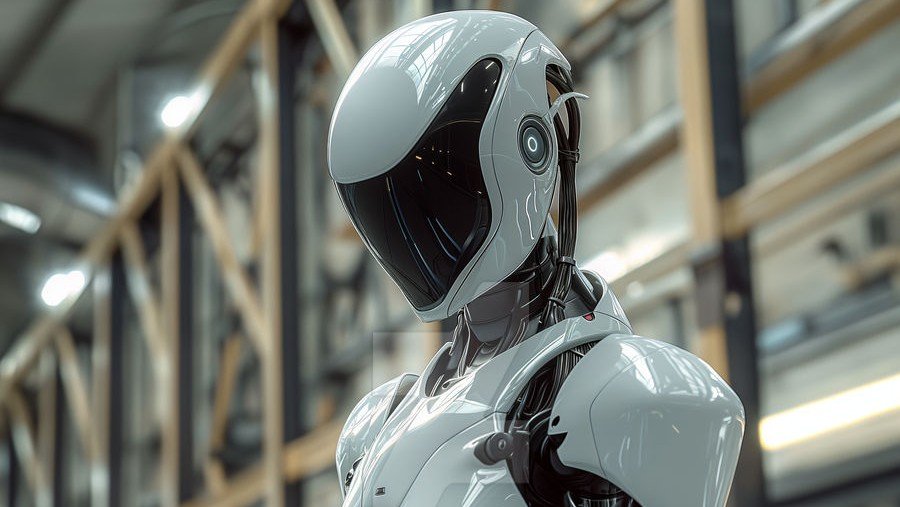
Tesla Bot Gen 3 JUST Got A NEW Look! 2027 Version: The race to develop a general-purpose humanoid robot is entering an exciting new phase. Tesla’s Optimus program continues to attract attention as leaked images and design comparisons circulating across Tesla news outlets offer a possible glimpse of the next-generation Tesla Optimus Gen 3. The reported design changes suggest a stronger focus on integrated body panels, refined arms, improved hand mechanisms, and better protection for moving joints.
However, it is important to distinguish between reported design concepts and officially confirmed specifications. Images alone cannot establish whether a robot has achieved better dexterity, greater strength, or full autonomy.
The big question is whether the 2027 Tesla Bot Gen 3 could move humanoid robotics closer to practical, large-scale deployment. From advanced AI and precision hands to factory testing and manufacturing challenges, here is everything to understand about the potential evolution of Tesla Optimus.
What Is New About the Tesla Optimus Gen 3 Design?
The reported Gen 3 appearance points toward a more integrated structure than earlier Optimus prototypes. Rather than emphasizing exposed mechanical components, the newer design appears to prioritize smoother exterior panels and more enclosed joints.
These changes could matter significantly when a humanoid robot operates around industrial equipment, storage bins, production lines, and other machines.
A Streamlined Arm and Elbow Structure
Earlier Optimus designs featured visible mechanical sections around several joints. A more continuous arm profile could help protect internal components while allowing the robot to work in confined spaces.
Potential benefits include:
- Improved joint protection: Enclosed panels may reduce exposure to dust, debris, and accidental contact.
- Better cable management: Integrated packaging could protect electrical connections and wiring harnesses.
- Reduced snagging risks: A smoother exterior may make it easier to move around machinery and shelving.
- More compact engineering: Carefully arranged motors and actuators could improve the distribution of weight.
The forearm and wrist are particularly important because their mass affects how quickly a robot can reposition its hand. Reducing unnecessary weight near the wrist may improve movement, although the actual benefit depends on the internal motor, gearbox, and structural design.
Improved Lower-Body Enclosure
Another reported design change involves the pelvis and upper-thigh regions. Flexible outer coverings could connect the torso and leg assemblies while protecting sensitive components.
Humanoid robots regularly bend, squat, twist, and change direction. These movements expose joints and wiring to repeated mechanical stress.
Better environmental protection could help Optimus operate more reliably in factories. Nevertheless, exterior coverings do not automatically establish water resistance, dustproofing, increased torque, or improved balance. Those capabilities require engineering validation and testing.
Tesla Optimus Gen 3 Hands: The Biggest Robotics Challenge
A humanoid robot can walk across a factory floor and still struggle to perform useful work. The real challenge is manipulating objects with the flexibility, precision, and adaptability of a human hand.
For Tesla Optimus, advanced robotic hands could determine whether the machine can handle a broad range of industrial tasks without repeatedly switching specialized tools.
Why 22 Degrees of Freedom Matters
Some reports and design discussions associate the potential Gen 3 hand with 22 degrees of freedom (DOF). This figure should be treated as an unverified specification unless confirmed by Tesla.
Degrees of freedom describe the independent movements available to a mechanical system. A highly articulated robotic hand could potentially support several useful grasping patterns, including:
- Precision pinch: Picking up small components and thin objects.
- Power grip: Holding heavier tools or larger parts.
- Lateral grip: Holding flat objects between a finger and thumb.
- Fine manipulation: Positioning screws, connectors, and small assembly components.
If implemented successfully, greater finger articulation could make Optimus more adaptable to different tasks. However, additional degrees of freedom also increase the complexity of motors, transmissions, wiring, software, and maintenance.
The goal is not simply to create a hand with more joints. It is to build one that remains reliable, affordable, strong, and precise during repeated operation.
Tactile Sensors Could Improve Grip Control
Cameras help a robot recognize objects, but visual information alone cannot always reveal whether an object is slipping or how much pressure is being applied.
Tactile sensing could provide valuable information from the fingers and palm. Such sensors may help a robot:
- Control grip force: Apply enough pressure to hold an object without damaging it.
- Detect slipping: Identify small movements and adjust the grip before an object falls.
- Improve contact awareness: Determine where the hand touches an object.
- Handle delicate components: Manipulate parts that require careful positioning.
For example, handling a plastic component requires a different grip from lifting a metal tool. Combining visual recognition with touch feedback could help Optimus respond to these differences.
The extent of any Gen 3 tactile-sensing upgrade remains uncertain until detailed specifications and demonstrations are available.
The AI Behind Tesla Optimus Gen 3
Advanced hardware is only one part of a capable humanoid robot. To perform useful work, Optimus must interpret its surroundings, understand instructions, plan movements, and respond when something unexpected happens.
Tesla’s experience with artificial intelligence, computer vision, and autonomous driving provides a foundation for its robotics ambitions. However, operating a humanoid robot presents different challenges from controlling a vehicle.
Vision-Language-Action Models
A Vision-Language-Action (VLA) model connects visual observations and instructions with actions a robot can perform.
Imagine a worker telling Optimus, “Pick up the component and place it in the assembly tray.”
A capable system would need to identify the component, locate the tray, determine a suitable grasp, plan a collision-free movement, and coordinate the fingers and arms.
The process involves several interconnected capabilities:
- Visual perception: Recognizing objects, surfaces, and obstacles.
- Task understanding: Interpreting the requested action.
- Motion planning: Selecting a suitable movement sequence.
- Motor control: Coordinating joints, fingers, and actuators.
- Feedback processing: Correcting movements when the result differs from expectations.
A robot must also handle changing conditions, such as a misplaced component or an object that is heavier than expected.
Why World Models and Simulation Matter
A robot that can predict the consequences of an action may make better decisions before moving.
For instance, a system could estimate how a box might tilt when lifted from one side or how an object might move when pushed. These predictions can support safer and more efficient manipulation.
Simulation-based training allows engineers to test thousands of scenarios without physically repeating every experiment. However, transferring simulated skills into the real world remains difficult because friction, lighting, flexible materials, and unexpected collisions can behave differently.
Tesla could combine simulation with teleoperation, real-world demonstrations, and video-based learning. The challenge is ensuring that the resulting skills work consistently outside controlled testing environments.
Tesla Optimus Gen 3 Manufacturing: Can It Scale?
Designing a functional prototype is difficult, but manufacturing thousands of dependable humanoid robots introduces another level of complexity.
Unlike a conventional vehicle, a humanoid robot requires numerous compact actuators, precision joints, sensors, flexible connections, and sophisticated control electronics.
Precision Components and Supply Chains
Potential manufacturing requirements include:
- Harmonic drive gearboxes for compact, precise joint movement.
- Brushless DC motors for efficient actuation.
- Miniature screws and transmissions for finger movement.
- Load cells and torque sensors for force measurement.
- Cameras and computing hardware for perception and AI processing.
Every component must meet demanding requirements for size, weight, performance, durability, and cost.
Producing these parts at scale while maintaining consistent quality could be one of the biggest obstacles to commercial deployment.
Tesla Factories as Real-World Testing Grounds
Tesla’s manufacturing facilities could provide a practical environment for testing early Optimus units.
Potential applications include moving materials, transporting components, sorting supplies, and supporting repetitive factory workflows.
These tasks offer several advantages. Engineers can observe failures, measure operating time, identify maintenance needs, and improve software using real-world feedback.
A robot that performs a task successfully during a short demonstration may still struggle during a full shift. Reliability, operating uptime, recovery from errors, and maintenance costs are therefore essential measurements.
Internal deployment could help Tesla identify these problems before attempting broader commercial distribution.
Tesla Bot Gen 3 vs. Earlier Optimus Versions
The following table summarizes the potential direction of the reported redesign without treating unverified details as confirmed specifications.
| Feature | Earlier Designs | Potential Gen 3 Direction |
|---|---|---|
| Arm structure | More visibly segmented components | Smoother, integrated exterior |
| Joint protection | Some mechanisms visibly exposed | More enclosed joint areas |
| Hand design | Evolving finger articulation | Potentially more capable manipulation |
| Tactile sensing | Development-stage sensing systems | Possible improvements to contact feedback |
| Lower body | Visible gaps around some assemblies | More integrated flexible coverings |
| AI control | Learning and motion-control development | Continued integration of perception and action |
| Manufacturing | Prototype development and testing | Progress toward repeatable production |
These comparisons describe possible engineering priorities rather than verified performance improvements. Actual specifications, production status, and capabilities must be established through reliable disclosures and demonstrations.
What to Watch for in the 2027 Tesla Optimus Roadmap
The reported design changes are interesting, but the most meaningful evidence will come from measurable improvements in real-world performance.
Three developments deserve particular attention.
1. Uncut Demonstrations of Complex Tasks
Look for demonstrations showing Optimus handling small components, using tools, maintaining balance, and recovering from mistakes without frequent human assistance.
Longer, continuous demonstrations can reveal more than carefully edited clips.
2. Verified Autonomous Operating Hours
A useful industrial robot must work consistently rather than complete an isolated task. Important metrics include successful task completion, human intervention frequency, operating uptime, and recovery from unexpected conditions.
3. Confirmed Production Milestones
Official information about manufacturing volumes, factory deployment, component costs, and commercial deliveries would help establish how close Optimus is to large-scale production.
Claims about thousands of units or future production targets should be distinguished from robots actually manufactured and operating productively.
Conclusion: Is Tesla Optimus Gen 3 Ready for the Future?
The potential Tesla Optimus Gen 3 redesign highlights several important areas of humanoid robotics: integrated body panels, protected joints, dexterous hands, tactile sensing, advanced AI, and scalable manufacturing.
These improvements could help create a robot capable of handling repetitive industrial work while adapting to different tasks. Yet a refined exterior is only one step toward that goal.
The real test will be whether Optimus can manipulate objects reliably, operate safely around people, complete tasks without constant supervision, and deliver measurable economic value.
As Tesla continues developing its humanoid robotics program, the most important milestones will be verified capabilities, dependable factory performance, and demonstrated progress toward mass production. Until detailed specifications and results are confirmed, the 2027 version should be viewed as a developing possibility rather than a finished industrial product.
FAQs
1. What is the Tesla Bot Gen 3?
The Tesla Bot Gen 3 is the anticipated next-generation version of Tesla’s Optimus humanoid robot. It is associated with potential improvements to its hands, arms, joint protection, AI systems, and manufacturing design. Specific Gen 3 details require official confirmation.
2. What is new about the Tesla Optimus Gen 3 design?
Reported design comparisons suggest a more streamlined exterior, integrated arm panels, improved joint enclosure, and refined lower-body coverings. These changes could improve component protection and industrial usability, but their exact benefits remain unverified.
3. When will the Tesla Bot Gen 3 be released?
The 2027 version is a subject of speculation and discussion. A confirmed public release date, commercial delivery schedule, and production timeline should not be assumed without an official Tesla announcement.
4. How many degrees of freedom will the Tesla Optimus Gen 3 hand have?
Some design discussions suggest 22 degrees of freedom (DOF). However, this specification needs official confirmation. More degrees of freedom could enable improved finger articulation and more precise object manipulation.
5. Why are robotic hands important for Tesla Optimus?
Robotic hands allow a humanoid robot to handle tools, pick up small components, move objects, and perform detailed assembly work. Improved dexterity could help Optimus complete more tasks without requiring specialized attachments.
6. Will Tesla Optimus Gen 3 have tactile sensors?
Tactile sensing is an important area of humanoid robotics development. Sensors across the fingers and palm could help Optimus detect contact, control grip pressure, and identify slipping objects. The precise tactile-sensing configuration of Gen 3 has not been confirmed.
7. What AI technology could power Tesla Optimus Gen 3?
Tesla’s robotics efforts involve artificial intelligence, computer vision, neural networks, and motion control. Vision-Language-Action models could help a robot interpret instructions and translate them into physical movements, although the exact Gen 3 software architecture requires confirmation.
8. Can Tesla Optimus Gen 3 work autonomously?
The long-term goal of humanoid robotics is to perform useful tasks with minimal human intervention. Optimus would need to recognize objects, plan movements, handle unexpected situations, and recover from errors to achieve dependable autonomous operation. The level of autonomy achieved by Gen 3 remains to be demonstrated.
9. What jobs could Tesla Optimus Gen 3 perform?
Potential applications include moving materials, sorting components, transporting supplies, handling tools, and performing repetitive assembly tasks. Future applications could extend to other workplaces, depending on the robot’s safety, dexterity, reliability, and software capabilities.
10. How could Tesla manufacture Optimus Gen 3 at scale?
Large-scale production would require reliable supplies of precision motors, gearboxes, sensors, actuators, computing hardware, and other specialized components. Tesla could draw on its manufacturing experience to improve production efficiency and component integration, but achieving high-volume production remains an engineering challenge.
11. Will Tesla Optimus Gen 3 be used in Tesla factories?
Tesla factories could serve as practical testing environments for Optimus. Potential duties include transporting parts and supporting repetitive manufacturing workflows. Actual deployment levels and the amount of work performed autonomously would need to be verified.
12. How is Tesla Optimus Gen 3 different from earlier versions?
The potential differences include a smoother exterior, more enclosed joints, refined limb packaging, and possible improvements to hand dexterity and tactile feedback. However, visual redesigns alone do not prove better strength, speed, balance, or autonomy.
13. Can Tesla Optimus Gen 3 perform household tasks?
Humanoid robots could eventually assist with tasks such as organizing objects, carrying items, and completing simple household chores. However, reliable operation in unpredictable home environments requires substantial progress in perception, manipulation, safety, and decision-making.
14. How much will the Tesla Bot Gen 3 cost?
A confirmed Tesla Optimus Gen 3 price has not been established. The eventual cost would depend on manufacturing scale, component prices, hardware complexity, software development, maintenance, and production efficiency. Unofficial price estimates should be treated cautiously.
15. Is the Tesla Bot Gen 3 ready for mass production in 2027?
Mass production readiness cannot be determined from leaked images or exterior design comparisons alone. Important indicators include confirmed production volumes, reliable autonomous operation, successful factory deployments, safety testing, and commercial delivery announcements. Until these milestones are verified, Gen 3’s 2027 production prospects remain uncertain.
Read More:
- Tesla is building its own maps to fix Navigation issues
- Tesla’s secretive “Project Crystal Sun” gets a big green light in Texas
- The Starship moon landing number NASA and Elon Musk can’t agree on
- Tesla reveals Optimus Academy, where robots teach themselves
- Tesla Reveals Major NEW Roadster Update 2027