
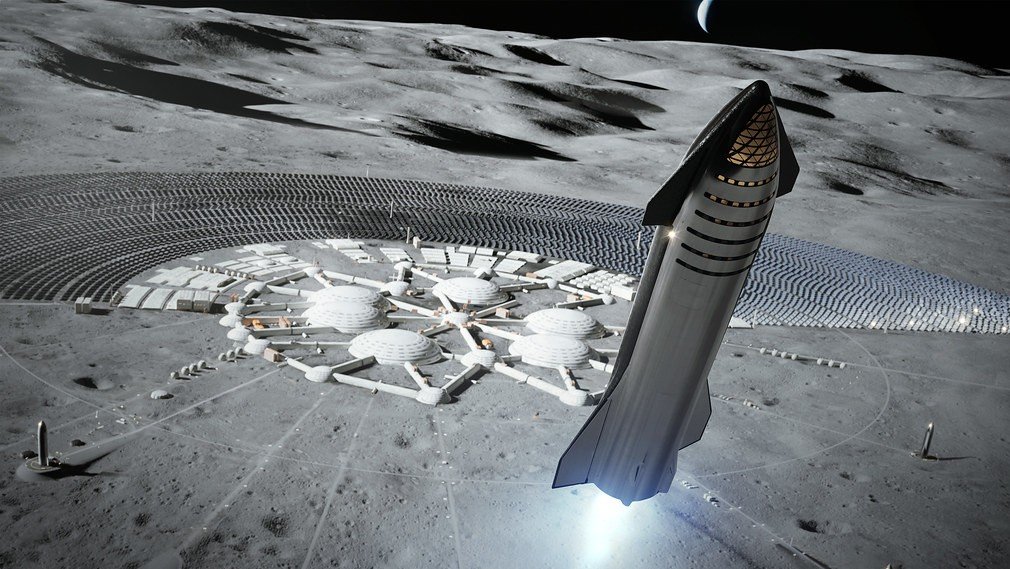
Vast Space Announced Plan to Build Moon Base with SpaceX Shocked NASA: The future of space exploration is entering an exciting new era as private companies move beyond Low Earth Orbit (LEO) and begin planning the infrastructure needed for a permanent human presence on the Moon. One of the latest developments attracting attention across the commercial space industry is Vast Space’s decision to establish a dedicated Lunar Programs Division.
Known for its ambitions to develop commercial space stations, including its planned Haven-1 orbital station, Vast Space is expanding its vision toward lunar exploration and surface infrastructure. This strategic shift could position the company as an important contributor to humanity’s next major space milestone: building a sustainable Moon base.
The development also brings Vast into the same broader lunar ecosystem as SpaceX, whose massive Starship rocket is being developed to transport astronauts, equipment, and cargo to the lunar surface. If these technologies eventually work together, they could help accelerate the development of permanent lunar infrastructure and support NASA’s long-term exploration objectives.
Although a fully operational Moon base remains a challenging long-term goal, the combination of heavy-lift transportation and specialized habitat technology could transform how humanity approaches lunar exploration.
Vast Space Expands Its Vision Beyond Earth Orbit
From Haven-1 to Lunar Infrastructure
Vast Space has focused much of its attention on developing commercial space stations that could support astronauts, scientific research, and private space missions. Its planned Haven-1 station represents an important step toward expanding commercial activity in Earth orbit.
However, the technologies required to operate an orbital station could also provide a foundation for future lunar projects. These include pressurized structures, environmental control systems, thermal management, avionics, and life-support technologies.
By applying its experience in these areas, Vast could potentially develop systems suitable for more demanding environments beyond Earth.
The Moon presents a very different engineering challenge from an orbital station. Equipment must survive the lunar surface, where extreme temperatures, abrasive dust, radiation, and limited access to replacement parts create significant operational risks.
Nevertheless, experience gained from designing and testing space infrastructure could help Vast address some of these challenges.
A Three-Phase Lunar Development Strategy
Vast’s lunar ambitions can be understood through a gradual approach that prioritizes testing before committing to long-duration human operations.
Phase 1: Technology Demonstration and Risk Reduction
The first stage would focus on developing and validating essential technologies. Testing power systems, airlocks, communications equipment, and other critical components could help engineers identify problems before attempting more complicated lunar missions.
Phase 2: Initial Lunar Surface Operations
The next stage would involve deploying essential surface infrastructure. Potential priorities include power generation, communications, environmental protection, and equipment designed to support astronauts working outside a habitat.
These systems would provide the foundation for more extensive operations.
Phase 3: Semi-Permanent Human Presence
The final stage would focus on supporting astronauts for longer periods. This would require reliable life-support equipment, radiation protection, energy storage, maintenance capabilities, and dependable transportation links.
A semi-permanent lunar outpost would represent a major advance beyond short-duration exploration missions.
Vast Space’s Key Technologies for a Future Moon Base
1. Mobile Lunar Power Stations
Electricity will be essential for almost every activity on the lunar surface. Astronauts will need energy for lighting, communications, scientific instruments, environmental systems, and equipment maintenance.
Vast has presented the concept of a mobile lunar power station featuring a compact, four-legged platform and deployable solar arrays.
Such a system could potentially move between work areas and distribute electricity to different surface assets. Its mobility could be particularly useful during the early stages of lunar construction, when permanent electrical infrastructure may not yet exist.
However, solar power alone would not solve every energy challenge. Long lunar nights and permanently shadowed regions could require advanced batteries, alternative energy sources, or nuclear power systems.
2. Lunar Airlocks Based on Orbital Technology
A lunar airlock would be another critical component of a future settlement.
Astronauts entering or leaving a pressurized habitat must be protected from the vacuum outside. The system must also limit the amount of lunar dust brought into living and working spaces.
Lunar regolith, the fine material covering the Moon’s surface, can damage seals, contaminate equipment, and create maintenance problems. Unlike ordinary household dust, it is sharp, abrasive, and difficult to manage.
Developing a dedicated airlock could allow Vast to test pressure integrity, spacesuit compatibility, dust-control procedures, and safe crew transitions before deploying larger habitats.
A successful airlock would help protect astronauts while reducing the risk of equipment failure.
3. Modular Habitats and Lunar Communications
A permanent lunar outpost will require more than a single landing vehicle. It will need interconnected living spaces, laboratories, storage areas, and utility systems.
Modular habitats could allow a settlement to grow gradually as additional missions deliver new equipment. Individual modules could serve different purposes, making the overall infrastructure easier to expand and maintain.
Communications will be equally important. Lunar missions require dependable links between astronauts, surface vehicles, orbiting spacecraft, and mission-control teams on Earth.
A dedicated lunar communications network could improve connectivity, particularly around the lunar south pole, where terrain may obstruct direct signals to Earth.
Together, modular habitats and reliable communications could help turn isolated landing sites into coordinated exploration facilities.
How SpaceX Starship Could Accelerate Moon Base Construction
Starship’s Heavy-Lift Advantage
SpaceX Starship is one of the most ambitious transportation systems being developed for future lunar missions. Designed for high payload capacity and eventual reusability, the vehicle could transport substantial quantities of cargo, equipment, and supplies.
NASA has selected a Starship-based system for its Artemis Human Landing System architecture, subject to the required development, testing, and mission milestones.
For lunar infrastructure, Starship’s potential advantage is straightforward: transporting large amounts of equipment in fewer missions could simplify the logistics of building a Moon base.
Instead of delivering every component in small quantities, future missions could potentially carry multiple habitat modules, power systems, scientific instruments, and surface vehicles.
The spacecraft’s large internal volume could also create opportunities for transporting equipment that would be difficult to accommodate on smaller landers.
Could a Landed Starship Become a Lunar Habitat?
One intriguing possibility is adapting the interior of a landed spacecraft for additional surface uses.
A large vehicle could potentially provide valuable internal volume for equipment storage, workspaces, or other mission functions. However, using Starship as a long-term human habitat would require extensive engineering validation.
Engineers would need to consider radiation shielding, temperature regulation, life support, safe access, fire protection, and the spacecraft’s suitability for sustained surface operations.
A landed Starship should therefore not automatically be considered a ready-made permanent habitat. Its practical role would depend on the final vehicle design and the modifications needed for safe habitation.
Even so, its potential cargo capacity could make it an important part of future lunar construction plans.
Vast Space and SpaceX: Competition or Collaboration?
The expansion of private lunar development does not necessarily mean that every company must build an entire Moon base independently.
Instead, the future lunar economy could involve companies specializing in different parts of the infrastructure.
SpaceX could provide heavy-lift transportation and lunar cargo delivery, while Vast could focus on specialized systems such as airlocks, modular habitats, power distribution, and communications infrastructure.
This division of responsibilities could eventually create a complementary supply chain.
For example, a cargo mission might deliver habitat components and power equipment to the lunar surface. Specialized infrastructure could then be installed around the landing site, allowing astronauts to conduct more complex operations.
However, a formal Vast–SpaceX partnership should not be assumed without an official announcement. Their technologies could be complementary even if their future projects remain independent.
For NASA and other lunar exploration organizations, the emergence of specialized commercial suppliers could expand the number of available solutions and encourage innovation.
The Biggest Challenges of Building a Permanent Moon Base
Extreme Temperatures and Power Limitations
The lunar environment experiences severe temperature variations. Some polar regions receive sunlight for extended periods, while nearby areas remain in deep shadow.
Reliable operations will require carefully planned power generation, energy storage, and thermal-control systems.
Lunar Dust and Equipment Reliability
Lunar dust can interfere with moving parts, seals, solar panels, spacesuits, and optical instruments. Engineers will need effective dust mitigation methods to reduce maintenance and protect astronauts.
Radiation and Long-Term Crew Safety
The Moon lacks Earth’s thick atmosphere and global magnetic field. Consequently, astronauts face greater exposure to certain forms of space radiation.
Radiation shielding could involve covering habitats with lunar soil, using specially designed shielding materials, or incorporating protected areas into the base’s architecture.
Cost, Logistics, and Construction
A lunar settlement will require repeated launches, cargo delivery, surface transportation, maintenance, and emergency planning.
Even advanced rockets cannot eliminate every challenge. Building a sustainable outpost will depend on the reliability of the entire transportation and infrastructure network.
What Vast Space’s Lunar Ambitions Mean for NASA
NASA’s Artemis program aims to return astronauts to the lunar surface and develop capabilities that support longer-term exploration. Commercial companies could contribute by supplying transportation, habitation systems, communications, power equipment, and other essential services.
Vast Space’s lunar expansion reflects the growing interest in developing a broader commercial ecosystem around lunar exploration.
If the company can translate its orbital engineering experience into reliable lunar hardware, it could become a potential contributor to future surface infrastructure. SpaceX’s Starship, meanwhile, could help address the enormous transportation requirements involved in delivering that equipment.
Still, major technical demonstrations, funding decisions, mission approvals, and operational testing will determine how quickly these ambitions become reality.
Conclusion: The Race to Build Humanity’s Next Home
Vast Space’s lunar ambitions highlight an important shift in the commercial space industry. Companies that initially concentrated on orbital infrastructure are increasingly considering how their technologies could support exploration beyond Earth.
By combining potential advances in modular habitats, lunar airlocks, mobile power systems, and communications with heavy-lift transportation capabilities such as SpaceX Starship, future missions could establish the foundations of a more sustainable human presence on the Moon.
For NASA, these developments could expand the range of commercial technologies available for exploration. For the wider space industry, they signal a future in which building lunar infrastructure may become a collaborative effort involving multiple specialized companies.
A permanent Moon base is not guaranteed, and substantial engineering challenges remain. Nevertheless, the growing focus on practical infrastructure suggests that the next chapter of lunar exploration will involve more than landing astronauts. It will require creating the systems that allow them to live, work, conduct research, and return safely.
The ultimate goal is ambitious: transforming the Moon from a destination visited briefly into a place where humans can conduct sustained scientific and commercial activities.
FAQs
1. What is Vast Space planning to build on the Moon?
Vast Space is expanding its focus toward lunar infrastructure through a dedicated Lunar Programs Division. Its proposed technologies include modular habitats, lunar airlocks, mobile power stations, and communications systems designed to support future lunar operations.
2. What is Vast Space’s Lunar Programs Division?
The Lunar Programs Division is Vast Space’s strategic effort to explore technologies for establishing infrastructure on the lunar surface. It aims to build on the company’s experience in commercial space stations and apply relevant engineering capabilities to future lunar missions.
3. How is Vast Space connected to SpaceX Starship?
Vast Space and SpaceX could potentially contribute complementary technologies to lunar exploration. SpaceX is developing Starship for heavy-lift transportation and lunar landing missions, while Vast is exploring specialized infrastructure that could support astronauts and long-term surface operations. A formal partnership should not be assumed without official confirmation.
4. What is the role of SpaceX Starship in building a Moon base?
SpaceX Starship could transport large quantities of cargo, scientific equipment, habitat components, and supplies to the lunar surface. Its potential high payload capacity could reduce logistical challenges associated with delivering the materials needed for a future Moon base.
5. What is Vast Space’s Haven-1 space station?
Haven-1 is Vast Space’s planned commercial space station designed for operations in Low Earth Orbit. The project is part of the company’s broader ambition to develop commercial space infrastructure and gain experience with technologies that may also be relevant to future lunar projects.
6. What are the three phases of Vast Space’s lunar roadmap?
Vast’s proposed lunar development strategy can be divided into three broad phases: technology demonstration and risk reduction, initial lunar surface operations, and the development of infrastructure capable of supporting a semi-permanent human presence.
7. What is a lunar power station, and why is it important?
A lunar power station would generate and distribute electricity for habitats, scientific instruments, communications equipment, and surface machinery. Mobile solar-powered systems could support early operations, while batteries or alternative energy sources may be needed in areas with limited sunlight.
8. Why does a Moon base need a specialized airlock?
A lunar airlock allows astronauts to move between a pressurized habitat and the vacuum of space while limiting pressure loss and contamination. It must also help manage abrasive lunar dust, which can damage seals, spacesuits, and mechanical equipment.
9. Could SpaceX Starship itself become a lunar habitat?
A landed Starship could potentially provide substantial internal space for storage, equipment, or adapted work areas. However, using it as a long-term human habitat would require suitable life support, radiation shielding, thermal control, safety systems, and other engineering modifications.
10. Why is the lunar south pole important for a future Moon base?
The lunar south pole attracts interest because some locations may offer access to water ice and areas with favorable sunlight conditions. Water ice could potentially support drinking water, oxygen production, and propellant manufacturing, but its accessibility and practical use require further investigation.
11. What are the biggest challenges of building a Moon base?
The biggest challenges include extreme temperatures, radiation exposure, abrasive lunar dust, limited power availability, transportation costs, and reliable life-support systems. Engineers must also develop dependable construction methods and emergency procedures to protect astronauts.
12. How will Vast Space protect astronauts from lunar radiation?
Potential approaches include radiation-shielded habitats, protective layers of lunar soil called regolith, and specially designed shelter areas. The final solution would depend on mission duration, habitat design, radiation exposure, and other safety requirements.
13. How could lunar communications satellites help astronauts?
A lunar communications network could relay signals between astronauts, surface vehicles, orbiting spacecraft, and Earth-based mission-control centers. Such a network could improve connectivity in areas where mountains or the lunar horizon obstruct direct communication.
14. Will Vast Space’s Moon base be built in collaboration with NASA?
Vast Space’s lunar ambitions align with broader interest in commercial lunar infrastructure, an area relevant to NASA’s exploration plans. However, specific contracts, partnerships, or mission responsibilities must be confirmed through official announcements rather than assumed.
15. When will Vast Space build a permanent Moon base?
There is no confirmed completion date for a permanent Vast Space Moon base established by the information discussed here. The timeline will depend on technology demonstrations, funding, transportation availability, mission approvals, and the successful testing of lunar infrastructure.
16. How could Vast Space and SpaceX change the future of lunar exploration?
If their respective technologies become available and are used together, SpaceX could provide transportation while Vast Space supplies specialized lunar infrastructure. This approach could help future missions develop power networks, habitats, communications systems, and other facilities needed for sustained human activity on the Moon.
Read More:
- Tesla is building its own maps to fix Navigation issues
- Tesla’s secretive “Project Crystal Sun” gets a big green light in Texas
- The Starship moon landing number NASA and Elon Musk can’t agree on
- Tesla reveals Optimus Academy, where robots teach themselves
- Tesla Reveals Major NEW Roadster Update 2027