
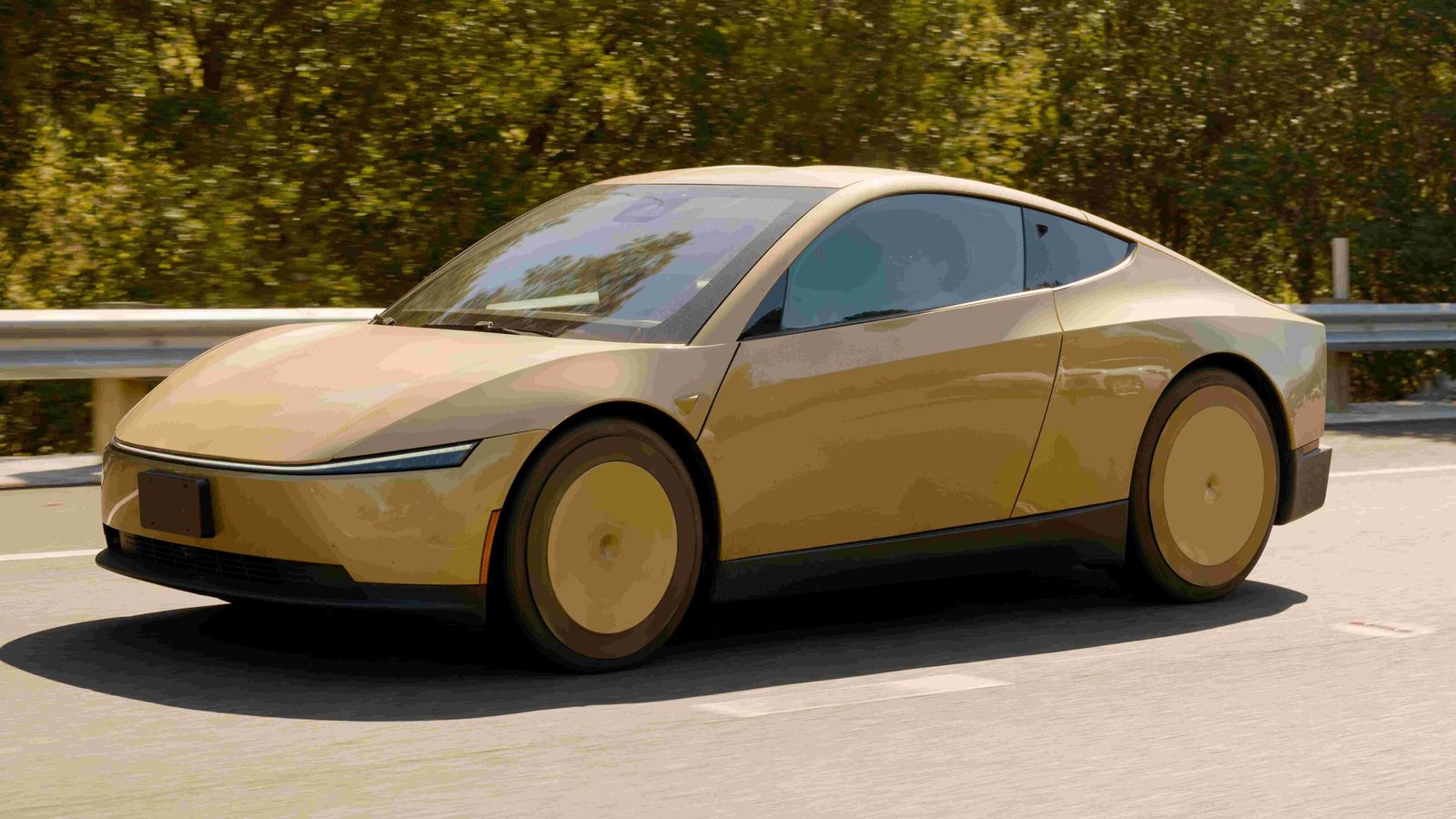
Tesla Cybercab V1.5 BIG Reveal! New Hardware & 4 Major Changes: Tesla is taking another major step toward transforming the future of autonomous transportation. The company’s purpose-built, two-seat, steering-wheel-free Cybercab passenger service has officially expanded to Dallas, Texas, marking the second city to receive Tesla’s dedicated robotaxi. This expansion represents an important milestone in Tesla’s long-term vision of creating a fully autonomous transportation network.
The Dallas launch, announced on November 19, 2026, through Tesla’s official robotaxi account with the message “Howdy Dallas,” brings more than just a new city to the company’s robotaxi network. It also highlights several important hardware refinements associated with the newly discussed Cybercab V1.5, including redesigned seats, additional camera hardware, and potential battery improvements.
According to the November 22 video, Tesla Cybercab V1.5 BIG Reveal! New Hardware & 4 Major Changes! by TESLA CAR WORLD, Tesla is moving beyond experimental robotaxi operations toward a more commercially focused autonomous vehicle platform.
Let’s explore the four major changes, the Dallas expansion, and what these developments could mean for Tesla’s robotaxi business.
Tesla Cybercab Expands Into Dallas After Austin
Tesla’s decision to introduce Cybercab in Dallas follows months of preparation using driverless Model Y vehicles. Rather than immediately launching its purpose-built robotaxi, Tesla first established the operational infrastructure needed to support autonomous passenger transportation.
Dallas Robotaxi Development Timeline
Tesla began expanding its autonomous transportation operations in Dallas during April 2026. The company introduced unsupervised robotaxi rides using Model Y vehicles, allowing passengers to experience autonomous transportation without a human safety operator occupying the front passenger seat.
By late August 2026, Tesla had significantly expanded its Dallas operating area. The service zone reportedly increased from 31 square miles to 81 square miles, extending west toward Irving and reaching additional neighborhoods around downtown Dallas.
The biggest development arrived in November 2026, when Tesla transitioned toward its purpose-built Cybercab vehicles.
Tesla AI vice president Ashok Elluswamy had previously confirmed the company’s growing Cybercab production and deployment efforts. Reports indicated that Tesla had more than 300 Cybercabs in Austin and registered another 200 vehicles with the Texas Department of Motor Vehicles shortly before the Dallas launch.
This preparation suggests that Tesla is gradually building the fleet capacity required for larger-scale autonomous transportation.
Tesla Cybercab V1.5: Four Major Hardware Changes
The Dallas expansion is particularly interesting because it coincides with reports of hardware improvements to the Cybercab platform. These changes appear focused on passenger convenience, autonomous monitoring, manufacturing efficiency, and commercial operations.
1. New Rear Trunk Lid Camera
One of the most interesting hardware discoveries is a camera positioned near the rear trunk lid.
The camera was spotted on November 19 and shared by Tesla observer Sawyer Merritt. Some reports suggest that certain Cybercab units may have included similar hardware as early as March 2026.
The addition could improve the vehicle’s ability to monitor its luggage compartment.
The Cybercab reportedly offers approximately 20.1–20.2 cubic feet of cargo capacity, providing room for passenger luggage, shopping bags, and groceries.
In a traditional vehicle, passengers can simply check the trunk before leaving. However, a driverless robotaxi needs a more sophisticated solution because no driver is available to inspect the luggage area.
A dedicated trunk camera could help the autonomous fleet identify forgotten belongings and monitor luggage-related activity.
This small hardware addition could improve the overall passenger experience while reducing the need for human fleet assistance.
2. Redesigned Seats and Cybercab V1.5 Improvements
The second major development involves redesigned passenger seats and other hardware refinements.
Tesla robotaxi director Eric Early reportedly referred to the updated vehicle as Cybercab V1.5, suggesting that Tesla is making iterative improvements rather than waiting for an entirely new generation.
Seat design is especially important for a vehicle intended to operate as a commercial passenger service.
Unlike privately owned cars, robotaxis may transport multiple passengers throughout the day. Their interiors must withstand frequent use while remaining comfortable, durable, and easy to clean.
Redesigned seats could improve passenger support, cabin usability, and long-term durability.
These refinements also demonstrate how Tesla can use real-world operating data to identify weaknesses and improve future production vehicles.
The V1.5 designation may therefore represent an important step toward a more commercially mature Cybercab.
3. Potential Battery and Exterior Color Changes
Battery capacity is another important area of discussion surrounding the Cybercab.
Elon Musk has previously discussed a silver Cybercab configuration with an approximately 40 kWh battery, compared with an earlier reported figure of around 47.6 kWh.
A smaller battery could potentially reduce vehicle weight, manufacturing costs, and energy requirements.
For a dedicated robotaxi, battery optimization is particularly important because vehicles must balance passenger range, charging frequency, operating expenses, and fleet availability.
However, the Dallas Cybercab vehicles remain yellow, and the proposed 40 kWh configuration should not be treated as a confirmed V1.5 specification.
The silver exterior and smaller battery could instead represent future design possibilities or a later V2 revision.
Tesla’s ultimate objective will be to develop a vehicle that delivers sufficient daily operating range without unnecessarily increasing production costs.
4. Customer Orders and Autonomous Subscription Pricing
Perhaps the most commercially significant development is the reported opening of Cybercab customer orders to selected buyers on November 13, 2026.
According to the video, the reported starting price is $29,990 before taxes, with an additional $299 monthly autonomy subscription.
Initial deliveries in Austin were reportedly being targeted for December 2026.
If these reported arrangements proceed, they could introduce another revenue opportunity beyond Tesla’s traditional vehicle sales.
The combination of vehicle purchases and recurring autonomy subscriptions could create a business model in which customers pay for both the physical vehicle and access to autonomous driving capabilities.
However, the reported pricing, subscription arrangements, and delivery timelines should be distinguished from confirmed final commercial terms.
Tesla’s Advanced Camera System Supports Driverless Operations
The Cybercab’s camera architecture is another important part of its autonomous transportation strategy.
According to the video, the vehicle reportedly uses nine cameras, consisting of eight exterior cameras and one interior cabin camera.
The exterior cameras provide visual information for autonomous driving, while cleaning systems help maintain camera visibility.
The interior camera adds another layer of cabin monitoring, potentially helping Tesla manage passenger-related situations and improve fleet readiness.
For a vehicle without a steering wheel or traditional driving controls, reliable camera systems and autonomous software are essential.
Tesla’s approach focuses on combining cameras, artificial intelligence, and neural-network-based driving systems to navigate roads without conventional driver controls.
Tesla’s Robotaxi Business: Profitability Is the Biggest Challenge
Expanding into new cities is an important achievement, but the long-term success of Cybercab will depend on whether Tesla can operate its fleet profitably.
The most important metric is paid miles per vehicle per day.
A robotaxi generates revenue when it transports paying passengers. Time spent charging, cleaning, waiting for customers, or undergoing maintenance reduces the number of hours available for revenue-generating trips.
Tesla must therefore optimize several operational factors:
- Charging efficiency: Reduce charging time and increase vehicle availability.
- Fleet utilization: Keep Cybercabs active throughout the day.
- Cleaning operations: Maintain comfortable passenger interiors.
- Insurance and maintenance: Control recurring operating expenses.
- Remote support: Resolve unusual situations without requiring frequent physical intervention.
- Dispatch algorithms: Reduce passenger waiting times and unnecessary vehicle movements.
Tesla’s Q3 2026 shareholder update reportedly cited nearly 2 million cumulative unsupervised miles across its broader robotaxi service by the end of September.
Austin operations were also reportedly running from approximately 6:00 a.m. to midnight, providing around 18 hours of potential daily operating time.
These figures demonstrate the importance of building a transportation network that can remain productive for extended periods.
Competition With Waymo and Regulatory Challenges
Tesla is not alone in the autonomous transportation market.
Waymo has already established itself as an important competitor in commercial driverless ride-hailing. Its experience highlights how passenger trust, service reliability, safety performance, and operating consistency matter just as much as advanced technology.
Tesla’s Cybercab has a distinctive design advantage: it is purpose-built without a steering wheel or pedals.
However, this design also introduces additional regulatory considerations.
Vehicles without conventional driving controls must satisfy applicable safety requirements and receive the necessary approvals before operating commercially in different markets.
Regulations can vary between cities and states, meaning Tesla cannot assume that successful deployment in Austin automatically guarantees approval everywhere else.
Dallas is therefore an important test of Tesla’s ability to expand its autonomous transportation operations while navigating local requirements.
What the Cybercab V1.5 Updates Mean for Tesla’s Future
The Dallas expansion and reported V1.5 refinements suggest that Tesla is moving toward a more mature robotaxi platform.
The trunk camera could improve luggage monitoring, redesigned seats could enhance passenger comfort, potential battery optimization could reduce operating costs, and reported customer orders could introduce additional revenue opportunities.
More importantly, Tesla is gradually building the operational experience needed to manage autonomous vehicles across multiple cities.
The company’s long-term vision goes beyond selling electric cars. It involves creating a transportation network where autonomous vehicles can operate, transport passengers, and generate revenue with minimal human involvement.
However, major challenges remain, including regulatory approval, autonomous driving reliability, fleet utilization, and commercial profitability.
Tesla Cybercab V1.5 could become an important milestone in the development of autonomous transportation. If Tesla successfully combines affordable manufacturing, dependable autonomous software, and efficient fleet operations, its purpose-built robotaxi could play a significant role in shaping the future of mobility.
FAQs
1. What is the Tesla Cybercab V1.5?
The Tesla Cybercab V1.5 is a reported updated version of Tesla’s purpose-built, two-seat autonomous robotaxi. It features hardware refinements, including redesigned seats and additional camera hardware, to improve passenger experience and commercial operations.
2. When did Tesla launch Cybercab in Dallas?
Tesla expanded its dedicated Cybercab passenger service to Dallas on November 19, 2026, making Dallas the second city to receive the purpose-built robotaxi.
3. Why is Dallas important for Tesla’s Cybercab expansion?
Dallas represents an important step in Tesla’s autonomous transportation expansion. The company had already tested driverless Model Y vehicles in the city before introducing its dedicated Cybercab fleet.
4. What are the four major changes in Tesla Cybercab V1.5?
The four major reported developments include a rear trunk lid camera, redesigned passenger seats, potential battery and exterior color changes, and reported customer orders with an autonomy subscription.
5. What is the purpose of the new rear trunk camera?
The rear trunk camera could help monitor the luggage compartment and identify belongings left behind by passengers. This feature may improve convenience because Cybercab operates without a human driver.
6. How much cargo space does the Tesla Cybercab offer?
The Tesla Cybercab reportedly provides approximately 20.1–20.2 cubic feet of cargo space, allowing passengers to carry luggage, groceries, and other personal belongings.
7. What improvements does Cybercab V1.5 offer in its seats?
The reported redesigned seats are intended to improve passenger comfort, durability, and interior usability. These improvements are particularly important for a robotaxi designed to transport multiple passengers throughout the day.
8. What is the expected battery capacity of the Tesla Cybercab?
Elon Musk has discussed a possible 40 kWh battery configuration, compared with an earlier reported capacity of approximately 47.6 kWh. However, the smaller battery has not been confirmed as the final V1.5 specification.
9. Why might Tesla reduce the Cybercab’s battery size?
A smaller battery could potentially reduce manufacturing costs, vehicle weight, and energy consumption. It could also help Tesla develop a more affordable robotaxi while maintaining sufficient operating range.
10. Will Tesla Cybercab V1.5 come in silver?
A silver Cybercab configuration has been discussed, but the Dallas vehicles remain yellow. The silver finish could be associated with a future variant rather than the currently deployed V1.5 vehicles.
11. How much does the Tesla Cybercab reportedly cost?
According to the reported customer-order information, selected buyers were offered Cybercab at approximately $29,990 before taxes, with a separate $299 monthly autonomy subscription.
12. What is the monthly Tesla Cybercab autonomy subscription?
The reported autonomy subscription costs approximately $299 per month. It would provide a recurring revenue opportunity alongside the vehicle’s purchase price, although final commercial terms require confirmation.
13. How many cameras does the Tesla Cybercab reportedly have?
The Cybercab reportedly features nine cameras, including eight exterior cameras with cleaning systems and one interior cabin camera for passenger monitoring.
14. How many unsupervised miles has Tesla’s robotaxi service completed?
Tesla’s Q3 2026 shareholder update reportedly cited nearly 2 million cumulative unsupervised miles across its broader robotaxi service by the end of September 2026.
15. How long does Tesla’s Austin robotaxi service operate each day?
According to the reported operating schedule, Tesla’s Austin robotaxi service runs approximately from 6:00 a.m. to midnight, providing around 18 hours of potential daily operating time.
16. How does Tesla Cybercab compete with Waymo?
Tesla aims to compete through purpose-built autonomous vehicles, lower manufacturing costs, artificial intelligence, and fleet scalability. However, passenger safety, reliability, regulatory approval, and operating efficiency will determine its long-term competitiveness against Waymo.
17. When could Tesla Cybercab become a profitable robotaxi business?
Cybercab profitability will depend on increasing paid miles per vehicle per day, reducing charging and maintenance expenses, improving fleet utilization, and expanding into additional cities. Tesla’s ability to manage these costs will be essential to building a sustainable autonomous transportation network.
Read More:
- Google wants more of SpaceX, reveals Elon Musk
- 2027 Tesla Semi Price Finally Revealed, Up 60%! Affordable Or Expensive?
- Just Happened! 2027 Tesla Robotaxi Finally Launched! ONLY $4.20 Fare, What’s Inside?
- SpaceX Found New Problems on Starship during Catching! Here’s Solution
- Everyone Wants A Tesla Semi Now—Massive Orders Pour In