
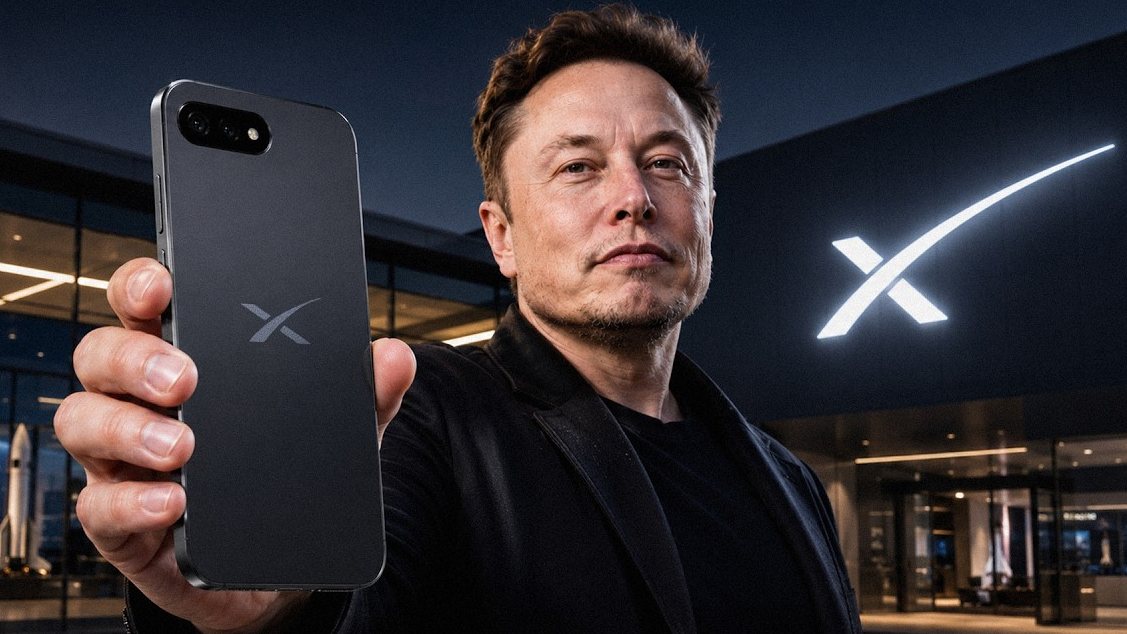
This Is How SpaceX Will Take Over The Internet: The future of global connectivity is changing faster than ever before. What once seemed like separate industries—satellite internet, autonomous transportation, electric trucks, and artificial intelligence—are now converging into a single digital ecosystem. At the center of this transformation are SpaceX and Tesla, two companies that are redefining how the world communicates, travels, and moves goods.
While many people associate SpaceX with reusable rockets and Mars missions, the company’s most valuable business today is Starlink, a satellite internet network that is rapidly becoming a global communications platform. At the same time, Tesla is reshaping transportation with its Cybercab robotaxi and Tesla Semi, creating an interconnected future powered by software, AI, and clean energy.
Starlink Is No Longer Just Satellite Internet
When Starlink first launched, its mission appeared straightforward: provide high-speed internet to remote areas where traditional broadband infrastructure was unavailable.
For years, internet access depended on cell towers, fiber-optic cables, and expensive ground infrastructure. While this system works well in cities, billions of people still experience poor connectivity because building networks in remote regions is costly.
Starlink changes that equation.
Instead of relying on ground-based infrastructure, Starlink uses thousands of Low Earth Orbit (LEO) satellites that deliver fast internet almost anywhere on Earth. This eliminates many geographical barriers and allows users to stay connected whether they are in rural communities, deserts, mountains, or even the middle of the ocean.
Today, Starlink has grown into one of SpaceX’s most profitable businesses, proving that satellite internet is becoming a major part of the world’s digital infrastructure.
Starlink Has Become SpaceX’s Biggest Revenue Driver
One of the biggest surprises in recent years is how quickly Starlink has transformed SpaceX’s business model.
Instead of earning most of its revenue from rocket launches, the company now generates a significant portion of its income through subscription-based internet services.
With millions of active users across more than 160 countries, Starlink has become one of the world’s fastest-growing broadband providers. This recurring revenue gives SpaceX the financial strength to continue investing in ambitious projects like Starship, while simultaneously expanding its communications network.
For investors, Starlink is no longer viewed as a niche satellite service. It is increasingly seen as the foundation of a future global telecommunications company.
Starlink Is Expanding Beyond Homes
Initially, Starlink targeted homeowners living in rural locations. That strategy has now expanded dramatically.
Airlines
Several major airlines have adopted Starlink Aviation, allowing passengers to enjoy high-speed Wi-Fi during flights. Instead of slow and expensive onboard internet, travelers can stream videos, browse websites, and attend virtual meetings with minimal interruptions.
Maritime Industry
Cruise ships and commercial vessels are also adopting Starlink. Reliable internet at sea was once considered a luxury, but Starlink is turning it into a standard service for both passengers and crew members.
Emergency Response
Starlink has become an important disaster recovery tool.
When hurricanes, earthquakes, or wildfires damage cellular towers and fiber networks, portable Starlink terminals can restore internet access within minutes. This enables emergency responders, hospitals, and government agencies to coordinate rescue operations more efficiently.
The Next Step: Direct-to-Phone Connectivity
Perhaps the most exciting development is Direct-to-Device (D2D) technology.
Instead of requiring a satellite dish, future smartphones could connect directly to Starlink satellites.
This means users may eventually send texts, make phone calls, or access emergency services without relying on traditional cell towers.
SpaceX has already partnered with T-Mobile to develop this technology, allowing compatible smartphones to communicate directly with satellites in orbit.
If successful, this innovation could eliminate many mobile coverage gaps worldwide and fundamentally reshape the telecommunications industry.
Could SpaceX Challenge Traditional Telecom Companies?
Industry analysts believe SpaceX is aiming much higher than simply providing internet access.
Rather than competing only with internet service providers, Starlink could eventually compete directly with major wireless carriers.
SpaceX has already invested heavily in acquiring valuable wireless spectrum and continues expanding its satellite infrastructure.
Whether the company eventually launches its own smartphone or simply integrates satellite connectivity into existing devices, the long-term objective appears clear: create a communications network that works virtually anywhere on Earth.
Tesla’s Cybercab Is Changing Urban Transportation
While SpaceX transforms global communications, Tesla is reinventing transportation.
The company’s upcoming Cybercab is designed as a fully autonomous robotaxi with no steering wheel or pedals.
Unlike traditional vehicles, Cybercab is built entirely around artificial intelligence, allowing it to transport passengers without human intervention.
Recently released technical documentation has provided valuable insights into how Tesla plans to operate this autonomous fleet safely.
Smart Fleet Management Makes Autonomous Driving Safer
One of the Cybercab’s most impressive capabilities is its centralized fleet management system.
Instead of every vehicle making decisions independently, Tesla can coordinate thousands of vehicles simultaneously.
If emergency responders close a road after an accident, Tesla can instantly create a temporary geo-fence around the affected area.
Every Cybercab approaching that location automatically receives updated routing instructions before reaching the hazard, reducing congestion and improving safety.
This level of coordination would be nearly impossible with human drivers.
Built for Emergency Situations
Tesla has designed the Cybercab to work alongside firefighters, police officers, and emergency medical teams.
The vehicle uses advanced cameras and acoustic sensors to detect emergency sirens and flashing lights.
When necessary, the Cybercab automatically:
- Pulls over safely
- Unlocks passenger doors
- Activates hazard lights
- Connects with Tesla’s remote support team
Even more impressive, Tesla has trained the vehicle’s AI to recognize hand signals from first responders and navigate temporary traffic patterns created with cones.
These features demonstrate that autonomous vehicles are being developed not just for convenience but also for real-world emergency scenarios.
Tesla Semi Is Transforming Commercial Trucking
Tesla’s innovation extends beyond passenger transportation.
The Tesla Semi is designed to disrupt the trucking industry by significantly reducing operating costs.
Unlike diesel trucks with thousands of moving mechanical components, the Tesla Semi uses a simplified electric drivetrain that requires much less maintenance.
Fleet operators also benefit from:
- Lower energy costs
- Reduced brake wear through regenerative braking
- Less downtime
- Higher operational efficiency
These savings become even more attractive over hundreds of thousands of miles.
Government Incentives Accelerate Adoption
California has introduced generous incentives that dramatically reduce the purchase price of qualifying electric commercial trucks.
For eligible fleet operators, these incentives can reduce the effective cost of a Tesla Semi by up to $240,000, making electric trucking financially competitive with conventional diesel vehicles.
Lower purchase costs combined with reduced maintenance expenses could accelerate the transition toward electric freight transportation across North America.
The Bigger Picture: Building Tomorrow’s Infrastructure
Looking at Starlink, Cybercab, and Tesla Semi individually tells only part of the story.
Together, they represent a much larger strategy.
Starlink provides the global communication network.
Cybercab creates an AI-powered transportation system.
Tesla Semi modernizes the commercial logistics industry.
Each product strengthens the others through software, connectivity, and continuous data collection.
Instead of building isolated products, SpaceX and Tesla are creating an integrated technological ecosystem where satellites, vehicles, and artificial intelligence work together seamlessly.
Conclusion
The next decade will likely be defined by companies that own the infrastructure powering digital communication and intelligent transportation. SpaceX is positioning Starlink as a worldwide communications platform capable of connecting people almost anywhere on Earth, while Tesla continues advancing autonomous mobility and electric logistics.
If these ambitious plans succeed, the internet will become more accessible, transportation will become increasingly autonomous, and freight delivery will become cleaner and more cost-effective. Rather than simply building rockets and electric cars, SpaceX and Tesla are laying the foundation for a future where connectivity, mobility, and commerce operate as one unified, software-driven ecosystem.
FAQs
1. What is Starlink?
Starlink is a satellite internet service developed by SpaceX that uses thousands of low Earth orbit (LEO) satellites to provide high-speed internet access worldwide, especially in remote and underserved areas.
2. How is Starlink different from traditional internet providers?
Unlike traditional internet services that rely on fiber-optic cables and cell towers, Starlink delivers internet directly from satellites orbiting Earth, allowing users to stay connected almost anywhere.
3. Can Starlink replace mobile networks?
Starlink is working on Direct-to-Device (D2D) technology that allows compatible smartphones to connect directly to satellites. While it may complement or replace some mobile services in the future, it is not yet a complete replacement for existing cellular networks.
4. Why is Starlink considered important for the future of the internet?
Starlink has the potential to provide global internet coverage, reduce connectivity gaps, improve disaster response, and bring reliable internet to regions where traditional infrastructure is unavailable.
5. Which industries are using Starlink today?
Starlink is widely used in aviation, maritime, emergency services, businesses, rural communities, and government organizations that require reliable internet access in challenging environments.
6. What is Tesla’s Cybercab?
The Tesla Cybercab is an upcoming fully autonomous robotaxi designed without a steering wheel or pedals. It uses artificial intelligence and Tesla’s Full Self-Driving technology to transport passengers without human intervention.
7. How does the Cybercab improve road safety?
Cybercab can detect emergency vehicles, obey traffic signals, recognize first responder hand gestures, automatically reroute around incidents, and communicate with Tesla’s remote support team during emergencies.
8. What happens if a Tesla Cybercab is involved in an accident?
If a serious collision occurs, the Cybercab automatically parks safely, activates hazard lights, unlocks its doors, lowers its windows for ventilation, and contacts Tesla’s emergency support services.
9. What is the Tesla Semi?
The Tesla Semi is an all-electric Class 8 commercial truck built for long-distance freight transportation. It offers lower operating costs, reduced maintenance, and zero tailpipe emissions compared to diesel trucks.
10. Why is the Tesla Semi considered a game-changer?
The Tesla Semi combines lower fuel costs, fewer moving parts, regenerative braking, and reduced maintenance, helping fleet operators significantly reduce their total cost of ownership.
11. How far can the Tesla Semi travel on a single charge?
The Tesla Semi is designed to deliver an estimated 500-mile driving range on a full charge, making it suitable for many regional freight routes.
12. How are SpaceX and Tesla connected?
Both companies share Elon Musk’s vision of creating sustainable, technology-driven infrastructure. While they operate independently, they complement each other through innovations in connectivity, transportation, artificial intelligence, and energy.
13. Could SpaceX become a global telecommunications company?
Many industry experts believe SpaceX is positioning Starlink to become a major player in the global telecommunications industry, potentially competing with traditional wireless carriers through satellite-based mobile connectivity.
14. How will AI influence the future of transportation?
Artificial intelligence enables vehicles to navigate roads, avoid obstacles, optimize routes, detect emergencies, and continuously improve driving performance, making transportation safer and more efficient.
15. What does the future look like for SpaceX and Tesla?
SpaceX and Tesla are building an integrated ecosystem where satellite communications, autonomous vehicles, electric transportation, and AI-powered logistics work together to reshape how people connect, travel, and conduct business worldwide.
Read More:
- SpaceX gets initial stock coverage from Tesla’s biggest bull
- Tesla gets its latest short from Michael Burry: ‘Happy it jumped back to this level’
- Tesla Optimus project fires up as Musk sees production line progress
- Tesla’s $119B TeraFab Secret Finally Revealed
- New $20K Tesla Model 2 Senior Edition Aluminum Battery 6-Min Charge & Model 3 Shock
1 thought on “This Is How SpaceX Will Take Over The Internet”