
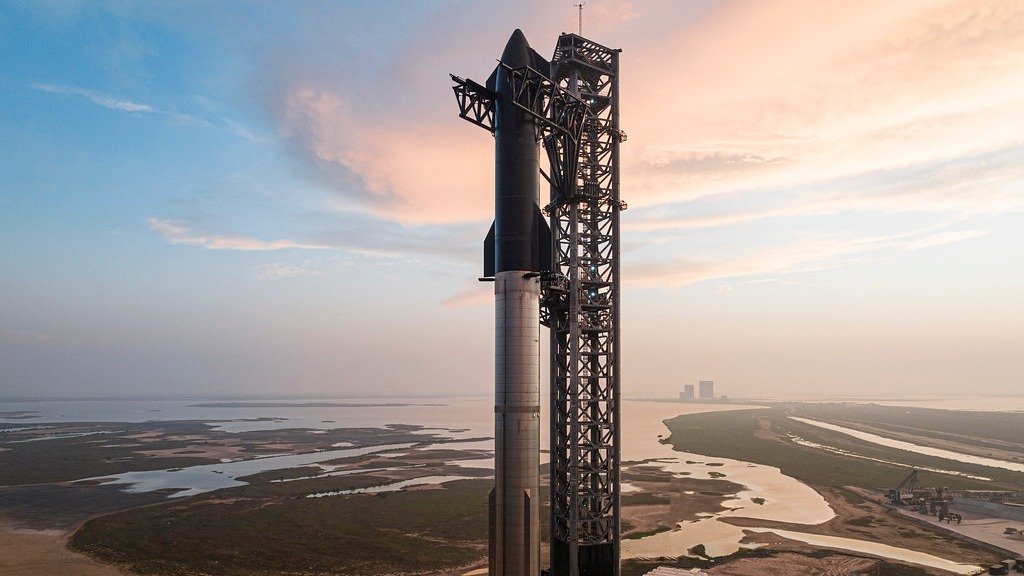
Wow! Starship Flight 15 will 24 Hours on Orbit: SpaceX is entering an exciting new phase in its ambitious Starship development program, with Flights 15 and 16 expected to push the world’s most powerful launch system toward greater reusability, longer orbital missions, and expanded launch operations. These upcoming missions represent important milestones in the company’s effort to transform space transportation through rapid rocket recovery and high-frequency launches.
Among the most anticipated developments is Starship Flight 15’s planned 24-hour orbital mission, which could significantly expand the spacecraft’s operational capabilities. SpaceX is also preparing to advance its recovery technology, potentially bringing both the Super Heavy booster and Starship upper stage back for recovery during a single mission.
Meanwhile, Flight 16 could introduce Starship operations at Launch Complex 39A (LC-39A) in Florida, opening a new chapter in the program’s expansion beyond Starbase, Texas.
Together, these missions highlight SpaceX’s long-term vision of making spaceflight more affordable, reliable, and accessible while supporting commercial satellite deployment, lunar exploration, and future interplanetary missions.
Starship Flight 15: Aiming for 24 Hours in Orbit
One of the biggest objectives associated with Starship Flight 15 is extending the spacecraft’s orbital endurance to approximately 24 hours. According to the information presented in the referenced report, SpaceX is planning a substantially longer mission profile than the roughly 10-hour duration associated with Flight 14.
This extended orbital mission would provide valuable opportunities to evaluate Starship’s ability to remain in space for longer periods while maintaining the performance of its critical onboard systems.
Why Is a 24-Hour Orbital Mission Important?
Keeping a spacecraft in orbit for an extended period involves more than simply reaching the desired altitude. Engineers must consider propulsion systems, power generation, thermal management, navigation, communications, and the spacecraft’s ability to withstand the demanding conditions of space.
For Starship, a longer mission could help SpaceX gather important engineering data and better understand how the vehicle performs during extended orbital operations.
These capabilities are particularly important for future missions involving satellite deployment, orbital refueling, lunar transportation, and deep-space exploration.
Although a 24-hour orbital mission would represent a significant development milestone, it would not independently demonstrate that Starship is ready for routine operational service. Additional testing would still be necessary to establish reliability and repeatability.
Starship Flight 15 Could Attempt a Historic Dual-Stage Recovery
Another major objective for Flight 15 is the potential recovery of both rocket stages during a single mission.
Starship consists of two primary components: the Super Heavy booster, which provides the thrust required to leave the launch pad, and the Starship upper stage, which continues the journey into space.
SpaceX has developed an innovative recovery approach using its launch tower and mechanical arms, often called chopsticks. Rather than relying exclusively on conventional landing legs, the system is designed to catch returning vehicles directly at the launch site.
Catching the Starship Upper Stage
While Super Heavy has demonstrated tower catches, recovering the upper-stage Starship presents a different set of engineering challenges.
After completing its mission in space, Starship must survive the intense heating associated with atmospheric reentry. Its thermal protection system must withstand extreme temperatures while protecting the vehicle’s structure and internal systems.
The spacecraft must then control its descent, transition from a horizontal flight orientation to a vertical position, and approach the launch tower with sufficient precision for a potential catch.
A successful Starship tower catch would be an important step toward full vehicle reusability. However, the attempt remains a demanding engineering objective, and its success depends on the spacecraft’s performance throughout the entire flight.
Why Full Reusability Matters
Traditional launch vehicles often discard major components after launch or require extensive recovery and refurbishment operations.
SpaceX aims to change this model by recovering and reusing both stages of Starship.
If the company can demonstrate reliable recovery, rapid refurbishment, and repeated launches, it could reduce the cost and turnaround time associated with transporting payloads into space.
The ultimate goal is to make Starship a highly reusable transportation system capable of supporting a wide range of commercial and government missions.
Starship Flight 16 Could Expand Launch Operations to Florida
While Flight 15 focuses on orbital endurance and recovery technology, Starship Flight 16 could mark another major milestone by expanding operations to Florida.
The mission is associated with Booster 23 and Ship 43, according to the referenced report, with an early-to-mid-December launch timeframe discussed as a target.
One potential launch location is Kennedy Space Center’s Launch Complex 39A, a historic facility that has supported several major American spaceflight programs.
Expanding Starship operations to Florida would allow SpaceX to develop a second major launch location for its next-generation rocket system.
What Infrastructure Does LC-39A Need?
Launching Starship requires significantly different infrastructure from that used for smaller launch vehicles.
The company must develop and integrate several major systems, including:
- A heavy-duty launch mount capable of supporting the enormous rocket during launch preparations.
- A powerful water-deluge system designed to manage the intense heat and acoustic energy generated during liftoff.
- Expanded propellant infrastructure for storing and supplying the liquid methane and liquid oxygen used by Starship.
- A dedicated launch and catch tower designed to support vehicle operations and potential booster recovery.
- Ground support equipment for transporting, preparing, testing, and servicing the launch vehicles.
Building this infrastructure requires extensive engineering, construction, testing, and regulatory coordination.
SpaceX must also address the logistical challenge of transporting large rocket components from Texas to Florida. Maritime transportation using specialized barges could play an important role in moving flight hardware between the company’s facilities.
Could Starship Connect Florida and Texas?
The referenced report describes a potential mission concept connecting Florida’s launch facilities with Starbase in Texas.
Under this concept, the Super Heavy booster could return to its Florida launch site while the Starship upper stage completes its orbital journey and returns to Texas.
Such a profile would represent a complex operational demonstration involving launch, stage separation, orbital flight, atmospheric reentry, and recovery across different locations.
However, this should be understood as a reported mission concept rather than a confirmed operational capability. Its implementation would depend on mission design, safety requirements, regulatory approvals, and successful testing.
Parallel Testing Is Accelerating Starship Development
One of the most important aspects of SpaceX’s current development strategy is its emphasis on parallel testing.
Instead of completing every test for one vehicle before beginning work on another, the company is processing hardware for multiple missions simultaneously.
This approach can improve production efficiency, increase the use of testing facilities, and reduce delays between development milestones.
Flight 15 Hardware Advances Through Testing
According to the supplied report, Flight 15 hardware includes Ship 42 and Booster 22.
The vehicles have progressed through testing activities involving cryogenic pressure checks, engine tests, and simulated mechanical operations associated with the launch tower’s recovery system.
The report also describes three major static fire tests conducted across consecutive days in late October:
- October 25: Booster 22 underwent a static fire test.
- October 26: Ship 42 completed a single-engine test.
- October 27: Ship 42 underwent a six-engine static fire test.
Static fire tests allow engineers to evaluate propulsion systems while a vehicle remains secured to the ground. These tests help verify engine performance, propellant delivery, and vehicle systems before a launch attempt.
Successful ground testing is an important prerequisite for flight readiness, although it does not guarantee that every system will perform as expected during flight.
Flight 16 Development Continues Simultaneously
While Flight 15 hardware advances, Ship 43 is also undergoing preparations for the next mission.
The reported activities include cryogenic testing and simulated launch-tower catch checks.
Testing multiple Starship vehicles in parallel could help SpaceX increase its launch cadence over time. However, achieving weekly or daily launches will require more than faster testing. The company must also demonstrate reliable vehicle recovery, efficient refurbishment, dependable ground infrastructure, and consistent launch operations.
How Starship Could Transform the Commercial Space Industry
SpaceX has already established a major position in the commercial launch market through its Falcon 9 rocket fleet. Starship represents a more ambitious effort to increase payload capacity while reducing the cost of accessing space.
Designed as a fully reusable, two-stage transportation system, Starship aims to carry substantially larger payloads than existing operational launch vehicles.
If SpaceX achieves its long-term performance and reusability objectives, the rocket could change how satellites, cargo, and other equipment are transported into orbit.
Faster Starlink Satellite Deployment
One potential application is the expansion of SpaceX’s Starlink satellite constellation.
A larger payload capacity could allow individual launches to deploy more satellites or transport larger next-generation spacecraft.
Combined with frequent launches, this capability could help SpaceX expand network capacity, improve coverage, and replace older satellites more efficiently.
Nevertheless, these benefits depend on Starship demonstrating reliable payload deployment and achieving its intended operational performance.
Supporting NASA’s Artemis Program
Starship is also being developed for a major role in NASA’s Artemis lunar exploration architecture.
NASA selected a Starship-derived vehicle as its Human Landing System for planned crewed lunar landing missions.
The system is intended to transport astronauts between lunar orbit and the Moon’s surface. Achieving this objective will require substantial additional development, including demonstrations of orbital refueling and other mission-critical technologies.
Successful progress on Flights 15 and 16 could contribute valuable operational experience, but these flights alone would not establish readiness for crewed lunar landings.
Military Logistics and Future Space Transportation
Starship’s potential applications extend beyond commercial satellites and lunar exploration.
The U.S. Department of Defense has explored concepts involving rapid global transportation and the movement of cargo through space.
A reusable vehicle capable of carrying large payloads could eventually support new logistics concepts, although substantial technical, economic, and operational challenges remain.
Future missions to Mars also depend on advancing the technologies needed for reliable launch, orbital refueling, long-duration spaceflight, and safe atmospheric entry.
Conclusion: Flights 15 and 16 Could Shape Starship’s Future
Starship Flights 15 and 16 represent important steps in SpaceX’s effort to develop a fully reusable, high-capacity launch system.
Flight 15 is expected to focus on extended orbital operations and potentially ambitious recovery objectives, including an attempt to catch the Starship upper stage at the launch tower. Its reported 24-hour orbital profile could provide valuable information about the spacecraft’s ability to support longer missions.
Flight 16, meanwhile, could help advance SpaceX’s plans to expand Starship operations to Florida, provided the necessary infrastructure and operational requirements are satisfied.
Equally important is the company’s parallel testing strategy, which aims to move multiple vehicles through development simultaneously and establish the foundation for a higher launch cadence.
The road to routine Starship operations remains challenging. Reliable recovery, rapid refurbishment, orbital refueling, payload deployment, and regulatory approval will all be essential to achieving the program’s long-term goals.
Nevertheless, these upcoming missions illustrate the scale of SpaceX’s ambitions. If Starship achieves dependable full reusability and frequent launches, it could reshape commercial spaceflight, accelerate lunar exploration, and open new possibilities for transporting cargo beyond Earth.
FAQs
1. What is SpaceX Starship Flight 15?
Starship Flight 15 is a planned test mission in SpaceX’s Starship development program. According to the provided report, the mission is expected to focus on extended orbital operations, vehicle performance, and potential recovery of both the Super Heavy booster and Starship upper stage.
2. Why is Starship Flight 15 targeting 24 hours in orbit?
The planned 24-hour orbital mission is intended to evaluate Starship’s ability to remain in space for an extended period. It could provide valuable data about onboard systems, thermal management, propulsion, navigation, and spacecraft endurance.
3. What makes Starship Flight 15 different from previous test flights?
Flight 15 is expected to build on previous testing by targeting a longer orbital duration and potentially attempting an ambitious recovery profile involving both rocket stages. These objectives could help SpaceX advance its goal of developing a fully reusable launch system.
4. Will SpaceX catch both Starship rocket stages during Flight 15?
SpaceX is reportedly targeting the recovery of both stages during the mission. The Super Heavy booster would use the launch tower’s mechanical arms, while the Starship upper stage could attempt a similar tower catch. Both-stage recovery remains a challenging objective, and success will depend on the vehicle’s flight performance and recovery systems.
5. How does the Starship launch tower catch system work?
The Starship launch tower uses large mechanical arms, commonly called chopsticks, to catch a returning rocket. The vehicle must approach the tower at the correct position and speed, allowing the arms to secure it for inspection and subsequent processing.
6. What is the role of Ship 42 and Booster 22 in Flight 15?
According to the supplied report, Ship 42 (S42) and Booster 22 (B22) are the vehicles associated with Flight 15. They have undergone testing intended to evaluate propulsion performance, structural integrity, and readiness for the next stages of the launch campaign.
7. What is Starship Flight 16?
Starship Flight 16 is the subsequent test mission discussed in SpaceX’s development plans. The supplied report associates the mission with Ship 43 and Booster 23, with preparations focused on vehicle testing and potentially expanding Starship operations to Florida.
8. Could Starship Flight 16 launch from Florida?
Flight 16 could be associated with preparations for Starship operations at Launch Complex 39A (LC-39A) at Kennedy Space Center in Florida. However, the proposed launch timing and operational plans should be treated as targets described in the report rather than confirmed launch arrangements.
9. What infrastructure does SpaceX need to launch Starship from Florida?
Starship operations require substantial ground infrastructure, including a heavy-duty launch mount, propellant storage facilities, water-deluge systems, launch support equipment, and a suitable tower for vehicle operations and potential recovery. Developing these systems is essential to supporting Starship launches from Florida.
10. How does SpaceX transport Starship hardware from Texas to Florida?
SpaceX can use specialized maritime transportation to move large rocket components between its facilities. Transporting Starship hardware from Starbase in Texas to Florida requires careful logistical planning, secure handling, and coordination with the receiving launch site.
11. What is parallel testing in the Starship development program?
Parallel testing means preparing and testing multiple vehicles at the same time rather than completing one entire development campaign before starting another. This strategy can improve facility utilization, streamline production, and potentially shorten the time between test flights.
12. Why are static fire tests important for Starship?
Static fire tests allow engineers to ignite rocket engines while the vehicle remains secured to the ground. These tests help evaluate engine performance, propellant systems, and other critical components before flight. Passing a static fire test is an important milestone, although it does not guarantee a successful launch.
13. How could Starship reduce the cost of space launches?
Starship is designed for full two-stage reusability, meaning both the Super Heavy booster and Starship spacecraft are intended to be recovered and reused. If SpaceX can achieve reliable recovery and rapid refurbishment, the system could reduce launch costs and support more frequent missions.
14. How could Starship support SpaceX’s Starlink satellite constellation?
Starship’s large payload capacity could enable the deployment of more satellites per launch or support larger, more capable spacecraft. Combined with a higher launch cadence, this capability could help SpaceX expand and maintain its Starlink satellite constellation more efficiently.
15. What role could Starship play in NASA’s Artemis program?
NASA selected a Starship-derived vehicle as its Human Landing System for planned crewed lunar landing missions under the Artemis program. The vehicle is intended to transport astronauts between lunar orbit and the Moon’s surface. Achieving this goal requires additional testing and demonstrations of critical technologies, including orbital refueling.
16. What is the long-term goal of SpaceX’s Starship program?
SpaceX aims to develop a fully reusable, high-capacity transportation system capable of supporting commercial satellite launches, lunar exploration, cargo delivery, and eventually missions to Mars. Flights 15 and 16 could contribute to this goal by advancing vehicle recovery, orbital endurance, testing efficiency, and launch infrastructure development.
Read More:
- Elon Musk calls Earth’s data centers “peanuts” next to what SpaceX is planning in orbit
- Tesla Optimus project fires up as Musk sees production line progress
- 2026 Tesla Aluminum-ion Battery is Finally HERE in Tesla Model 2: Destroying The Mass Market! P1
- SpaceX Stunned NASA with Big Starship Progress towards 2027 Artemis
- Elon Musk SHOCKED New Tesla Semi Caught FIRE, Closes Freeway For 10 Hours