
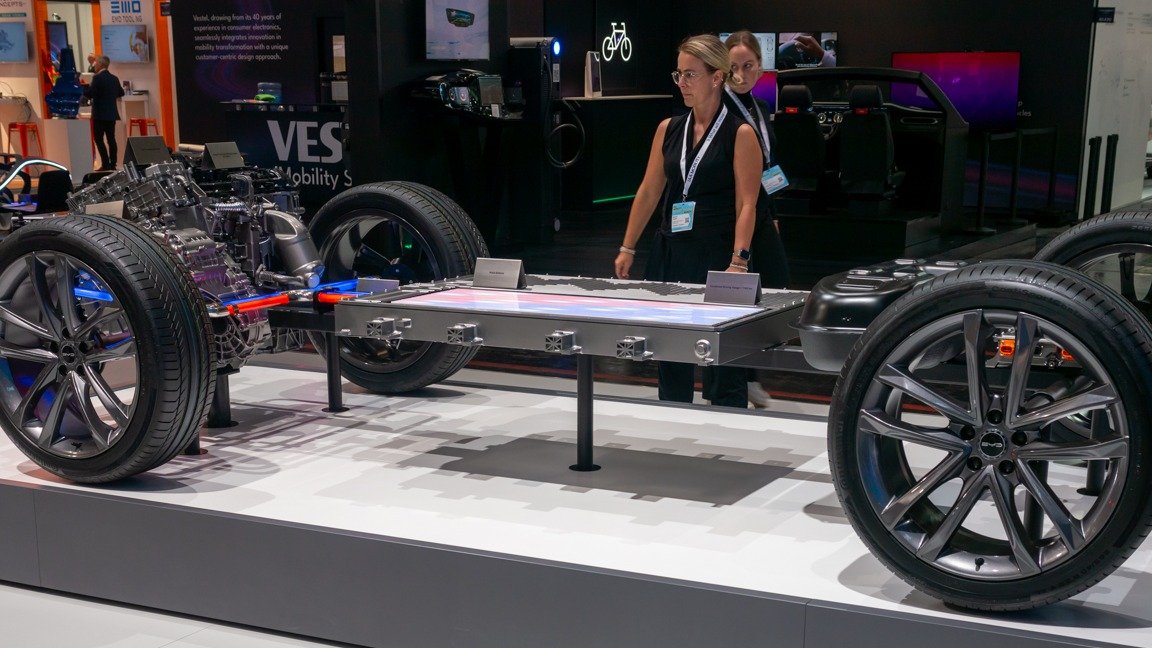
Elon Musk Unveils NEXT-GEN Battery! 4 HUGE Upgrades: The electric vehicle industry is entering an exciting new era as automakers push beyond everyday transportation toward extreme performance, ultra-fast charging, and advanced battery technology. At the center of this transformation is Tesla’s next-generation Roadster, an ambitious electric supercar designed to combine breathtaking acceleration with groundbreaking engineering.
While much of the attention surrounding the upcoming Roadster has focused on futuristic technologies, including SpaceX-inspired cold gas thrusters and advanced aerodynamic systems, its most important innovations may be hidden beneath its bodywork. Tesla’s battery and electrical architecture are expected to deliver extraordinary power while addressing some of the biggest challenges facing high-performance electric vehicles.
According to Tesla’s vehicle engineering leadership, the Roadster incorporates lessons learned from nearly two decades of electric vehicle development. However, unlike the Model 3 and Model Y, which prioritize affordability, efficiency, and everyday practicality, the Roadster is being engineered for maximum performance without compromising battery protection.
Here are the four major battery upgrades that could make Tesla’s next-generation Roadster a significant milestone in electric vehicle technology.
1. Dual-Sided Battery Cooling for Extreme Performance
One of the biggest challenges in designing a high-performance electric supercar is managing the enormous amount of heat generated during acceleration and rapid charging.
Tesla’s next-generation Roadster is associated with ambitious performance targets of approximately 1,341 horsepower and 1,302 lb-ft of torque. Delivering this level of power requires the battery to release enormous amounts of electrical energy in a very short period.
However, high electrical loads generate heat inside battery cells. If temperatures rise too quickly, the battery management system may reduce power output to prevent overheating and protect long-term battery health.
How Dual-Sided Cooling Works
Tesla’s proposed battery design features a dual-sided coolant channel architecture that allows coolant to remove heat from both sides of individual battery cells.
Unlike conventional cooling arrangements that primarily transfer heat through one surface, this approach is designed to improve thermal transfer throughout the battery pack.
The potential benefits include:
- Improved heat dissipation during aggressive acceleration.
- More consistent battery temperatures across the pack.
- Reduced risk of localized overheating.
- Better support for repeated high-power driving.
- Improved thermal management during rapid charging.
For an electric supercar, these improvements could be particularly important. Drivers expect consistent performance during repeated acceleration runs, not just one impressive launch.
By controlling temperatures more effectively, Tesla aims to make high power output more sustainable. However, the effectiveness of this system will ultimately depend on production hardware, driving conditions, and real-world testing.
2. Lightweight Aluminum Cells and Titanium Protection
Battery cooling systems can improve performance, but they also introduce additional hardware and weight. In a supercar, every extra kilogram matters because vehicle mass directly influences acceleration, braking, handling, and efficiency.
Tesla’s next-generation Roadster battery design addresses this challenge through lightweight materials and carefully engineered structural protection.
Aluminum Battery Cell Housings
The proposed design uses aluminum cell canisters instead of conventional steel housings.
Aluminum offers two important advantages: it generally weighs less than steel and transfers heat efficiently. These characteristics make it attractive for battery systems that must balance thermal performance with weight reduction.
A lighter battery assembly could help the Roadster maintain its performance-focused character while accommodating the additional cooling hardware required for high-power operation.
Titanium Battery Protection
Another notable feature is the use of a titanium protection plate above the battery assembly.
Titanium is known for its high strength-to-weight ratio and corrosion resistance. Its application in a specialized battery enclosure could help Tesla balance structural protection with mass reduction.
The underside of the battery assembly is described as using aluminum protection designed to help withstand road debris and potential impacts.
Together, these materials could support a battery structure that combines durability, thermal management, and weight-conscious engineering.
However, the final safety performance will depend on the complete enclosure design, crash testing, manufacturing quality, and production specifications.
3. Advanced 800V to 1,000V Electrical Architecture
One of the most significant potential upgrades is the Roadster’s move toward a high-voltage electrical architecture in the 800V to 1,000V range.
Traditional electric vehicles often use 400V electrical systems. Higher-voltage architectures can provide substantial advantages when a vehicle needs to transfer enormous amounts of electrical power.
Why Higher Voltage Matters
Electrical power depends on voltage and current. For the same power output, increasing voltage reduces the amount of current required.
For example, delivering one megawatt of electrical power would theoretically require approximately:
- 2,500 amps at 400 volts
- 1,250 amps at 800 volts
- 1,000 amps at 1,000 volts
These figures assume ideal power transfer and do not account for conversion losses or system-specific operating conditions.
Reducing current can help limit resistive heat losses in cables and electrical connections. It may also allow engineers to optimize the size and weight of certain electrical components.
Benefits of a High-Voltage Battery System
A higher-voltage architecture could offer several advantages:
- Reduced electrical losses at comparable power levels.
- Improved support for high-power charging.
- Potential reductions in cable weight and size.
- More efficient delivery of substantial electrical power.
- Better integration with advanced power electronics.
For the next-generation Roadster, this architecture could be essential to achieving both extreme performance and shorter charging times.
Nevertheless, higher voltage alone does not guarantee faster charging. Battery chemistry, cooling capacity, charging equipment, and the vehicle’s power-management system must work together to deliver the expected results.
4. Megawatt Charging and a Potential 10-Minute Recharge
Charging speed remains one of the most important considerations for electric vehicle buyers. Even a high-performance supercar becomes less convenient if drivers must spend extended periods waiting for its battery to recharge.
Tesla’s proposed Roadster specifications point toward peak charging power ranging from 500 kW to as much as 1 megawatt, with a potential charging window of approximately 10 minutes from 15% to 85%.
If achieved under suitable conditions, this would represent an impressive development for an electric passenger vehicle.
How Megawatt Charging Could Transform EV Ownership
Megawatt charging involves delivering electrical power at exceptionally high rates. At these power levels, battery temperature management becomes critical because rapid energy transfer generates substantial heat.
The combination of high-voltage architecture and advanced battery cooling could help the Roadster accept greater charging power while maintaining safe operating temperatures.
Potential advantages include:
- Shorter charging stops during long-distance journeys.
- Improved convenience for high-performance EV owners.
- Better integration between charging infrastructure and advanced batteries.
- Reduced waiting time when compatible high-power charging stations are available.
However, peak charging power is not the same as the average power delivered throughout an entire charging session.
A battery typically accepts different amounts of power at different charge levels. Temperature, battery condition, charger capability, and charging conditions all influence the final result.
Therefore, the proposed 10-minute charging window should be treated as a target rather than a verified production capability until independently tested vehicles demonstrate it.
When Will Tesla’s Next-Generation Roadster Arrive?
Despite the excitement surrounding its engineering ambitions, the Tesla Roadster’s production timeline remains a major question.
First introduced in 2017, the next-generation Roadster has experienced repeated delays as Tesla continues development. Its original delivery expectations were not met, leaving reservation holders waiting for a finalized production schedule.
The vehicle is also expected to be a specialized, low-volume product rather than a mass-market model like the Model 3 or Model Y.
Production Challenges Tesla Must Overcome
Bringing an advanced electric supercar to market involves much more than developing an impressive prototype.
Tesla must validate its battery architecture, finalize the electrical system, complete safety testing, establish manufacturing processes, and ensure that the vehicle performs reliably under real-world conditions.
Specialized configurations, including performance-focused and thrust-equipped variants, could introduce additional engineering and manufacturing complexity.
The company must also demonstrate that its proposed battery technologies can be produced consistently at scale, even if annual production remains relatively limited.
The 2028 production window has been discussed as a potential target, but buyers should distinguish between projected timelines and a confirmed customer delivery schedule.
Until Tesla publishes definitive production details, the Roadster’s final specifications, pricing, manufacturing location, and delivery dates remain subject to change.
Conclusion: Is Tesla Redefining Electric Supercar Technology?
Tesla’s next-generation Roadster represents an ambitious attempt to push electric vehicle engineering beyond conventional performance limits.
Its proposed dual-sided battery cooling, lightweight aluminum construction, titanium protection, high-voltage electrical architecture, and megawatt charging capability highlight four major areas where battery technology could evolve.
These innovations are designed to address some of the biggest challenges facing high-performance EVs: heat management, excessive weight, electrical losses, and charging time.
If Tesla successfully integrates these technologies into a production-ready vehicle, the Roadster could demonstrate how advanced battery engineering can support both extraordinary performance and improved charging convenience.
Nevertheless, important questions remain about production readiness, real-world charging performance, long-term battery durability, and the final specifications.
The real breakthrough will not simply be a faster electric supercar. It will be proving that these advanced technologies can work together reliably in a vehicle customers can actually buy.
FAQs
1. What are the four major upgrades in Tesla’s next-generation Roadster battery?
The four major upgrades include dual-sided battery cooling, lightweight aluminum cell housings with titanium protection, an advanced 800V to 1,000V electrical architecture, and megawatt charging capability. These technologies are intended to improve thermal management, performance, efficiency, and charging speed.
2. How much horsepower will the next-generation Tesla Roadster produce?
The next-generation Tesla Roadster has been associated with a targeted output of approximately 1,341 horsepower and 1,302 lb-ft of torque. These figures reflect the specifications described in the provided technical breakdown and should not be considered independently verified production specifications.
3. What is dual-sided battery cooling in Tesla’s Roadster?
Dual-sided battery cooling is a proposed thermal management approach in which coolant removes heat from both sides of individual battery cells. This design aims to maintain more consistent battery temperatures and support high-power acceleration and rapid charging.
4. Why does battery cooling matter in high-performance electric vehicles?
Battery cooling is essential because high electrical loads generate heat inside battery cells. Effective thermal management helps prevent overheating, maintain performance, protect battery health, and reduce the likelihood of power limitations during demanding driving conditions.
5. Why is Tesla using aluminum in the next-generation Roadster battery?
Aluminum is lightweight and offers good thermal conductivity, making it useful for applications that require both weight reduction and heat management. Using aluminum cell housings could help Tesla balance battery cooling requirements with the performance demands of an electric supercar.
6. What is the purpose of titanium protection in Tesla’s Roadster battery?
Titanium is reportedly used in a protective plate above the battery assembly. Its high strength-to-weight ratio makes it a potential solution for providing structural protection without adding as much weight as some conventional materials.
7. Will the next-generation Tesla Roadster use an 800V or 1,000V battery system?
The technical breakdown describes a potential 800V to 1,000V electrical architecture. A higher-voltage system can reduce current requirements at the same power level, potentially lowering electrical losses and supporting faster charging. The final production configuration must be confirmed by Tesla.
8. How does a 1,000V electrical system improve electric vehicle performance?
A 1,000V electrical system can deliver a given amount of power with less current than a lower-voltage system. This can reduce resistive heat losses in cables and connections and help engineers optimize the vehicle’s electrical components for high-power operation.
9. How fast could the next-generation Tesla Roadster charge?
The proposed charging target is approximately 10 minutes to charge from 15% to 85%, with peak charging power potentially reaching 500 kW to 1 megawatt. Actual charging times will depend on battery temperature, charging infrastructure, battery condition, and the final production specifications.
10. What is megawatt charging, and why is it important for Tesla?
Megawatt charging refers to charging at power levels approaching or reaching one million watts. For high-performance electric vehicles, this technology could significantly reduce charging stops, provided the battery, cooling system, electrical architecture, and charging station can support such power levels.
11. Will Tesla’s next-generation battery improve battery life?
Advanced thermal management may help protect battery cells from excessive heat, which can contribute to degradation. However, long-term battery life depends on several factors, including cell chemistry, charging habits, temperature, operating conditions, and the frequency of high-power charging. Production testing will be needed to establish the Roadster battery’s durability.
12. When will the next-generation Tesla Roadster be released?
The next-generation Roadster has experienced multiple delays since its introduction in 2017. 2028 has been discussed as a potential production target, but a firm customer delivery date should not be assumed without an official confirmation from Tesla.
13. How will the new Roadster battery differ from the Tesla Model 3 and Model Y batteries?
The Model 3 and Model Y prioritize a balance of efficiency, affordability, durability, and everyday usability. The Roadster’s proposed battery architecture places greater emphasis on high power output, aggressive thermal management, lightweight construction, and exceptionally fast charging.
14. Will the next-generation Tesla Roadster feature SpaceX-inspired technology?
The Roadster has been associated with SpaceX-inspired cold gas thrusters and other ambitious performance concepts. These features are intended to push the vehicle beyond conventional electric supercar capabilities, but their final availability, configuration, and production specifications require official confirmation.
15. Why is Tesla’s next-generation Roadster important for the electric vehicle industry?
The Roadster could demonstrate how advanced battery cooling, higher-voltage electrical systems, lightweight materials, and ultra-fast charging can work together in a high-performance electric vehicle. If these technologies reach production successfully, they could offer valuable engineering lessons for future electric cars, although their adoption will depend on cost, safety, manufacturing feasibility, and charging infrastructure.
Read More:
- Elon Musk calls Earth’s data centers “peanuts” next to what SpaceX is planning in orbit
- Tesla Optimus project fires up as Musk sees production line progress
- 2026 Tesla Aluminum-ion Battery is Finally HERE in Tesla Model 2: Destroying The Mass Market! P1
- SpaceX Stunned NASA with Big Starship Progress towards 2027 Artemis
- Elon Musk SHOCKED New Tesla Semi Caught FIRE, Closes Freeway For 10 Hours