
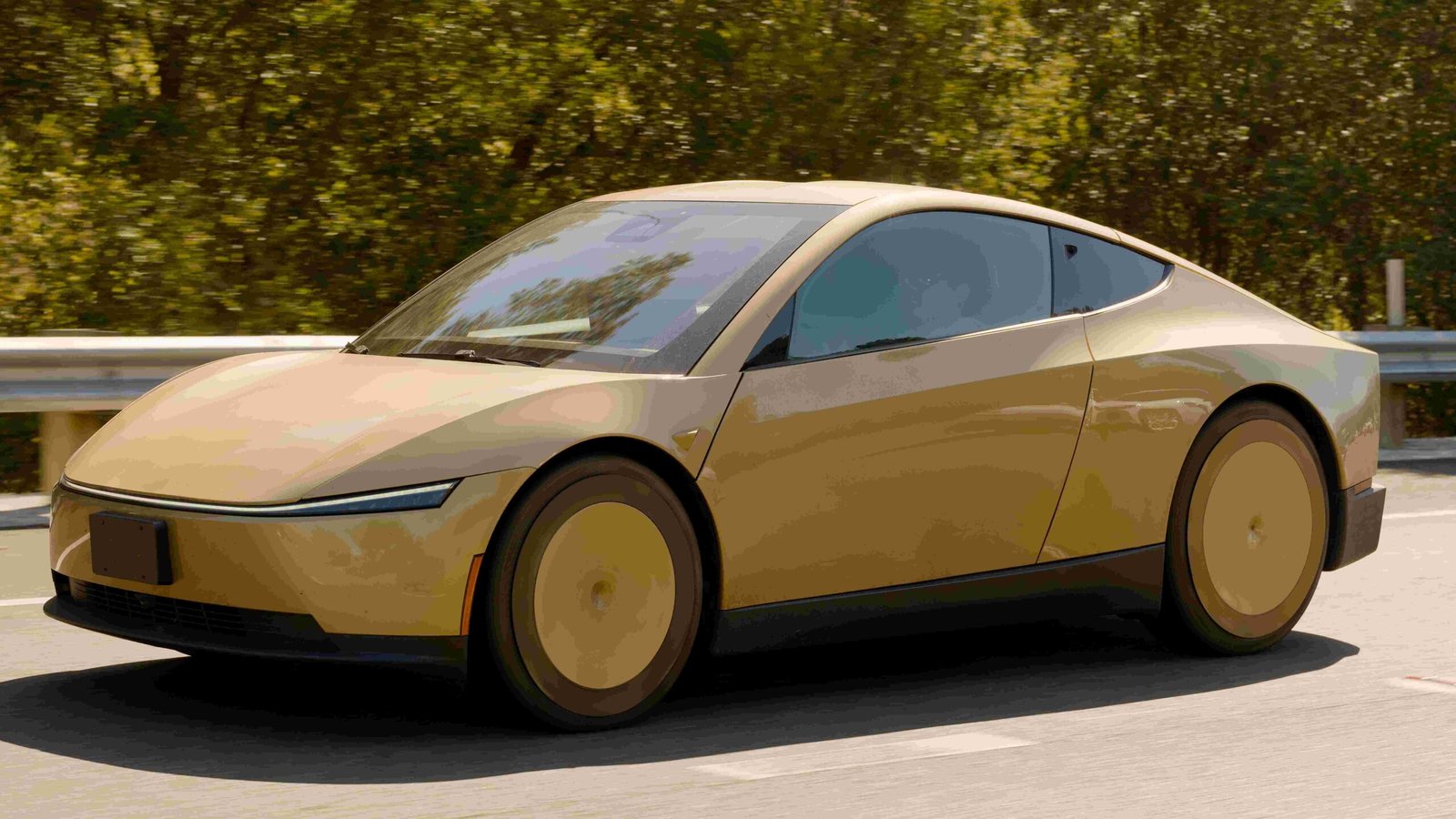
2027 Tesla Cybercab Robotaxi Mass Operation Amazing UPDATE: The future of transportation is rapidly evolving, and Tesla is pushing the boundaries of autonomous driving, electric vehicle manufacturing, and high-performance automotive engineering. With the expansion of its Cybercab robotaxi fleet and growing anticipation surrounding the next-generation Tesla Roadster, the company is pursuing a new era of intelligent, affordable, and sustainable mobility.
Tesla’s vision extends far beyond manufacturing electric cars. By combining artificial intelligence (AI), autonomous driving technology, advanced battery systems, and innovative manufacturing processes, the company aims to transform how people travel and how vehicles are produced.
The latest developments surrounding the 2027 Tesla Cybercab Robotaxi mass operation highlight the potential for large-scale autonomous transportation, while the upcoming Roadster demonstrates Tesla’s continued ambition to deliver extraordinary electric supercar performance.
Tesla Cybercab Robotaxi: A Major Step Toward Mass Operation
Rapid Robotaxi Fleet Expansion in Texas
Tesla’s autonomous ride-hailing initiative has attracted significant attention as the company works to expand its robotaxi operations. Austin, Texas, has become an important testing and deployment location for Tesla’s autonomous transportation strategy.
According to the supplied report, Tesla’s initial public-service fleet consisted of approximately 38 vehicles before expanding to more than 300 vehicles within 30 weeks. If sustained, this growth would represent a significant increase in the company’s ability to serve passengers and gather real-world driving data.
A larger fleet could help Tesla evaluate its autonomous driving software across different traffic conditions, road layouts, weather patterns, and passenger demands. Every additional vehicle potentially contributes valuable information that can help engineers improve the system.
However, fleet growth does not automatically mean fully driverless operation in every situation. Regulatory requirements, safety procedures, and the availability of remote assistance can influence how robotaxi services operate.
Dallas and Other Cities Could Expand Tesla’s Reach
Austin serves as an important foundation for Tesla’s robotaxi ambitions, but expansion into additional metropolitan areas could dramatically increase the technology’s reach.
The supplied report identifies Dallas as a potential next destination and mentions vehicle activity in locations such as Houston and Miami. Expansion into these cities would give Tesla opportunities to evaluate its system in different urban environments.
Dallas, for example, features extensive road networks, busy highways, suburban communities, and commercial districts. Operating successfully across these conditions would require reliable navigation, effective hazard detection, and consistent autonomous decision-making.
For Tesla, the long-term goal is to establish a scalable robotaxi network that connects passengers with autonomous vehicles through a convenient ride-hailing platform.
Nevertheless, expansion timelines and operational capabilities should be confirmed through official announcements, as sightings of vehicles do not necessarily establish that a commercial service has launched.
Tesla Cybercab Design and Revolutionary Manufacturing
The Unboxed Manufacturing Process
One of the most significant aspects of the Cybercab concept is Tesla’s proposed unboxed manufacturing strategy.
Traditional automotive production typically moves a vehicle through sequential assembly stages. Tesla’s unboxed approach aims to manufacture major sections of a vehicle simultaneously before combining them during final assembly.
This method could reduce unnecessary movement, simplify factory layouts, and improve manufacturing efficiency. Tesla has suggested that its next-generation production methods could substantially reduce factory space requirements.
The potential benefits include:
- Lower manufacturing costs through streamlined production.
- Reduced factory footprint by assembling vehicle modules in parallel.
- Faster production cycles through improved workflow.
- Simplified vehicle architecture designed around autonomous transportation.
- Greater production scalability as demand increases.
If implemented successfully at high volume, these improvements could make the Cybercab more economical to manufacture than vehicles built using conventional production processes.
Interior Space and Passenger Comfort
The Cybercab is designed around a compact, two-passenger configuration rather than a traditional family-car layout.
According to the supplied specifications, the vehicle offers approximately 43.4 inches of legroom and 20.2 cubic feet of rear cargo capacity. These figures suggest a focus on comfortable short-distance journeys while retaining practical space for luggage and shopping.
Its minimalist interior is intended to support a simplified passenger experience. Instead of concentrating on conventional driving controls, the concept emphasizes automated transportation and digital interaction.
The absence of traditional driving controls also makes the Cybercab fundamentally different from a standard passenger vehicle. Its commercial deployment therefore depends on the relevant autonomous-driving capabilities, safety validation, and regulatory approval.
Tesla Cybercab Battery, Range, and Operating Costs
Efficient Electric Powertrain
Energy efficiency is essential to the economics of an autonomous ride-hailing service. Robotaxis can accumulate substantial daily mileage, making electricity consumption, battery durability, and maintenance costs particularly important.
The supplied report describes a proposed Cybercab configuration featuring a 48 kWh battery pack, a single front-mounted electric motor, and an estimated range approaching 293 miles.
It also cites energy consumption of approximately 165 watt-hours per mile. These numbers should be treated as reported estimates rather than independently verified final production specifications.
A compact battery and efficient electric powertrain could help reduce vehicle weight and operating expenses. Tesla’s reported use of a rare-earth-free motor would also be notable if incorporated into the final production configuration, potentially reducing reliance on certain specialized materials.
Could Robotaxi Rides Become Cheaper?
The financial case for the Cybercab depends on more than its purchase price. Electricity, charging infrastructure, insurance, cleaning, maintenance, depreciation, and fleet management all influence the cost of each journey.
Tesla has discussed a potential vehicle price of $30,000 or less, while the supplied report estimates operating costs near $0.20 per mile and possible passenger fares of approximately $0.30–$0.40 per mile.
These figures are targets or estimates, not guaranteed prices available to passengers.
If Tesla can achieve sufficiently low operating costs, autonomous ride-hailing could become a competitive alternative to conventional taxis and app-based transportation. Lower prices could be particularly attractive for commuters, airport transfers, and frequent short-distance trips.
However, actual fares will depend on local demand, regulatory requirements, fleet utilization, and the cost of maintaining a safe and reliable service.
Tesla Roadster 2027: A New Era of Electric Supercar Performance
SpaceX Package and Cold-Gas Thrusters
While Cybercab focuses on transportation efficiency, the next-generation Tesla Roadster represents the performance side of Tesla’s ambitions.
The Roadster has been associated with an optional SpaceX package that reportedly incorporates compressed-gas thrusters. These systems are intended to provide additional bursts of force, potentially improving acceleration and vehicle dynamics.
The concept has attracted attention because it combines automotive engineering with technology inspired by aerospace applications.
However, claims about hovering, substantial vehicle lift, or extraordinary acceleration require careful distinction between proposed demonstrations and verified production capabilities. A road-going vehicle would also need to satisfy demanding safety and regulatory requirements.
Active Aerodynamics and High-Speed Stability
Aerodynamic engineering is another important element of the Roadster concept.
An active rear wing can adjust its position according to driving conditions, balancing aerodynamic drag and downforce. Greater downforce can improve tire grip and stability during high-speed cornering, while a lower-drag configuration can support straight-line efficiency.
The supplied report describes a two-piece active rear wing that could retract into the vehicle’s body or deploy rapidly. It also cites a potential downforce figure of 700 kilograms.
These specifications should be considered reported targets until confirmed for a final production model.
Expected Roadster Performance Specifications
Tesla has previously promoted ambitious performance targets for the next-generation Roadster. The supplied report highlights the following figures:
- 0–60 mph: Approximately 1.9 seconds.
- Top speed: More than 250 mph.
- Estimated range: Approximately 620 miles.
- Optional performance technology: A reported SpaceX package.
These figures illustrate the vehicle’s intended position at the extreme end of electric performance. Actual results will depend on the production configuration, testing conditions, tires, battery performance, and other engineering factors.
The Roadster’s production timing has shifted over the years, so any anticipated 2027–2028 production window should be treated as a target rather than a confirmed delivery schedule.
What Tesla’s Cybercab and Roadster Mean for the Future
From Electric Cars to AI-Powered Mobility
The Cybercab and Roadster represent two different approaches to Tesla’s broader technology strategy.
The Cybercab focuses on autonomous transportation, manufacturing efficiency, and lower potential ride costs. The Roadster emphasizes acceleration, advanced aerodynamics, and high-performance electric propulsion.
Both projects depend on improvements in battery technology, software integration, manufacturing processes, and vehicle engineering.
For the robotaxi business, the biggest challenge is demonstrating that autonomous driving can operate safely and consistently across diverse real-world conditions. For the Roadster, the challenge is converting ambitious performance claims into a production vehicle that meets expectations for reliability, range, and safety.
Conclusion
The 2027 Tesla Cybercab Robotaxi mass operation vision represents an ambitious attempt to reshape urban transportation through autonomous driving and next-generation manufacturing. A growing fleet, potential expansion into additional cities, and a focus on low operating costs could make robotaxis an important part of future mobility.
At the same time, the next-generation Tesla Roadster promises to push electric supercar engineering toward new performance benchmarks through advanced aerodynamics and its proposed SpaceX package.
Although many specifications, prices, and timelines remain subject to confirmation, these developments demonstrate Tesla’s broader ambition to combine electric vehicles, artificial intelligence, robotics, and advanced manufacturing into an integrated mobility ecosystem.
The ultimate success of these projects will depend on production readiness, regulatory approval, proven safety, and the company’s ability to turn ambitious engineering targets into dependable products that customers can actually use.
FAQs
1. What is the 2027 Tesla Cybercab Robotaxi?
The Tesla Cybercab Robotaxi is a purpose-built electric vehicle designed for autonomous ride-hailing. Its concept emphasizes a two-passenger cabin, advanced AI-based driving technology, and efficient manufacturing to support a future network of self-driving transportation services.
2. How many Tesla Cybercab vehicles are operating in Texas?
According to the supplied report, Tesla’s robotaxi fleet grew from approximately 38 vehicles to more than 300 vehicles within 30 weeks. These figures describe the reported fleet expansion and should not be interpreted as independently verified counts of fully driverless Cybercabs.
3. Which city could be next for Tesla Robotaxi expansion?
Dallas, Texas, has been identified in the supplied report as a potential next destination for Tesla’s robotaxi service. Houston and Miami are also mentioned as locations of interest, but commercial availability and expansion dates require official confirmation.
4. What is Tesla’s unboxed manufacturing process?
Tesla’s unboxed manufacturing process is designed to build major vehicle sections simultaneously before combining them during final assembly. The approach could reduce factory space requirements, simplify production workflows, and lower manufacturing costs.
5. How many passengers can the Tesla Cybercab accommodate?
The Cybercab concept is designed to accommodate two passengers. Its compact interior focuses on autonomous ride-hailing rather than the larger seating capacity found in conventional family vehicles.
6. What is the estimated range of the Tesla Cybercab?
The supplied report cites an estimated range of approximately 293 miles per charge. This figure is a reported estimate rather than a confirmed final production specification, and actual range would depend on driving conditions, weather, speed, and vehicle configuration.
7. What battery capacity is expected in the Tesla Cybercab?
The reported Cybercab configuration features a 48 kWh battery pack using Tesla’s 4680 battery-cell technology. The final production battery capacity and configuration would need to be confirmed by Tesla.
8. How much could the Tesla Cybercab cost?
The supplied report identifies a potential target price of $30,000 or less. This is an estimated target, not a confirmed retail price. Final pricing could depend on production costs, specifications, market conditions, and the availability of the vehicle.
9. How much could Tesla Robotaxi rides cost per mile?
The supplied report estimates potential passenger fares of approximately $0.30–$0.40 per mile. Actual fares could vary according to location, demand, fleet operating expenses, insurance, maintenance, and local regulations.
10. Does the Tesla Cybercab use lidar technology?
The reported Tesla approach relies on cameras and neural-network-based vision rather than a lidar-centered sensor system. This strategy requires the vehicle’s software to interpret road conditions, identify obstacles, and respond safely to changing environments, including challenging low-light conditions.
11. What are the main challenges facing Tesla Robotaxi operations?
Major challenges include autonomous-driving safety, nighttime object detection, regulatory approval, fleet maintenance, and reliable performance in complex traffic. Tesla must demonstrate that its system can operate consistently and safely before expanding driverless services more broadly.
12. What is the next-generation Tesla Roadster?
The next-generation Tesla Roadster is an electric supercar designed to deliver exceptional acceleration, high top speed, and long driving range. Tesla has promoted ambitious performance targets, although final production specifications and delivery schedules require confirmation.
13. What is the Tesla Roadster SpaceX package?
The reported SpaceX package is an optional performance concept associated with compressed-gas thrusters. It is intended to enhance acceleration and vehicle dynamics. Its final design, production availability, and real-world performance have not been established by the figures in the supplied report.
14. How fast could the new Tesla Roadster accelerate?
Tesla has advertised a target of approximately 1.9 seconds for 0–60 mph acceleration. This is an ambitious performance claim, and independently verified production-vehicle results may differ depending on configuration and testing conditions.
15. What are the expected top speed and range of the Tesla Roadster?
The supplied report cites a target top speed exceeding 250 mph and an estimated range of approximately 620 miles per charge. These figures are reported targets rather than guaranteed production specifications, and actual performance will depend on final vehicle engineering and testing.
16. When could the Tesla Cybercab and next-generation Roadster enter mass production?
The timing depends on manufacturing readiness, software development, safety validation, and regulatory requirements. The supplied report suggests a potential late 2027–2028 production window for the Roadster, but this should be treated as a target rather than a confirmed schedule. Cybercab mass deployment will similarly depend on Tesla’s production capacity and authorization to operate autonomous ride-hailing services in each market.
Read More:
- Why Elon Musk’s target date for buying an Optimus robot is harder than it sounds
- Tesla Cybercab and Robotaxi’s real advantage won’t be the ride service
- Taiwan power firm bets big on Tesla Megapacks as AI data center thirst grows
- Starship Flight 15 is finally Making a Ship Catch Possible
- $119B Elon Musk’s Terafab Amazing Inside New Update