
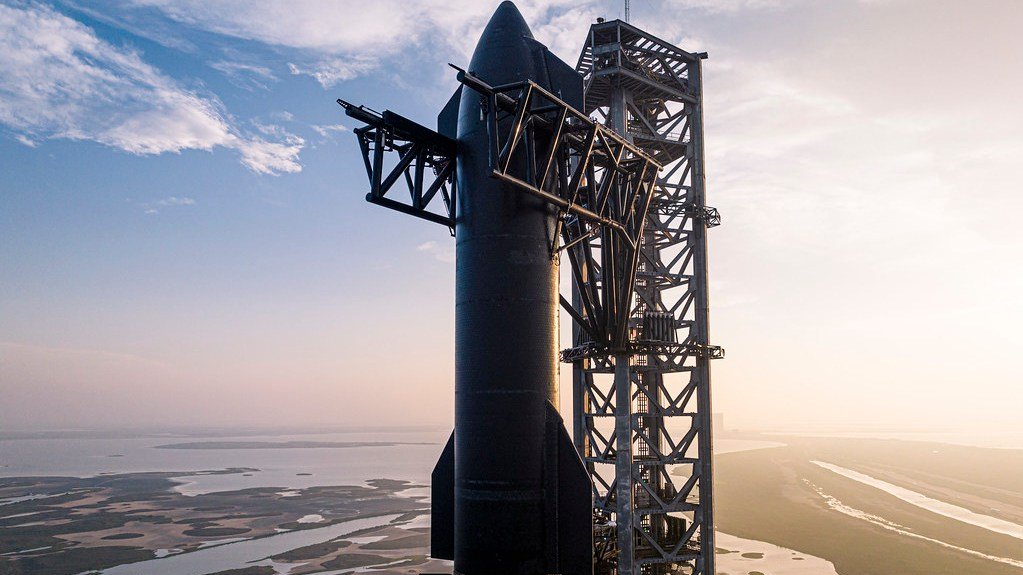
SpaceX’s New Starship Heat Shield Upgrades after Elon Says Problems are Solved: SpaceX’s Starship thermal protection system (TPS) has been one of the biggest engineering challenges standing between the spacecraft and true, rapid reusability. While Starship requires enormous thrust to reach orbit, surviving atmospheric re-entry is an entirely different challenge. At hypersonic speeds approaching Mach 25, the vehicle must withstand tremendous aerodynamic heating while protecting its stainless-steel structure and sensitive onboard systems.
Following recent test flights, SpaceX CEO Elon Musk has indicated that the fundamental Starship heat shield problem is solved. However, continued hardware changes at Starbase suggest that SpaceX is still refining specific areas of the system. These upgrades highlight an important distinction: a technology can be fundamentally proven while engineers continue optimizing it for durability, reliability, and rapid turnaround.
Starship Heat Shield: From Major Obstacle to Engineering Refinement
The importance of the TPS cannot be overstated. During atmospheric re-entry, Starship converts enormous kinetic energy into heat. Temperatures around exposed portions of the vehicle can exceed 1,500°C, creating an environment capable of damaging the spacecraft within seconds if the thermal protection system fails.
Flight 13, involving Ship 40 (S40), provided important evidence that Starship’s thermal protection architecture can protect the vehicle during a demanding atmospheric return. S40 completed its entry sequence, landing maneuver, and splashdown while remaining structurally intact.
This was significant because earlier Starship test flights had demonstrated vulnerabilities involving tile loss, plasma intrusion, oxidation, and localized burn-through. Improving tile retention therefore represents a major step toward reusable operations.
What Flight 13 Demonstrated
Flight 13 offered several important milestones for Starship’s TPS development:
- Improved tile retention under extreme aerodynamic forces.
- Better protection against plasma reaching the stainless-steel hull.
- Successful atmospheric entry and landing operations.
- Improved thermal isolation for important internal systems.
- Structural survival through the post-entry splashdown environment.
The results suggest that Starship’s basic heat shield architecture is capable of performing its primary function. However, surviving one flight is not the same as achieving a heat shield that requires little or no refurbishment after every mission.
Ship 42 Reveals More Starship Heat Shield Upgrades
Although the fundamental problem may be considered solved, SpaceX continues making targeted modifications to newer vehicles. Ship 42 (S42) has reportedly shown changes around the aft portion of the spacecraft, including an area where heat shield tiles have been removed or modified.
This region is particularly important because it sits near the liquid oxygen (LOX) tank and aft hardware. The area contains numerous critical systems, including propellant lines, electrical equipment, batteries, and thrust-vector-control components.
Why the Aft Section Is So Challenging
The aft section experiences an unusual combination of mechanical and thermal stresses.
First, the area is close to the Raptor engine section and must tolerate substantial acoustic vibration and mechanical loads during launch.
Second, it must handle the extreme temperature changes associated with re-entry.
Third, the LOX tank can experience significant thermal contraction because liquid oxygen is stored at approximately -183°C. Meanwhile, the external heat shield can encounter temperatures exceeding 1,500°C during atmospheric entry.
This creates a difficult engineering problem involving differential thermal expansion. The spacecraft structure, insulation, mounting hardware, and ceramic tiles must move and flex without causing excessive stress or tile detachment.
Rather than redesigning the entire heat shield, SpaceX’s iterative approach allows engineers to focus on specific high-stress areas. Potential improvements include stronger attachment hardware, revised insulation, optimized interfaces, and changes to individual tile sections.
Why “Solved” Does Not Mean “Finished”
At first glance, Elon Musk saying the Starship heat shield is solved while SpaceX continues modifying it may appear contradictory. In aerospace engineering, however, these statements can describe different stages of development.
A fundamental engineering problem is solved when the basic architecture has demonstrated that it can perform its intended function. Optimization continues afterward to improve reliability, manufacturing efficiency, durability, and maintenance requirements.
SpaceX is known for an iterative development philosophy. Instead of waiting years to perfect every detail before flight, the company builds hardware, flies it, collects real-world data, analyzes failures, and incorporates lessons into subsequent vehicles.
This process can be summarized as:
- Build and test hardware.
- Fly under real operating conditions.
- Collect flight and recovery data.
- Identify localized weaknesses.
- Modify the next vehicle.
- Repeat the test process.
For Starship, this approach is particularly valuable because atmospheric re-entry creates conditions that are extremely difficult to reproduce completely on the ground.
Starship TPS vs. Earlier Reusable Spacecraft
Starship’s heat shield also differs from earlier spacecraft in important ways.
The Space Shuttle used thousands of lightweight ceramic tiles. These tiles were highly effective but fragile, and maintaining them contributed significantly to the vehicle’s turnaround requirements.
Traditional crew capsules such as Apollo and Orion use ablative heat shields. Instead of remaining intact, ablative materials deliberately erode during re-entry, carrying heat away from the spacecraft. This approach is highly effective but inherently unsuitable for rapid reuse without replacing the shield material.
Starship is pursuing another model: a large reusable vehicle covered by mechanically mounted ceramic tiles.
The hexagonal tile design is intended to provide extensive thermal coverage while allowing individual damaged tiles to be replaced. Mechanical attachment also offers a potentially more serviceable architecture than permanently bonding every tile directly to the vehicle.
The ultimate objective is not simply surviving re-entry. The goal is to survive re-entry with minimal inspection, minimal tile replacement, and minimal downtime.
The Road Toward Full Starship Reusability
Future Starship flights will be increasingly important for validating the TPS under more demanding conditions.
A vehicle returning from an orbital mission experiences a different re-entry environment from a shorter suborbital test. Orbital velocity produces significantly greater heating and energy loads, making future orbital-entry demonstrations critical.
Newer ships incorporating lessons from previous flights will help determine whether the targeted modifications provide the reliability SpaceX needs.
The larger objective is a spacecraft that can return from space, undergo limited inspection and servicing, and fly again without an extensive refurbishment campaign.
Why Rapid Reuse Matters
The heat shield is directly connected to Starship’s business model.
If every Starship mission requires extensive tile inspections and repairs, rapid launch cadence becomes difficult. The spacecraft could face the same type of maintenance bottleneck that affected earlier reusable systems.
But if Starship can repeatedly survive re-entry with minimal maintenance, the economics change dramatically.
A highly reusable Starship could support:
- High-frequency satellite deployment
- Large-scale orbital logistics
- Lunar cargo and refueling missions
- Artemis-related transportation objectives
- Future Mars cargo operations
- Large orbital propellant depots
The TPS is therefore more than a protective layer. It is a critical component of Starship’s reusability and economic strategy.
Conclusion: Starship’s Heat Shield Enters a New Phase
SpaceX’s latest Starship heat shield developments indicate that the company may be moving beyond the question of whether its basic TPS architecture can survive re-entry. The focus is increasingly on optimization, durability, and rapid reuse.
Flight 13 and Ship 40 provided valuable evidence that Starship can survive a demanding atmospheric return. Meanwhile, modifications seen on Ship 42 demonstrate that engineers are continuing to address localized weaknesses, particularly around complex aft structures.
That does not necessarily contradict the claim that the heat shield problem is “solved.” Instead, it may signal a transition from fundamental development to engineering refinement.
The real test will be whether future Starships can repeatedly endure hypersonic re-entry while requiring little maintenance between missions. If SpaceX succeeds, the thermal protection system could become one of the technologies that enables Starship to move from an experimental spacecraft toward a genuinely rapidly reusable orbital transportation system.
FAQs
1. What is Starship’s thermal protection system (TPS)?
Starship’s thermal protection system (TPS) is designed to protect the stainless-steel spacecraft from the extreme heat generated during atmospheric re-entry. It primarily relies on ceramic heat-shield tiles covering areas exposed to intense heating.
2. Why does Starship need a heat shield?
During re-entry, Starship travels at hypersonic speeds, converting enormous kinetic energy into heat. Without adequate thermal protection, the spacecraft’s structure and internal systems could suffer severe thermal damage.
3. Has SpaceX solved the Starship heat shield problem?
SpaceX leadership has described the fundamental heat shield problem as solved. However, that does not mean development has stopped. Engineers continue making targeted improvements to increase reliability, durability, and reusability.
4. What did Flight 13 demonstrate about the heat shield?
Flight 13 provided important evidence that Starship’s TPS could protect the vehicle during a demanding atmospheric entry. Ship 40 (S40) completed its entry and landing sequence and remained structurally intact after splashdown.
5. How hot does Starship get during re-entry?
Parts of Starship’s heat shield can experience temperatures of more than 1,500°C during atmospheric re-entry. The exact temperature varies depending on location, trajectory, speed, and aerodynamic conditions.
6. What happened to heat-shield tiles on earlier Starship flights?
Earlier flights experienced tile loss and localized thermal damage. Missing or displaced tiles can expose the underlying structure to extremely hot plasma, potentially causing oxidation and burn-through.
7. Why are SpaceX engineers modifying Ship 42?
Ship 42 incorporates lessons learned from earlier flights. Targeted changes around the aft section and LOX tank region are intended to address areas that experienced higher thermal or mechanical stresses.
8. Why is the aft section important?
The aft section contains important spacecraft infrastructure, including propellant lines, electrical systems, batteries, and thrust-vector-control hardware. Protecting this region is particularly important because damage could affect critical vehicle functions.
9. What is differential thermal expansion?
Differential thermal expansion occurs when different materials or parts of a spacecraft expand or contract by different amounts as temperatures change. Starship must handle extreme differences between cryogenic propellant temperatures and intense re-entry heating.
10. How are Starship’s heat-shield tiles attached?
Starship uses a mechanically mounted tile architecture rather than relying solely on direct adhesive bonding. This approach is intended to make individual tiles easier to replace and help accommodate movement caused by thermal and mechanical stresses.
11. How is Starship’s heat shield different from the Space Shuttle’s?
Both spacecraft use reusable ceramic thermal protection, but their designs differ. The Space Shuttle used thousands of specialized tiles that required significant inspection and maintenance. Starship is designed around standardized hexagonal tiles and mechanical attachment, with the long-term goal of much faster turnaround.
12. Is Starship’s heat shield reusable?
Yes. The fundamental objective of Starship’s TPS is multi-flight reusability. The challenge is proving that the tiles can repeatedly survive atmospheric entries while requiring little or no refurbishment.
13. Why is rapid heat-shield refurbishment important?
A reusable spacecraft only achieves high flight rates if it can be prepared for its next mission quickly. Extensive tile inspections or replacements could increase turnaround time and operating costs, reducing the benefits of Starship’s reusable architecture.
14. What will future Starship flights test?
Future flights are expected to provide increasingly demanding tests of orbital re-entry, thermal protection, vehicle control, and recovery operations. These missions will help determine whether the latest TPS improvements work under repeated and more representative conditions.
15. Why is the Starship heat shield important for SpaceX’s long-term plans?
A reliable TPS is essential to SpaceX’s vision of rapidly reusable Starship operations. Reliable re-entry could support frequent satellite launches, orbital refueling, lunar missions, and eventually deep-space logistics.
16. Does “heat shield solved” mean Starship is ready for full rapid reuse?
Not necessarily. It means the fundamental TPS architecture appears viable, while optimization and validation continue. The bigger milestone will be demonstrating repeated flights with minimal tile damage, limited inspection, and fast turnaround between missions.
Read More:
- Gen 2 Tesla Roadster Flying BIG Launch Event, New Massive Specs
- Tesla is opening Cybercab rides to a select few
- SpaceX achieves incredible milestone with Starlink program
- New Footage revealed What Exactly Happened with Ship 40 before reaching Christmas Island Shocked Us
- Tesla Bot Gen 3 Is FINALLY NUTTY — Can Do 5,000 Tasks
1 thought on “SpaceX’s New Starship Heat Shield Upgrades after Elon Says Problems are Solved”