
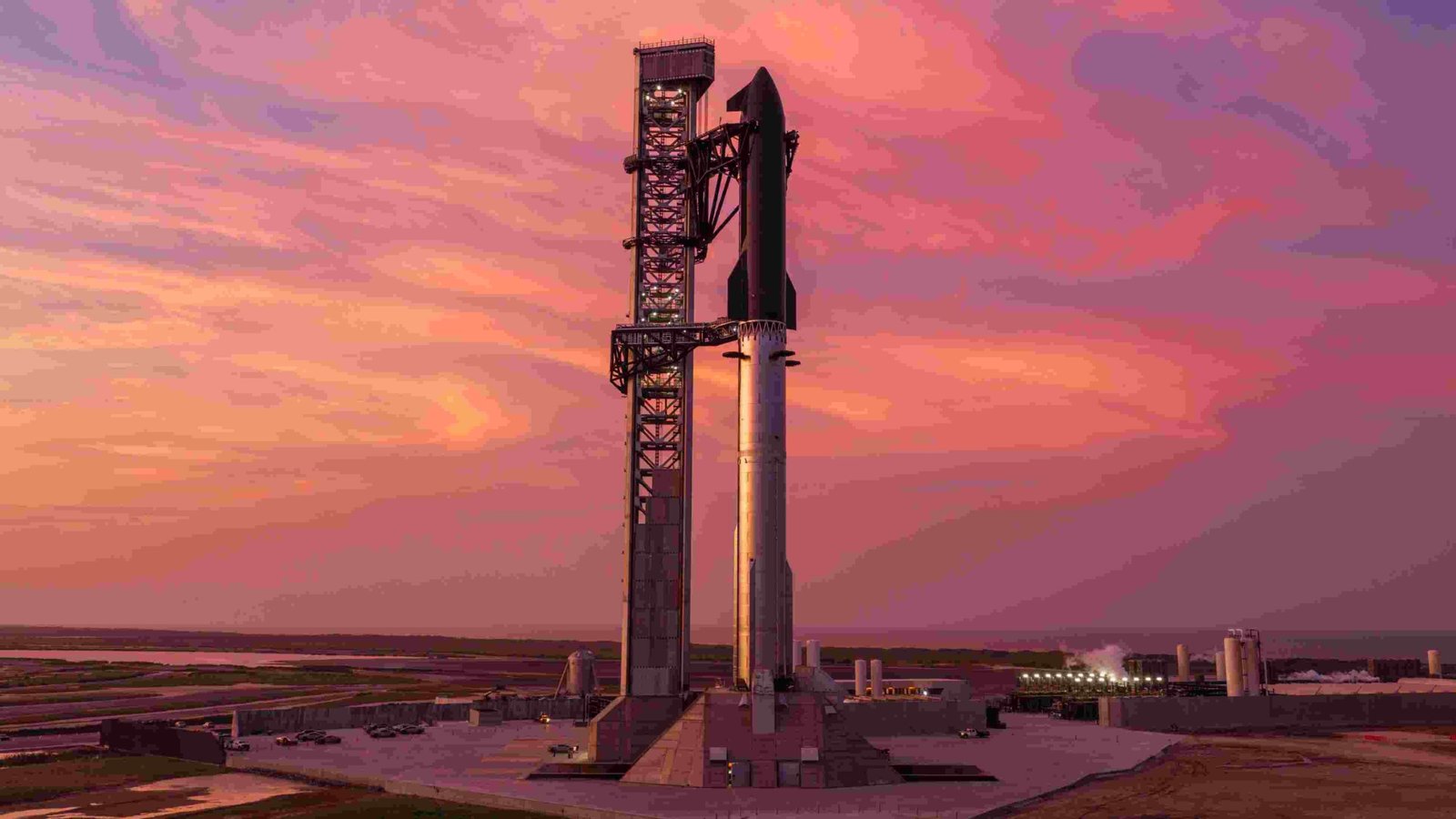
SpaceX Ready for 1st Starship Catching in Flight 15 after S42’s Test Begins &…Tower-1 Upgrades: SpaceX is moving closer to one of the most important milestones in modern aerospace engineering: catching the Starship upper stage with the giant Mechazilla chopstick arms at Starbase, Boca Chica.
While previous Starship flights have provided valuable data through ocean splashdowns, a successful tower catch could take SpaceX much closer to its ultimate goal of rapid and complete rocket reusability.
With preparations for Flight 15 accelerating, several developments are attracting attention. Ship 42 (S42) is undergoing critical testing, Tower 1 is receiving infrastructure upgrades, and regulatory changes could provide the framework required for future land-return operations.
If the testing campaign stays on schedule, Flight 15 could become a historic mission, potentially featuring SpaceX’s first attempt to catch a Starship upper stage at the launch site.
Ship 42 Testing Builds Toward Starship Flight 15
The hardware preparation for Flight 15 is already well underway. Ship 42, the Starship upper-stage vehicle expected to support the campaign, has been undergoing extensive testing at SpaceX’s Massey’s test site.
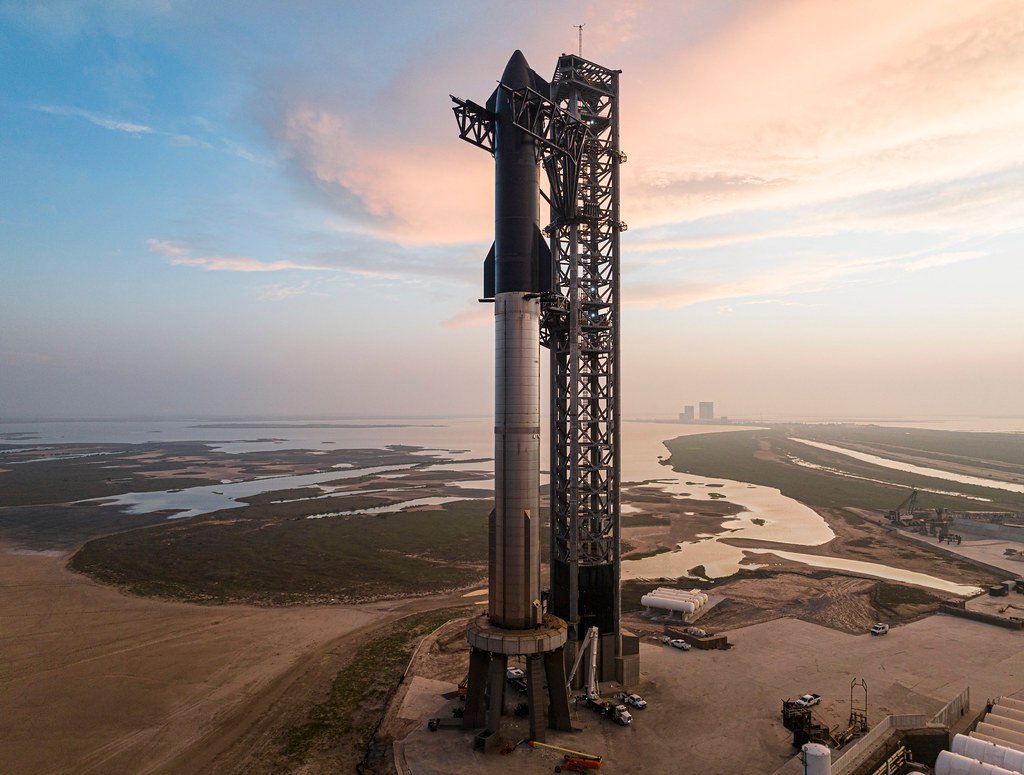
These tests are designed to ensure that the vehicle can withstand the extreme mechanical, thermal and environmental conditions expected during launch and atmospheric re-entry.
Flap Testing Tests Flight Control Systems
On September 2, S42 completed extensive flap actuation testing. Engineers exercised both the forward and aft flaps, including simultaneous movements.
The flaps are essential to Starship’s ability to control its orientation during atmospheric entry. Their performance will be particularly important if SpaceX eventually attempts a precision return to the launch tower rather than a conventional ocean splashdown.
The testing was followed by cryogenic proof tests beginning September 3 and continuing through September 5.
Cryogenic Testing Puts the Vehicle Under Extreme Stress
During cryogenic testing, S42 was exposed to extremely cold conditions associated with the propellants used by Starship. Heavy venting and visible frost across the stainless-steel vehicle indicated prolonged exposure to liquid methane and liquid oxygen environments.
Cryogenic testing is a critical part of preparing Starship hardware because the vehicle must remain structurally sound while experiencing significant temperature changes and pressure loads.
Following the campaign, S42 returned to the production area on September 6 for additional inspections and preparation for engine integration.
A static-fire test toward the end of September would represent another major step toward Flight 15. Meanwhile, Super Heavy Booster 22 (B22) is also progressing through its own testing campaign.
Tower 1 Upgrades Could Be Critical for a Starship Catch
Building a flight-ready Starship is only one part of the challenge. SpaceX also needs a reliable launch and recovery infrastructure capable of supporting a complicated SpaceX recently removed the weather tower’s top antenna assembly. The modification appears connected tower catch maneuver.
At Starbase, Pad 2 is currently handling active launch operations, while Pad 1 has been taken offline following 11 launches for substantial upgrades.
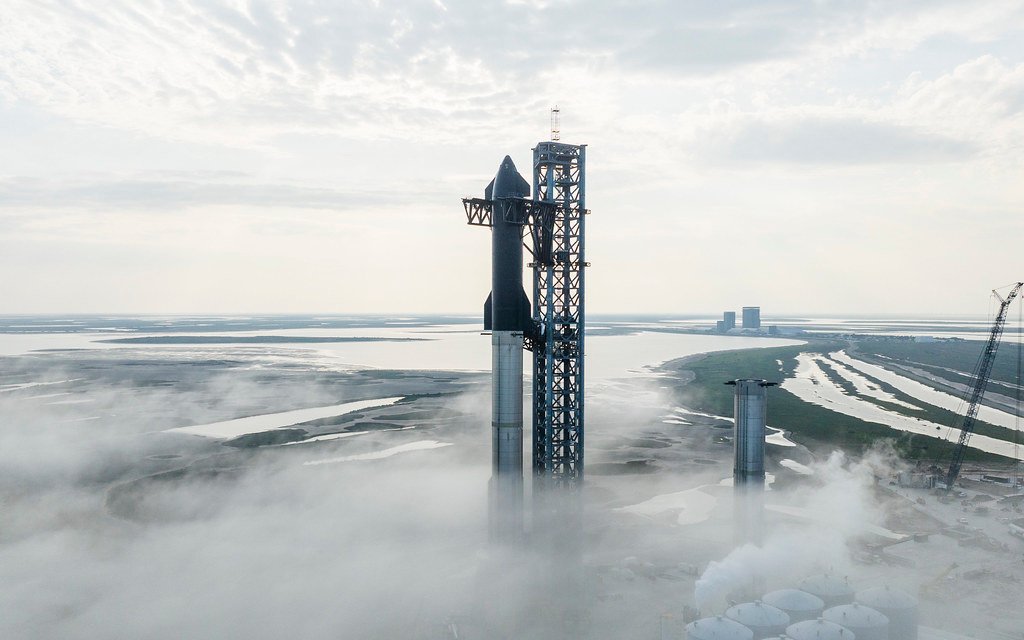
One of the notable changes involves Tower 1, where SpaceX recently removed the weather tower’s top antenna assembly. The modification appears connected to the installation of newer and more capable communications hardware.
Why Communications Matter During a Catch
The importance of ground infrastructure catch the returning Super Heavy booster, but the attempt was aborted because of a ground-side communication and telemetry issue. The mechanical catching system itself was not necessarily the problem; instead, the ground systems did not provide the safety clearances required to proceed became particularly clear during Flight 6.
SpaceX had planned to catch the returning Super Heavy booster, but the attempt was aborted because of a ground-side communication and telemetry issue. The mechanical catching system itself was not necessarily the problem; instead, the ground systems did not provide the safety clearances required to proceed.
This highlights an important reality about rocket catching: precision hardware is only useful when the supporting software, communications and telemetry systems are equally reliable.
For a Starship returning over Boca Chica, SpaceX needs highly accurate real-time information about the vehicle, its trajectory and the surrounding environment.
Upgrading Tower 1 could therefore reduce potential single-point failures before SpaceX attempts an even more ambitious Starship catch.
Two Towers Could Enable Future Dual Catches
SpaceX’s long-term infrastructure strategy could eventually involve two towers performing different recovery roles.
One potential approach would be a single-stage catch. Under this scenario, the Super Heavy booster could continue to splash down in the Gulf while the Starship upper stage performs a dedicated return and catch attempt at Starbase.
A more ambitious configuration would involve dual-tower catches.
In that scenario, Tower 1 could handle the Super Heavy booster while Tower 2 could be used to catch the returning Starship. Such an arrangement could eventually allow SpaceX to recover both stages at the launch site during the same mission.
That would represent a major advancement in fully reusable launch operations.
Starship’s Heat Shield Remains a Critical Challenge
One of the biggest technical challenges facing a Starship land-return attempt is the vehicle’s thermal protection system (TPS).
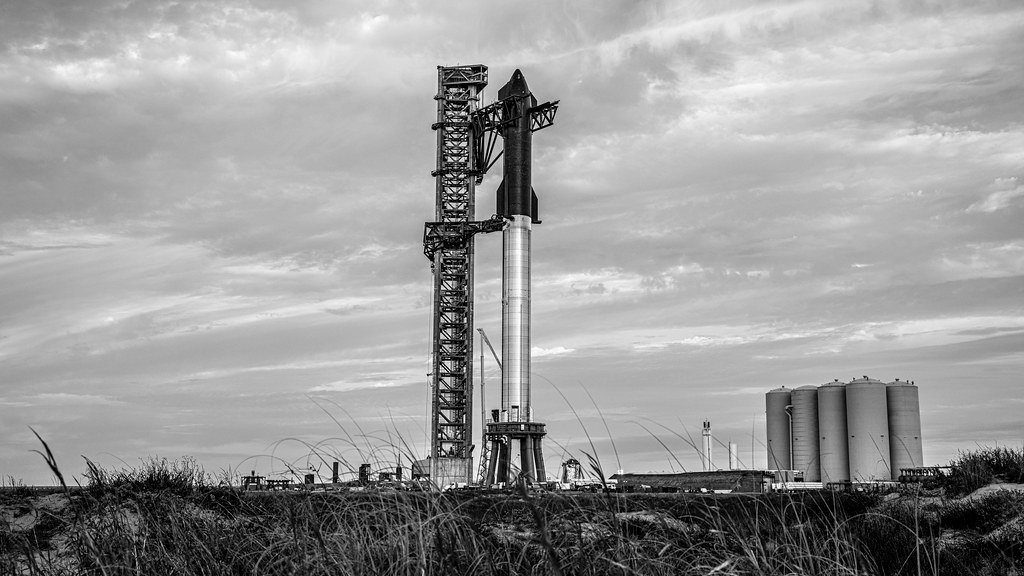
Observers noticed changes involving TPS tiles around the lower section of S42 before cryogenic testing. Such modifications could reflect lessons learned from previous Starship flights and efforts to strengthen areas exposed to particularly high thermal loads.
Re-Entry Data Could Shape S42’s Design
During atmospheric re-entry, Starship experiences enormous aerodynamic and thermal forces. The heat shield must protect the stainless-steel structure while the vehicle performs its controlled belly-flop maneuver and transitions toward landing.
Data gathered from previous flights can therefore influence the placement, reinforcement and design of future heat-shield components.
For Flight 15, heat-shield reliability will be one of the most important prerequisites for any attempt to return Starship to land.
FAA Approvals Could Support Future Return Attempts
Technical capability is not enough for an overland Starship return. SpaceX also needs the appropriate regulatory framework.
Recent Federal Aviation Administration (FAA) developments have expanded the potential return trajectories associated with Starship operations in the Pacific and around Boca Chica.
These regulatory developments could become increasingly important as SpaceX moves from experimental splashdowns toward controlled land-return operations.
A successful Starship catch would require not only a vehicle capable of surviving re-entry but also an approved flight path and operational environment that supports the maneuver.
Flight 14 Could Be the Gateway to Flight 15
Before SpaceX attempts a first Starship catch, Flight 14 could serve as a crucial proving ground.
The mission is expected to focus on several important objectives, including achieving orbital insertion, deploying payloads, conducting an in-space de-orbit burn and demonstrating a controlled atmospheric re-entry.
These objectives matter because SpaceX needs reliable data before attempting a significantly higher-risk recovery profile.
What Flight 14 Needs to Demonstrate
Flight 14 can provide valuable information about:
- Orbital performance
- Payload deployment
- De-orbit procedures
- Atmospheric re-entry accuracy
- Heat-shield performance
- Vehicle structural integrity
- Splashdown trajectory precision
The more predictable these systems become, the more confidence SpaceX can have in attempting a tower catch.
A controlled water landing may appear less spectacular than a tower catch, but it provides critical information about the vehicle’s ability to reason SpaceX is pursuing tower catches is not simply to achieve a dramatic engineering milestone. The real survive the return journey.
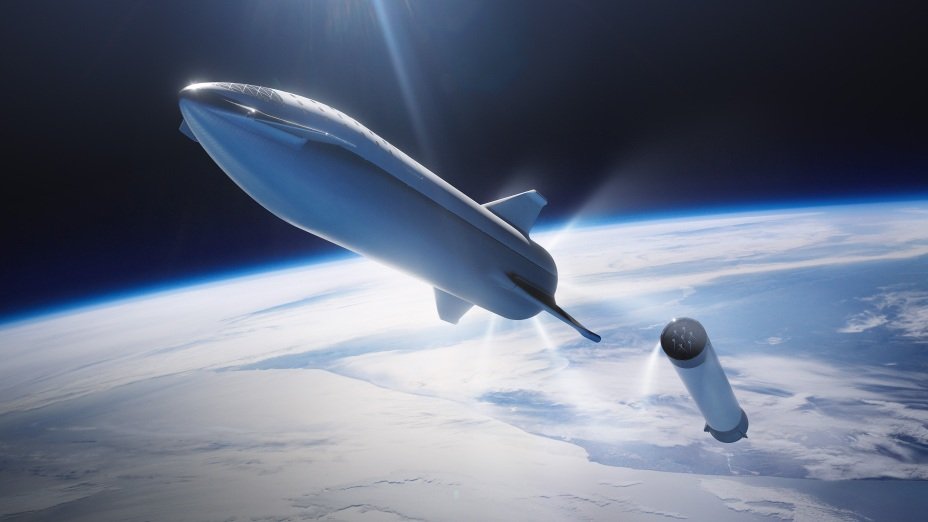
Why Catching Starship Could Change Spaceflight Economics
The biggest reason SpaceX is pursuing tower catches is not simply to achieve a dramatic engineering milestone. The real objective is rapid reusability.
Traditional rockets generally require landing legs, extensive recovery infrastructure or expendable stages. Starship’s tower-catch architecture at the launch tower, SpaceX could potentially inspect, stack, refuel and prepare the vehicles for another launch with is designed to remove much of that complexity.
If both the Super Heavy booster and Starship can be caught at the launch tower, SpaceX could potentially inspect, stack, refuel and prepare the vehicles for another launch with far less turnaround time.
From Launch to Rapid Relaunch
The long-term concept is straightforward:
Launch → Stage Separation → Orbital Mission → Booster Catch + Ship Catch → Rapid Restack → Refuel → Relaunch
Achieving this operational cycle would be enormously significant.
Instead of treating each launch as an isolated event requiring substantial refurbishment, SpaceX could move toward an airline-like model of frequent spacecraft operations.
That could dramatically reduce the cost per launch and increase the number of missions Starship can perform.
Flight 15 Could Become a Historic Starship Mission
The combination of S42 testing, B22 preparations, Tower 1 upgrades, heat-shield development and regulatory progress makes Flight 15 particularly interesting.
However, the exact mission profile and whether SpaceX will actually attempt an upper-stage tower catch will ultimately depend on the results of earlier testing and Flight 14.
SpaceX is likely to prioritize vehicle reliability and operational confidence over simply meeting an aggressive schedule. A Starship catch is an extremely demanding maneuver, and even small problems involving telemetry, communications, guidance or the heat shield could force, it would demonstrate that Starship is moving beyond experimental flight testing toward the company to postpone the attempt.
Nevertheless, the direction is clear.
Flight 15 could represent a major turning point for Starship. If SpaceX successfully catches the upper stage using Mechazilla, it would demonstrate that Starship is moving beyond experimental flight testing toward a genuinely reusable transportation system.
In the longer term, this technology could support large-scale satellite deployment, NASA’s Artemis lunar ambitions and eventually human missions to Mars.
The first Starship catch, whenever it happens, would therefore be more than a spectacular landing. It could be the moment SpaceX demonstrates that rapid, full-stack rocket reusability is becoming an operational reality.
FAQs
1. What is SpaceX Starship Flight 15?
Starship Flight 15 is a planned test flight in SpaceX’s ongoing Starship development program. The mission could become particularly significant if SpaceX attempts to recover the Starship upper stage using the Mechazilla catch arms at Starbase.
2. What is Mechazilla?
Mechazilla is the nickname for SpaceX’s massive launch-tower infrastructure, including the mechanical chopstick arms designed to catch returning Starship vehicles and Super Heavy boosters.
3. Could Flight 15 feature the first Starship upper-stage catch?
Potentially. The testing and infrastructure developments described in the campaign suggest that Flight 15 could be a candidate for an upper-stage catch, although SpaceX’s final mission profile will depend on vehicle and regulatory readiness.
4. What is Ship 42?
Ship 42 (S42) is the Starship upper-stage vehicle being prepared for the Flight 15 campaign. It has undergone important ground tests, including flap actuation and cryogenic proof testing.
5. Why is S42 undergoing flap testing?
Flap testing helps verify that Starship’s forward and aft flight-control surfaces can move correctly. Reliable flap operation is essential for controlling the spacecraft during atmospheric re-entry and its eventual landing maneuver.
6. What is cryogenic testing on Starship?
Cryogenic testing exposes the vehicle to extremely cold conditions associated with its propellants, particularly liquid methane and liquid oxygen. It helps engineers evaluate structural integrity, tanks and systems before flight.
7. Why are Tower 1 upgrades important?
Tower 1 upgrades could improve the communications, telemetry and operational reliability required for complex recovery operations. Reliable ground systems are essential because a tower catch requires precise coordination between the vehicle and launch-site infrastructure.
8. What happened during the attempted booster catch on Flight 6?
During Flight 6, SpaceX did not proceed with the planned Super Heavy catch because of a ground-side communication and telemetry issue. The event demonstrated how important reliable ground infrastructure is to catch operations.
9. Could SpaceX catch both Starship stages?
Yes, that is the long-term objective of the tower-catch architecture. SpaceX ultimately wants to recover both the Super Heavy booster and Starship upper stage at the launch site.
10. Why does Starship need a heat shield?
Starship’s heat shield protects the vehicle from the extreme temperatures generated during atmospheric re-entry. Maintaining heat-shield integrity is essential if the spacecraft is expected to return safely and eventually be caught by Mechazilla.
11. What role could Flight 14 play before Flight 15?
Flight 14 could provide critical flight data before a more ambitious catch attempt. Its performance during orbital operations, de-orbiting and atmospheric re-entry could help SpaceX determine whether the vehicle is ready for a future land-return maneuver.
12. What is the advantage of catching Starship instead of landing it?
A successful tower catch could eliminate the need for landing legs and some recovery hardware. It could also allow SpaceX to rapidly inspect, restack, refuel and prepare the vehicle for another launch.
13. How could Starship catches reduce launch costs?
The ability to rapidly reuse both stages could increase launch frequency while reducing refurbishment and recovery requirements. Over time, this could significantly lower the cost of transporting payloads to orbit.
14. What could Starship’s full reusability enable?
A highly reusable Starship system recovery profile on the results of testing, previous flight performance, heat-shield readiness, communications systems and regulatory approval could support large satellite constellations, lunar missions, cargo transportation and eventually human missions to Mars. Frequent reuse is central to SpaceX’s broader Starship vision.
15. Will SpaceX definitely attempt a Starship catch on Flight 15?
Not necessarily. Although Flight 15 could be an important candidate, SpaceX is likely to base the final recovery profile on the results of testing, previous flight performance, heat-shield readiness, communications systems and regulatory approval. A catch attempt could be delayed if any critical system is not ready.
Read More:
- NASA Artemis 3 Crew Unexpectedly Visits SpaceX Starship Pad 39A, Ready to Make History in mid-2027
- Tesla Cybertruck engineer reveals new changes in ‘constantly evolving’ pickup
- Tesla Cybercab improvements are already on the minds of company engineers
- Elon Musk hints at Tesla Cybercab’s next market
- NEW Tesla Cell Phone ( Pi Phone ) 27 Starlink Satellites, 35,000-Ft 4K & ZERO SIM