

NASA Artemis 3 Crew Unexpectedly Visits SpaceX Starship Pad 39A, Ready to Make History in mid-2027: The global space race is entering a new and increasingly ambitious phase. Across the United States, India, and the commercial space sector, major programs are moving from long-term plans toward flight-ready hardware, operational infrastructure, and increasingly sophisticated space networks.
A recent visit by the NASA Artemis III crew to SpaceX’s Starship infrastructure at Launch Complex 39A (LC-39A) has drawn particular attention. At the same time, NASA’s Space Launch System (SLS) continues to take shape, a new Mars telecommunications network is being developed, and India has achieved another important satellite-launch milestone.
Together, these developments demonstrate how human lunar exploration, deep-space communications, and Earth observation are rapidly becoming interconnected elements of the next generation of spaceflight.
NASA Artemis III Crew Visits SpaceX’s Starship Tower at LC-39A
On September 3, members of the Artemis III astronaut team visited SpaceX’s Starship launch infrastructure at Launch Complex 39A inside NASA’s Kennedy Space Center.
The visiting group included primary astronauts Randy Bresnik, Frank Rubio, Andre Douglas, and Luca Parmitano, along with backup astronaut Bob Hines. Their visit offered a closer look at the infrastructure being developed for Starship operations at one of the most historically significant launch sites in the world.
LC-39A has a remarkable history. The same complex was used for Apollo lunar missions and later supported numerous Space Shuttle launches. Its transformation for Starship represents another major chapter in the evolution of American launch infrastructure.
Starship Tower Construction Continues
Construction activity at LC-39A remains substantial, with cranes, steel structures, and tower components visible across the site.
The developing tower has an interior configuration that differs from the structures at SpaceX’s Starbase facility in Texas. Astronauts also inspected important supporting infrastructure, including propellant tank farms, control and operations facilities, and upper sections of the launch tower.
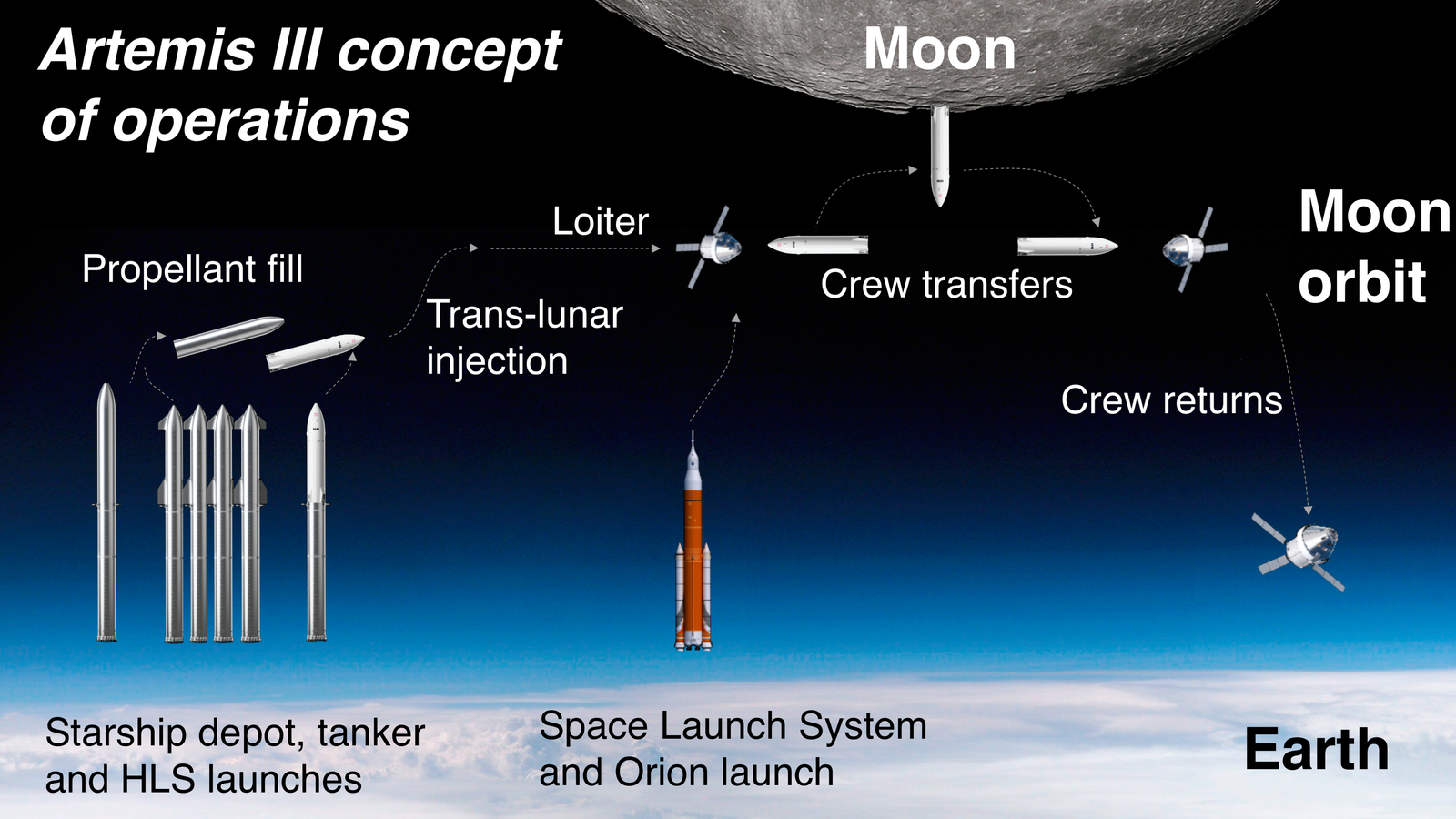
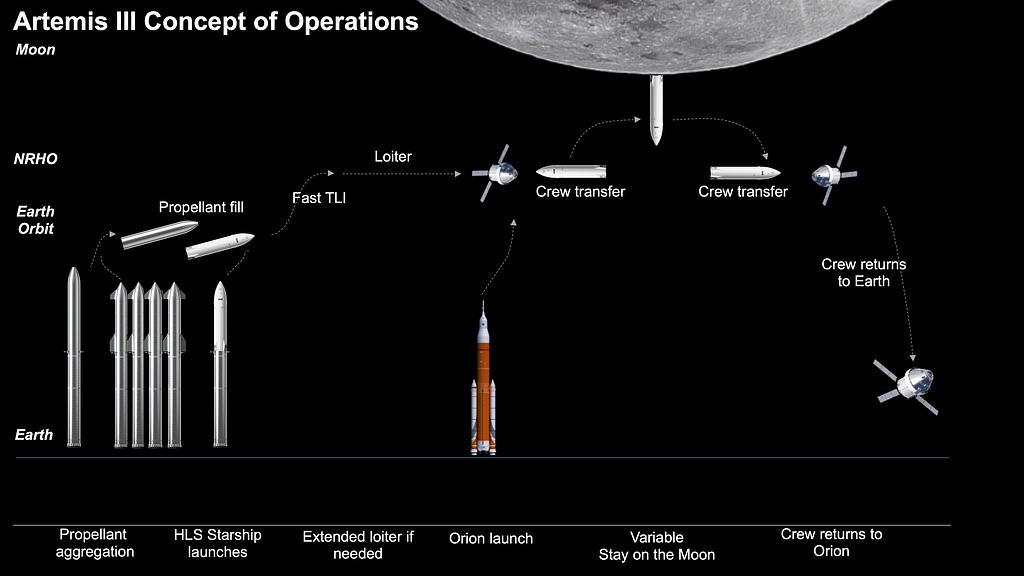
The progress is particularly significant because Starship is expected to play a central role in NASA’s Artemis lunar architecture.
Although earlier targets envisioned pad readiness in early 2027, continued construction could bring the facility into operational use during the broader period associated with Artemis III preparations.
Artemis III SLS Hardware Advances at Kennedy Space Center
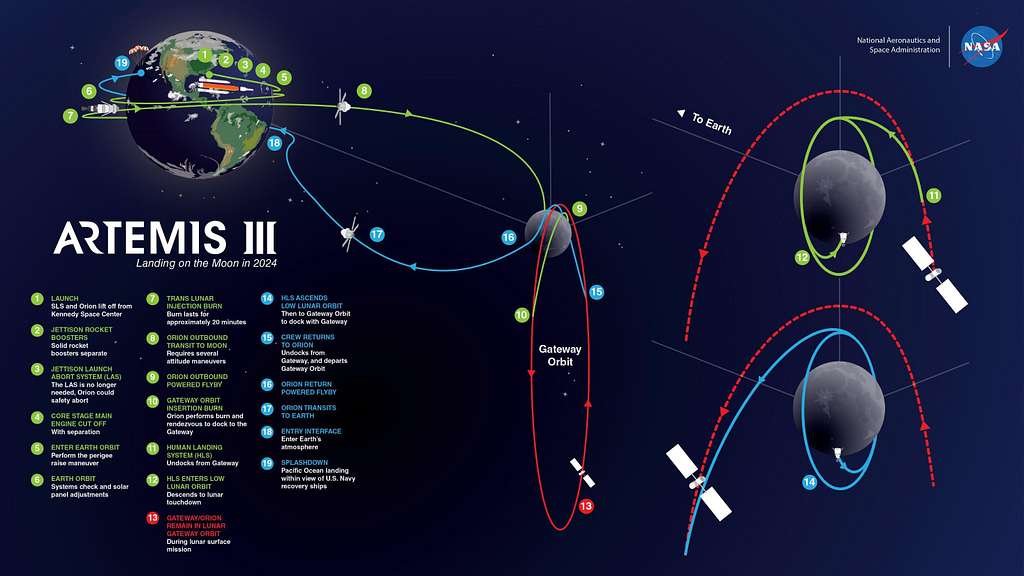
While SpaceX continues developing Starship Human Landing System infrastructure, NASA is simultaneously progressing with the Space Launch System (SLS) rocket that will launch astronauts toward the Moon.
For Artemis III, major assembly milestones are being achieved at Kennedy Space Center.
RS-25 Engines Installed on Artemis III Core Stage
NASA has confirmed that all four RS-25 engines have been installed on the bottom of the Artemis III SLS Core Stage.
These engines are a crucial component of the rocket’s propulsion system, working alongside the massive solid rocket boosters to generate the enormous thrust required during liftoff.
Solid Rocket Booster Stacking Reaches Major Milestone
Technicians have also reached approximately the halfway point in stacking the two five-segment solid rocket boosters.
The boosters are responsible for generating roughly 75% of SLS liftoff thrust, making their assembly a critical milestone for the Artemis III launch vehicle.
Full booster stacking and integration with the core stage are expected to progress through late 2026, keeping the Artemis III hardware pipeline moving toward its next major phases.
Artemis IV and Artemis V Hardware Is Already Taking Shape
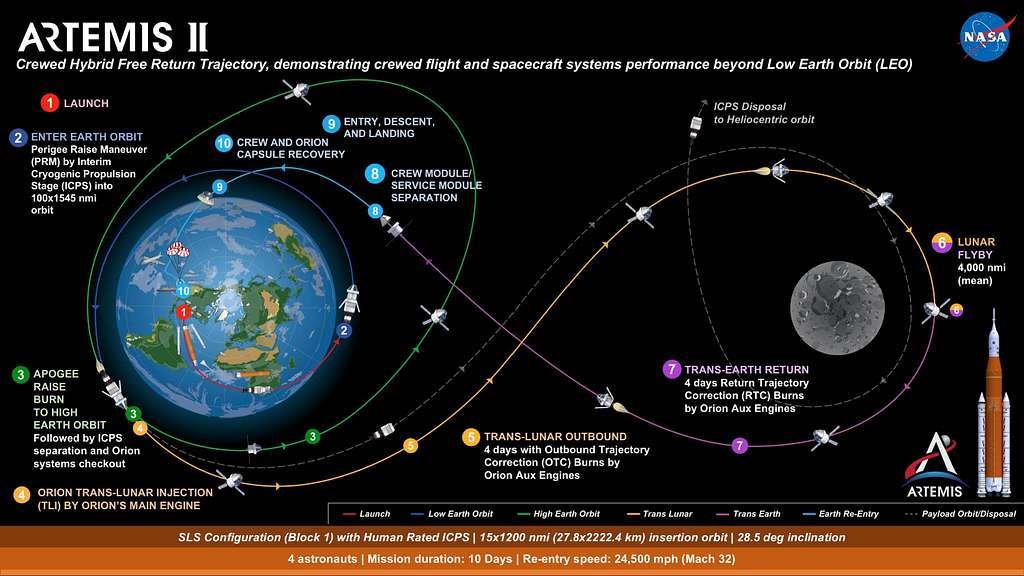
NASA’s preparations extend beyond Artemis III. Hardware for future missions, including Artemis IV and Artemis V, is already being manufactured and tested.
At NASA’s Michoud Assembly Facility, work on long-lead components is continuing.
Artemis IV Tank Testing Completed
For Artemis IV, hydrostatic proof testing has been completed on the liquid oxygen (LOX) and liquid hydrogen (LH2) tanks.
The boattail section is also transitioning toward Kennedy Space Center, representing another step toward eventual vehicle assembly and integration.
Artemis V Assembly Begins
Meanwhile, assembly work for Artemis V has started inside the Vertical Assembly Center. Technicians are working on barrel sections and structural rings associated with the liquid hydrogen tank.
This parallel production strategy highlights NASA’s effort to establish a sustainable Artemis campaign rather than treating each lunar mission as an isolated project.
NASA Awards $700 Million Mars Communications Contract to Blue Origin
Human exploration is not the only area undergoing major development. NASA is also investing in the infrastructure required to support increasingly complex Mars missions.
NASA has awarded Blue Origin a $700 million contract to develop the Mars Telecommunications Network (MTN).
Dedicated Mars Telecommunications Network
The planned system will use Blue Origin’s modular Blue Ring spacecraft platform. A dedicated Mars telecommunications spacecraft is intended to provide relay services between Mars-based assets and Earth.
This capability could become increasingly important as NASA and other organizations deploy more sophisticated rovers, landers, and potentially human missions to Mars.
Currently, spacecraft such as the Mars Reconnaissance Orbiter (MRO) and Mars Odyssey perform both scientific observations and communications-relay duties.
A dedicated telecommunications network could reduce this conflict by allowing science orbiters to spend more time conducting research while specialized infrastructure handles communications.
NASA expects the Mars Telecommunications Network to be delivered around 2028, with an operational target around 2030.
ISRO Successfully Launches EOS-05 Into Orbit
India is also contributing to the rapidly evolving global space landscape.
On September 4, the Indian Space Research Organisation (ISRO) successfully launched the EOS-05 Earth observation satellite aboard a GSLV Mk II rocket from the Satish Dhawan Space Centre.
The satellite was deployed into a sub-geosynchronous transfer orbit before progressing toward its operational orbit.
EOS-05 Earth Observation Capabilities
EOS-05 has a mass of approximately 2,367 kilograms (5,218 pounds) and is designed to operate from geostationary orbit, roughly 35,786 kilometers above Earth.
Its position allows the satellite to maintain continuous observation of a fixed geographical region, making geostationary Earth observation particularly useful for applications that require persistent monitoring.
Potential uses include severe weather tracking, environmental disaster monitoring, and strategic surveillance across the Indian subcontinent.
The mission also represents the fifth consecutive successful GSLV Mk II launch following upgrades introduced after 2021.
A New Era of Multi-Mission Space Infrastructure
The latest developments show that the modern space race is no longer defined simply by individual rocket launches.
Instead, the focus is increasingly shifting toward integrated space architectures.
NASA is developing the SLS and Artemis infrastructure for sustained lunar exploration. SpaceX is building Starship systems and launch infrastructure capable of supporting future human missions. Blue Origin is moving into deep-space communications infrastructure, while ISRO continues expanding India’s satellite and launch capabilities.
These efforts point toward a future in which launch vehicles, lunar landers, communication satellites, Earth-observation spacecraft, and deep-space networks operate as parts of much larger systems.
Conclusion
The unexpected Artemis III crew visit to SpaceX’s Starship pad at LC-39A offers a glimpse into how quickly the next era of human spaceflight is taking shape.
With Starship infrastructure advancing, Artemis III SLS hardware moving through assembly, Artemis IV and V components already under construction, a new Mars telecommunications network being developed, and ISRO achieving another successful satellite launch, the global space sector is entering a period of rapid technological expansion.
If current progress continues, the years ahead could mark a historic transition from experimental exploration toward a more permanent and interconnected human presence beyond Earth.
FAQs
1. Why did the NASA Artemis III crew visit SpaceX’s Starship pad at LC-39A?
The Artemis III crew visited SpaceX’s Starship infrastructure at Launch Complex 39A to inspect the launch tower, propellant facilities, operations areas, and other infrastructure being developed to support future Starship missions.
2. Where is SpaceX’s Starship launch infrastructure for Artemis III located?
The Starship infrastructure is being developed at Launch Complex 39A (LC-39A) inside NASA’s Kennedy Space Center in Florida. The historic launch complex previously supported Apollo and Space Shuttle missions.
3. When could the Artemis III mission launch?
The current development timeline discussed in the article points toward an Artemis III launch period around mid-2027, although launch schedules can change as testing, certification, and vehicle development progress.
4. What is Starship’s role in NASA’s Artemis III mission?
SpaceX’s Starship Human Landing System (HLS) is intended to transport Artemis III astronauts from lunar orbit to the Moon’s surface and back as part of NASA’s lunar exploration architecture.
5. What is NASA’s Space Launch System?
The Space Launch System (SLS) is NASA’s heavy-lift rocket designed to launch the Orion spacecraft and astronauts on deep-space missions, including the Artemis missions to the Moon.
6. How many RS-25 engines does the Artemis III SLS rocket have?
The Artemis III SLS Core Stage uses four RS-25 engines. These engines provide powerful liquid-fuel propulsion during the rocket’s ascent.
7. How much thrust do the SLS solid rocket boosters provide?
The two five-segment solid rocket boosters provide approximately 75% of the SLS rocket’s liftoff thrust, making them essential to the vehicle’s initial climb from Earth.
8. What is the status of the Artemis III SLS boosters?
Technicians have progressed to roughly the halfway point in stacking the two Artemis III solid rocket boosters. Further stacking and integration are expected to continue through late 2026.
9. Is NASA already building hardware for Artemis IV and Artemis V?
Yes. NASA is already working on long-lead hardware for Artemis IV and Artemis V, including liquid oxygen and liquid hydrogen tanks, barrel sections, and structural components.
10. What is the Mars Telecommunications Network?
The Mars Telecommunications Network (MTN) is a planned dedicated communications system designed to relay data between spacecraft and surface assets on Mars and Earth.
11. Who is developing NASA’s Mars Telecommunications Network?
Blue Origin has been awarded a $700 million NASA contract to develop the Mars telecommunications system using its modular Blue Ring spacecraft platform.
12. Why does Mars need a dedicated telecommunications network?
A dedicated network could allow existing Mars orbiters, such as Mars Reconnaissance Orbiter and Mars Odyssey, to focus more heavily on scientific observations instead of dividing their time between science and communications-relay duties.
13. When is NASA’s Mars Telecommunications Network expected to become operational?
The planned telecommunications capability is expected to be delivered around 2028, with an operational target of approximately 2030.
14. What is ISRO’s EOS-05 satellite?
EOS-05 is an Indian Earth observation satellite launched by the Indian Space Research Organisation (ISRO). It is designed to provide continuous observation of the Indian subcontinent from geostationary orbit.
15. What is the purpose of the EOS-05 satellite?
EOS-05 can support applications including severe weather monitoring, environmental disaster tracking, high-resolution Earth observation, and strategic surveillance of the Indian subcontinent.
16. Why are these space missions important for the future of space exploration?
These missions demonstrate that the modern global space race is moving beyond individual rocket launches toward integrated infrastructure. Lunar landers, heavy-lift rockets, launch towers, Mars communication networks, and Earth-observation satellites are becoming interconnected systems that could support a more sustained human and robotic presence beyond Earth.
Read More:
- Tesla Cybertruck engineer reveals new changes in ‘constantly evolving’ pickup
- Tesla Cybercab improvements are already on the minds of company engineers
- Elon Musk hints at Tesla Cybercab’s next market
- NEW Tesla Cell Phone ( Pi Phone ) 27 Starlink Satellites, 35,000-Ft 4K & ZERO SIM
- Next-Gen Tesla Motor No Rare Earths, Built In 10 Second is INSANE
1 thought on “NASA Artemis 3 Crew Unexpectedly Visits SpaceX Starship Pad 39A, Ready to Make History in mid-2027”