
Yesterday, we reported on Tesla Cybertruck getting some major adjustments from a manufacturing standpoint in an effort to make the all-electric pickup more cost-effective, more reliable, more serviceable, and more easily produced.
Tesla Cybertruck engineer reveals new changes in ‘constantly evolving’ pickup
One of those changes was the addition of a self-reinforcing polypropylene aero shield that sits underneath the truck. Previously, Tesla utilized aluminum for this, but the self-reinforcing polypropylene was more durable while also being cheaper and lighter.
Tesla has revealed another small change it made to the Cybertruck, and it has to do with the side repeater cameras.
Tesla does not wait for a new model year to improve its vehicles. On September 8, Cybertruck lead engineer Wes Morrill posted side-by-side photos of an updated side repeater camera housing now rolling off the line at Gigafactory Texas.
The triangular camera pod mounted on the front fender looks almost identical at first glance. A closer look reveals a revised contour that uses the air already flowing around the truck to keep the lens clearer in rain and road spray.
The side repeater camera was updated – the version on the left is the newer part which uses passive geometry to create airflow disturbance that better keep water off the lens while driving. No cost penalty, just pure vision improvement. pic.twitter.com/wAbXtcL1Jf
— Wes (@wmorrill3) September 8, 2026
The side repeater cameras sit in an exposed position on the Cybertruck’s angular stainless-steel body.
In wet weather, they readily collect water droplets that can degrade the image Autopilot and Full Self-Driving use for lane changes and blind-spot monitoring. Early production trucks sometimes left owners wiping lenses by hand or accepting temporary restrictions on driver-assistance features.
Tesla has added washers to cameras on certain other models and on Cybercab prototypes, but those active systems add cost, complexity, and extra potential leak points.
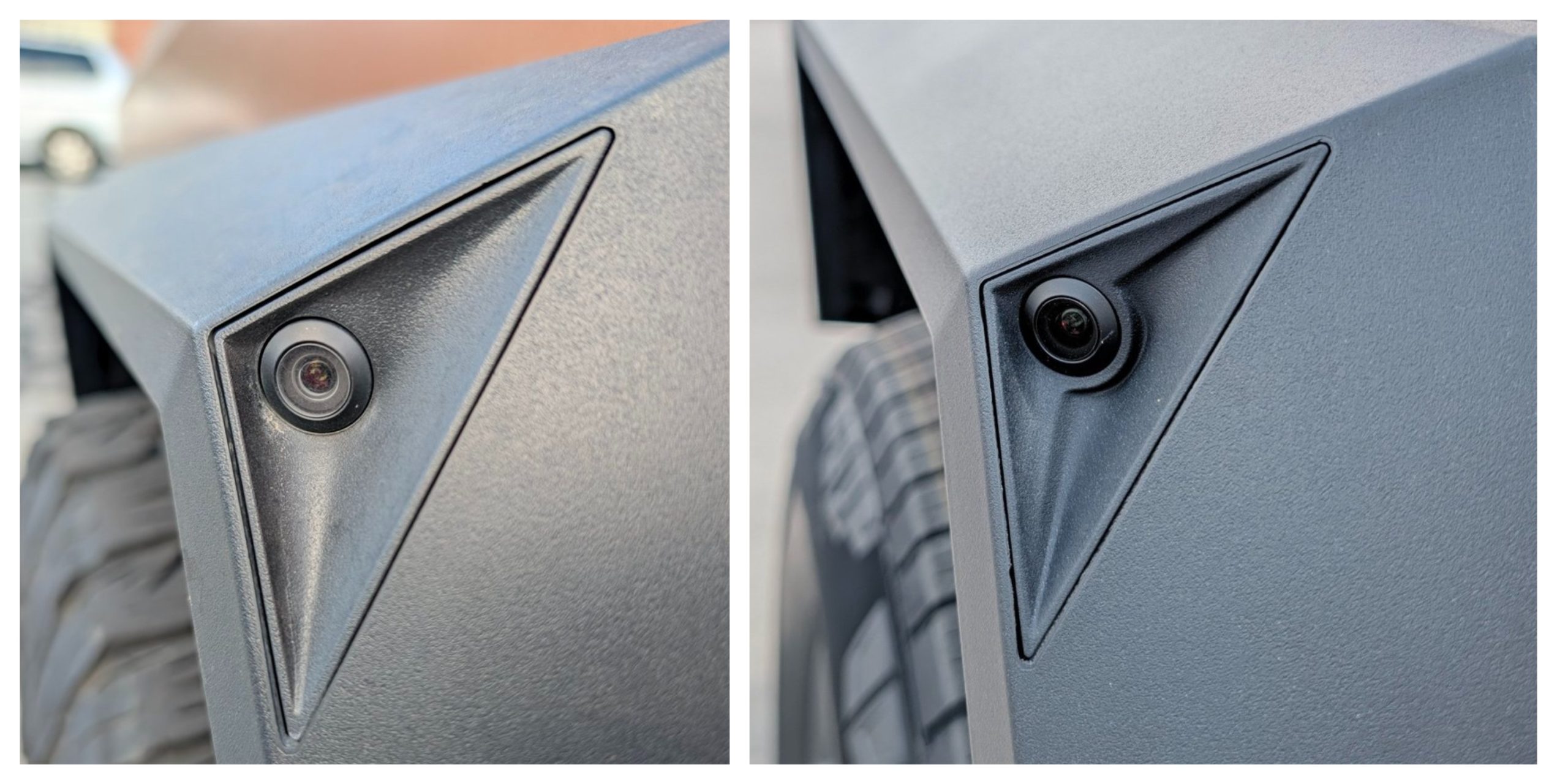
The new housing solves the problem with passive geometry. Subtle changes in the surround create localized airflow disturbances as the vehicle moves. Those eddies physically push water droplets away from the optical surface. Morrill called the result “pure vision improvement” achieved at “no cost penalty.” Once the production mold is updated, every subsequent part costs the same as the original.
The advantages compound quickly. Clearer cameras in rain improve the reliability of driver-assistance features precisely when they are needed most. The design consumes no extra energy and introduces no new failure modes.
New Cybertrucks built after the tooling changeover receive the updated part automatically. Some owners of trucks delivered as late as June 2026 have already confirmed they received the revised housing. Retrofit questions have appeared in replies, and the cameras appear electrically compatible, though Tesla has not announced an official service program.
A few millimeters of reshaped housing will not make headlines the way a new battery pack does, but these changes are incremental and increase the Cybertruck’s effectiveness as a vehicle over time.
This improvement illustrates how Tesla continues to refine the Cybertruck after volume production began. Better wet-weather vision, zero added cost, and no extra hardware add up to a meaningful gain in everyday usability and safety.
The post This tiny Tesla Cybertruck adjustment has big advantages appeared first on TESLARATI.