
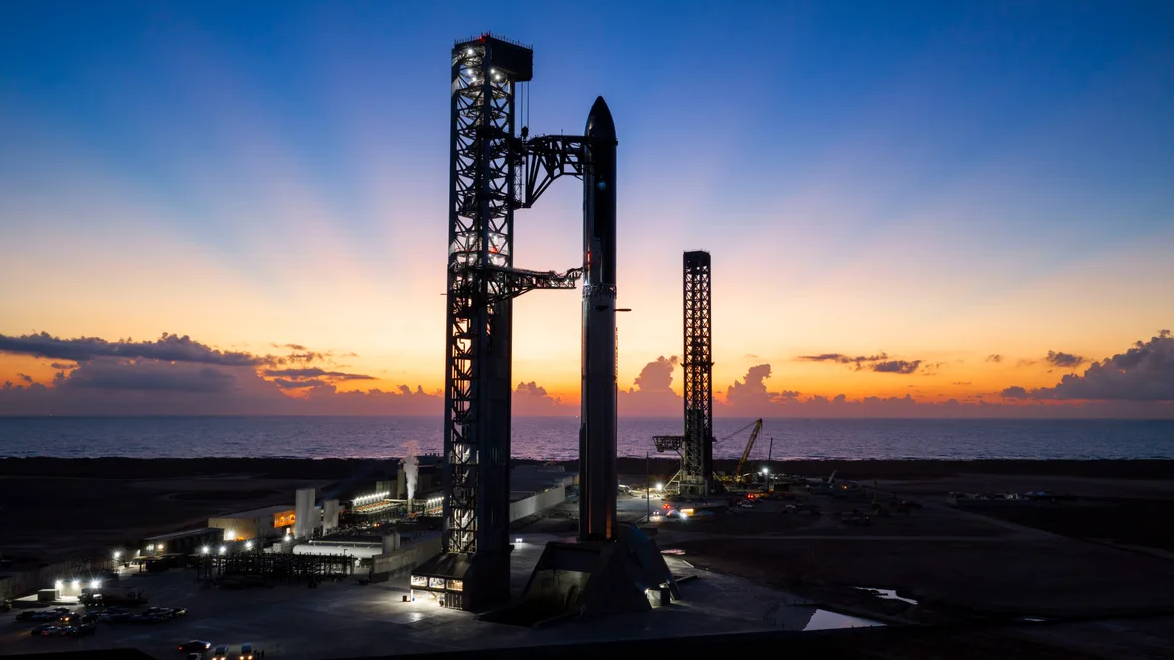
SpaceX’s Crazy Plan & Launch Date To Catch Starship On Flight 15?: Following the major milestones achieved during SpaceX Starship Flight 14, attention is now shifting toward the next ambitious chapter: Flight 15. The upcoming mission could become one of the most important tests yet for the Starship program, especially if SpaceX attempts to catch the returning Starship upper stage with the massive Mechazilla tower arms.
Flight 14 demonstrated that Starship can achieve critical orbital objectives, including satellite deployment and controlled re-entry operations. But Flight 15 is expected to push the system toward something even more ambitious: rapid, tower-based vehicle recovery.
SpaceX Starship Flight 14 Set the Stage
Flight 14 represented a significant step forward for the Starship architecture. The mission demonstrated progress in orbital operations, re-entry control, and payload deployment.
The Starship upper stage S41 successfully reached its planned trajectory and deployed 26 Starlink V3 satellites. Meanwhile, the Super Heavy booster B21 completed its boostback sequence and performed a controlled ocean landing.
These accomplishments showed that the system was progressing toward increasingly complex missions.
However, Flight 14 was not without technical problems.
Raptor Engine Dropouts Created New Challenges
During critical phases of Flight 14, both the Super Heavy booster and Starship upper stage experienced engine dropouts. A problem involving a Raptor Vacuum engine also resulted in the mission’s planned orbital test being shortened.
Instead of continuing the planned approximately 10-hour orbital test, Ship 41 performed its de-orbit sequence after roughly three hours.
That makes engine reliability one of the key issues heading into Flight 15.
Flight 15 Could Attempt the Starship Catch
The biggest potential change for Flight 15 is the possibility of catching Starship S42 directly at the launch tower.
Rather than allowing the upper stage to descend into the ocean, SpaceX’s concept involves guiding Starship back toward the tower and positioning it between the enormous Mechazilla chopstick arms.
How the Mechazilla Catch Could Work
The process would require extremely precise control.
First, Starship S42 would perform a de-orbit burn to establish the correct trajectory. The vehicle would then enter the atmosphere while using its aerodynamic control surfaces to manage its position.
As it approaches the tower, Starship would transition into its terminal landing maneuver.
The final stage would involve aligning the vehicle with the tower’s designated catch zone, allowing the chopstick arms to capture it.
This would be dramatically different from a traditional ocean splashdown.
Why SpaceX Wants To Catch Starship
The tower catch is not simply a spectacular engineering demonstration. It is connected to SpaceX’s larger objective of achieving rapid and full reusability.
Traditional recovery requires a vehicle to land, be transported, inspected, refurbished, and eventually returned to the launch site.
A successful Mechazilla catch could eliminate several of those steps.
From Ocean Recovery to Tower Recovery
With an ocean recovery approach, the vehicle could require transportation from the landing area back to a port or launch facility. Additional inspection and refurbishment would then be necessary.
The tower-based approach is designed to shorten that process.
After being caught, Starship could potentially undergo inspection close to the launch infrastructure before being prepared for another mission.
The source describes the potential difference as moving from recovery timelines measured in days or weeks toward a process potentially measured in hours to days.
That is central to SpaceX’s long-term Starship strategy.
Pad 2 Could Influence the Flight 15 Plan
One of the major logistical constraints surrounding Flight 15 is the availability of launch infrastructure.
According to the provided source, Pad 1 is undergoing upgrades, leaving Pad 2 as the sole operational pad at Starbase during the relevant period.
This creates an important operational challenge.
Trying to recover both the Super Heavy booster and the Starship upper stage at the same tower during the same mission could place additional demands on the launch infrastructure and mission operations.
As a result, the source suggests that SpaceX could prioritize the Starship ship catch.
The Possible Flight 15 Launch Window
The source notes that internal FAA documents had included an aggressive target as early as October 19, while logistical considerations pointed toward a late-October launch window.
However, this should be treated as a target or planning window rather than a guaranteed launch date.
A Starship launch depends on vehicle readiness, engine testing, regulatory requirements, weather, range availability, and launch-site preparations.
Raptor 3 Is Another Major Piece of the Puzzle
The development of Raptor 3 is closely connected to SpaceX’s vision for reusable Starship operations.
According to the source, Raptor 3 incorporates more internalized fluid routing and advanced manufacturing techniques while reducing external plumbing and other hardware.
This approach is intended to produce a lighter and more integrated engine capable of supporting the demanding requirements of Starship.
Manufacturing Remains a Challenge
However, producing these advanced engines is not simple.
Internal regenerative cooling channels require extremely precise manufacturing. Removing external heat-shielding and plumbing means more complexity has to be incorporated directly into the engine structure.
Because Flight 14 experienced Raptor engine dropouts, resolving these reliability issues becomes particularly important before attempting a highly demanding Starship tower catch.
A successful catch would require precise vehicle control during the final stages of flight, leaving little room for engine-related uncertainty.
Rapid Reusability Could Change Starship Economics
The larger objective behind the catch system is operational cadence.
SpaceX ultimately wants Starship to operate more like a reusable transportation system rather than a vehicle that requires lengthy recovery and refurbishment after every flight.
Removing landing legs could also reduce vehicle mass and potentially allow more mass to be dedicated to payload capacity.
A vehicle caught directly at the launch tower could also avoid some of the problems associated with ocean recovery, including transportation and exposure to the marine environment.
Why This Matters for NASA’s Artemis Program
Rapid Starship reuse could have major implications for future lunar missions.
NASA’s Artemis program relies on SpaceX’s Starship Human Landing System for planned lunar operations. The source notes that lunar missions require multiple launches and propellant-refueling operations in low Earth orbit.
That means the Starship architecture must eventually support a high level of launch and reuse coordination.
A reliable recovery system could therefore become an important part of creating the launch cadence needed for more ambitious missions.
Flight 15 Could Be a Defining Starship Test
The significance of Flight 15 goes beyond whether Mechazilla successfully catches Starship S42.
The mission could test several interconnected technologies at once: Raptor reliability, atmospheric re-entry, aerodynamic guidance, tower operations, recovery infrastructure, and rapid reusability.
Flight 14 demonstrated that Starship could reach orbit and deploy a substantial payload, while also exposing engine-related challenges.
Flight 15 could take the next major step by attempting to bring the vehicle back to the launch tower.
The Bigger Starship Vision
SpaceX’s long-term Starship architecture depends on making the vehicle fully reusable, rapidly recoverable, and capable of repeated launches.
A successful tower catch would therefore represent more than an impressive landing technique. It would demonstrate a recovery philosophy designed around speed, repeatability, and reduced turnaround time.
At the same time, planetary science missions such as NASA’s OSIRIS-REx continue revealing information about the origins of the solar system, showing how modern space exploration combines transportation technology with scientific discovery.
Conclusion
SpaceX Flight 15 could become another major milestone in the evolution of Starship. The source identifies a potential late-October launch window, with an earlier October 19 target also discussed, while emphasizing that infrastructure and technical readiness could affect the actual schedule.
The most exciting possibility is the attempted Mechazilla catch of Starship S42.
If SpaceX can demonstrate reliable re-entry, precise terminal guidance, and a successful tower capture, it would provide another important piece of the company’s broader rapid-reusability strategy.
But before that can happen, the lessons from Flight 14’s Raptor engine issues and the realities of Starbase’s limited launch infrastructure will remain critical factors. Flight 15 is therefore not just another Starship launch—it could be a major test of whether the program can move closer to its vision of fast, repeatable, full-stack reuse.
FAQs
1. What is SpaceX Starship Flight 15?
Starship Flight 15 is the upcoming mission discussed in the source, with a major focus on testing the next stage of Starship recovery and reusability.
2. Will SpaceX try to catch Starship on Flight 15?
The source identifies a potential attempt to catch Starship S42 using the Mechazilla chopstick arms at the launch tower.
3. What is Mechazilla?
Mechazilla is SpaceX’s large launch-tower recovery system, featuring movable chopstick arms designed to handle and potentially catch Starship vehicles.
4. Which Starship could be caught on Flight 15?
The source identifies Starship S42 as the upper-stage vehicle targeted for the potential tower-catch attempt.
5. How would the Starship catch work?
Starship would perform a de-orbit burn, control its atmospheric re-entry using its aerodynamic surfaces, execute a terminal landing maneuver, and align with the tower’s catch zone for the chopstick arms.
6. When could Starship Flight 15 launch?
The source discusses an aggressive October 19 target, while logistical considerations point toward a late-October launch window. The actual launch timing would depend on readiness and other operational factors.
7. What happened during Starship Flight 14?
Flight 14 demonstrated important capabilities including orbital insertion, Starlink V3 deployment, boostback operations, and controlled re-entry. It also experienced engine-related problems.
8. How many Starlink satellites were deployed on Flight 14?
The Starship upper stage successfully deployed 26 Starlink V3 satellites during Flight 14.
9. What engine problems occurred during Flight 14?
The source states that both the Super Heavy booster and upper stage experienced engine dropouts during critical phases of the mission. A Raptor Vacuum engine issue also shortened the planned orbital test.
10. Why is Raptor 3 important for Starship?
Raptor 3 is intended to support Starship’s long-term reusable architecture through a more integrated engine design, including reduced external plumbing and advanced manufacturing techniques.
11. What is the main challenge with Raptor 3 manufacturing?
The source highlights the difficulty of manufacturing internal regenerative cooling channels with the extremely tight tolerances required by the engine’s integrated design.
12. Why does SpaceX want to catch Starship instead of landing it in the ocean?
A tower catch could reduce the recovery process by avoiding ocean transport, additional recovery logistics, and some refurbishment steps, supporting faster vehicle turnaround.
13. Could a tower catch improve Starship’s launch cadence?
The goal is to enable rapid reusability, potentially allowing a recovered Starship to undergo inspection and preparation much closer to the launch site.
14. What role does Pad 2 play in Flight 15?
According to the source, Pad 2 is the sole operational pad at Starbase while Pad 1 is undergoing upgrades. This could influence how SpaceX approaches booster and ship recovery during Flight 15.
15. How could Starship Flight 15 support NASA’s Artemis program?
The source connects rapid Starship reuse with NASA’s Artemis program, particularly because lunar Starship missions require multiple launches and propellant-refueling operations in low Earth orbit.
16. Why would a successful Starship catch be important?
A successful Mechazilla catch would demonstrate another major component of SpaceX’s planned full and rapid reusability architecture, moving the recovery concept closer to operational use.
Read More:
- Elon Musk and Trump are closer than ever, and Tesla could be the big winner
- Tesla snags $30B in fresh credit lines for expanding its biggest projects
- Elon Musk weather update tips Tesla Roadster speculation into Plaid Mode
- What Actually Happened On SpaceX’s FOURTEENTH Starship Test Flight
- Raptor 3 Failed! SpaceX revealed All Secrets on Starship Flight 14 Problem