
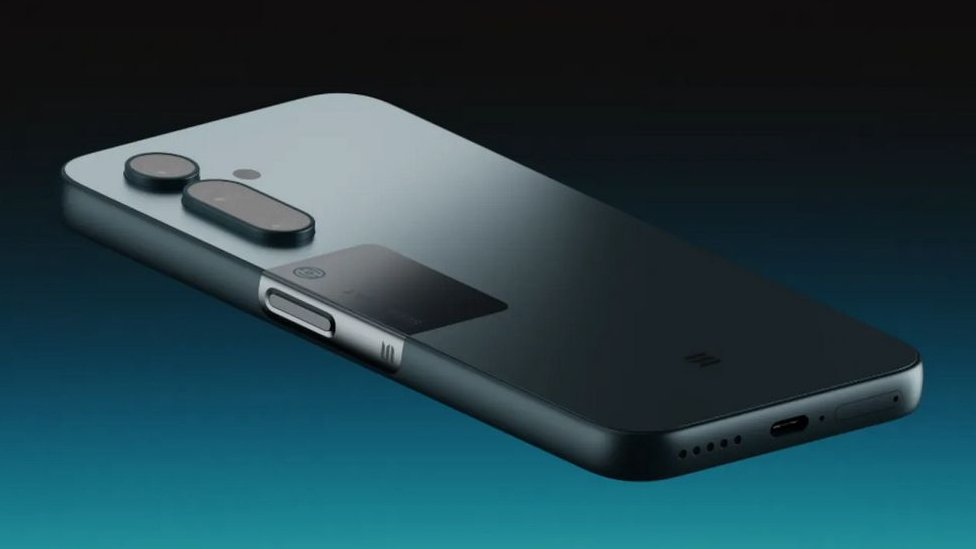
NEW Tesla Cell Phone ( Pi Phone ): The smartphone industry could be heading toward a major transformation as satellite connectivity, direct-to-cell technology, and next-generation wireless networks continue to develop. One of the most talked-about concepts is the rumored Tesla Model Pi (π) Phone, a theoretical Tesla smartphone that could potentially connect with SpaceX Starlink satellites instead of relying entirely on traditional cellular towers.
A viral technology analysis from PLUGGED EV explores how a potential Tesla phone combined with Starlink Direct-to-Cell could challenge the traditional telecommunications model. The concept is especially disruptive because it imagines connectivity that could work in areas where conventional cell towers are unavailable.
However, it is important to distinguish online speculation from confirmed Tesla products. The source describes the Pi Phone as a theoretical concept rather than a confirmed Tesla smartphone. The larger technology shift, meanwhile, centers on Starlink Direct-to-Cell infrastructure.
Tesla Pi Phone: Is Tesla Really Building a Smartphone?
For years, rumors about a Tesla Pi Phone have circulated across the internet. Concept designs have imagined everything from solar-powered smartphone bodies to advanced neural interfaces.
Tesla CEO Elon Musk has historically questioned the need for Tesla to build a conventional smartphone. The source notes that Musk has described the mobile operating-system market as a duopoly dominated by iOS and Android, while indicating that Tesla might consider a phone if existing platforms became restrictive toward Tesla applications.
That distinction matters.
The potential disruption does not necessarily depend on Tesla manufacturing a smartphone. Instead, Starlink Direct-to-Cell could provide the underlying connectivity architecture that makes a different kind of mobile experience possible.
Starlink Direct-to-Cell Changes the Connectivity Model
Starlink’s Direct-to-Cell approach uses low-Earth-orbit satellites equipped with cellular networking technology. Instead of requiring users to carry a specialized satellite phone, compatible ordinary cellular devices can potentially communicate directly with satellites.
This creates an entirely different connectivity model.
Traditional smartphones generally communicate with a nearby terrestrial cell tower. A satellite-connected device could instead communicate with an orbital network, extending connectivity into locations where terrestrial infrastructure is difficult or expensive to deploy.
The $172 Billion Carrier Shock Explained
The most dramatic part of the concept is the potential impact on the traditional wireless carrier business model.
Telecommunications companies spend enormous amounts of money acquiring spectrum, leasing property, constructing cell towers, installing fiber backhaul, and maintaining terrestrial infrastructure. Those expenses ultimately become part of the economics behind monthly wireless plans, roaming services, and international data packages.
A satellite-first connectivity model could challenge some of those assumptions.
1. Reducing Cellular Dead Zones
One of the biggest advantages of satellite connectivity is geographical reach.
Traditional cellular networks require physical infrastructure. Remote deserts, oceans, mountains, and isolated rural regions can be difficult and expensive to cover with conventional towers.
A LEO satellite constellation, by contrast, moves above the Earth’s surface and can potentially provide connectivity across areas where installing towers is impractical.
This could be especially important for remote communications, emergency connectivity, travel, and off-grid locations.
2. Reducing Dependence on Physical Infrastructure
Traditional networks require thousands of physical locations and extensive maintenance.
A large satellite constellation requires substantial investment as well, but the source argues that its economics could scale differently because satellites can provide broad geographic coverage without requiring a separate cell tower for every local area.
The result could be a gradual shift from tower-based connectivity toward satellite-supported connectivity.
3. Challenging the Carrier Middleman
The most disruptive possibility is direct connectivity between a compatible device and a satellite network.
If consumers could obtain substantial mobile connectivity without depending on a traditional mobile network operator, some conventional services—including roaming arrangements and carrier-specific plans—could face pressure.
That is the foundation behind the source’s $172 billion carrier shock concept.
Tesla Pi Phone Could Become More Than a Smartphone
If Tesla ever developed a dedicated mobile device, its potential value would not necessarily come from phone calls or messaging alone.
The bigger opportunity could be ecosystem integration.
Tesla already operates across vehicles, energy products, software, and other technologies. A Tesla-branded mobile device could theoretically become a central control and authentication platform connecting these products.
Deep Tesla Vehicle Integration
A Tesla phone could theoretically provide a deeper connection with Tesla vehicles.
Possible applications described by the source include keyless vehicle access, climate pre-conditioning, Sentry Mode connectivity, and vehicle monitoring in areas with limited terrestrial cellular coverage.
For Tesla’s envisioned autonomous transportation ecosystem, a connected device could also serve as an interface for monitoring, summoning, and managing autonomous vehicles.
This would transform a smartphone from a communication device into a potential vehicle-control hub.
Energy Management From Anywhere
The same concept could extend into Tesla’s energy business.
Tesla’s ecosystem includes Powerwall, Megapack, and Solar Roof products. These systems depend on connectivity for monitoring and optimization.
A deeply integrated Tesla device could theoretically allow users to control and monitor home energy systems without depending entirely on a local internet provider.
That could be particularly valuable for remote properties, emergency situations, and off-grid environments.
Speculated Tesla Pi Phone Hardware
Online concepts surrounding the Tesla Pi Phone often imagine hardware designed around satellite connectivity.
The source describes several speculative possibilities, including a photochromic backplate, solar-assisted trickle charging, Tesla software integration, and a Starlink-centered network architecture.
| Feature | Traditional Smartphone | Speculated Tesla Pi Concept |
|---|---|---|
| Network | 4G/5G Towers | Starlink Direct-to-Cell + Terrestrial Mesh |
| Back Design | Aluminum/Glass | Photochromic Backplate |
| Emergency Power | USB-C Power Banks | Solar Trickle Charging |
| Ecosystem | App Store/Play Store | Tesla + Starlink + X Integration |
| Connectivity | Terrestrial Networks | Orbital + Terrestrial Networks |
These features remain speculative concepts, rather than confirmed Tesla specifications.
Could Solar Charging Actually Work?
A solar-powered smartphone sounds revolutionary, but there are significant engineering limitations.
A smartphone’s surface area is relatively small, meaning an integrated photovoltaic panel would produce limited power. The source therefore describes low-efficiency solar trickle charging as a more realistic potential application than completely powering a smartphone through sunlight.
Even limited solar generation could theoretically help with emergency location broadcasting or maintaining minimal battery capacity during off-grid situations.
The Biggest Challenges for a Satellite Smartphone
Despite the enormous potential, replacing conventional cellular networks with satellite connectivity would not happen overnight.
Bandwidth Limitations
Satellite-to-cell systems can be useful for lower-bandwidth services such as messaging and emergency communications, but supporting millions of simultaneous high-bandwidth users would be considerably more difficult.
Dense cities already benefit from enormous terrestrial network capacity. Matching that capacity from orbit would require substantial satellite infrastructure and spectrum resources.
Regulatory Barriers
Wireless spectrum is heavily regulated around the world.
Satellite operators and terrestrial carriers must operate within national and international telecommunications frameworks. The source suggests that regulatory issues could become a major challenge if satellite networks attempt to bypass traditional mobile operators on a global scale.
Battery Consumption
Communicating directly with satellites hundreds of kilometers above Earth creates another engineering challenge.
A compact smartphone must balance transmission power, battery life, heat generation, and antenna performance. Making satellite communication seamless without significantly reducing battery life remains an important technical consideration.
The Future of Mobile Connectivity
The Tesla Pi Phone remains a speculative concept, but the technology surrounding the idea is more significant than the rumors themselves.
The combination of Starlink Direct-to-Cell, LEO satellites, compatible smartphones, and increasingly connected vehicles could gradually change how people think about mobile connectivity.
Instead of asking which cell tower provides coverage, users could eventually rely on an increasingly integrated combination of terrestrial networks and satellites.
Whether Tesla eventually produces a phone or not, the broader shift toward direct-to-cell satellite communication could reshape parts of the telecommunications industry.
The future smartphone may not simply be a faster version of today’s device. It could become a global connectivity hub, connecting people, vehicles, energy systems, and other technologies from virtually anywhere.
FAQs
1. What is the Tesla Pi Phone?
The Tesla Pi Phone, also called the Tesla Model Pi, is a rumored or speculative smartphone concept associated with Tesla. The source does not confirm that Tesla is officially producing such a device.
2. Will the Tesla Pi Phone use Starlink?
The concept envisions integration with Starlink Direct-to-Cell, allowing compatible devices to communicate with satellites rather than relying exclusively on traditional cell towers.
3. What is Starlink Direct-to-Cell?
Starlink Direct-to-Cell is a satellite connectivity approach in which satellites equipped with cellular networking technology can communicate directly with compatible cellular devices.
4. Can the Tesla Pi Phone work without cell towers?
The proposed concept could provide connectivity without depending entirely on nearby terrestrial cell towers. However, the source describes this as a potential technology model rather than a confirmed Tesla phone feature.
5. What does the $172 billion carrier shock mean?
The $172 billion carrier shock refers to the potential disruption that satellite-based connectivity could create for traditional wireless carriers by reducing dependence on physical infrastructure, roaming services, and conventional carrier networks.
6. Would the Tesla Pi Phone eliminate mobile carriers?
Not necessarily. The source presents the possibility that direct satellite connectivity could reduce dependence on traditional carriers, but regulatory, bandwidth, and technical limitations remain significant obstacles.
7. Could the Tesla Pi Phone provide global coverage?
A satellite-based network could potentially provide connectivity across remote areas, oceans, deserts, and other locations where traditional cellular infrastructure is difficult to deploy.
8. Could the Tesla Pi Phone control Tesla vehicles?
The concept could potentially integrate deeply with Tesla vehicles, supporting functions such as keyless access, climate control, Sentry Mode monitoring, and vehicle management.
9. Could the Pi Phone connect to Tesla Energy products?
The source suggests that a Tesla mobile device could potentially interact with products such as Powerwall, Megapack, and Solar Roof, providing centralized monitoring and energy-management capabilities.
10. Will the Tesla Pi Phone have solar charging?
Some speculative concepts include a solar-powered or solar-assisted back panel. However, the source explains that limited surface area would make full solar-powered operation challenging, with solar trickle charging being a more realistic concept.
11. What could make the Tesla Pi Phone different from an iPhone or Android phone?
The proposed difference is its potential integration of Starlink connectivity, Tesla vehicles, Tesla Energy, and other parts of the Tesla ecosystem, rather than simply offering another conventional smartphone.
12. Could the Tesla Pi Phone work in remote areas?
Potentially, satellite connectivity could help provide communication in remote and off-grid locations where conventional cell towers are unavailable or difficult to install.
13. What are the biggest challenges for the Tesla Pi Phone?
Major challenges include satellite bandwidth, regulatory approval, power consumption, spectrum availability, and network capacity. These factors could limit how extensively satellite connectivity can replace terrestrial networks.
14. Is the Tesla Pi Phone officially confirmed?
The provided source does not confirm an official Tesla Pi Phone launch. It distinguishes online speculation about a Tesla smartphone from the actual development of Starlink Direct-to-Cell infrastructure.
15. Could Starlink Direct-to-Cell change the smartphone industry?
The source argues that direct-to-cell satellite connectivity could significantly change mobile communications by reducing reliance on traditional cellular infrastructure and expanding connectivity into areas that terrestrial networks struggle to serve.
Read More:
- Elon Musk and Trump are closer than ever, and Tesla could be the big winner
- Tesla snags $30B in fresh credit lines for expanding its biggest projects
- Elon Musk weather update tips Tesla Roadster speculation into Plaid Mode
- What Actually Happened On SpaceX’s FOURTEENTH Starship Test Flight
- Raptor 3 Failed! SpaceX revealed All Secrets on Starship Flight 14 Problem