
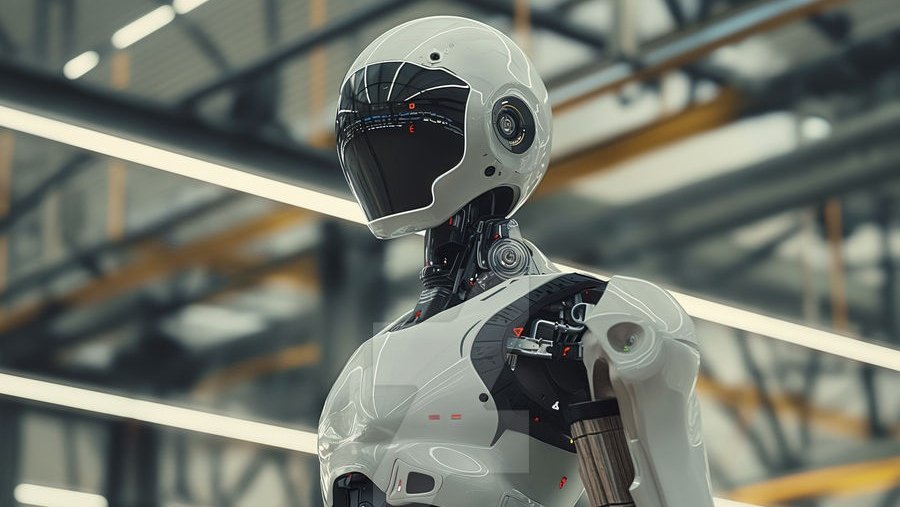
2027 Tesla Bot Gen 3 LEARNS 500 INSANE Tasks! AMAZING Upgrade: Tesla is pushing the boundaries of humanoid robotics with its ambitious Optimus Gen 3 development program. Under the leadership of Elon Musk, the company is working to transform humanoid robots from experimental machines into practical assistants capable of performing complex industrial and household tasks. With early production activities taking shape in Fremont, California, Tesla is preparing for a future in which intelligent robots could become an essential part of manufacturing and everyday life.
The 2027 Tesla Bot Gen 3 represents a significant step toward this vision, with improvements in hand dexterity, artificial intelligence, autonomous decision-making, and manufacturing scalability. Tesla is also targeting commercial deliveries to external enterprise customers by the end of 2027, although the timeline will depend on engineering progress, reliability, and production readiness.
Tesla Optimus Gen 3: A Major Humanoid Robot Upgrade
The third-generation Optimus platform is designed to move beyond controlled demonstrations and become a more capable general-purpose humanoid robot. Unlike traditional industrial robots that perform repetitive movements in fixed positions, Optimus is intended to operate in environments designed for humans.
Advanced Hand Dexterity and Tactile Sensors
One of the biggest challenges in humanoid robotics is developing hands that can perform delicate movements while maintaining sufficient strength for demanding work.
Optimus Gen 3 is expected to feature significant improvements in hand articulation, compact actuators, tactile sensing, and finger control. These technologies could help the robot manipulate objects of different shapes, sizes, and textures.
For example, a humanoid robot must apply the correct amount of pressure when picking up a drinking glass. It must also recognize when an object begins slipping and adjust its grip before dropping it.
Similarly, handling cleaning equipment, organizing household items, and manipulating industrial tools requires coordinated movements and accurate feedback.
These capabilities could make Optimus more useful in factories, warehouses, logistics facilities, and eventually homes. However, consistent performance across a wide variety of objects remains an important technical challenge.
Learning 500 Different Tasks
Another major objective for Tesla is teaching Optimus to perform hundreds of different tasks instead of relying on a limited collection of programmed movements.
The proposed 500-task benchmark highlights the ambition to develop a robot that can perform activities such as sorting objects, cleaning surfaces, organizing materials, and handling tools.
However, the real achievement would not simply be demonstrating 500 individual tasks. The robot must also learn to transition between activities, recognize changing conditions, and recover from unexpected problems.
For instance, if an object slips from its hand, Optimus should ideally recognize the mistake and attempt to recover. If a pathway becomes blocked, it should identify an alternative route rather than immediately requiring human assistance.
Developing these capabilities will require advances in robotic reasoning, perception, motion planning, and autonomous decision-making.
The ultimate goal is to create a machine that can adapt to unfamiliar situations rather than simply repeat movements demonstrated during training.
Tesla AI5 Chip Could Transform Optimus Gen 3
Artificial intelligence computing power will play a crucial role in the next generation of Tesla’s humanoid robots.
More Powerful Onboard AI Processing
Tesla is expected to integrate its next-generation AI5 chip into its broader robotics and AI development efforts, with the supplied timeline pointing toward April 2027. The precise integration schedule and performance specifications should be treated as targets rather than confirmed production outcomes.
The AI5 platform is expected to provide a substantial improvement over earlier hardware. The source material suggests approximately 10 times the performance of AI4, although this figure should not be interpreted as a verified, across-the-board improvement for every workload.
For Optimus, more computing power could enable faster processing of camera feeds, sensor information, and neural network predictions.
Instead of depending entirely on remote computing systems, a capable onboard processor could allow the robot to make important decisions locally.
Real-Time Decision-Making and Autonomous Movement
A humanoid robot must continuously interpret its surroundings while coordinating its arms, legs, hands, and balance.
For example, walking through a busy warehouse requires Optimus to recognize obstacles, estimate distances, adjust its movements, and maintain stability.
Onboard AI processing could help reduce decision-making delays and support more responsive behavior.
Nevertheless, processing power alone cannot guarantee intelligence. Tesla must also develop reliable software, effective training methods, robust sensors, and safety systems that work together under real-world conditions.
Tesla’s Robot University: How Optimus Learns Human Tasks
Training a general-purpose humanoid robot requires enormous amounts of useful data. Tesla is pursuing a human-demonstration approach to help Optimus understand how people perform everyday activities.
Motion-Capture Suits and Advanced Sensors
According to the supplied information, workers at Tesla’s research facilities in Palo Alto and Texas use specialized motion-capture equipment to demonstrate household and industrial tasks.
These systems reportedly include 25-pound sensor-equipped suits, with configurations featuring up to 40 cameras and 3D sensor arrays.
The equipment is designed to record human movements, hand positions, and interactions with objects.
Workers can demonstrate activities such as preparing meals, cleaning surfaces, moving materials, and organizing equipment. The recorded demonstrations can then contribute to the training data used to develop robotic behaviors.
Operating across multiple shifts could allow Tesla to collect a broad range of demonstrations and expand its training datasets.
However, the quality and diversity of the data are just as important as the quantity. A robot must learn how to respond when objects move unexpectedly, lighting conditions change, or familiar tasks occur in unfamiliar environments.
Bridging the Gap Between Human Demonstrations and Robotics
Tesla’s experience with computer vision and neural networks provides a potential foundation for its humanoid robotics program.
Its vehicles use camera-based perception systems to interpret roads, identify objects, and support autonomous driving features. Optimus faces a related but substantially different challenge: understanding three-dimensional environments while physically interacting with them.
A humanoid robot must coordinate perception with precise physical movements.
Human demonstration data could help Optimus learn how actions relate to their outcomes. For example, the robot might learn how to grasp a container, lift it without spilling its contents, and place it on a shelf.
The challenge is transferring those learned behaviors to different objects, environments, and physical conditions.
If Tesla successfully addresses this problem, Optimus could become more adaptable and require less task-specific programming.
Tesla Optimus Mass Production Target: 20,000 Robots Per Week
Developing a capable robot is only one part of Tesla’s larger ambition. Manufacturing humanoid robots at an industrial scale presents another major challenge.
Fremont and Texas Manufacturing Expansion
Tesla’s Fremont facility in California has been associated with its early Optimus production efforts. The company is also pursuing broader manufacturing capabilities to support future robotics expansion.
According to the supplied material, the initial production-line architecture was designed with a long-term capacity target of 1 million robots annually.
At that output level, production would average approximately 19,200 robots per week when calculated across 52 weeks.
Elon Musk has also outlined an ambitious target of approximately 20,000 robots per week, equivalent to around 1.04 million robots annually if sustained throughout the year.
These figures describe ambitious capacity goals, not proof that Tesla is already producing robots at those rates.
Reaching such volumes would require highly automated assembly lines, dependable component suppliers, efficient quality-control processes, and consistent manufacturing performance.
Why Robot Manufacturing Is So Difficult
Humanoid robots combine mechanical systems, electrical components, software, cameras, actuators, batteries, and sophisticated control electronics.
Every component must work reliably with the rest of the machine.
For example, a small calibration error in a robotic hand could reduce its ability to manipulate delicate objects. Wear in a joint could affect movement accuracy, while unreliable sensors could interfere with balance or object recognition.
Tesla must therefore focus on more than increasing assembly speed.
Manufacturing reliability, component quality, sensor accuracy, and long-term durability will be essential to making Optimus commercially practical.
Large-scale production will become valuable only when the robots can consistently perform useful work with manageable maintenance requirements.
Tesla Optimus Gen 3 Commercial Deliveries Targeted for 2027
Tesla’s long-term robotics strategy extends beyond internal factory operations.
According to the supplied timeline, the company is targeting the beginning of external commercial deliveries by the end of 2027. This remains a target rather than a guaranteed launch date.
Industrial Applications Could Come First
Factories and industrial facilities could provide an attractive starting point for humanoid robots.
These environments often contain repetitive workflows, structured operating procedures, and tasks that may expose human workers to physical strain or hazardous conditions.
Optimus could potentially assist with moving materials, sorting components, transporting supplies, and performing selected repetitive operations.
Businesses would need to evaluate the robot’s productivity, safety, reliability, maintenance costs, and overall operating expenses before adopting it at scale.
The Future of Household Humanoid Robots
Beyond factories, Tesla ultimately envisions humanoid robots performing useful tasks in everyday environments.
Potential applications include organizing household items, assisting with cleaning, transporting objects, and helping people complete routine activities.
However, domestic environments are considerably less predictable than controlled industrial workspaces.
A household robot must handle clutter, interact safely with people and pets, and recognize objects it has never encountered before.
Achieving dependable performance across these situations will require continued progress in AI training, dexterity, perception, and autonomous control.
Conclusion: Is Tesla Optimus Gen 3 Ready to Change Robotics?
The 2027 Tesla Bot Gen 3 represents an ambitious effort to combine advanced artificial intelligence, human-like dexterity, large-scale manufacturing, and autonomous task execution.
Its development strategy emphasizes several important areas: improved robotic hands, training through human demonstrations, next-generation computing, and production capacity targeting approximately 20,000 robots per week.
The proposed ability to perform hundreds of different tasks could eventually make Optimus useful across factories, warehouses, and other environments. Meanwhile, Tesla’s targeted external deliveries by the end of 2027 could mark an important milestone if the company achieves the required performance and reliability.
Nevertheless, major challenges remain. Reliable autonomous operation, affordable manufacturing, component durability, and safe interaction with people will determine whether the technology succeeds commercially.
If Tesla can overcome these obstacles, Optimus could become an important part of the emerging humanoid robotics industry. For now, its ambitious targets offer a glimpse into a future where intelligent machines may increasingly assist humans with repetitive, physically demanding, and time-consuming work.
FAQs
1. What is Tesla Optimus Gen 3?
Tesla Optimus Gen 3 is the third-generation version of Tesla’s humanoid robot program. It is designed to perform a wide range of tasks using artificial intelligence, advanced robotic hands, sensors, and autonomous movement.
2. What makes the 2027 Tesla Bot Gen 3 different from previous versions?
The 2027 Tesla Bot Gen 3 is expected to feature improvements in hand dexterity, tactile sensing, AI processing, and autonomous task execution. These upgrades could help the robot manipulate delicate objects and perform complex movements.
3. Can Tesla Optimus Gen 3 really learn 500 different tasks?
Tesla aims to develop a humanoid robot capable of performing hundreds of tasks, including cleaning, sorting, organizing, and handling tools. The proposed 500-task benchmark emphasizes versatility, although reliable autonomous performance remains a challenge.
4. When will Tesla Optimus Gen 3 be available commercially?
Tesla is targeting external commercial deliveries by the end of 2027. However, this remains a target and depends on technological development, manufacturing readiness, and reliability testing.
5. What is the Tesla AI5 chip, and how could it improve Optimus Gen 3?
The Tesla AI5 chip is a next-generation AI computing platform expected to support advanced artificial intelligence applications. Greater onboard computing capability could help Optimus process sensor information, recognize objects, and make movement decisions more efficiently.
6. How does Tesla train its Optimus humanoid robot?
Tesla uses human demonstrations and AI training methods to develop robotic capabilities. Workers demonstrate everyday activities using specialized equipment that captures movements and interactions with objects. These demonstrations help train neural networks to perform useful tasks.
7. What is Tesla’s Robot University?
Tesla’s Robot University refers to its human-demonstration and training-data approach for teaching Optimus different tasks. Workers demonstrate activities such as cleaning, organizing, and handling materials to help improve the robot’s real-world capabilities.
8. How many cameras and sensors are used to train Tesla Optimus?
The supplied information describes specialized motion-capture suits equipped with up to 40 cameras and 3D sensor arrays. These systems capture detailed human movements and interactions with objects to support robotic training.
9. How many Tesla Optimus robots does Elon Musk want to produce each week?
Elon Musk has outlined an ambitious production target of approximately 20,000 Optimus robots per week. Achieving this rate would require highly automated manufacturing facilities, reliable component supplies, and consistent quality control.
10. Where will Tesla Optimus Gen 3 robots be manufactured?
Tesla’s early Optimus production activities are associated with its Fremont, California, facility, while Texas is also part of its broader robotics development and manufacturing efforts.
11. What is Tesla’s annual production target for Optimus robots?
The supplied material describes a long-term production-line capacity target of approximately 1 million robots per year. This is an ambitious manufacturing objective rather than confirmed annual production.
12. What jobs could Tesla Optimus Gen 3 perform?
Optimus could potentially perform repetitive and physically demanding tasks, including sorting components, transporting materials, organizing supplies, handling tools, and assisting with cleaning activities.
13. Can Tesla Optimus Gen 3 work inside people’s homes?
Tesla envisions humanoid robots eventually assisting with household activities such as organizing objects, moving items, and completing routine chores. However, domestic use will require improvements in autonomous decision-making, safety, and adaptability.
14. What are the biggest challenges facing Tesla Optimus Gen 3?
The main challenges include developing dexterous robotic hands, training AI to handle unfamiliar situations, improving sensor accuracy, ensuring component durability, and scaling manufacturing while keeping costs manageable.
15. Could Tesla Optimus Gen 3 transform the future of robotics?
Tesla Optimus Gen 3 could contribute significantly to general-purpose humanoid robotics if it achieves its performance and production goals. Its long-term impact will depend on real-world performance, affordability, reliability, and commercial adoption.
Read More:
- The $119 Billion GigaFactory | Inside New Elon Musk’s Terafab Revealed
- Tesla owners who tap Emergency Drive Away for fun are in for a surprise
- Wow! Starship Flight 15 will 24 Hours on Orbit
- Elon Musk Unveils NEXT-GEN Battery! 4 HUGE Upgrades
- 2027 Tesla Model 2 Finally Goes on Sale in November! Elon Musk Confirms Official Price & Design
2 thoughts on “2027 Tesla Bot Gen 3 LEARNS 500 INSANE Tasks! AMAZING Upgrade”