
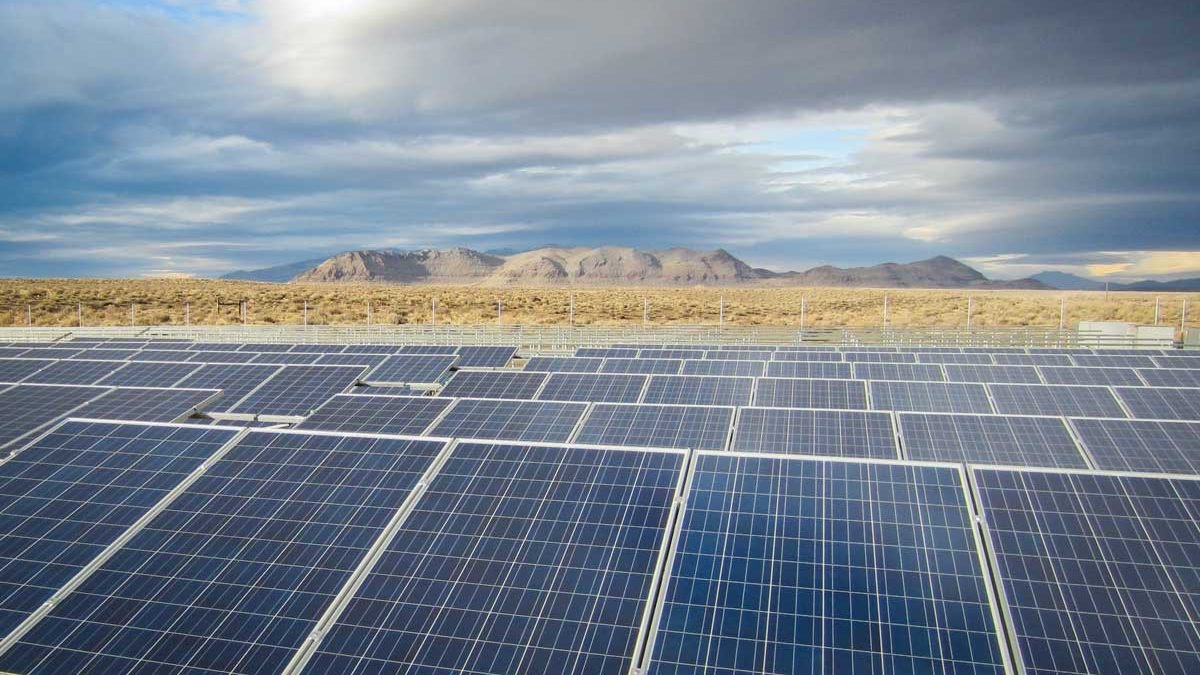
Elon Musk’s World’s First 1000GW Solar Factory SHOCKED Energy Industry: Elon Musk is preparing to reshape the global energy industry with an ambitious vision combining massive solar manufacturing, advanced battery storage, autonomous transportation, and next-generation factory automation. At the center of this strategy is Project Crystal Sun, a proposed $10.1 billion solar manufacturing complex in Texas that could become a major step toward expanding America’s domestic solar production capacity.
However, Tesla’s ambitions go far beyond building another solar factory. The company is positioning itself to address one of the biggest challenges facing the artificial intelligence industry: electricity. At the same time, Tesla is reconsidering its vehicle production priorities, shifting resources toward the Cybercab robotaxi and developing increasingly powerful manufacturing technologies.
These developments reveal a broader industrial strategy that could transform how energy is produced, stored, and consumed.
Project Crystal Sun: Tesla’s $10.1 Billion Solar Factory
One of the most significant developments in Elon Musk’s energy strategy is Project Crystal Sun, a proposed solar cell and panel manufacturing facility in Fort Bend County, Texas, approximately 40 minutes from Houston.
The project represents a reported $10.1 billion investment, with the majority of the funding directed toward industrial machinery and production equipment rather than conventional buildings and offices.
The proposed investment includes approximately:
- $1.5 billion for land and property assets.
- $8.6 billion for manufacturing equipment and industrial machinery.
- Approximately 3,000–3,500 acres of industrial development.
- Around 9,712 permanent full-time jobs.
- Approximately 1,147 peak construction jobs.
According to the project timeline described in the source, construction is targeted for completion in 2028, with commercial production expected to begin in the first quarter of 2029.
Why Tesla Is Investing Billions in Solar Manufacturing
The timing of this investment is particularly important because electricity demand is increasing rapidly.
Artificial intelligence systems require enormous computing resources. Large data centers operate thousands of powerful servers, advanced networking equipment, and sophisticated cooling systems. All these technologies consume significant amounts of electricity.
While much of the attention surrounding AI focuses on advanced chips and computing performance, reliable electricity generation could become an equally important limitation.
Tesla appears to recognize this opportunity. By manufacturing solar panels and combining them with large-scale battery storage systems, including its Megapack technology, the company could provide a more complete energy solution.
Instead of simply selling electricity-related products, Tesla could help customers generate, store, and manage their own power.
Tesla’s Vertical Integration Could Transform the Solar Industry
A major difference between Project Crystal Sun and many conventional solar manufacturing operations is its proposed vertically integrated production model.
Historically, several solar manufacturers have assembled finished panels using photovoltaic cells and components produced elsewhere. This approach can create supply-chain vulnerabilities, particularly when manufacturers depend heavily on overseas suppliers.
Project Crystal Sun aims to bring multiple manufacturing stages together under one industrial operation.
1. Silicon Ingots and Wafers
The manufacturing process begins with silicon, one of the most important materials used in photovoltaic technology.
Silicon is melted and processed into large crystalline ingots. These ingots are then sliced into extremely thin wafers that become the foundation of solar cells.
2. Advanced Solar Cell Processing
The wafers move through specialized production equipment where their surfaces are treated and electrical properties are improved.
This stage includes:
- Surface coating and processing.
- Electrical contact printing.
- Metallization.
- Clean-room manufacturing.
- Automated inspection and quality control.
These processes transform basic silicon wafers into functional photovoltaic cells capable of converting sunlight into electricity.
3. Complete Solar Module Assembly
The final stage involves testing, connecting, and assembling individual solar cells into finished solar modules.
By bringing these processes together, Tesla could reduce dependence on external suppliers, improve manufacturing efficiency, and gain greater control over product quality.
The Ambition Behind 100 Gigawatts and Beyond
The broader vision discussed in the source involves approximately 100 gigawatts of annual U.S. solar manufacturing capacity, alongside much larger long-term ambitions reaching terawatt-scale production.
These targets would represent an enormous expansion of domestic manufacturing capabilities.
If successfully achieved, large-scale production could help lower manufacturing costs, strengthen domestic supply chains, and support the growing electricity requirements of AI infrastructure.
Tesla Is Shifting From Cybertruck Toward Cybercab
While Tesla expands its energy ambitions, the company is also making difficult decisions about its automotive manufacturing priorities.
According to the video, Tesla is considering winding down Cybertruck production at Gigafactory Texas around mid-2027 to redirect factory capacity and engineering resources toward the Cybercab.
The Cybercab represents Tesla’s vision of an autonomous robotaxi designed to operate without traditional human drivers.
This strategy follows another major production shift involving the Model S and Model X. Their Fremont production lines were reportedly being repurposed to support the development and manufacturing of Optimus humanoid robots.
By mid-2027, the Model 3 and Model Y are expected to remain Tesla’s primary core consumer vehicle programs under the strategy described in the video.
Why the Cybertruck Is Facing Manufacturing Challenges
The Cybertruck was unveiled in 2019 with an advertised starting price of $39,900 and an original target delivery timeline of 2021. However, customer deliveries eventually began in 2023 at prices significantly higher than the initial announcement.
The video highlights several challenges:
- Actual sales have fallen short of the original annual production ambition of approximately 250,000 vehicles.
- Reported U.S. sales during the first nine months of 2026 were approximately 11,000–12,000 units.
- October sales were reported at 1,914 units, with an average price of approximately $92,380.
- Quality concerns included surface corrosion, loose trim, recalls, and repair difficulties.
These figures illustrate the gap between Tesla’s original Cybertruck ambitions and its reported commercial performance.
Cybercab Could Become Tesla’s Next Major Opportunity
Tesla’s decision to prioritize Cybercab reflects its broader interest in autonomous transportation.
Elon Musk has repeatedly presented a vision of producing millions of autonomous vehicles. However, achieving that target will require more than manufacturing capacity.
Tesla must demonstrate reliable autonomous driving technology, obtain necessary regulatory approvals, and establish commercially sustainable robotaxi operations.
Competition is also increasing, with companies such as Waymo, Zoox, and Baidu developing autonomous mobility services.
Nevertheless, Tesla believes that combining vehicle manufacturing, artificial intelligence, and autonomous driving could create a major long-term opportunity.
Tesla’s 50,000-Ton Gigapress Could Change Automotive Manufacturing
Another major development highlighted in the video is Tesla’s next-generation gigacasting technology.
Tesla helped popularize large-scale aluminum die casting during the development of the Model Y. The approach replaced numerous smaller stamped and welded components with much larger structural castings.
This reduced manufacturing complexity and created opportunities for faster vehicle assembly.
According to the video, the number of structural components has fallen from approximately 200 in the Model Y to around 80 in the Cybercab.
The Future of the 50,000-Ton Gigapress
Tesla’s next manufacturing ambition involves a reported 50,000-ton Gigapress.
For comparison, existing large automotive casting machines generally operate in the 6,000- to 9,000-ton range, while competitors such as XPeng have also explored much larger casting equipment.
The proposed 50,000-ton machine could potentially produce multiple vehicle structures in a single manufacturing cycle.
The video describes a potential production-speed improvement of up to three times compared with previous manufacturing approaches.
If successful, this technology could dramatically reduce the number of individual manufacturing operations required to build a vehicle.
How the Gigapress Manufacturing Process Works
The process involves several highly controlled stages.
1. Aluminum Melting: Aluminum ingots and recycled scrap are melted in a furnace at approximately 850°C before being transferred to a holding furnace.
2. Metal Purification: Argon gas, rotary degassing, and specialized filtration help remove impurities from the molten aluminum.
3. Mold Preparation: A robotic system sprays approximately 35 milliliters of soybean oil onto the mold to prepare its surface.
4. High-Pressure Injection: A powerful piston injects molten aluminum into the mold under extreme pressure, creating the required structural component.
5. Cooling and Inspection: Once solidified, the casting is cooled and inspected using X-ray technology and AI-powered quality-control systems.
6. Recycling: Excess aluminum material is returned to the melting process, helping reduce waste and improve material efficiency.
According to the video, the entire production cycle can take approximately one to two minutes, depending on the casting operation.
Why Tesla’s Industrial Strategy Matters
Project Crystal Sun, Cybercab, and the 50,000-ton Gigapress may appear to be separate developments, but they are connected by one larger objective.
Tesla wants to control more of the industrial infrastructure behind the future economy.
Solar manufacturing could help address growing electricity demand. Battery storage could make renewable energy more reliable. Autonomous vehicles could transform transportation, while advanced casting technology could dramatically reduce manufacturing complexity.
The strategy also reflects Elon Musk’s approach to allocating limited resources. Instead of maintaining every product program at maximum scale, Tesla appears increasingly focused on technologies that could support larger long-term markets.
However, these ambitions come with substantial risks. Project Crystal Sun requires enormous capital investment, Cybercab must overcome technical and regulatory challenges, and next-generation gigacasting must prove its reliability at commercial scale.
Conclusion: Elon Musk Is Betting on the Future of Energy and Automation
Elon Musk’s reported $10.1 billion Project Crystal Sun investment represents a major ambition for the future of American solar manufacturing.
Combined with Tesla’s battery storage business, autonomous transportation plans, Optimus development, and next-generation Gigapress technology, the company is pursuing a strategy that extends far beyond traditional electric vehicle manufacturing.
The biggest opportunity could come from connecting all these technologies into one integrated industrial ecosystem.
Whether Tesla can achieve its ambitious production targets remains uncertain. Nevertheless, its direction is becoming increasingly clear: the future industrial competition will be about energy, artificial intelligence, automation, and the ability to manufacture at unprecedented scale.
FAQs
1. What is Project Crystal Sun?
Project Crystal Sun is a proposed $10.1 billion solar manufacturing complex in Fort Bend County, Texas. It aims to manufacture solar cells and solar panels while supporting Tesla’s long-term renewable energy ambitions.
2. Where will Tesla build the Project Crystal Sun solar factory?
The proposed factory will be located in Fort Bend County, Texas, approximately 40 minutes from Houston. The project is expected to cover around 3,000 to 3,500 acres.
3. How much is Tesla investing in Project Crystal Sun?
The proposed investment is approximately $10.1 billion, including around $1.5 billion for land and property assets and $8.6 billion for manufacturing equipment and machinery.
4. When will Tesla’s Crystal Sun solar factory begin production?
According to the project timeline described in the source, construction is targeted for completion in 2028, with commercial production expected to begin in the first quarter of 2029.
5. Why is Elon Musk investing heavily in solar energy?
Elon Musk’s solar ambitions are connected to the growing electricity requirements of artificial intelligence, data centers, electric vehicles, and industrial infrastructure. Solar power combined with battery storage could provide a scalable energy solution.
6. What is Tesla’s goal for solar manufacturing capacity?
The broader ambition discussed in the video involves approximately 100 gigawatts of annual U.S. solar manufacturing capacity, with long-term plans pointing toward terawatt-scale solar production.
7. How will Project Crystal Sun manufacture solar panels?
The proposed facility will integrate several manufacturing stages, including silicon ingot production, wafer slicing, photovoltaic cell processing, testing, and finished solar module assembly.
8. How will Tesla Megapacks support the solar energy business?
Tesla Megapacks are large-scale battery energy storage systems. They can store electricity generated by solar installations and release it when demand increases or solar generation decreases.
9. Why is Tesla reportedly planning to wind down Cybertruck production?
The video reports that Tesla is considering reducing or winding down Cybertruck production around mid-2027 to redirect factory capacity, engineering resources, and manufacturing capabilities toward the Cybercab.
10. What is Tesla Cybercab?
Tesla Cybercab is an autonomous electric robotaxi designed to transport passengers without a traditional human driver. It is part of Tesla’s broader strategy to develop self-driving transportation services.
11. Why did the Cybertruck struggle to reach its original sales targets?
The Cybertruck faced challenges involving pricing, customer demand, production scaling, quality concerns, and service limitations. These factors contributed to a gap between its original production ambitions and reported sales performance.
12. What is Tesla’s 50,000-ton Gigapress?
The 50,000-ton Gigapress is a proposed next-generation high-pressure aluminum casting machine. It is intended to manufacture large vehicle structures with fewer individual components and potentially much faster production cycles.
13. How does Tesla’s Gigapress improve vehicle manufacturing?
The Gigapress replaces multiple smaller stamped and welded components with large aluminum castings. This can reduce part counts, simplify assembly, lower manufacturing complexity, and improve production efficiency.
14. How does Tesla recycle aluminum during the Gigapress manufacturing process?
Excess aluminum and casting scrap can be collected and returned to the melting furnace. This allows manufacturers to reuse material, reduce waste, and improve manufacturing efficiency.
15. How could Elon Musk’s solar factory and manufacturing strategy transform Tesla?
The combination of large-scale solar production, Megapack energy storage, autonomous Cybercab vehicles, and advanced Gigapress technology could help Tesla become more than an electric vehicle manufacturer. It could position the company as a major player in energy infrastructure, artificial intelligence, autonomous transportation, and automated manufacturing.
Read More:
- Tesla Full Self-Driving v15 gets release date from Elon Musk
- 2027 Model 2 The Truth Behind Tesla’s $25,000 EV
- 2027 Tesla Pi Phone $799 Finally Hit The Market, Elon Musk SHOCKED Apple
- There’s a Crazy Plan in Starship Flight 16 – The Whole Industry Needs It
- Tesla Cybercab Massive Update Ever, Goes on Sale, New Version & More
2 thoughts on “Elon Musk’s World’s First 1000GW Solar Factory SHOCKED Energy Industry”