
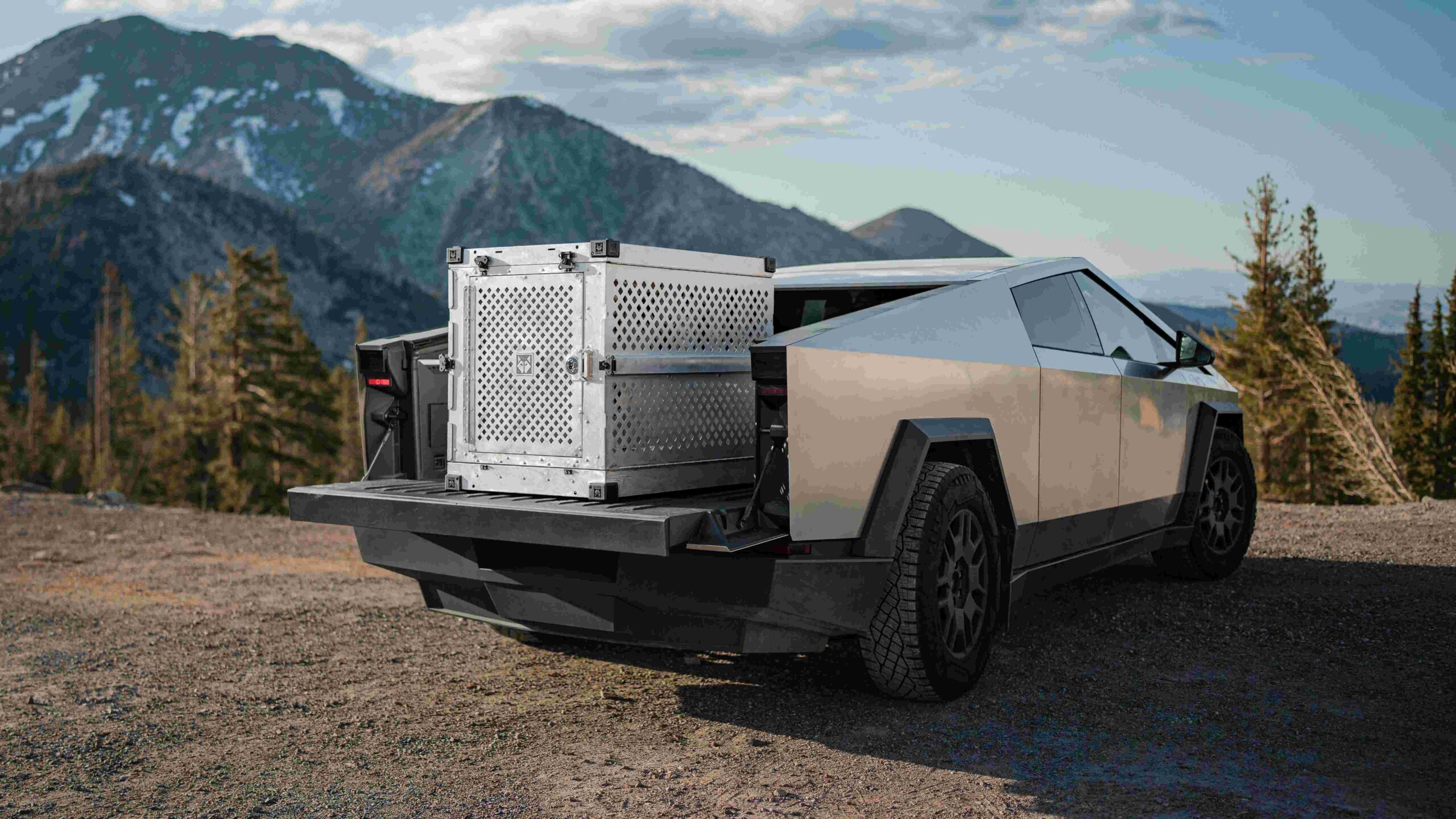
Tesla Cybertruck “Affordable” Version Launched! FSD V14 Update & New Sales Policy: The electric pickup war just entered a new phase. While the world has been watching Elon Musk reposition Tesla from a car company into a robotics and AI powerhouse, the automaker delivered a surprise that shook the U.S. truck market: a new Cybertruck Dual Motor All-Wheel Drive starting at $59,990, launched on February 20, 2026.
But this isn’t just another trim level. It’s a strategic reset.
Alongside the new pricing comes FSD V14.2, Tesla’s latest Full Self-Driving update, and a 10-day flexible pricing policy designed to stimulate demand. The move signals a major pivot — one aimed at reviving sales, broadening Tesla’s audience, and steering the Cybertruck back toward its original growth ambitions.
So what does this “affordable” Cybertruck really offer?
Is FSD V14.2 a meaningful leap forward?
And can this pricing strategy truly challenge the traditional pickup kings?
Let’s break it down.
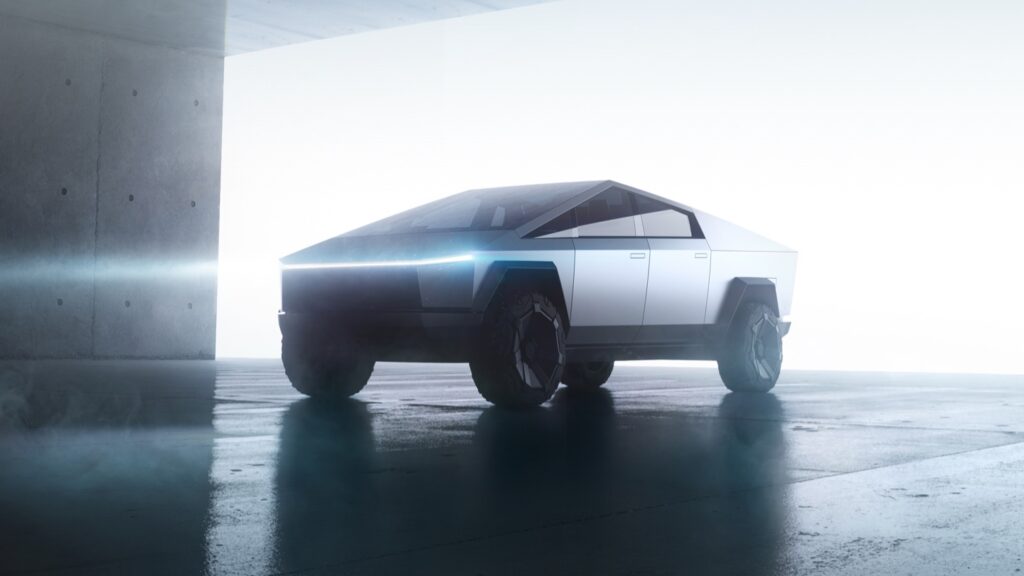
Cybertruck Dual Motor AWD at $59,990: Affordable or Strategic?
When Tesla unveiled the Cybertruck in 2019, the promised starting price was $39,900. That number is now firmly in the rearview mirror. Today’s $59,990 version isn’t cheap — it’s simply less expensive than before.
Previously, the premium All-Wheel Drive version started around $79,990. That’s nearly a $20,000 price cut.
What You Still Get for $59,990
Despite the lower price, this configuration retains serious performance credentials:
- 0–60 mph in 4.1 seconds
- EPA-estimated 325-mile range
- 7,500 lbs towing capacity
- Dual motor all-wheel drive
- Steer-by-wire system
- Four-wheel steering
- PowerShare capability
- Stainless steel exoskeleton
You lose the air suspension and rear passenger display, but the core engineering remains intact.
On paper, it looks like a smart trade-off. But in the American pickup market, paper specs don’t always translate to buyer decisions.
Cybertruck vs Ford F-150: The Pricing Reality
To understand Tesla’s strategy, we must examine its real competitor: the Ford F-150.
A base gasoline F-150 still starts around $39,000 — often less with dealer incentives. For contractors, farmers, and fleet buyers, a $20,000 difference matters. That gap can mean hundreds more per month in loan payments.
Tesla’s pricing positions the Cybertruck closer to the electric Ford F-150 Lightning, whose higher trims frequently approach $70,000 before incentives.
From that angle, $59,990 begins to look competitive.
But here’s the nuance:
- Traditional F-150 models can tow over 10,000 lbs.
- The new Cybertruck trim caps at 7,500 lbs.
- Higher-end Cybertruck variants previously claimed up to 11,000 lbs.
Tesla appears to be redefining what qualifies as a “real truck.” Rather than chasing maximum towing bragging rights, the company is prioritizing practical, everyday usability.
This version isn’t built for hauling a cross-country RV weekly. It’s built for:
- Daily commuting
- Weekend towing
- Job-site functionality
- Outdoor adventures
That’s a deliberate repositioning.
The Psychology of Price Anchoring
Tesla’s strategy is classic price anchoring.
- Introduce a high benchmark ($79,990).
- Lower it significantly.
- Create the perception of major savings.
The $59,990 sticker feels like a deal compared to $79,990 — even though it’s far from the original $39,900 promise.
Add a 10-day limited pricing window, and you inject urgency. Fear of missing out (FOMO) accelerates purchase decisions. This isn’t just pricing — it’s behavioral economics in action.
FSD V14.2: The Real Upgrade?
Beyond pricing, Tesla rolled out FSD V14.2, the latest evolution of Full Self-Driving.
Following legal scrutiny around the term “Autopilot,” especially in California, Tesla adjusted its messaging. Drivers must remain attentive. Supervision is mandatory.
But make no mistake — Tesla’s ambition hasn’t changed.
From Ownership to Subscription
Tesla eliminated the expensive one-time FSD purchase option. Instead, it shifted to a $199 per month subscription model.
This transforms FSD into software-as-a-service — more like Netflix than a traditional car feature.
Americans are accustomed to subscriptions. But paying monthly for driving assistance? That’s still a psychological hurdle.
The question becomes:
Does FSD V14.2 deliver enough value to justify the cost?
What’s New in FSD V14.2?
Compared to V14.1, version 14.2 focuses on smoother performance and smarter decision-making.
Key Improvements
1. Smoother Driving Behavior
Users report:
- Reduced unnecessary braking
- Less hesitation during lane changes
- More confident intersection handling
The result? A calmer, more human-like driving feel.
2. Enhanced Neural Network Vision
Tesla upgraded its vision encoder for higher-resolution processing. This allows:
- Better emergency vehicle detection
- Improved obstacle recognition
- Greater sensitivity to complex urban scenarios
3. Autonomous Driving Statistics Dashboard
A long-requested feature now shows:
- Total autonomous miles driven
- Overall miles traveled
- Current software version
Transparency builds trust.
4. Pre-Selectable Parking Preferences
Drivers can now choose:
- Curbside parking
- Lot parking
Before departure.
While users still cannot select an exact parking space, this marks meaningful progress.
5. Refined Driver Attention Monitoring
FSD V14.2 allows slightly longer glance-away periods before warnings. It strikes a better balance between comfort and safety.
Speed Profiles: Mad Max to Sloth
Tesla retains its speed modes:
- Mad Max
- Hurry
- Standard
- Chill
- Sloth
On highways, real-world testing shows modest behavioral differences. Mad Max still tops out near 85 mph, while other modes scale progressively.
However, routing logic still needs refinement. Some users report inefficient route choices — an area Tesla must improve.
Manufacturing Maturity at Gigafactory Texas
The Cybertruck’s stainless steel exoskeleton once seemed impossible to mass-produce.
But Gigafactory Texas has refined the process using:
- Precision laser cutting
- High-speed stamping
- Air bending techniques
- Optical scanning for quality control
Production maturity matters. As efficiency improves, consistency improves — and so does buyer confidence.
4680 Structural Battery: Engineering DNA
The Dual Motor AWD version uses Tesla’s 4680 battery cells integrated into a structural pack.
Benefits include:
- Lower center of gravity
- Increased chassis rigidity
- Improved crash performance
- Enhanced balance and stability
Although scaling 4680 production has been challenging, the architecture represents forward-thinking design.
For drivers, it translates into a planted, solid feel — not abstract innovation.
Performance That Redefines Pickup Expectations
Let’s be clear:
4.1 seconds to 60 mph in a full-size pickup is sports-car territory.
Immediate torque from dual motors means:
- Confident highway merging
- Strong overtaking power
- Responsive acceleration
And thanks to steer-by-wire and four-wheel steering, the Cybertruck feels surprisingly agile — even compared to larger traditional trucks.
It doesn’t drive like an old-school pickup. It feels engineered for the future.
PowerShare: A Functional Work Tool
One of the Cybertruck’s most underrated features is PowerShare.
With 120V and 240V outlets in the bed, the truck can:
- Power tools on job sites
- Serve as backup home energy during outages
- Supply electricity in remote environments
In regions prone to blackouts, this capability alone can justify the purchase.
This isn’t just a lifestyle truck — it’s a mobile power station.
New Sales Policy: Flexibility Over Scarcity
There was once talk of:
- 1 million reservations
- Long waiting lists
- A no-resale clause preventing flipping
But estimated 2025 sales around 20,000 units shifted the narrative.
Tesla responded with flexibility.
Key Changes
- 10-day dynamic pricing test
- Removal of resale restrictions
- Lower entry price
- Subscription-based FSD
The focus has shifted from exclusivity to volume.
In America, buying decisions revolve around monthly payments, not sticker prices.
A $20,000 reduction can mean hundreds less per month. That matters more than prestige.
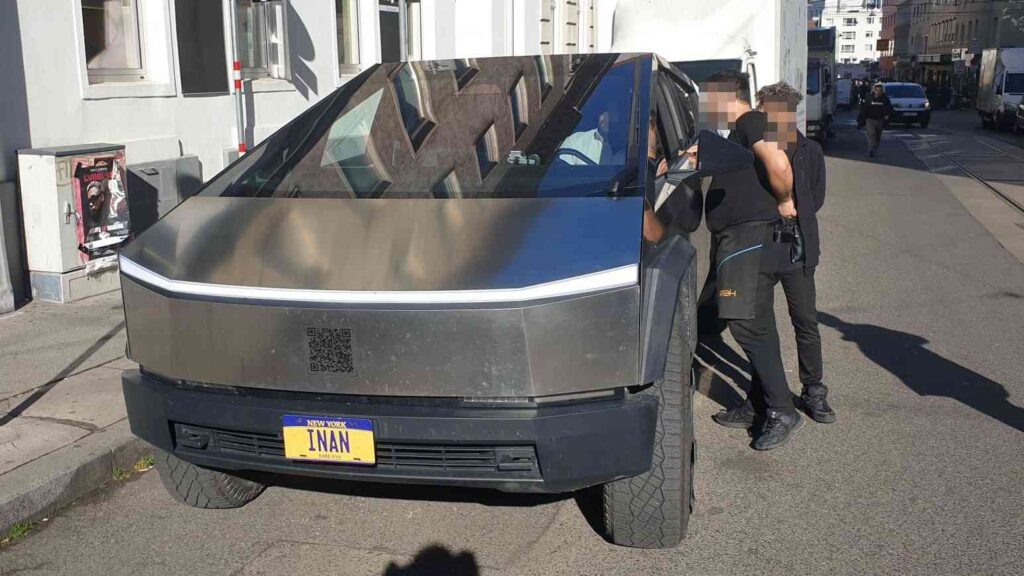
Tesla vs Internal Competition
Tesla must also compete with its own lineup.
The Tesla Model Y and Tesla Model 3 sometimes feature attractive financing offers like 0.99% APR.
To stand out, the Cybertruck needs:
- Competitive pricing
- Practical configuration
- Strong perceived value
This “affordable” trim is Tesla’s attempt to rebalance its portfolio while scaling production in Texas.
Can Cybertruck Challenge Pickup Culture?
The American pickup market is deeply rooted in tradition. The Ford F-150 has dominated for decades.
To truly compete, the Cybertruck cannot remain a tech symbol.
It must become:
- A working tool
- Cost-effective
- Durable
- Easy to finance
- Strong in resale value
By removing premium luxuries and emphasizing utility, Tesla is acknowledging market reality.
This version moves closer to mainstream acceptance.
Final Verdict: Strategic Victory or Delayed Compromise?
So how should consumers view the $59,990 Cybertruck?
Is it:
- A strategic win bringing Tesla closer to mass adoption?
- Or an admission that the original $39,900 dream was unrealistic?
The answer depends on perspective.
What’s clear is this:
Tesla is no longer relying on hype alone.
It’s recalibrating around affordability, monthly payments, and practical functionality.
If the equation works, the Cybertruck could evolve from internet sensation to mainstream American workhorse.
If not, this may simply be a tactical adjustment in a tougher-than-expected market.
FAQs
1. What is the starting price of the new Tesla Cybertruck Dual Motor AWD?
The new Dual Motor All-Wheel Drive Cybertruck starts at $59,990, making it nearly $20,000 less expensive than the previous $79,990 AWD configuration.
2. How fast is the Cybertruck Dual Motor AWD?
It accelerates from 0 to 60 mph in approximately 4.1 seconds, which is sports-car-level performance for a full-size electric pickup.
3. What is the driving range of the new Cybertruck version?
The EPA-estimated range is 325 miles on a full charge, powered by Tesla’s structural 4680 battery pack.
4. How much can the Cybertruck tow?
The Dual Motor AWD version offers 7,500 lbs of towing capacity, suitable for most everyday civilian and light commercial needs.
5. How does the Cybertruck compare to the Ford F-150?
Compared to the Ford F-150, the Cybertruck is significantly quicker and fully electric but costs more upfront than base gasoline models. It competes more directly with the electric Ford F-150 Lightning.
6. Why is the $59,990 price called “affordable”?
It’s considered affordable relative to Tesla’s previous $79,990 version — not cheap in absolute terms. It represents a strategic price reduction rather than a budget truck.
7. What features were removed to lower the price?
The $59,990 trim removes:
- Air suspension
- Rear passenger display
- Certain luxury elements
However, it retains core performance and drivetrain features.
8. Does the Cybertruck still have steer-by-wire and four-wheel steering?
Yes. The Dual Motor AWD version keeps Tesla’s steer-by-wire system and four-wheel steering, improving maneuverability and stability.
9. What is FSD V14.2?
FSD V14.2 is the latest Full Self-Driving software update from Tesla, introducing smoother driving behavior, enhanced neural network processing, and better real-world responsiveness.
10. How much does Tesla’s Full Self-Driving cost now?
Tesla has shifted to a $199 per month subscription model, eliminating the expensive one-time purchase option.
11. What improvements does FSD V14.2 bring?
Key updates include:
- Smoother lane changes
- Reduced unnecessary braking
- Better emergency vehicle detection
- Improved intersection handling
- Autonomous driving statistics dashboard
12. Can FSD V14.2 park automatically?
Yes, drivers can pre-select parking preferences (such as curbside or lot parking). However, it does not yet allow selecting a specific parking spot.
13. What is Tesla’s 10-day pricing policy?
Tesla introduced a limited 10-day flexible pricing window, creating urgency and testing short-term market demand.
14. Is the Cybertruck built in the United States?
Yes. Production takes place at Gigafactory Texas, where Tesla manufactures the Cybertruck using advanced stainless steel processing techniques.
15. What is PowerShare capability?
PowerShare allows the Cybertruck to function as a mobile power source, offering 120V and 240V outlets in the truck bed to power tools, appliances, or even a home during outages.
16. Why did Tesla remove the resale restriction?
Earlier Cybertruck buyers faced a resale restriction to prevent flipping. Tesla removed this policy to reduce buyer hesitation and encourage more purchases.
17. Is the new Cybertruck version worth buying?
That depends on your needs. If you want:
- Fast acceleration
- Electric performance
- Daily usability
- Advanced driver-assistance technology
- Utility with lower monthly payments
The $59,990 configuration offers strong value. However, traditional heavy-duty truck buyers who prioritize maximum towing and lowest upfront cost may still lean toward gasoline alternatives.
Read More:
- SpaceX suddenly Announced “NO Starship V3 Launch in March”…What’s WRONG?
- Elon Musk hints Tesla investors will be rewarded heavily
- How NASA Changed Everything We Know About Mars
- Elon Musk Drops Price 2026 Tesla Model Y | All-New Updated Features LEAKED
- Tesla Cybercab coming next to Giga Berlin, Optimus possibly after
- Elon Musk estimates Tesla Semi could reach Europe next year