

Tesla has once again shocked the automotive world. Recent news that the Tesla Semi may travel up to 800 miles on a single charge has sparked massive excitement across both the EV community and the trucking industry. Coupled with images of a new Tesla Semi design hitting public roads, curiosity is at an all-time high.
Following Tesla’s official announcement that the 2026 Semi is ready for mass production, it’s clear this is no longer just a futuristic prototype—it’s a commercially viable vehicle in the making. But with fewer than 500 units operating in real-world conditions, questions remain: is the market ready to embrace it, or is it still an overhyped concept?
In this blog, we’ll dive deep into the Tesla Semi 2026, its design, performance, charging infrastructure, and the implications for the trucking industry.
Why the Tesla Semi’s 800-Mile Range is Turning Heads
Reports claim the Tesla Semi can travel up to 800 miles on a single charge. For the logistics and freight industry, that sounds like a knockout blow to diesel trucks. But here’s the catch: the 800-mile figure was achieved under bobtail conditions, meaning the truck was tested without a trailer.
The Reality of Bobtail Range
In heavy-duty trucking, unloaded range figures are almost meaningless. Diesel trucks can carry auxiliary fuel tanks and travel thousands of miles without cargo, but that doesn’t translate to real-world commercial hauling capability. Some experts argue Tesla released this number to highlight the efficiency of the new 4680 battery system while masking the weight implications when the truck hauls full loads.
Tesla Semi’s Engineering Challenges: Weight vs. Payload
The Tesla Semi is generating discussion because of a critical engineering paradox: balancing battery weight with payload capacity.
- The 2026 long-range Semi weighs approximately 23,000 lbs, including a massive battery pack weighing over 11,000 lbs.
- By comparison, traditional diesel tractors typically weigh 16,976–18,078 lbs.
Even with federal allowances permitting an extra 2,000 lbs for electric trucks, this reduces cargo capacity by 8–10% per trip, translating into lower revenue per mile for freight operators.
The Economics of Payload Loss
In the trucking industry, profit margins hover around 5–10%, so losing payload capacity is significant. To offset this, Tesla must rely on cheaper electricity costs or dramatically lower maintenance expenses compared to diesel trucks.
- Diesel trucks operate at ~30–40% thermal efficiency, losing over half their fuel energy to heat.
- Tesla’s electric drivetrain claims over 90% efficiency, potentially creating a significant cost advantage if energy is cheap enough.
Aerodynamics: Tesla Semi’s Secret Weapon
The Tesla Semi isn’t just about batteries; it’s also about aerodynamics.
- Drag coefficient: 0.36 (comparable to luxury SUVs, and 20% lower than diesel trucks)
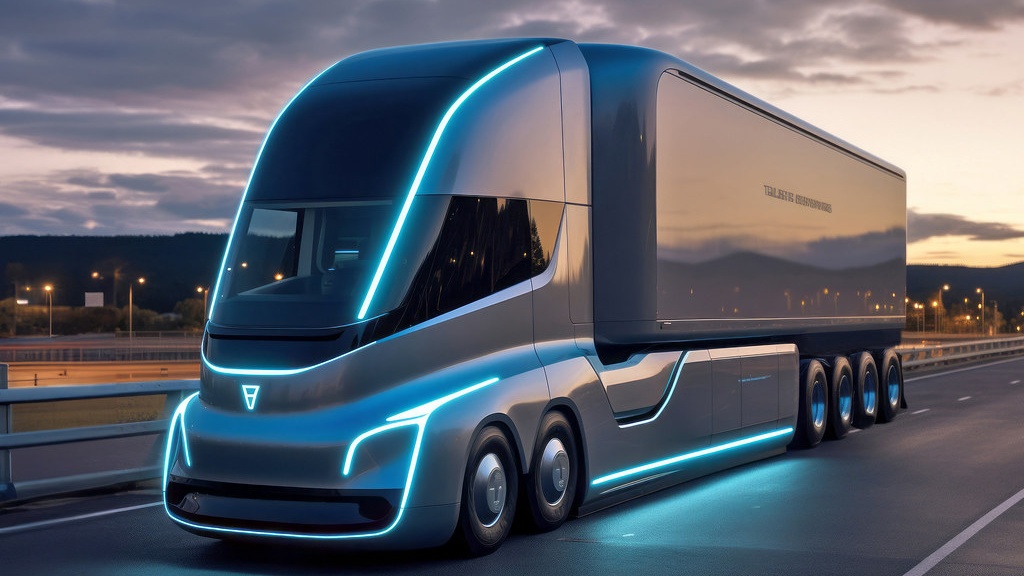
- Design improvements: smoother front fascia, curved roofline, and horizontal light bar reminiscent of Tesla Model Y and Cybertruck
This aerodynamic efficiency reduces energy consumption and partially offsets the battery’s weight. It also contributes to the reported 1.5 kWh per mile efficiency, a dramatic reduction in operating costs.

Tesla Semi 2026: Design Updates and Features
Tesla has redesigned the Semi to be visually sleeker and mechanically efficient. Key updates include:
- Horizontal light bar similar to the Model Y
- Smaller windshield and smoother front fascia
- Center-mounted driver seat for balanced visibility and reduced blind spots
- Touchscreen-dominated cabin with almost no physical buttons
- Camera-based mirrors to reduce drag
Center Seat Layout: Pros and Cons
Tesla argues the central seat improves visibility and aerodynamics. While it offers a supercar-like driving experience, critics highlight practical challenges:
- Administrative tasks (e.g., tolls, warehouse paperwork) are harder from the center seat
- Team driving becomes less practical, as secondary drivers are confined to a smaller seat
- Solo design issue may limit adoption until autonomous driving becomes mainstream
Tesla Semi Performance: Power and Acceleration
The 2026 Semi is designed for impressive acceleration and efficiency:
- 0–62 mph in 20 seconds at full load
- 1.2 MW to 2 MW charging system, capable of delivering hundreds of miles of range in ~30 minutes
While acceleration is “superhero-level,” energy consumption for ultra-heavy cargo can rival diesel trucks, especially without fully developed charging infrastructure.
Charging Infrastructure: The Mega Charger Network
Tesla isn’t just selling a truck—it’s building the backbone of heavy-duty EV freight.
- Mega Chargers: ultra-high power, 1.2–2 MW capacity, enabling rapid recharging for long-haul operations
- US deployments: partnerships with Pilot and other travel centers along I-5 and I-10
- Corporate fleets: companies like PepsiCo installing Mega Chargers at distribution hubs
European Expansion
Tesla is preparing for European regulations and plans to introduce the Semi alongside high-power charging in 2026–2027. With incentives and regulatory pressure for electrification, Europe could become a major market for the Semi, extending Tesla’s competitive advantage globally.
Operational Advantages: Maintenance and Safety
Beyond range and design, Tesla Semi offers key operational benefits:
- Lower maintenance costs: no traditional transmission or complex exhaust systems
- Refrigerated trailer support: can power reefer units without diesel
- Advanced safety: anti-rollover and anti-jackknife systems enabled by independent wheel torque control
Corporations are betting on these advantages to optimize supply chains, even if solo drivers find some design choices challenging.
Challenges and Industry Skepticism
Despite advancements, skepticism remains:
- Payload loss: 8–10% less cargo per trip than diesel
- Single point of failure: heavy reliance on touchscreens and digital mirrors
- Charging network feasibility: building nationwide mega charger corridors is costly and complex
Industry veterans argue these practical limitations may slow adoption, especially for smaller operators without dedicated infrastructure.
Tesla Semi vs. Diesel: A Comparative Outlook
| Feature | Tesla Semi 2026 | Diesel Trucks |
|---|---|---|
| Weight | ~23,000 lbs | 16,976–18,078 lbs |
| Efficiency | 90%+ | 30–40% |
| Operating Cost (per 200 miles) | ~$28 | ~$170 |
| Payload Capacity Loss | 8–10% | None |
| Acceleration 0–62 mph | 20 sec full load | 30–40 sec typical |
| Charging/Refueling | Mega Chargers | Widespread diesel stations |
Tesla Semi shines in efficiency, cost per mile, and safety, while diesel trucks still dominate payload flexibility and refueling infrastructure.
Conclusion: Tesla Semi’s Future in Freight
The 2026 Tesla Semi represents a bold bet on electric freight. With major corporations like PepsiCo, Walmart, and DHL securing orders, Tesla is clearly pushing the industry toward electrification. While challenges like payload loss, infrastructure, and driver ergonomics remain, the potential benefits of low operating costs, reduced emissions, and advanced safety are compelling.
Tesla is effectively reshaping the logistics industry, betting that high-efficiency electric drivetrains and mega charging networks will overcome the current limitations of payload and infrastructure. For companies with fixed routes and centralized hubs, the Tesla Semi may already be economically viable. For smaller operators and interstate freight, adoption depends heavily on charging infrastructure expansion.

FAQs
1. What is the Tesla Semi 2026?
The Tesla Semi 2026 is an all-electric heavy-duty truck designed for long-haul freight, offering up to 800 miles of range on a single charge under specific conditions. It’s Tesla’s move to revolutionize the trucking industry with efficiency and low emissions.
2. How far can the Tesla Semi travel on a single charge?
Tesla claims the Semi can travel 800 miles, but this was achieved under bobtail conditions—without pulling a trailer. Real-world range with a full load will be lower but still competitive compared to diesel trucks.
3. What is the payload capacity of the Tesla Semi?
Due to its heavy battery pack (~11,000 lbs), the Semi sacrifices 8–10% of payload capacity compared to traditional diesel trucks. Federal regulations allow an extra 2,000 lbs for electric trucks to partially offset this.
4. How fast can the Tesla Semi accelerate?
The 2026 Semi can accelerate from 0–62 mph in about 20 seconds at full load, faster than many conventional diesel trucks, thanks to its electric drivetrain.
5. What are Tesla Semi’s energy efficiency figures?
The Semi reportedly consumes around 1.5 kWh per mile, significantly more efficient than diesel trucks, which operate at ~30–40% thermal efficiency.
6. What is the Tesla Semi’s drag coefficient?
With a sleek design and smooth roofline, the Semi has a drag coefficient of 0.34–0.36, 20% lower than traditional diesel trucks, improving energy efficiency.
7. What is the Mega Charger network?
The Mega Charger network is Tesla’s high-power charging infrastructure for the Semi, capable of delivering 1.2–2 MW to recharge hundreds of miles in ~30 minutes, essential for long-haul operations.
8. Which companies have ordered the Tesla Semi?
Major corporations like PepsiCo, Walmart, DHL, and UPS have placed significant orders for the Semi due to lower operating costs, safety features, and efficiency.
9. How does the Tesla Semi’s center seat design affect drivers?
The center-mounted driver seat improves visibility and reduces blind spots but complicates routine tasks like toll collection and team driving, especially for long-haul operations.
10. Can the Tesla Semi power refrigerated trailers?
Yes, the Semi can power refrigerated trailers without running a diesel engine, saving thousands in fuel costs for food transport operators.
11. How safe is the Tesla Semi?
The Semi features anti-rollover and anti-jackknife systems using independent wheel torque control, offering a level of stability that diesel trucks cannot achieve.
12. What are the maintenance benefits of the Tesla Semi?
Without traditional transmissions or complex exhaust systems, maintenance is significantly lower, reducing downtime and operational costs compared to diesel trucks.
13. How practical is the Tesla Semi for long-distance freight?
While charging infrastructure is expanding, Tesla Semi is currently best suited for fixed routes and centralized distribution hubs. Interstate adoption depends on further Mega Charger network rollout.
14. When will the Tesla Semi be available in Europe?
Tesla is adapting the Semi for European regulations and could launch alongside high-power charging stations between 2026–2027, targeting markets with strong electrification incentives.
15. Does the Tesla Semi make economic sense for fleets?
For corporations with optimized routes, centralized hubs, and access to low-cost electricity, the Semi’s efficiency and reduced maintenance can offset the payload disadvantage, making it economically viable.
Read More:
- SpaceX IPO could push Elon Musk’s net worth past $1 trillion: Polymarket
- Music City Loop could highlight The Boring Company’s real disruption
- Tesla Sweden appeals after grid company refuses to restore existing Supercharger due to union strike
- Elon Musk fires back after Wikipedia co-founder claims neutrality and dubs Grokipedia “ridiculous”
- Tesla FSD (Supervised) fleet passes 8.4 billion cumulative miles