
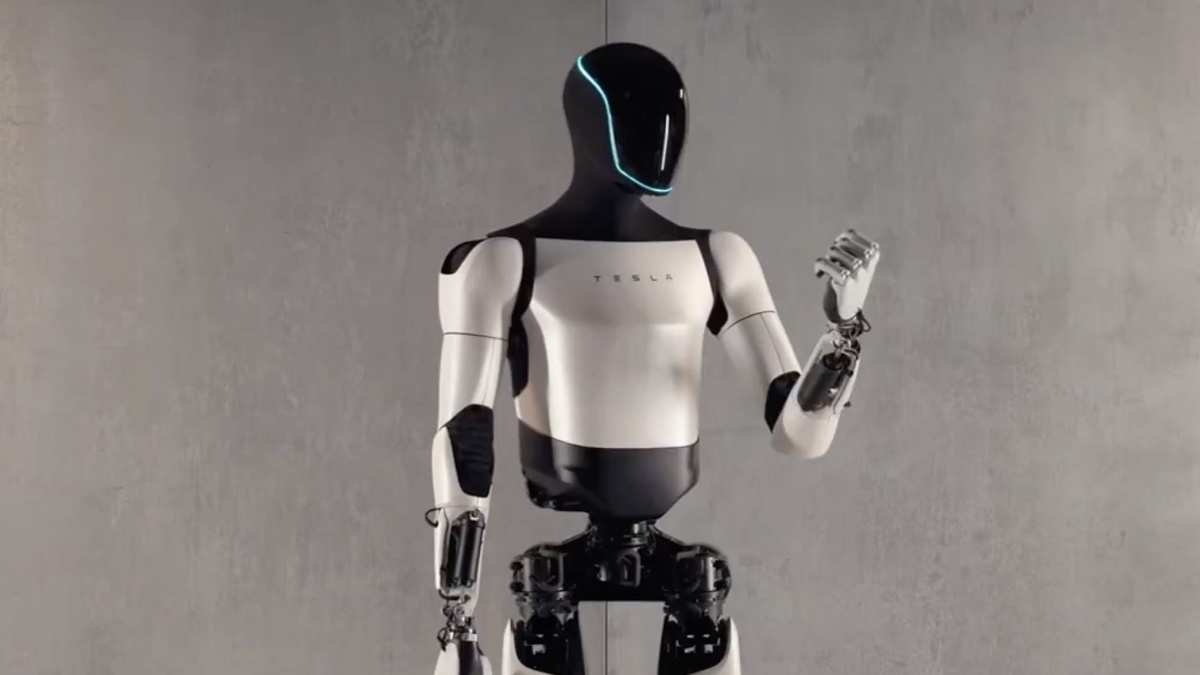
The world is standing at the edge of a technological transformation where robots are no longer confined to factories or research labs. Instead, they are rapidly evolving into intelligent assistants capable of performing real-world tasks alongside humans. At the center of this shift is Tesla’s humanoid robot, Optimus Gen 3.
This latest iteration represents a significant leap forward—not just in engineering, but in vision. Elon Musk’s ambition is clear: to create a future where robots handle repetitive and labor-intensive tasks, freeing humans to focus on creativity, innovation, and higher-value work.
With Optimus Gen 3, Tesla is moving beyond industrial automation and stepping into the realm of service robotics—machines designed to operate in everyday environments like restaurants, homes, and retail spaces.
The Evolution of Tesla Optimus: From Concept to Capability
A Complete Overhaul, Not an Upgrade
The transition from earlier versions like Gen 2.5 to Gen 3 is not just incremental—it’s revolutionary. Tesla has reengineered nearly every aspect of the robot, aiming to double performance across key metrics such as speed, efficiency, and functionality.
This means Optimus Gen 3 is not just better—it’s fundamentally more capable, bringing us closer to practical, real-world deployment.
A New Design Philosophy: Function Over Form
The All-Black Transformation
One of the most noticeable changes in Optimus Gen 3 is its new all-black exterior. While previous versions featured sleek white panels, the new design prioritizes practicality over aesthetics.
This shift is not accidental. The black casing is:
- Easier to manufacture at scale
- Lighter in weight
- More durable for everyday use
Why Weight Matters
Reducing weight has a direct impact on:
- Energy efficiency
- Mobility and speed
- Operational endurance
By shedding unnecessary mass, Tesla has made Optimus more agile and better suited for dynamic human environments.
Redefining Robot Mobility
Faster, Smoother, More Human-Like Movement
Speed has long been a limitation for humanoid robots. Optimus Gen 3 addresses this challenge by achieving walking speeds between 2.2 m/s and 2.5 m/s.
This improvement is crucial for real-world applications. In environments like restaurants or retail stores, robots must:
- Keep pace with human workers
- Navigate crowded spaces efficiently
- Avoid becoming obstacles
Why Mobility is Critical
A service robot that moves too slowly becomes impractical. Optimus Gen 3’s enhanced mobility ensures it can operate seamlessly in fast-paced settings.
The “Waiter” Vision: A Breakthrough Use Case
More Than Just Carrying Food
Elon Musk has highlighted the role of a “robot waiter” as a near-term goal. But this is not a simple task—it requires a combination of advanced hardware and intelligent software.
A robot waiter must:
- Navigate crowded environments
- Handle fragile items
- Understand human instructions
- Maintain balance while moving
This makes the waiter role a perfect benchmark for real-world readiness.
Mastering Dexterity: The Human Hand Challenge
22 Degrees of Freedom
One of the most impressive features of Optimus Gen 3 is its highly advanced hands, offering 22 degrees of freedom. This allows for:
- Fine motor control
- Precise object handling
- Complex task execution
Balancing Precision and Durability
Tesla has engineered these hands to achieve two critical goals:
1. Dexterity
The robot can handle delicate objects like:
- Glassware
- Plates
- Cutlery
2. Durability
Unlike experimental robots, Optimus is built for real-world use. It can:
- Repeat tasks thousands of times daily
- Withstand wear and tear
- Maintain consistent performance
Custom Actuators: Tesla’s Secret Weapon
Instead of relying on off-the-shelf components, Tesla has developed custom actuators for every joint. These include:
- High-torque actuators for hips
- Ultra-smooth actuators for wrists
This vertical integration gives Tesla a major advantage in performance and efficiency.
Dynamic Balance and Real-World Navigation
Handling Chaos Like a Human
A restaurant environment is unpredictable. There are:
- Moving people
- Spilled liquids
- Tight spaces
Optimus Gen 3 is equipped with advanced dynamic balance systems that allow it to:
- Adjust in real time
- Maintain stability
- Navigate obstacles smoothly
Built for Harsh Conditions
Tesla has also improved the robot’s resilience. Optimus Gen 3 features:
- Increased water resistance
- Tolerance to humidity
- Protection against spills
This ensures reliable operation in environments like kitchens and cleaning areas.
The Brain Behind the Robot: AI and Communication
Beyond Commands: Understanding Context
Hardware alone is not enough. For a robot to function in human environments, it must understand context—not just follow instructions.
Optimus Gen 3 integrates advanced conversational AI that allows it to interpret nuanced requests.
For example:
- “Get me a glass of water, but not too cold”
The robot can understand and execute this with contextual awareness.
Human-Like Interaction: The Face of Optimus
OLED Display Integration
There are strong indications that Optimus Gen 3 will feature an 8-inch OLED screen as its face. This enables:
- Emotional expressions
- Status updates
- Visual communication
Why This Matters
Humanizing robots is essential for public acceptance. A robot that can “express” itself becomes:
- Less intimidating
- More approachable
- Easier to interact with
The Optimus Academy: Learning at Scale
A Shared Intelligence Network
Tesla’s training approach is radically different from traditional robotics. Instead of programming each robot individually, Tesla uses a centralized learning system known as the Optimus Academy.
How It Works
- One robot learns a task
- The data is uploaded
- All robots receive the update
This creates a powerful network effect where:
- Learning is accelerated
- Skills are shared globally
- Performance improves continuously
Power and Endurance: Built for a Full Workday
Battery Advancements
Optimus Gen 3 is expected to feature advanced battery technology with improved energy density.
Key Performance Metrics
- Battery Capacity: حوالي 3 kWh
- Operating Time: 7–8 hours
- Power Consumption: ~430W
Why This is Important
For a robot to be commercially viable, it must:
- Work full shifts
- Minimize downtime
- Operate efficiently
Optimus Gen 3 meets these requirements, making it suitable for real-world deployment.
The Road to Mass Production
Initial Deployment Strategy
Tesla plans to first deploy Optimus Gen 3 internally within its factories. These robots will assist with:
- Assembly tasks
- Logistics operations
- Material handling
This controlled environment allows Tesla to:
- Collect real-world data
- Refine AI systems
- Improve reliability
Geopolitics and Supply Chain Challenges
The Domestic Opportunity
In the United States, increasing concerns about data security could create strong demand for domestically produced robots. Tesla is well-positioned to capitalize on this trend.
Dependency on Global Supply Chains
However, Tesla still relies heavily on international suppliers for key components, including:
- Sensors
- Thermal systems
- Electronics
Balancing cost, scalability, and geopolitical pressures will be a major challenge moving forward.
The $20,000 Dream: Making Robots Affordable
One of Tesla’s long-term goals is to reduce the cost of Optimus to around $20,000 per unit.
Achieving this would:
- Make robots accessible to businesses
- Open the consumer market
- Accelerate global adoption
However, reaching this price point requires:
- Supply chain optimization
- Manufacturing efficiency
- Technological breakthroughs
The Future: A Labor-Optional World
From Factories to Homes
Elon Musk envisions a future where Optimus is not just a workplace tool, but a household companion.
Potential use cases include:
- Cleaning
- Cooking assistance
- Elder care
- Delivery tasks
A Shift in Human Lifestyle
If successful, Optimus could fundamentally change how society functions:
- Reducing reliance on manual labor
- Increasing productivity
- Improving quality of life
Conclusion: The Beginning of a New Era
Optimus Gen 3 is more than just a robot—it is a glimpse into the future of human-robot collaboration. With its advanced mobility, dexterity, AI capabilities, and scalable learning system, it represents a major step toward making service robots a reality.
From serving food in restaurants to assisting in homes, the possibilities are vast. While challenges remain—particularly in manufacturing and supply chains—the progress is undeniable.
The question is no longer if robots will become part of our daily lives, but how soon.
And with Tesla Optimus Gen 3, that future may arrive sooner than we expect.
FAQs
1. What is Tesla Optimus Gen 3?
Tesla Optimus Gen 3 is the latest version of Tesla’s humanoid robot designed to perform complex tasks in real-world environments such as homes, factories, and restaurants.
2. Can Tesla Bot Gen 3 really work as a waiter?
Yes, Elon Musk has indicated that one of the near-term goals is for Optimus to function as a waiter, handling tasks like serving food, carrying trays, and interacting with customers.
3. What makes Optimus Gen 3 different from previous versions?
Optimus Gen 3 features major improvements in speed, efficiency, dexterity, and AI capabilities, making it significantly more advanced than Gen 2 and Gen 2.5.
4. How fast can Tesla Optimus Gen 3 walk?
The robot is expected to achieve walking speeds between 2.2 m/s and 2.5 m/s, making it suitable for fast-paced environments like restaurants and retail stores.
5. How many hours can Optimus Gen 3 operate on a single charge?
Optimus Gen 3 is expected to run for approximately 7 to 8 hours on a single charge, enough for a typical work shift.
6. What kind of tasks can Tesla Bot perform?
The robot can perform tasks such as serving food, cleaning, carrying objects, assisting in factories, and potentially helping with household chores.
7. How advanced are Optimus Gen 3’s hands?
The robot’s hands feature 22 degrees of freedom, allowing it to handle delicate objects and perform precise movements similar to a human hand.
8. Does Optimus Gen 3 use artificial intelligence?
Yes, it uses advanced AI systems that enable contextual understanding, communication, and decision-making in real-world situations.
9. Can Optimus understand human speech?
Yes, with integrated conversational AI, Optimus can understand natural language instructions and respond accordingly.
10. Is Tesla Optimus Gen 3 safe to use around humans?
Tesla is designing Optimus with safety features such as dynamic balance, obstacle avoidance, and controlled force to ensure safe interaction with humans.
11. What is the expected price of Tesla Optimus?
Tesla aims to reduce the price to around $20,000 per unit in the future, making it accessible for businesses and possibly households.
12. Where will Optimus Gen 3 be used first?
Initial deployments will likely occur in Tesla factories like Giga Texas and Fremont for internal tasks and testing.
13. Can Optimus Gen 3 work in harsh environments?
Yes, it is designed with improved water resistance and durability, allowing it to function in environments like kitchens and industrial settings.
14. What is the Optimus Academy?
Optimus Academy is Tesla’s centralized learning system where robots share knowledge globally, allowing rapid improvement and skill distribution.
15. When will Tesla Optimus be available for home use?
Elon Musk suggests that Optimus could be ready for home use by around 2027, depending on development and production progress.
16. Will robots like Optimus replace human jobs?
While Optimus may automate repetitive tasks, it is also expected to create new opportunities and allow humans to focus on more creative and strategic work.
Read More:
- Tesla Optimus V3 hand and arm details revealed in new patents
- Tesla’s last chance version of the flagship Model X is officially gone
- SpaceX’s Double Header Tests on Starship Ship 39 and Booster 19! Static Fire TODAY
- Dream Chaser Heat Shield Upgraded SOLVED What Musk Called ‘Impossible’!
- The Starship V3 static fire everyone was waiting for just happened
So Gen 3 is what was promised for Gen 2, and before that Gen 1. And we were supposed to be able to buy these last year, and there were going to be millions of them by mid-2026. Oh yeah and how about that new roadster that was announced April 1?
Don’t you people ever get fed up with this constant stream of BS?