
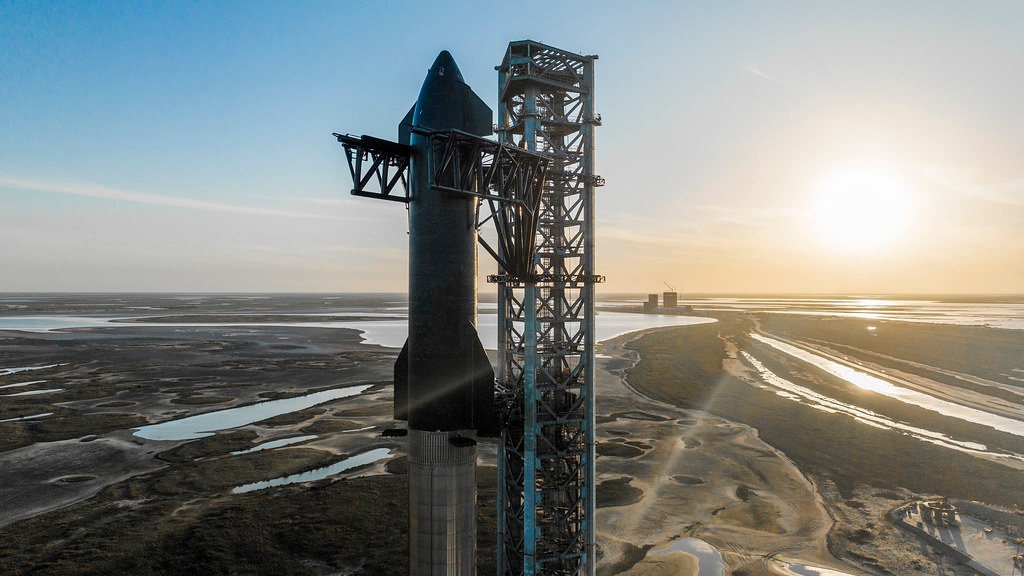
The dream of establishing a sustained human presence on the Moon is no longer confined to science fiction. What once seemed like a distant ambition is now rapidly transforming into a tangible reality. With groundbreaking developments from SpaceX and NASA, humanity is closer than ever to returning to the lunar surface—this time to stay.
At the center of this transformation is Starship Version 3 (V3), a next-generation spacecraft that represents a monumental leap in space exploration technology. Designed with full reusability and deep-space missions in mind, Starship V3 is expected to play a critical role in NASA’s Artemis program and reshape the economics of space travel.
In this comprehensive blog post, we’ll explore how Starship V3 is evolving, what it means for lunar missions, the implications of SpaceX’s potential IPO, and how Elon Musk’s broader ecosystem—including Tesla and Terrafab—is contributing to a future that extends beyond Earth.
Starship V3: The Lunar Workhorse of the Future
Starship V3 is not just another iteration of SpaceX’s ambitious rocket program—it is the backbone of future lunar missions. Built to carry both cargo and crew, this fully reusable spacecraft is designed to revolutionize how we access space.
Unlike traditional rockets that are discarded after a single use, Starship V3 aims to drastically reduce the cost of launches by being completely reusable. This capability is essential for frequent lunar missions and eventually for building a permanent human settlement on the Moon.
Why Starship V3 Matters
Starship V3 stands out for several reasons:
- It is designed for deep-space missions, including Moon and Mars travel
- It supports orbital refueling, a critical requirement for long-duration missions
- It enables high payload capacity, allowing large-scale infrastructure transport
These features collectively position Starship V3 as the primary vehicle for NASA’s Artemis missions.
Reaching Sustainable Orbit: A Critical Milestone
Before humans can return to the Moon, SpaceX must overcome one of the most complex challenges in spaceflight: achieving and maintaining a sustainable orbit.
Flight 13: A Turning Point
Upcoming test flights, particularly Flight 13, are expected to mark a major breakthrough. Unlike earlier suborbital tests, this mission is anticipated to include a full orbital profile for the second stage of Starship.
This is significant because:
- Sustained orbit is essential for orbital refueling
- It validates the thermal protection and re-entry systems
- It demonstrates the reusability framework in real-world conditions
Without mastering orbital flight, the vision of lunar missions would remain incomplete.
The V3 Maiden Voyage: Launching a New Era
One of the most anticipated milestones in space exploration is the maiden flight of Starship V3, expected in May 2026.
Key Highlights of the Maiden Flight
1. Artemis Integration
Starship V3 is expected to serve as the foundation for NASA’s Human Landing System (HLS). This system will be responsible for transporting astronauts from lunar orbit to the Moon’s surface.
2. Full Reusability
Unlike previous versions, V3 is specifically engineered to achieve complete reusability. This is a game-changer, as it significantly lowers mission costs and enables frequent launches.
3. Lunar Mission Timeline
NASA’s Artemis program outlines an ambitious schedule:
- Artemis 3 (2027): A low-Earth orbit rehearsal mission
- Artemis 4 (2028): The first crewed lunar landing using Starship
Starship V3 is expected to play a central role in both missions, potentially carrying astronauts who will become the next generation of moonwalkers.
Orbital Refueling: The Key to Deep Space Exploration
One of the most revolutionary aspects of Starship V3 is its ability to perform orbital refueling.
What is Orbital Refueling?
Orbital refueling involves transferring fuel between spacecraft while in orbit. This allows Starship to:
- Carry heavier payloads
- Travel longer distances
- Support extended missions
Why It Matters
Without orbital refueling, missions to the Moon—and especially Mars—would be severely limited. By enabling this capability, SpaceX is unlocking the possibility of building large-scale infrastructure beyond Earth.
SpaceX IPO: A Financial Revolution in the Making
While SpaceX continues to push technological boundaries, it is also preparing for a historic financial milestone: a potential Initial Public Offering (IPO).
A Record-Breaking Opportunity
Reports suggest that SpaceX could raise up to $75 billion, with a valuation exceeding $1.75 trillion. This would make it one of the largest IPOs in history.
To put this into perspective:
- Saudi Aramco’s 2019 IPO raised $29 billion
- SpaceX could more than double that figure
Opening the Doors to Retail Investors
In a surprising move, up to 30% of shares may be allocated to retail investors. This means everyday individuals could have the opportunity to invest in:
- Lunar infrastructure development
- Space-based technologies
- The future of interplanetary travel
This democratization of investment could redefine how people participate in space exploration.
The Terrafab Initiative: Building a Galactic Civilization
Beyond rockets and spacecraft, Elon Musk’s ecosystem is expanding into advanced manufacturing through the Terrafab initiative.
What is Terrafab?
Terrafab is a collaborative project involving SpaceX, Tesla, xAI, and Intel. The initiative aims to build a massive 100 million square foot chip fabrication facility.
Key Objectives
1. Powering Autonomous Systems
The facility will produce chips for:
- Humanoid robots (Optimus)
- Autonomous vehicles (Cybercabs)
2. Space-Based Computing
Specialized D3 chips will support SpaceX’s vision of space-based data centers.
3. Global Technological Impact
The project is part of a broader “one terawatt initiative,” aiming to scale energy and computing infrastructure to unprecedented levels.
Why It Matters
Terrafab represents a critical step toward a future where:
- Robotics and AI are deeply integrated into daily life
- Space infrastructure is supported by advanced computing
- Humanity becomes a multi-planetary species
Tesla’s Global Resurgence in 2026
While SpaceX focuses on the stars, Tesla is regaining its dominance on Earth.
Strong Q1 Performance
In the first quarter of 2026, Tesla delivered 358,023 vehicles, marking a 6.5% year-over-year increase. This achievement allowed Tesla to reclaim its position as the world’s largest manufacturer of pure battery electric vehicles.
Global Market Comeback
Europe
Tesla experienced a strong rebound across Europe:
- Registrations tripled in France
- Doubled in Norway
- Quadrupled in Germany
South Korea
Tesla also became the top imported car brand in South Korea, surpassing established luxury brands.
What’s Driving the Growth?
The End of an Era: Model S and Model X
As Tesla evolves, it is also saying goodbye to two of its most iconic vehicles: the Model S and Model X.
Production Changes
Elon Musk announced that custom orders for these models have officially ended. This marks the beginning of a transition toward more scalable and future-focused products.
Rising Prices and Limited Supply
To manage inventory and preserve value, Tesla has increased the price of remaining units by $15,000.
A Legacy That Changed the Industry
The Model S and Model X played a crucial role in:
- Proving that electric vehicles can be luxurious and high-performance
- Accelerating global EV adoption
- Establishing Tesla as a leader in innovation
The Rise of Optimus: Tesla’s Next Big Bet
With production lines shifting away from legacy vehicles, Tesla is focusing heavily on its humanoid robot, Optimus.
Mass Production Goals
Tesla aims to produce up to 1 million Optimus robots per year. These robots are expected to:
- Perform repetitive and labor-intensive tasks
- Assist in manufacturing and logistics
- Eventually integrate into everyday life
Why Optimus Matters
Optimus represents a major shift in Tesla’s strategy—from automotive manufacturing to robotics and AI. This aligns with Elon Musk’s broader vision of a highly automated future.
Connecting the Dots: Musk’s Unified Vision
What makes these developments truly remarkable is how interconnected they are.
A Multi-Industry Ecosystem
- SpaceX is building the infrastructure for space travel
- Tesla is advancing sustainable energy and robotics
- Terrafab is enabling next-generation computing
Together, these initiatives form a cohesive strategy aimed at:
- Expanding human presence beyond Earth
- Automating industries through AI and robotics
- Creating a sustainable and technologically advanced civilization
Conclusion: A Giant Leap for Humanity
The unveiling of Starship V3 marks a pivotal moment in human history. With its advanced capabilities and integration into NASA’s Artemis program, it represents the most realistic path yet toward a sustained human presence on the Moon.
At the same time, SpaceX’s potential IPO, the Terrafab initiative, and Tesla’s resurgence highlight a broader transformation—one that extends far beyond space exploration.
We are witnessing the early stages of a future where:
- Space travel becomes routine
- Humans establish bases on the Moon and beyond
- Advanced robotics and AI reshape everyday life
The journey is just beginning, but one thing is clear: the era of interplanetary civilization is no longer a distant dream—it is unfolding before our eyes.
FAQs
1. What is Starship V3?
Starship V3 is the latest version of SpaceX’s fully reusable spacecraft, designed for deep-space missions including lunar landings and future Mars exploration.
2. Why is Starship V3 important for the Artemis program?
Starship V3 is expected to serve as the Human Landing System (HLS) for NASA’s Artemis missions, enabling astronauts to travel from lunar orbit to the Moon’s surface.
3. When will Starship V3 launch for the first time?
The maiden flight of Starship V3 is anticipated around May 2026, marking a major milestone in space exploration.
4. What is the goal of Artemis 3?
Artemis 3, planned for 2027, will act as a rehearsal mission in low-Earth orbit before the first crewed lunar landing.
5. When will humans return to the Moon?
NASA aims to land astronauts on the Moon during Artemis 4 in 2028, using Starship V3 technology.
6. What makes Starship V3 different from earlier versions?
Starship V3 is designed for full reusability, higher payload capacity, and orbital refueling, making it more efficient and cost-effective.
7. What is orbital refueling?
Orbital refueling is the process of transferring fuel between spacecraft in space, allowing longer and more complex missions.
8. Why is orbital refueling important?
It enables spacecraft like Starship to travel farther, carry more cargo, and support long-duration missions to the Moon and Mars.
9. What is SpaceX’s IPO and why is it significant?
SpaceX is reportedly planning an Initial Public Offering (IPO) that could raise up to $75 billion, potentially making it one of the largest IPOs ever.
10. Can retail investors invest in SpaceX?
Yes, reports suggest that up to 30% of shares in the IPO may be allocated to retail investors, offering public participation.
11. What is the Terrafab initiative?
Terrafab is a large-scale chip manufacturing project involving SpaceX, Tesla, xAI, and Intel, aimed at producing advanced silicon for future technologies.
12. How does Terrafab support space exploration?
It will produce specialized chips for space-based data centers and advanced computing systems, essential for deep-space missions.
13. How is Tesla performing in 2026?
Tesla has regained its position as the world’s leading BEV manufacturer, delivering over 358,000 vehicles in Q1 2026.
14. Why are Model S and Model X being discontinued?
Tesla is shifting focus to mass-market vehicles and robotics, leading to the end of custom orders for Model S and Model X.
15. What is Tesla Optimus?
Optimus is Tesla’s humanoid robot designed to perform repetitive tasks and assist in industries like manufacturing and logistics.
16. What is Elon Musk’s long-term vision?
Elon Musk aims to create a multi-planetary civilization, combining space travel, AI, robotics, and sustainable energy technologies.
Read More:
- Elon Musk “Tesla Bot Gen 3 Will Become Waiter”, Optimus Complex Tasks Ready?
- Tesla Optimus V3 hand and arm details revealed in new patents
- Tesla’s last chance version of the flagship Model X is officially gone
- SpaceX’s Double Header Tests on Starship Ship 39 and Booster 19! Static Fire TODAY
- Dream Chaser Heat Shield Upgraded SOLVED What Musk Called ‘Impossible’!
Face it, SLS kicked Starship’s ass, without exploding and without requiring ANY refuels.
So when is the first S3 explosion scheduled?