
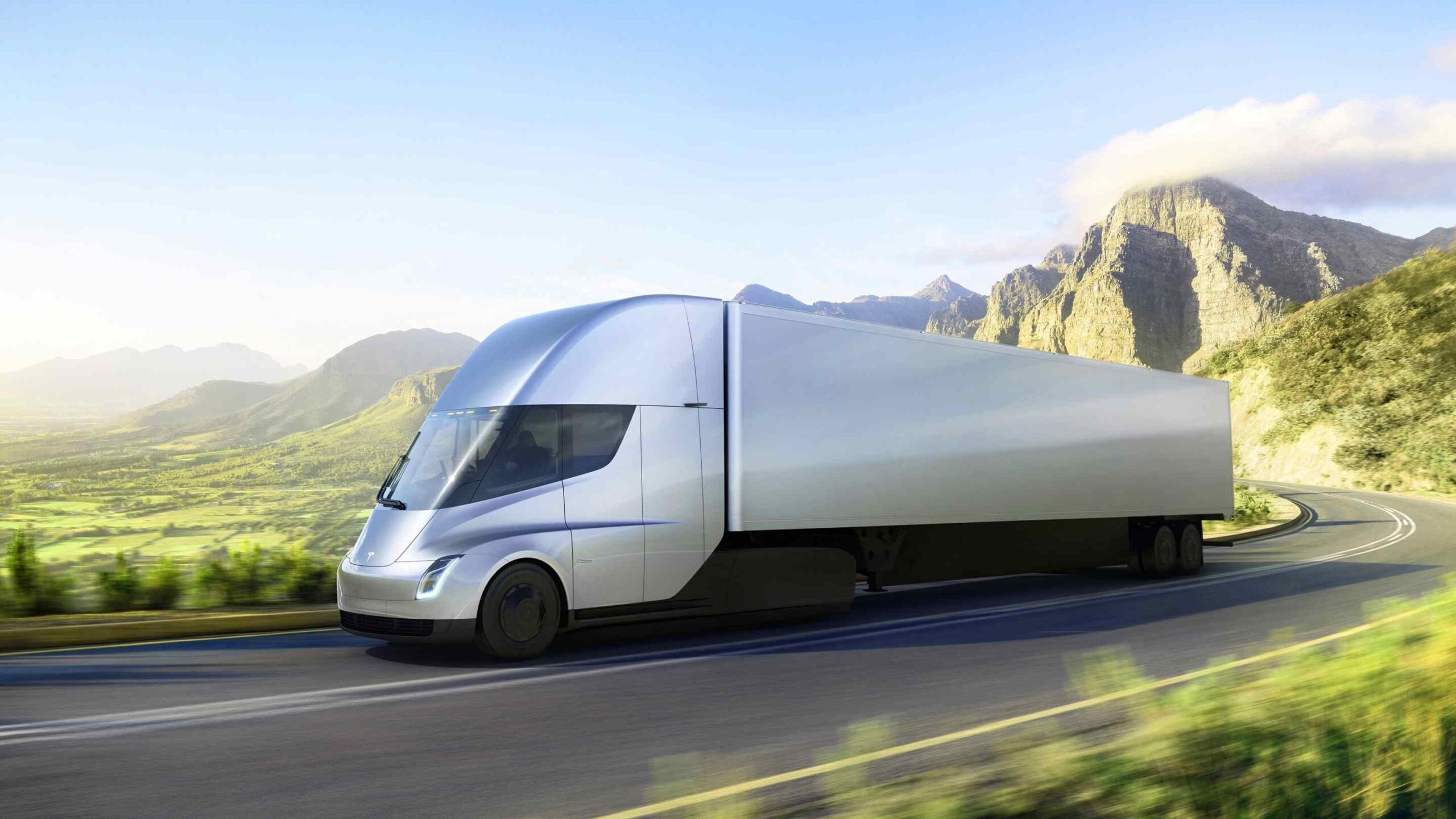
The heavy-duty trucking industry is standing on the precipice of its biggest disruption since the invention of the diesel engine. For years, skeptics argued that electric trucks couldn’t handle the brutal demands of long-haul freight. Battery weight, range anxiety, and charging downtime were cited as insurmountable hurdles.
However, Elon Musk and Tesla are officially silencing the critics. With the launch of the Tesla Semi G2 (Generation 2), Tesla has not only solved the core engineering bottlenecks of electric trucking but has done so at a price point that is $100,000 cheaper than many of its electric rivals.
Termed by Musk as a “money-making machine,” the 2026 Tesla Semi rollout signals the transition of electric big rigs from experimental prototypes to high-volume commercial assets. Let’s dive deep into how the Tesla Semi G2 is redefining global logistics.
The Financial Reality: Why Diesel is Becoming Inefficient
In the logistics sector, profit margins are razor-thin, and the Total Cost of Ownership (TCO) dictates which vehicles get bought. For decades, diesel was the undisputed king of freight. Today, real-world data is turning that tradition on its head.
Crushing Operational Costs per Mile
Recent trials and pilot programs indicate that the Tesla Semi operates at an estimated $0.15 per mile. In stark contrast, traditional diesel trucks cost roughly $0.50 per mile to operate.
When fleets are logging millions of miles annually, a difference of $0.35 per mile translates into massive financial windfalls. Over a three-year payback period, the Tesla Semi can completely offset its initial purchase premium compared to diesel, saving fleets billions of dollars in fuel and maintenance over time.
Pricing the Competition Out of the Market
One of the biggest shocks of the G2 launch is the pricing. While electric trucks from legacy automakers come with exorbitant price tags, the Tesla Semi is entering the market priced up to $100,000 less than its direct electric competitors.
While the upfront cost (estimated under $300,000) is still roughly twice that of a standard diesel truck, the combination of government incentives, zero-emission subsidies, and massive fuel savings makes the Tesla Semi an incredibly attractive asset for medium-to-large shipping fleets.
Real-World Testing: How the Tesla Semi Performs Under Heavy Loads
Many critics believed that range numbers provided by Tesla were purely theoretical. However, independent pilot programs run by logistics giants like PepsiCo and DHL have proven the vehicle’s reliability in standard commercial operations.
PepsiCo’s Range and Weight Data
PepsiCo has been one of the earliest testers of the Tesla Semi and has validated its range capabilities across different weight classes:
- Lighter Cargo (e.g., Potato Chips): The Semi can effortlessly achieve its advertised 805 km (500 miles) on a single charge.
- Heavy Cargo (e.g., Soft Drinks): When pulling heavy beverages, the range dips slightly but still maintains a highly functional 628 km (390 miles) before needing a recharge.
DHL’s Overwhelming Success
DHL reported logging over 5,000 km of daily commercial operations while carrying 34-ton loads. Even under these heavy weights, the trucks consistently delivered a stable range of 625 km while maintaining highway speeds above 80 km/h. This proves that electric trucks can sustain highway speeds without hemorrhaging battery percentages.
The Redesign: What Makes the 2026 Tesla Semi G2 Different?
If you think the new Tesla Semi looks the same as the prototype unveiled in 2017, look closer. Musk recently revealed that the delay in mass production was entirely strategic. Tesla was waiting for a new generation of technology and automated manufacturing to make the truck commercially scalable.
The 2026 model has been so thoroughly re-engineered that Musk calls it “almost unrecognizable” under the hood.
The Shift to 4680 Battery Cells
Earlier prototype versions of the Tesla Semi relied on Lithium Iron Phosphate (LFP) batteries. While LFP batteries are safe and cost-effective, they have a lower energy density. To hit a 500-mile range, Tesla was forced to build a massive, heavy 900 kWh battery pack. That heavy battery ate directly into the truck’s legal payload capacity.
The 2026 Tesla Semi G2 solves this by adopting Tesla’s advanced 4680 battery cells.
- Higher Energy Density: Offers nearly double the energy density of previous packs.
- Lighter Weight: Uses fewer cells to achieve the same 500-mile range, resulting in a lighter chassis.
- Better Payload: A lighter truck means companies can haul more actual cargo without breaking highway weight limits.
(Note: Tesla is not abandoning LFP entirely; it will strategically use LFP packs for a cheaper, short-range 300-mile variant tailored for regional deliveries).
Advanced Aerodynamics and Exterior Upgrades
Efficiency isn’t just about batteries; it is also about cutting through the air. The G2 Semi features sleek, smooth curves that drop its drag coefficient from 0.36 to 0.33. This seemingly minor drop yields a 5% to 8% gain in energy efficiency, further extending the vehicle’s effective range.
Visually, the front of the truck now features a beautiful, distinctive LED light bar (inspired by the Cybertruck and Robotaxi design language), while the windshield has been redesigned to be smaller, lighter, and much cheaper to replace.
Driver Experience: Winning Over the Toughest Critics
Perhaps the most surprising aspect of the Tesla Semi is how much it appeals to truck drivers—a demographic notoriously resistant to change.
The Central Seating Layout
Instead of the driver sitting on the left side, the driver sits in a centrally positioned seat. Flanking the driver are massive touchscreen displays that give a live feed of the truck’s surroundings.
- Zero Blind Spots: Professional drivers note that visibility is unparalleled, particularly on the right side where traditional trucks struggle.
- Effortless Reversing: Navigating tight corners or taking a wrong turn in a standard diesel truck requires multiple trips out of the cab to check clearance. In the Tesla Semi, drivers can back out smoothly using high-definition cameras.
Combating Driver Fatigue for Older Operators
For older truck drivers (aged 55 and above), wrestling with a 13-speed manual diesel clutch all day is physically exhausting. The Tesla Semi is fully automatic. There is no gear shifting, no heavy clutch, and virtually no engine vibration. This drastically reduces physical strain and driver fatigue on long-haul routes.
The Charging Ecosystem: Solving the Downtime Problem
One of the greatest fears fleet operators have regarding electric vehicles is downtime. A diesel truck can refuel in 10 to 15 minutes. How does an electric truck compete?
Megawatt Level Charging (Mega Chargers)
The 2026 G2 Semi introduces 1.2 megawatt to 1.5 megawatt level charging. Tesla’s specialized Mega Chargers can take the Semi’s battery from 10% to 70% in roughly 30 minutes.
In standard logistics, a driver is legally mandated to take a rest break every few hours. By timing the 30-minute charge with legal rest mandates, companies lose zero operational time.
Building a Massive High-Speed Network
Tesla is currently mapping out 66 public Mega Charger hubs across 15 US states, spanning critical West-to-East freight corridors. By vertically integrating both the truck and the charging grid, Tesla creates a closed ecosystem that legacy competitors cannot easily match.
Mass Manufacturing: The Move to High-Volume Production
The true Achilles’ heel of the original Tesla Semi was manufacturing. Until now, units were assembled manually in tiny batches. To conquer the freight world, Tesla needed a dedicated factory.
The Giga Nevada Expansion
Tesla has built a massive 1.7 million square foot facility near Gigafactory Nevada solely dedicated to the Semi.
- Target Output: Once fully operational, this facility is designed to output up to 200 units per day.
- Long-Term Goal: An annual production capacity of 50,000 trucks.
- Extreme Automation: Tesla aims to complete the assembly of a single Semi truck in as little as ten minutes!
By integrating battery cell manufacturing directly on-site, Tesla stabilizes its supply chain, bypassing third-party bottlenecks and driving costs down even further.
The Future of Autonomy and Global Expansion
The Tesla Semi was not just built for electric driving; it was built for the future of automated freight.
FSD and Driverless Convoys
The G2 truck comes packed with upgraded camera placements and sensor suites built directly into its chassis. It is ready for Full Self-Driving (FSD). In the future, this technology could unlock driverless freight convoys, allowing trucks to operate near-continuously day and night, stopping only briefly for rapid charging. Removing human labor restraints will slash freight operating costs by another 40%.
Conquering the European and Asian Markets
While the US rollout is happening now, Musk has teased that the Tesla Semi will be heading to Europe by 2027. A European-compliant prototype—sporting a shorter cab and EU-spec trailer hitches—already exists and has been showcased at transportation events. After Europe, massive logistics hubs in Asia (particularly China and India) are next on the roadmap.
Conclusion: Freight’s “iPhone” Moment
The logistics and freight industry is often slow to adopt new technologies, but the data supporting the Tesla Semi G2 is becoming impossible to ignore. It elegantly checks off every single box fleet operators care about:
- Lower Fuel Costs: $0.15 per mile vs $0.50 per mile for diesel.
- Rapid Charging: 30 minutes for a 60% top-off.
- Increased Payload: Lighter 4680 cells translate to more cargo.
- Unmatched Scale: Massive Giga Nevada automation aims for 50,000 units a year.
The question is no longer whether Tesla can build a viable electric truck. The question is whether traditional truck makers like Volvo and Daimler can pivot fast enough to compete. By merging advanced battery density, massive automated manufacturing, and visual autonomy, the Tesla Semi G2 is set to set a brand-new standard for global shipping.
FAQs
1. What is the Tesla Semi G2?
The Tesla Semi G2 is the 2026 generation of Tesla’s all-electric heavy-duty truck designed for long-haul freight, featuring improved batteries, lower costs, and high-volume production capability.
2. Why is the Tesla Semi G2 considered disruptive?
It significantly lowers operating costs, improves efficiency, and solves key issues like range and charging time—making electric trucking commercially viable at scale.
3. How much does the Tesla Semi cost?
The Tesla Semi is estimated to cost under $300,000, which is about $100,000 cheaper than many competing electric trucks.
4. How does the cost per mile compare to diesel trucks?
Tesla Semi: ~$0.15 per mile
Diesel trucks: ~$0.50 per mile
This creates major long-term savings for fleet operators.
5. What is the driving range of the Tesla Semi?
- Up to 805 km (500 miles) with lighter loads
- Around 625–628 km (390 miles) with heavy cargo
6. Has the Tesla Semi been tested in real-world conditions?
Yes, companies like PepsiCo and DHL have tested it extensively, confirming its performance under commercial workloads and heavy cargo conditions.
7. What battery technology does the G2 use?
The G2 uses advanced 4680 battery cells, which offer higher energy density, lighter weight, and improved efficiency compared to older battery types.
8. Will Tesla still use LFP batteries?
Yes, Tesla plans to use LFP batteries in a cheaper, shorter-range (300-mile) version for regional deliveries.
9. How fast can the Tesla Semi charge?
Using Mega Chargers, it can charge from 10% to 70% in about 30 minutes.
10. Does charging increase downtime for trucking companies?
No, because charging can be aligned with mandatory driver rest breaks, resulting in no additional operational downtime.
11. What makes the Tesla Semi more efficient aerodynamically?
Its improved design reduces drag coefficient from 0.36 to 0.33, increasing energy efficiency by 5–8%.
12. How is the driver experience different?
- Central seating position
- No blind spots
- Fully automatic (no gear shifting)
- Reduced fatigue due to lack of vibration and clutch use
13. How will Tesla manufacture the Semi at scale?
Tesla is building a dedicated factory in Nevada capable of:
- Producing up to 200 trucks per day
- Reaching 50,000 trucks annually
- Using high automation for faster assembly
14. Does the Tesla Semi support autonomous driving?
Yes, it is equipped with hardware for Full Self-Driving (FSD), enabling future driverless convoy operations and reduced labor costs.
15. Will the Tesla Semi be available globally?
Yes, Tesla plans to expand:
- Europe by 2027
- Later into major Asian markets like China and India
Read More:
- Starship Booster 19 finally Ignited Raptor 3 after Fixing Problems! Ready Firing in Hours
- Elon Musk’s TERAFAB project: Everything you need to know
- Tesla launches amazing new feature for shared vehicles
- Tesla reveals various improvements to the Semi in new piece with Jay Leno
- Elon Musk New Confirmations Tesla Cybercab Robotaxi & INSANE Terafab Project