
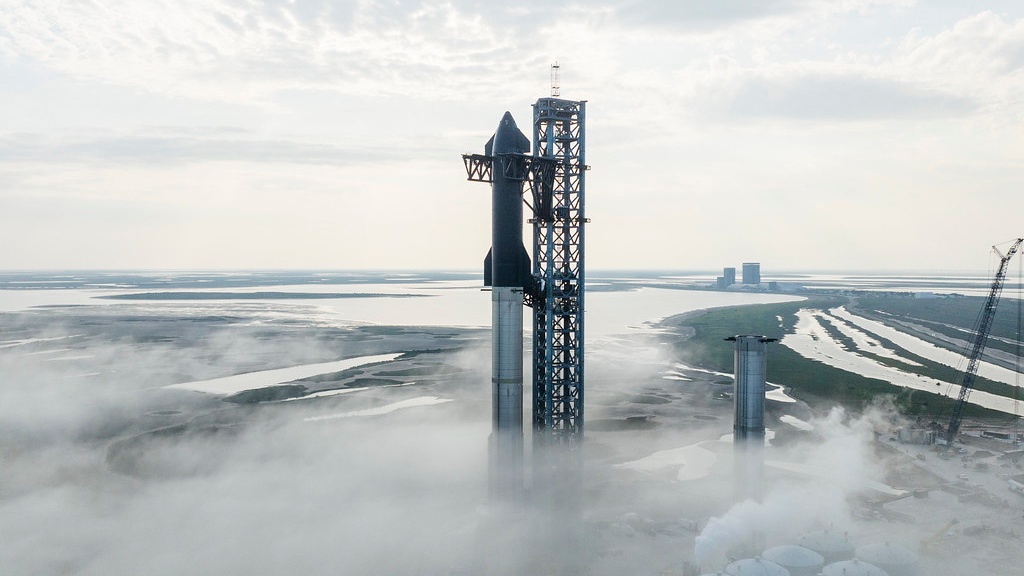
The global aerospace industry is entering a transformational era. Massive reusable rockets, advanced orbital mathematics, and the growing challenge of space debris are collectively reshaping the future of human spaceflight. At the center of this revolution stands SpaceX and its rapidly evolving Starship program.
From the bustling launch facilities at Starbase to breakthrough academic studies on lunar trajectories, the race to dominate the next generation of space exploration is accelerating faster than ever before.
The latest focus is Starship Flight 12, which recently completed a critical fueling milestone ahead of launch. What initially looked like a possible issue during testing is now being recognized as a deliberate engineering strategy tied to the company’s revolutionary Version 3 (V3) fueling infrastructure.
But that’s only one part of a much larger story.
This deep dive explores:
- The real reason behind the unusual partial-fill Wet Dress Rehearsal
- Why the new V3 ground systems could dramatically improve launch efficiency
- How scientists discovered smarter and cheaper ways to reach the Moon
- Why the rapidly worsening orbital debris crisis threatens the future of space operations
The Starship Flight 12 Full-Stack Integration
SpaceX recently completed the full-stack integration of Booster 19 (B19) and Ship 39 (S39) at Orbital Launch Pad 2 in Texas. This marks one of the final stages before launch authorization and flight readiness.
The integrated stack underwent a sequence of:
- Structural inspections
- Static validation procedures
- Cryogenic line verification
- Ground systems synchronization
- Countdown software testing
The most important step, however, was the Wet Dress Rehearsal (WDR) — the final full countdown simulation before launch.
Traditionally, a WDR involves loading the rocket with a full supply of supercooled liquid methane and liquid oxygen (LOX) to simulate launch conditions as accurately as possible.
This time, though, something looked very different.
What Happened During the Starship Flight 12 Fueling Test?
Observers monitoring the launch pad noticed frost forming across portions of both stages, confirming that cryogenic fueling had begun successfully.
However, the fueling operation stopped unexpectedly early.
Instead of reaching full tank capacity, SpaceX halted loading at roughly 50% fill levels before beginning the detanking sequence.
Fueling Comparison: Flight 11 vs Flight 12
| Test Campaign | Fueling Level |
|---|---|
| Flight 11 WDR | 100% Full Stack |
| Flight 12 WDR | ~50% Partial Fill |
This immediately sparked speculation across the aerospace community.
Many assumed there had been:
- A valve malfunction
- A pressure instability
- Ground support equipment failure
- Cryogenic plumbing anomalies
But evidence strongly suggests the partial fill was intentional.
Why the Partial Fill Was Actually a Smart Engineering Decision
SpaceX showed no signs of concern after the test.
In fact, several major clues confirmed that the operation was likely planned from the beginning.
1. No Technical Anomalies Were Reported
After detanking procedures concluded, there were:
- No emergency safing operations
- No visible hardware damage
- No pad evacuations
- No reports of structural issues
This is highly unusual if a real fueling problem had occurred.
2. Launch Timelines Remained Unchanged
SpaceX continued preparing for launch without adjusting the schedule.
The company maintained its planned launch window beginning at 5:30 p.m. Central Time, indicating strong confidence in vehicle readiness.
3. Full Fuel Loads Are Extremely Resource Intensive
A fully fueled Starship system requires enormous quantities of cryogenic propellant.
Immediately after the test, dozens of tanker trucks reportedly entered the facility to replenish the launch site’s tank farm infrastructure.
That highlights a crucial reality:
Fully fueling Starship is an immense logistical operation.
By limiting the test to partial capacity, SpaceX likely avoided unnecessary resource consumption while still validating key systems.
The Real Star of the Show: SpaceX’s New V3 Ground Systems
The most fascinating aspect of this entire event may actually be the introduction of the new Version 3 (V3) fueling infrastructure.
This upgraded ground system represents a major leap forward in launch operations.
Why Fueling Speed Matters
Heavy-lift rockets like Starship use extremely cold cryogenic propellants.
These liquids must be transferred carefully to avoid:
- Thermal shock
- Pressure instability
- Pipe contraction damage
- Valve stress failures
Historically, fueling massive rockets has taken a long time because engineers needed to carefully regulate temperature transitions.
The V3 infrastructure changes that dramatically.
How the V3 System Changes Everything
The upgraded system reportedly includes:
- High-flow subcooling units
- Redesigned valve manifolds
- Optimized transfer pipelines
- Improved thermal stabilization systems
Together, these upgrades significantly reduce fueling time.
Estimated Full Load Time
| Infrastructure Version | Estimated Fueling Time |
|---|---|
| Older Systems | Multiple Hours |
| V3 Infrastructure | ~35 Minutes |
That is an extraordinary improvement.
The implications are enormous for future launch cadence.
Why Faster Fueling Is a Huge Deal for Starship
If SpaceX can reliably fuel Starship in around 35 minutes, several major advantages emerge.
Faster Launch Turnaround
Rapid fueling supports:
- Higher launch frequency
- Faster mission cadence
- Quicker launch recycling
- Reduced operational downtime
Lower Operational Costs
Shorter fueling windows mean:
- Fewer labor hours
- Lower cryogenic losses
- Reduced infrastructure wear
- More efficient resource allocation
Better Launch Flexibility
Weather conditions can change rapidly near launch time.
A shorter fueling cycle gives mission controllers greater flexibility to adapt to:
- Wind shifts
- Lightning risk
- Upper-atmosphere conditions
- Range safety constraints
For a future built around rapidly reusable mega-rockets, this capability is absolutely critical.
The Bigger Picture: Heavy-Lift Rockets Are Changing Space Economics
Starship is not just another rocket.
It represents a potential shift in the economics of spaceflight itself.
Reusable heavy-lift systems could dramatically reduce the cost of:
- Satellite deployment
- Lunar missions
- Mars cargo transport
- Deep-space exploration
- Orbital infrastructure construction
But building giant rockets is only half the battle.
The next frontier is optimizing how spacecraft travel once they reach orbit.
Smarter Routes to the Moon Could Revolutionize Space Travel
While companies focus on launch systems, scientists are making breakthroughs in orbital trajectory optimization.
An international research team recently analyzed approximately 30 million Earth-to-Moon trajectories using advanced computational modeling and the Theory of Functional Connections.
Their findings could significantly reshape future lunar missions.
Understanding the Interplanetary Transportation Network
Spacecraft do not simply fly directly through space using continuous engine burns.
That would require enormous amounts of fuel.
Instead, mission planners use the Interplanetary Transportation Network (ITN) — a collection of gravitational pathways created by celestial bodies.
These pathways allow spacecraft to:
- Save fuel
- Reduce launch mass
- Extend mission duration
- Carry larger payloads
The concept is similar to using ocean currents instead of constantly powering against them.
The Newly Proposed Lunar Entry Path
Traditional lunar missions approach the Moon along trajectories closest to Earth.
The new pathway takes a very different approach.
Instead of approaching directly, the spacecraft loops around the far side of the Earth-Moon system before entering lunar orbit from the opposite direction.
This creates major efficiency gains.
Fuel Savings Through Orbital Mathematics
The study revealed a potential Delta-V reduction of 58.8 meters per second.
In aerospace engineering, that is a very meaningful improvement.
Delta-V Optimization
ΔV=58.8 m/s
Even relatively small reductions in Delta-V requirements can:
- Increase payload capacity
- Reduce total launch mass
- Extend mission flexibility
- Lower mission costs
For lunar cargo missions, this could become especially important.
Continuous Communication: A Hidden Advantage
One of the most interesting benefits involves communications reliability.
Traditional lunar missions often experience signal blackouts when spacecraft pass behind the Moon.
During missions like Apollo, this communication gap created periods of uncertainty for mission controllers.
The new trajectory avoids this issue entirely.
Why This Matters
Continuous line-of-sight communication allows:
- Real-time telemetry monitoring
- Immediate maneuver corrections
- Improved crew safety
- Better mission coordination
This is particularly important during critical orbital insertion burns.
Future Lunar Missions Could Become Far More Efficient
Researchers believe future simulations may unlock even greater efficiencies once the Sun’s gravitational influence is included in the calculations.
That means future missions could potentially combine:
- Lunar gravity assists
- Solar gravitational effects
- Optimized orbital insertion
- Minimal fuel expenditure
This is the future of advanced astrodynamics.
The Growing Crisis in Low Earth Orbit
While launch technology improves rapidly, another issue is becoming increasingly dangerous:
Space debris.
Low Earth Orbit (LEO) is becoming heavily congested with:
- Dead satellites
- Rocket fragments
- Paint particles
- Collision debris
- Untracked micro-fragments
This is no longer a theoretical problem.
It is actively disrupting modern space operations.
NASA’s Earth Observation Missions Are Already Being Affected
One major example occurred during severe California wildfires.
NASA’s Aqua satellite was providing thermal imaging data to emergency responders using its MODIS infrared observation system.
But scientists noticed sudden data gaps.
Investigations later linked the issue to emergency collision-avoidance maneuvers caused by incoming orbital debris.
That means the satellite had to prioritize survival instead of scientific operations.
The consequences were serious:
- Reduced wildfire tracking accuracy
- Temporary monitoring blind spots
- Delayed situational awareness for responders
Orbital Debris Numbers Are Exploding
The growth rate of orbital debris is alarming.
Tracked Orbital Debris Growth
| Year | Tracked Objects |
|---|---|
| 2005 | ~16,000 |
| 2026 | >44,000 |
That represents an increase of roughly 180%.
Even worse, experts estimate there are over 1 million untracked fragments between 1 mm and 10 cm in size.
These objects travel at extreme orbital velocities.
Orbital Velocity
v=7.8 km/s
At these speeds, even tiny particles can cause catastrophic damage.
Why Tiny Debris Is So Dangerous
A small paint fleck moving at orbital velocity carries tremendous kinetic energy.
Kinetic Energy Relationship
KE=21mv2
m1
m2
vm1m2
Because velocity is squared, even microscopic fragments can puncture spacecraft shielding.
This creates enormous risks for:
- Satellites
- Space stations
- Crewed spacecraft
- Scientific instruments
- Commercial infrastructure
The Financial Impact of Orbital Debris
The economic consequences are becoming severe.
NASA’s Earth Observing System constellation has reportedly executed dozens of debris avoidance maneuvers over the years.
Each maneuver creates multiple costs.
1. Propellant Loss
Satellites carry limited onboard fuel reserves.
Every emergency maneuver shortens operational lifespan.
Once fuel is depleted, the satellite becomes unusable.
2. Orbital Precision Problems
Earth-observation satellites rely on highly stable orbits for long-term climate measurements.
Unexpected maneuvers introduce:
- Positional drift
- Calibration inconsistencies
- Data alignment challenges
This reduces scientific accuracy.
3. Rising Space Insurance Costs
The commercial insurance industry is struggling to price orbital risk accurately.
As collision probability rises:
- Insurance premiums increase
- Coverage becomes limited
- Some missions become uninsurable
This creates financial instability for commercial satellite operators.
Why Space Sustainability Is Becoming a Global Priority
Humanity’s future in space depends on more than just powerful rockets.
Long-term sustainability now requires:
- International debris mitigation standards
- Space traffic management systems
- Active debris removal technologies
- Responsible launch practices
- Improved orbital coordination
Without these measures, Low Earth Orbit could become dangerously overcrowded.
The Future of Spaceflight Is Deeply Interconnected
Modern space exploration is evolving into a highly integrated global ecosystem.
Powerful launch systems like Starship may dramatically lower the cost of reaching orbit, but sustaining long-term operations requires equally advanced:
- Orbital mathematics
- Traffic coordination
- Debris mitigation
- Fuel optimization
- Mission planning
The future of human expansion into space depends on balancing engineering ambition with operational responsibility.
Final Thoughts
The events surrounding Starship Flight 12 reveal how quickly aerospace technology is evolving.
What looked like a simple fueling test was actually a demonstration of next-generation launch infrastructure designed for a future of rapid, reusable spaceflight.
At the same time, breakthroughs in lunar trajectory optimization are showing that smarter mathematics may become just as important as raw rocket power.
Yet looming over all of this progress is the growing challenge of orbital congestion and space debris — a problem that could ultimately determine whether humanity can sustainably expand into the cosmos.
The next chapter of space exploration will not be defined by a single rocket launch.
It will be defined by how effectively humanity can integrate:
- Powerful launch systems
- Intelligent orbital mechanics
- Sustainable space operations
- International cooperation
The future of spaceflight has officially entered a new era — and it’s moving faster than ever before.
FAQs
1. What is Starship Flight 12?
Starship Flight 12 is the latest integrated test campaign of SpaceX’s fully reusable Starship rocket system, featuring Booster 19 (B19) and Ship 39 (S39). The mission focuses on validating upgraded fueling infrastructure and launch operations before liftoff.
2. Why was the Starship Flight 12 fueling test important?
The fueling test, known as a Wet Dress Rehearsal (WDR), is one of the final launch readiness milestones. It validates:
- Cryogenic fueling systems
- Countdown software
- Ground infrastructure
- Thermal stabilization procedures
- Tank pressure performance
3. Why did SpaceX only partially fuel Starship during the WDR?
SpaceX intentionally stopped fueling at around 50% tank capacity to test the new V3 fueling infrastructure without wasting massive quantities of cryogenic propellant. The company likely only needed to validate early-stage fueling operations and thermal stabilization.
4. What is the V3 ground system infrastructure?
The V3 ground system is SpaceX’s upgraded fueling infrastructure at Starbase. It includes:
- High-flow subcooling units
- Faster transfer pipelines
- Redesigned valve systems
- Improved cryogenic management technology
These upgrades dramatically reduce fueling time.
5. How fast can Starship now be fueled using the V3 system?
The upgraded V3 infrastructure may reduce full fueling operations to roughly 35 minutes, compared to the multi-hour fueling timelines used previously.
6. What fuel does Starship use?
Starship uses:
- Liquid Oxygen (LOX)
- Liquid Methane (CH₄)
Both are stored at extremely low cryogenic temperatures.
7. Why is rapid fueling important for Starship?
Faster fueling enables:
- Higher launch frequency
- Rapid rocket reusability
- Lower operational costs
- Better weather flexibility
- Faster turnaround between missions
This is essential for future Mars and lunar missions.
8. What is the Interplanetary Transportation Network (ITN)?
The Interplanetary Transportation Network is a system of gravitational pathways used by spacecraft to travel efficiently through space while minimizing fuel consumption.
It allows spacecraft to use gravity instead of continuous engine burns.
9. How does the new lunar trajectory save fuel?
Researchers discovered a new Earth-to-Moon pathway that reduces required Delta-V by approximately 58.8 m/s. This saves fuel by allowing gravity from the Earth-Moon system to perform more of the spacecraft’s orbital work.
10. Why is Delta-V so important in aerospace engineering?
Delta-V measures the amount of velocity change required for a spacecraft maneuver. Lower Delta-V requirements mean:
- Less fuel needed
- Larger payload capacity
- Reduced launch costs
- Longer mission flexibility
11. What communication advantage does the new Moon trajectory provide?
Unlike traditional lunar approaches, the new route maintains a continuous line of sight with Earth, eliminating communication blackouts during critical orbital insertion maneuvers.
12. What is space debris?
Space debris refers to:
- Defunct satellites
- Rocket fragments
- Collision debris
- Tiny orbital particles
- Paint flecks and metal shards
These objects remain trapped in orbit and travel at extremely high speeds.
13. Why is orbital debris dangerous?
Even tiny debris fragments can severely damage spacecraft because they travel at roughly 7.8 km/s. At those velocities, small particles carry enormous kinetic energy capable of puncturing satellite shielding.
14. How much orbital debris currently exists?
According to recent estimates:
- Over 44,000 tracked debris objects exist in orbit
- More than 1 million smaller untracked fragments may also be present
The number continues growing rapidly every year.
15. How does space debris affect satellites?
Space debris forces satellites to perform emergency avoidance maneuvers, which:
- Consume valuable fuel
- Reduce satellite lifespan
- Interrupt scientific missions
- Increase operational costs
- Raise collision risk
16. Why is space sustainability becoming critical?
As launch frequency increases, sustainable space operations are becoming essential to avoid overcrowding in Low Earth Orbit. Future success in space exploration will depend on:
- Better traffic management
- Debris mitigation systems
- International cooperation
- Responsible launch practices
- Advanced orbital coordination systems
Read More:
- Tesla ditches India after years of broken promises
- Tesla Full Self-Driving expands in Europe, entering its second country
- Tesla scales back driver monitoring with latest Full Self-Driving release
- Elon Musk’s New $250M Factory Is Built For Dry Electrode Control
- Tesla Battery 2026: Only 10% Loss? Real-World Range, Resale Strength + Long-Term Savings
1 thought on “Starship Flight 12 Launch TODAY after Major Fueling test Done! First V3 is Kind of Mind-Blowing”