
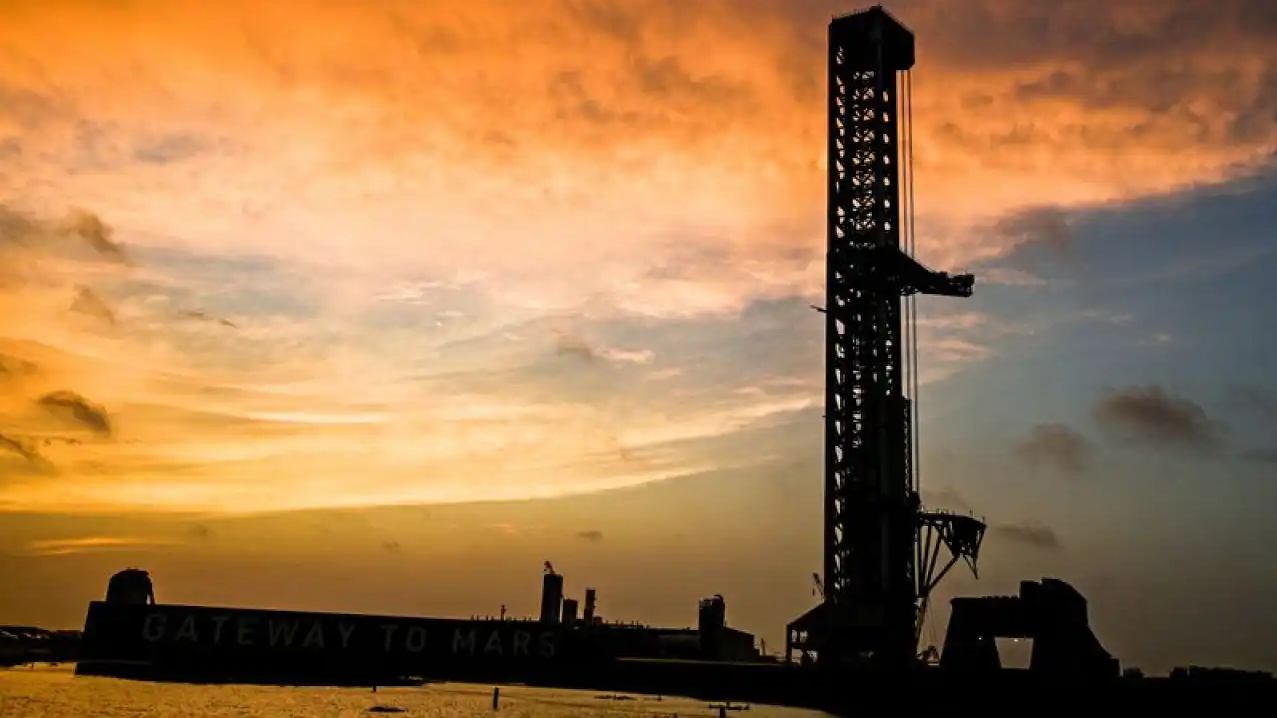
The excitement surrounding SpaceX Starship continues to grow as the company officially shifts its attention toward the next major milestone in its ambitious deep-space roadmap: Starship Flight 13. Although the dust has barely settled from the successful completion of Flight 12, engineers and technicians at Starbase are already preparing for the next critical test mission.
However, there is one important reality check for space enthusiasts eagerly awaiting another launch. Despite visible progress across multiple facilities, Starship Flight 13 will not launch this month.
The upcoming mission will feature the second flight of the newly upgraded Starship Version 3 (V3) architecture, utilizing Booster 20 (B20) and Ship 40 (S40). While testing activities are accelerating, several technical, regulatory, and operational hurdles must be cleared before the giant rocket can return to the launch pad.
In this article, we’ll explore the latest developments surrounding Starship Flight 13, the vehicles involved, the testing campaign at Massey’s facility, launch delays, mission possibilities, and why this mission is a crucial step toward NASA’s Artemis program and future missions to Mars.
SpaceX Begins Preparations for Starship Flight 13
Following Flight 12, SpaceX wasted no time transitioning into preparations for Flight 13. The company has entered a new phase of development where rapid experimentation is being balanced with a more structured engineering approach.
In Starship’s early years, SpaceX became famous for its “build, test, fly, explode, repeat” philosophy. Today, however, the company is focusing more on reliability, data collection, and mission success rates.
This strategic shift is especially important as Starship moves beyond experimental flights and begins supporting major programs such as:
- NASA Artemis lunar missions
- Orbital refueling demonstrations
- Deep-space cargo transportation
- Future human missions to Mars
As a result, every test now follows a carefully planned schedule designed to reduce risk and maximize performance.
The Hardware Behind Flight 13
Booster 20 (B20)
At the heart of the mission is Booster 20, the massive first-stage rocket responsible for generating the enormous thrust needed to lift Starship off the launch pad.
The final structural sections of B20 were transported to Mega Bay 1 in late April, where engineers spent weeks completing internal integration activities.
These activities included:
- Structural inspections
- Wiring harness verification
- Internal systems integration
- Component installation
- Quality assurance checks
Completing these procedures before major testing reduces the likelihood of discovering costly issues later in the campaign.
Ship 40 (S40)
The second major component of Flight 13 is Ship 40, the latest upper-stage spacecraft based on the new Version 3 design.
S40 reached an important milestone before its booster counterpart by successfully completing preliminary cryogenic proof testing during the first week of May.
Following successful verification, the vehicle returned to the production site where technicians began preparing it for flight.
Current work on Ship 40 includes:
- Installation of Raptor engines
- Fuel and oxidizer plumbing connections
- Thermal protection system upgrades
- Flight software integration
- Final structural inspections
Because these activities are occurring simultaneously with booster testing, SpaceX is dramatically reducing overall mission preparation time.
How SpaceX Uses Parallel Processing to Accelerate Development
One of SpaceX’s greatest strengths is its ability to conduct multiple development activities simultaneously.
Instead of waiting for one vehicle to complete testing before beginning work on another, the company operates through a highly efficient parallel workflow model.
While Booster 20 undergoes testing at Massey’s Test Facility, Ship 40 continues final outfitting and engine installation at the production site.
This approach offers several advantages:
Faster Development Cycles
Parallel operations significantly reduce downtime between missions.
Better Resource Utilization
Different engineering teams can work simultaneously without waiting for other departments to finish.
Increased Data Collection
Multiple systems can be tested at the same time, accelerating learning and improving overall program efficiency.
This strategy has become a cornerstone of SpaceX’s modern manufacturing philosophy.
Massey’s Test Site Becomes the Center of Flight 13 Preparations
Why Massey’s Matters
The testing campaign for Flight 13 officially begins at Massey’s Test Site, a specialized facility designed to safely conduct high-risk rocket testing away from the orbital launch pad.
Recent FAA documentation revealed temporary flight restrictions covering booster testing activities through mid-June, signaling the start of B20’s qualification campaign.
The facility plays a vital role because it allows engineers to validate hardware performance under realistic conditions without risking critical launch infrastructure.
Key Tests Booster 20 Must Pass
Structural Load Testing
Before flight, engineers must confirm that Booster 20 can withstand the extreme stresses encountered during launch.
Mechanical systems simulate:
- Aerodynamic pressure
- Structural bending
- Compression forces
- Max-Q flight conditions
This testing helps identify weaknesses before the rocket ever leaves the ground.
Pneumatic Leak Checks
Rocket systems contain thousands of potential leak points.
During this phase, engineers pump high-pressure nitrogen through tanks, valves, manifolds, and fuel lines to verify:
- Seal integrity
- Valve performance
- Pressure retention
- System responsiveness
Even tiny leaks can create major problems during flight.
Cryogenic Proof Testing
Cryogenic testing is one of the most important milestones in the campaign.
During these tests, tanks are filled with super-cooled liquids to mimic actual flight conditions.
The objectives include:
- Verifying tank strength
- Testing thermal contraction behavior
- Identifying structural weaknesses
- Validating operational procedures
Recent infrastructure upgrades at Massey’s allow SpaceX to perform these temperature cycles in approximately 35 minutes, dramatically improving testing efficiency.
Starship Launch Infrastructure Shows Major Improvements
One of the most encouraging outcomes of Flight 12 was the condition of the launch site afterward.
Earlier Starship launches caused severe damage to:
- Concrete foundations
- Steel structures
- Ground systems
- Launch pad hardware
However, the upgraded infrastructure performed remarkably well during Flight 12.
Water-Cooled Deluge System Success
The advanced water-cooled steel plate beneath the launch mount successfully absorbed the immense heat and acoustic energy generated by the 33 Raptor engines.
This achievement represents a major milestone because launch pad repairs previously required extensive downtime.
Chopstick Arm Requalification
The famous tower-mounted Chopstick Arms have undergone additional testing to ensure:
- Structural alignment
- Hydraulic performance
- Mechanical reliability
These giant arms will eventually catch returning boosters and spacecraft.
Catch Rail Reinforcement
Engineers have strengthened critical catch rail sections to prepare for future recovery attempts involving massive rocket stages.
Quick Disconnect Upgrades
Work also continues on:
- Booster Quick Disconnect (BQD)
- Ship Quick Disconnect (SQD)
These systems deliver fuel, power, and communication links to the vehicle prior to launch.
Why Starship Flight 13 Will Not Launch This Month
Despite significant progress, several major obstacles make a June launch impossible.
1. Extensive Testing Still Remains
The current cryogenic testing campaign occupies much of the first half of June.
After testing concludes, Booster 20 must return to Starbase for:
- Detailed inspections
- Hardware reviews
- Engine installation
- Flight readiness checks
Only after these activities can the booster move to the launch pad.
Static Fire Testing Is Still Ahead
Perhaps the most critical milestone is the Static Fire Test.
During this event:
- All 33 Raptor engines ignite simultaneously
- The booster remains secured to the launch mount
- Engineers collect critical performance data
This test alone requires significant preparation and analysis time.
Any unexpected issues could introduce additional delays.
2. FAA Investigation Requirements
Another major factor affecting the launch schedule is ongoing federal oversight.
Following Flight 12, the Federal Aviation Administration (FAA) initiated a formal mishap investigation related to engine performance anomalies observed during the booster’s descent.
Before Flight 13 can proceed, SpaceX must:
Identify Root Causes
Engineers must determine exactly what caused the anomalies.
Submit Corrective Actions
SpaceX must demonstrate how future flights will avoid similar issues.
Complete Safety Reviews
FAA officials must evaluate the proposed solutions and approve them.
While these procedures are routine in aerospace development, they inevitably extend mission timelines.
For this reason, many analysts now consider mid-July the earliest realistic launch opportunity.
Potential Mission Profiles for Flight 13
One of the biggest questions surrounding Flight 13 is what mission profile SpaceX will ultimately choose.
The company currently appears to have two primary options.
Option 1: Full Orbital Mission
The ambitious approach would attempt to place Ship 40 into orbit.
Under this scenario:
- Booster 20 completes a nominal ascent.
- Hot staging occurs successfully.
- Ship 40 continues accelerating.
- Orbital velocity is achieved.
- In-space testing begins.
If successful, Flight 13 would become one of the most significant milestones in Starship history.
Key Objectives of an Orbital Mission
In-Space Engine Relight
Future lunar and Mars missions require engines capable of restarting in space.
Propellant Management Testing
Engineers must learn how fuel behaves in microgravity environments.
Thermal Management Validation
Long-duration spaceflight requires effective heat control systems.
Achieving these objectives would significantly advance Starship toward operational status.
Option 2: High-Energy Suborbital Flight
The alternative approach focuses on gathering critical re-entry data.
Instead of reaching orbit, Ship 40 would follow a carefully designed high-speed suborbital trajectory.
This strategy would allow SpaceX to study:
- Atmospheric heating
- Thermal protection performance
- Aerodynamic stability
- Engine reliability under stress
Why a Suborbital Mission May Be Smarter
Although less dramatic than orbit, this approach provides enormous engineering value.
SpaceX still needs more information about:
- Long-duration thermal stress
- Heat shield durability
- Re-entry flight dynamics
- Vehicle survivability
Gathering this data now could significantly improve the odds of future orbital mission success.
In aerospace engineering, collecting quality data often matters more than chasing headlines.
How Flight 13 Supports NASA’s Artemis Program
Starship serves as a critical component of NASA’s Artemis lunar exploration program.
The spacecraft has been selected as the lunar lander for future Artemis missions.
To support these goals, SpaceX must demonstrate several capabilities:
Orbital Refueling
Multiple Starships must transfer propellant in orbit before lunar missions become possible.
Long-Duration Operations
Vehicles must remain operational for extended periods in space.
Precision Landing Systems
Safe lunar landings require extremely accurate navigation and control.
Reusability
Rapid turnaround and reusable hardware remain essential for reducing mission costs.
Every Starship test flight contributes valuable information toward these objectives.
The Road to Mars Begins with Missions Like Flight 13
While much of the current focus centers on the Moon, Elon Musk’s ultimate vision remains unchanged: establishing a permanent human presence on Mars.
To accomplish this goal, SpaceX must first master:
- Fully reusable rockets
- Orbital refueling
- Deep-space navigation
- Long-duration spacecraft operations
- Reliable atmospheric re-entry
Flight 13 represents another critical step in solving these challenges.
The lessons learned from every cryogenic test, static fire, and flight maneuver directly contribute to future interplanetary missions.
Final Thoughts
Although many fans hoped to see Starship Flight 13 launch this month, the reality is that SpaceX is prioritizing thorough testing, infrastructure readiness, and regulatory compliance over speed.
With Booster 20 and Ship 40 progressing through a carefully structured qualification campaign, Flight 13 is shaping up to be one of the most important Starship missions to date.
Whether SpaceX chooses an ambitious orbital attempt or a data-rich suborbital profile, the mission will generate critical insights needed for future Artemis Moon landings, orbital refueling operations, and eventually human missions to Mars.
For now, all eyes remain on Starbase, Massey’s Test Site, and the FAA approval process as SpaceX works toward what could become another historic chapter in the evolution of spaceflight. The launch may not happen this month, but the groundwork being laid today could determine how quickly humanity reaches the Moon, Mars, and beyond.
FAQs
1. What is Starship Flight 13?
Starship Flight 13 is the upcoming test mission in SpaceX’s Starship development program. It will be the second flight to use the upgraded Starship Version 3 (V3) architecture, featuring Booster 20 (B20) and Ship 40 (S40).
2. When will Starship Flight 13 launch?
As of now, Flight 13 is not expected to launch this month. Current testing schedules and regulatory requirements suggest that mid-July is the earliest realistic target, assuming all milestones are completed successfully.
3. Why is SpaceX delaying the Flight 13 launch?
The delay is primarily due to ongoing cryogenic testing, engine integration, static fire preparations, and an FAA-led mishap investigation related to anomalies observed during Flight 12.
4. What is Booster 20 (B20)?
Booster 20 is the Super Heavy first-stage rocket that will provide the enormous thrust needed to lift the Starship stack off the launch pad during Flight 13.
5. What is Ship 40 (S40)?
Ship 40 is the upper-stage spacecraft built using SpaceX’s latest Starship V3 design. It is responsible for completing the mission after separating from the booster.
6. What makes Starship Version 3 different from previous versions?
Starship V3 includes improvements in structural design, thermal protection, engine integration, and overall performance. These upgrades are intended to increase reliability and support future orbital and deep-space missions.
7. What testing is Booster 20 undergoing at Massey’s Test Site?
Booster 20 will undergo several critical tests, including:
- Structural load testing
- Pneumatic leak checks
- Cryogenic proof testing
- Pressure verification
- Flight readiness evaluations
8. What is cryogenic testing, and why is it important?
Cryogenic testing involves filling rocket tanks with super-cooled liquids to simulate flight conditions. It helps engineers verify tank strength, thermal performance, and structural integrity before launch.
9. What is a static fire test?
A static fire test is a major pre-launch milestone where all rocket engines are ignited while the vehicle remains secured to the launch pad. It allows engineers to verify engine performance and system reliability.
10. What role does the FAA play in Flight 13?
The Federal Aviation Administration (FAA) oversees launch licensing and public safety. SpaceX must complete all FAA requirements and receive approval before Flight 13 can launch.
11. Could Flight 13 reach orbit?
Yes. One potential mission profile involves achieving full orbital insertion, which would allow SpaceX to test in-space operations such as engine relights and orbital systems.
12. What is the alternative mission profile for Flight 13?
Instead of reaching orbit, SpaceX may choose a high-energy suborbital trajectory designed to collect valuable data on atmospheric re-entry, thermal protection, and vehicle performance.
13. Why is re-entry testing so important?
Re-entry testing helps engineers understand how Starship performs under extreme heat and aerodynamic stress. This data is essential for developing a fully reusable spacecraft.
14. How does Flight 13 support NASA’s Artemis program?
Flight 13 will help validate technologies required for NASA’s Artemis missions, including orbital operations, engine relights, long-duration flight capabilities, and future lunar landing systems.
15. What improvements were made to the Starbase launch site after Flight 12?
SpaceX upgraded and tested several key systems, including:
- Water-cooled steel deluge plate
- Chopstick arms
- Catch rails
- Quick Disconnect systems
- Launch pad infrastructure
These improvements help reduce turnaround time between launches.
16. Why is Flight 13 important for future Mars missions?
The technologies being tested during Flight 13—including reusability, orbital operations, engine reliability, and spacecraft durability—are critical building blocks for SpaceX’s long-term goal of establishing a human presence on Mars.
Read More:
- Tesla Finally UNLOCKED New 4.0 Production Line Destroy EV Industry
- Tesla upgrades Model Y’s affordable trims with new interior features
- Ferrari CEO’s self-driving stance echoes Elon Musk’s — sort of
- Tesla Model 3 has a tasty Supercharging incentive, but it’s ending soon
- SpaceX Ready to Push Starship Program Stronger than Ever after Flight 12: What Comes Next?