
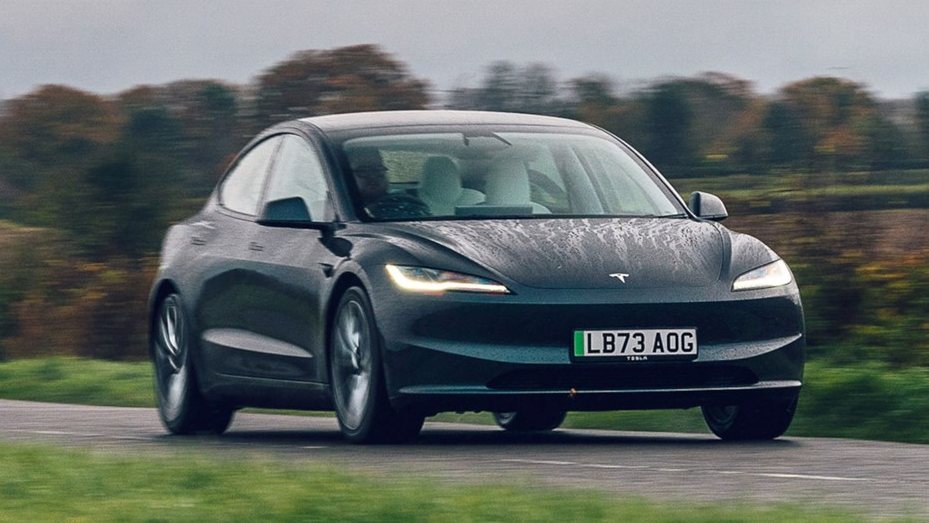
NEW TESLA MODEL 2 $15K SHOCK 310 Mile EV That Kills Gas Costs: The electric vehicle industry has spent years competing over flashy headlines. Automakers constantly promote 0-60 acceleration times, giant touchscreen displays, luxury interiors, and massive battery packs capable of traveling hundreds of miles on a single charge. While these features grab attention, a far more important revolution is quietly emerging in the affordable EV segment.
Enter the Tesla Model 2, the highly anticipated compact electric vehicle expected to transform how consumers think about transportation costs. With a projected price between $15,000 and $20,000, the Model 2 has the potential to become the most disruptive electric vehicle Tesla has ever produced.
However, the true story isn’t simply about affordability. The real breakthrough lies in predictable ownership costs, lower maintenance expenses, reduced fuel spending, and a vehicle engineered specifically for everyday commuting rather than luxury excess.
In many ways, the Tesla Model 2 could become the EV that finally makes electric transportation accessible to millions of households worldwide.
Why the Tesla Model 2 Matters More Than Premium Electric Cars
For years, electric vehicles have largely targeted premium buyers. These consumers often prioritize:
- High performance
- Luxury features
- Brand prestige
- Extended driving range
- Cutting-edge technology
The Model 2 approaches the market from an entirely different angle.
Rather than focusing on status, Tesla appears to be designing a vehicle centered around one question:
How can transportation become cheaper and more predictable for everyday families?
This shift represents a major change in automotive priorities.
Premium EV Buyers vs Affordable EV Buyers
Premium EV Segment Priorities
- Extreme range
- Supercar acceleration
- Luxury interiors
- Massive infotainment systems
- Brand image
Affordable Compact EV Priorities
- Low purchase price
- Affordable insurance
- Reduced maintenance
- Lower operating costs
- Long-term reliability
- Budget predictability
For most households, transportation is one of the largest recurring expenses after housing. The challenge isn’t simply purchasing a vehicle—it’s managing years of ongoing costs.
The Hidden Costs of Traditional Car Ownership
Many consumers focus solely on monthly payments when purchasing a vehicle. In reality, the biggest financial burden often comes from ongoing operating expenses.
These hidden costs include:
- Fluctuating gasoline prices
- Insurance premiums
- Tire replacements
- Oil changes
- Brake repairs
- Transmission servicing
- Engine maintenance
- Unexpected breakdowns
Over time, these expenses can add thousands of dollars to the total ownership cost.
Tesla’s strategy with the Model 2 is remarkably simple:
Remove as many costly systems as possible.
Instead of adding more features, Tesla is reducing complexity.
That means:
- Fewer moving parts
- Smaller battery packs
- Simplified manufacturing
- Reduced maintenance requirements
- Lower repair risks
This minimalist approach could dramatically reduce long-term ownership costs.
The Psychology Behind Affordable Car Buying
The average family does not buy a vehicle for bragging rights.
They buy transportation.
This distinction is critical.
When shopping for a compact car, buyers typically ask:
- What will this cost me every month?
- How much maintenance will it need?
- How expensive is insurance?
- Will it be reliable in five years?
- Can I avoid surprise repair bills?
The Tesla Model 2 appears specifically designed to answer these concerns.
Historically, buying an inexpensive vehicle often meant accepting compromises such as:
- Weak performance
- Poor comfort
- Lower reliability
- Outdated technology
Electric vehicle architecture changes this equation.
By eliminating complex mechanical systems, Tesla can reduce costs without sacrificing the core driving experience.
The Importance of the Battery in an Affordable EV
The battery pack is the most expensive component in any electric vehicle.
For a budget-friendly EV, battery size becomes the most important engineering decision.
Tesla appears to understand this reality.
Instead of installing oversized battery packs commonly found in luxury electric SUVs, the Model 2 is expected to use a more practical solution.
Expected Tesla Model 2 Battery Size
Industry estimates suggest the Model 2 may feature a:
53–55 kWh battery pack
This battery size could deliver approximately:
250 to 310 miles of real-world driving range
For most drivers, that’s more than enough.
Why a Smaller Battery Is Actually Better
Many consumers assume bigger batteries automatically create better vehicles.
In practice, larger batteries introduce several disadvantages:
- Higher vehicle costs
- Increased weight
- Faster tire wear
- Higher insurance costs
- Greater energy consumption
Tesla’s strategy focuses on “right-sizing” the battery.
Average Daily Driving Reality
Studies consistently show the average driver covers roughly:
37 miles per day
With a 250+ mile range, a Model 2 owner could drive several days before needing a recharge.
For daily commuting, shopping, school runs, and local travel, extra battery capacity often sits unused.
Instead of paying for unnecessary range, buyers receive exactly what they need.
This significantly reduces the vehicle’s purchase price.
How a Smaller Battery Creates a Better Vehicle
One of the most overlooked advantages of a compact battery pack is weight reduction.
Engineering Chain Reaction
Smaller Battery Pack
↓
Lower Vehicle Weight
↓
Reduced Mechanical Stress
↓
Lower Ownership Costs
The projected curb weight for the Tesla Model 2 falls between:
3,300 and 3,500 pounds
This is considerably lighter than many modern electric vehicles.
The benefits are substantial.
Longer Tire Life
Heavy EVs place enormous stress on tires.
Every acceleration, corner, and braking event generates friction.
A lighter vehicle:
- Extends tire lifespan
- Reduces replacement frequency
- Lowers operating costs
This alone could save owners hundreds of dollars over time.
Reduced Brake Wear
Electric vehicles already benefit from regenerative braking.
Instead of relying entirely on brake pads, the electric motor helps slow the vehicle while recovering energy.
A lighter vehicle requires less braking force.
Result:
- Longer brake pad life
- Fewer rotor replacements
- Lower maintenance expenses
Improved Suspension Durability
Road imperfections constantly stress:
- Control arms
- Bushings
- Dampers
- Suspension joints
Less vehicle weight means less impact force traveling through these components.
The result is:
Greater long-term durability and lower repair costs.
Better Thermal Efficiency
Heat is one of the biggest enemies of battery longevity.
A smaller battery generates less heat during:
- Fast charging
- Highway driving
- High-temperature operation
Reduced heat allows Tesla to simplify cooling systems while potentially extending battery lifespan.
Tesla’s Revolutionary Manufacturing Strategy
Building a profitable $15,000 EV requires more than battery optimization.
Tesla must also reinvent how vehicles are manufactured.
This is where two groundbreaking innovations come into play:
- Unboxed Assembly
- Giga Castings
Together, these technologies may dramatically reduce production costs.
What Is Tesla’s Unboxed Assembly Process?
Traditional automotive manufacturing follows a sequential process.
An empty vehicle shell travels down a production line while workers and robots gradually install components.
This method creates several inefficiencies:
- Tight working spaces
- Increased labor time
- Production bottlenecks
- Higher factory costs
Tesla’s Unboxed Assembly system changes everything.
How Unboxed Assembly Works
Instead of building one complete shell at a time, Tesla assembles major vehicle sections independently.
Separate production areas build:
- Front structure
- Rear structure
- Interior floor assembly
- Seating systems
- Electronic components
Only at the final stage are these completed sections joined together.
Advantages of Unboxed Assembly
- Faster production
- Reduced labor requirements
- Smaller factory footprint
- Lower manufacturing costs
- Greater scalability
This manufacturing breakthrough could become one of Tesla’s biggest competitive advantages.
The Power of Tesla Giga Castings
Another innovation helping reduce costs is Tesla’s use of Giga Castings.
Traditional vehicles require hundreds of individual metal components welded together.
Tesla replaces many of these parts with massive aluminum castings produced in a single piece.
Benefits of Giga Castings
1. Reduced Part Count
Hundreds of separate components disappear.
This simplifies:
- Manufacturing
- Inventory management
- Supply chains
2. Lower Labor Costs
Fewer parts mean fewer assembly steps.
Industry estimates suggest labor requirements may decline by:
20% to 30%
3. Improved Structural Integrity
Every weld introduces a potential weak point.
By reducing welds and joints, Tesla creates:
- Stronger structures
- Better durability
- Fewer rattles over time
4. Better Long-Term Reliability
Fewer components often mean fewer potential failures.
For consumers, this translates into:
Lower ownership stress and improved longevity.
Tesla Model 2 vs Gasoline Cars: The Cost Comparison
The strongest argument for the Model 2 isn’t performance.
It’s economics.
Let’s compare ownership costs.
Five-Year Maintenance Costs
Traditional Compact Gas Vehicle
Over five years, owners commonly pay for:
- Oil changes
- Spark plugs
- Belts
- Exhaust repairs
- Transmission servicing
- Engine diagnostics
Estimated cost:
$4,500–$4,725
And that’s before unexpected repairs.
Tesla Model 2
Electric vehicles eliminate many traditional maintenance items.
No:
- Engine oil
- Spark plugs
- Exhaust systems
- Fuel pumps
- Complex transmissions
As a result, maintenance expenses can be:
40% to 60% lower
than comparable gasoline vehicles.
Massive Fuel Savings
Fuel costs represent one of the biggest advantages of EV ownership.
Gasoline prices remain unpredictable.
Electricity prices tend to be more stable.
Over five years, many Model 2 owners could potentially save:
$5,000 to $7,000
in fuel expenses alone.
These savings accumulate month after month.
For budget-conscious families, this predictability can be transformative.
Why Buying a Used EV Can Be Risky
Many shoppers consider used electric vehicles as an affordable alternative.
While attractive on paper, used EVs introduce significant uncertainty.
The Battery Health Question
A used EV buyer often has limited knowledge about:
- Charging habits
- Fast-charging frequency
- Heat exposure
- Long-term battery degradation
Questions arise such as:
- Was the battery frequently charged to 100%?
- Was it exposed to extreme temperatures?
- How much range has already been lost?
These unknowns create risk.
Why a New Tesla Model 2 Could Be the Smarter Choice
Purchasing a new Model 2 offers several advantages:
Brand-New Battery Pack
Owners receive:
- Full battery capacity
- Factory warranty protection
- Known usage history
Reduced Financial Risk
Battery replacements can cost thousands of dollars.
With a new vehicle, buyers avoid this uncertainty.
The result is greater confidence and lower long-term risk.
Tesla’s Shift Away From Feature Creep
Tesla initially built its reputation through:
- Performance
- Innovation
- Advanced software
- Luxury features
The Model 2 represents a different philosophy.
Instead of adding more features, Tesla appears focused on delivering:
Practical value.
This strategy recognizes an important reality.
Most consumers care less about:
- Motorized door handles
- Giant passenger displays
- Ambient lighting systems
And more about:
- Lower monthly expenses
- Reliable transportation
- Predictable ownership costs
For many families, financial stability is the ultimate luxury.
Why Bigger Batteries Don’t Always Make Sense
Many buyers choose oversized battery packs for occasional road trips.
While emotionally reassuring, this decision carries hidden costs.
The Hiking Backpack Analogy
Imagine carrying a massive backpack on a short daily walk.
You rarely use everything inside, yet you bear the weight every day.
Large EV batteries create a similar problem.
Owners pay for:
- Extra battery capacity
- Additional weight
- Increased insurance costs
- Higher purchase prices
Even when they rarely need that extra range.
Tesla’s right-sized battery approach eliminates this inefficiency.
The Real Innovation Behind the Tesla Model 2
The Tesla Model 2 isn’t revolutionary because it is faster.
It isn’t revolutionary because it is luxurious.
It is revolutionary because it applies disciplined engineering to solve a problem affecting millions of households:
Transportation affordability.
Tesla appears focused on creating a vehicle optimized for real-world driving habits rather than rare edge-case scenarios.
This approach allows the company to:
- Lower manufacturing costs
- Improve efficiency
- Reduce maintenance
- Simplify ownership
- Increase accessibility
Conclusion: The EV That Could Change Everything
The upcoming Tesla Model 2 has the potential to become one of the most important vehicles of the decade.
With an expected price between $15,000 and $20,000, a projected 250–310 mile range, and a strong emphasis on cost predictability, it could bring electric mobility to an entirely new audience.
By combining:
- 53–55 kWh right-sized batteries
- Giga Casting technology
- Unboxed Assembly manufacturing
- Lower maintenance requirements
- Reduced fuel costs
Tesla is building far more than a cheap electric car.
The company is creating a transportation solution designed around long-term financial stability.
In a world where households face rising living expenses, volatile fuel prices, and increasing repair bills, the Tesla Model 2’s greatest innovation may not be technology at all.
Its greatest innovation is predictable mobility—a vehicle engineered to remove uncertainty from the family budget while delivering the benefits of electric transportation at an unprecedented price point.
If Tesla succeeds, the Model 2 won’t simply compete with compact cars. It could fundamentally reshape the global automotive market and accelerate the transition toward affordable electric transportation for millions of drivers worldwide.
FAQs
1. What is the Tesla Model 2?
The Tesla Model 2 is Tesla’s rumored affordable compact electric vehicle expected to target the mass market with a projected price between $15,000 and $20,000. It is designed to provide practical daily transportation with lower ownership costs than traditional gasoline vehicles.
2. How much will the Tesla Model 2 cost?
While Tesla has not officially confirmed pricing, industry estimates suggest the Model 2 could start between $15,000 and $20,000, making it Tesla’s most affordable EV to date.
3. What range is expected from the Tesla Model 2?
The Tesla Model 2 is expected to offer approximately 250 to 310 miles of driving range depending on driving conditions, battery configuration, and efficiency.
4. What battery size will the Tesla Model 2 use?
Reports indicate the Model 2 could feature a 53–55 kWh battery pack, which balances affordability, efficiency, and practical daily driving needs.
5. Is 250–310 miles of range enough for daily use?
Yes. Most drivers travel less than 40 miles per day, meaning a 250+ mile range can easily cover several days of commuting before requiring a recharge.
6. How does the Tesla Model 2 reduce ownership costs?
The Model 2 reduces costs through:
- Lower maintenance requirements
- Reduced fuel expenses
- Fewer moving parts
- Simplified manufacturing
- Improved efficiency
- Lower repair risks
7. Will the Tesla Model 2 require less maintenance than a gas car?
Yes. Unlike gasoline vehicles, the Model 2 won’t require:
- Oil changes
- Spark plug replacements
- Exhaust repairs
- Transmission servicing
This can reduce maintenance costs by 40% to 60% over time.
8. What is Tesla’s Unboxed Assembly process?
Unboxed Assembly is Tesla’s innovative manufacturing method that builds major vehicle sections separately and combines them later. This process can reduce labor costs, improve production speed, and lower manufacturing expenses.
9. What are Tesla Giga Castings?
Giga Castings are large aluminum structural components produced as single pieces instead of hundreds of smaller welded parts. They help reduce production complexity, improve structural strength, and lower costs.
10. Will the Tesla Model 2 have fast charging capability?
Although official specifications have not been announced, Tesla is expected to include access to its Supercharger network, allowing fast and convenient charging for long-distance travel.
11. Why does the Model 2 use a smaller battery than premium EVs?
A smaller battery lowers:
- Vehicle cost
- Vehicle weight
- Tire wear
- Energy consumption
- Manufacturing expenses
Tesla’s goal is to provide enough range for everyday driving without unnecessary costs.
12. Is the Tesla Model 2 better than buying a used EV?
For many buyers, yes. A new Model 2 would come with a factory warranty, a brand-new battery, and known battery health, reducing the risks associated with older used EVs.
13. How much can Tesla Model 2 owners save on fuel?
Compared to gasoline vehicles, owners could potentially save $5,000 to $7,000 over five years, depending on electricity and fuel prices in their area.
14. Will the Tesla Model 2 be suitable for families?
Yes. The Model 2 is expected to focus on affordability, reliability, efficiency, and practical daily transportation, making it attractive for families and first-time EV buyers.
15. When will the Tesla Model 2 be released?
Tesla has not officially announced a launch date. However, industry speculation suggests the vehicle could arrive within the next few years as Tesla expands its affordable EV lineup.
16. Why is the Tesla Model 2 considered a game-changer?
The Tesla Model 2 could revolutionize the EV market by combining:
- An affordable purchase price
- Practical driving range
- Lower maintenance costs
- Reduced fuel expenses
- Advanced manufacturing technologies
This combination could make electric vehicle ownership accessible to millions of drivers who previously considered EVs too expensive.
Read More:
- The Real Reason Elon Musk Just Became a TRILLIONAIRE
- SpaceX maintains bold advertising push for Starlink, contrasting Tesla’s minimalistic approach
- Tesla and SpaceX’s biggest bull just placed a massive $1B bet on the stock
- SpaceX soars with its first launch as a public company, marking a new era
- Tesla Cybercab snags huge regulatory green light that readies it for public roads