
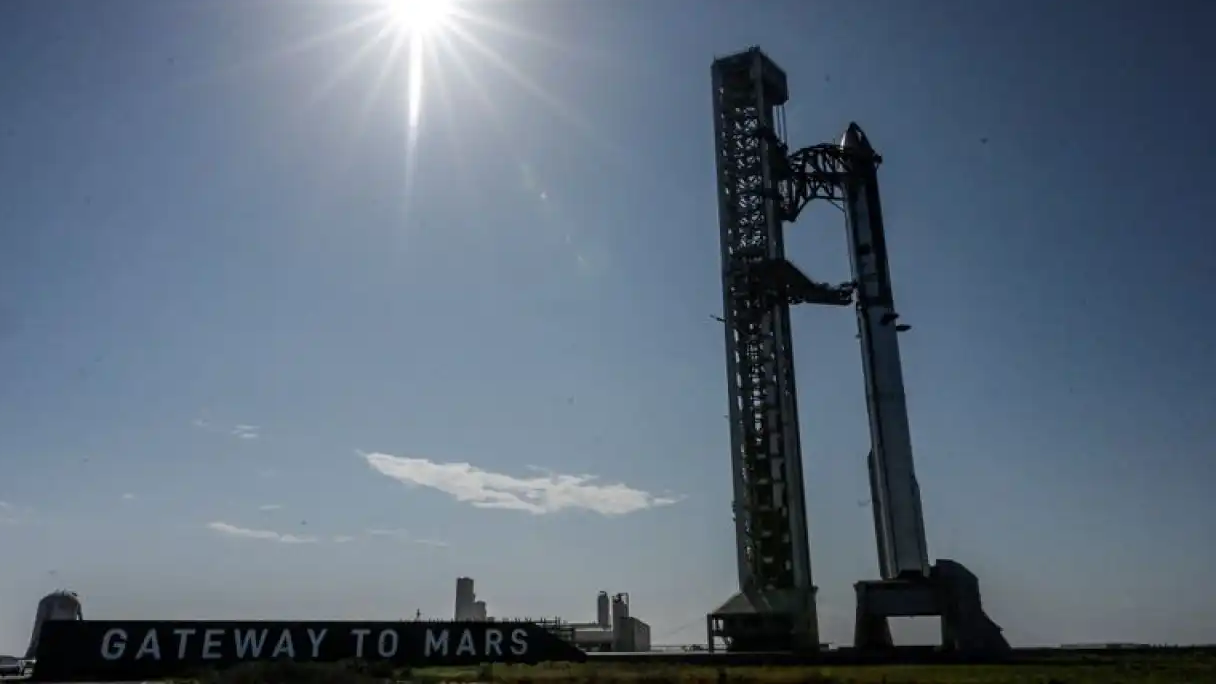
SpaceX ready for Starship Ship 40 Firing in Days —Progressing Fast Towards Launch: The global space industry is entering one of the most exciting periods in its history. From SpaceX’s rapid Starship development program in Texas to Europe’s push for independent space access through Isar Aerospace and the U.S. Space Force’s infrastructure expansion at Vandenberg Space Force Base, the pace of innovation is accelerating dramatically.
The aerospace sector is no longer dominated solely by government agencies. Today, private companies, commercial launch providers, and defense organizations are working together to create a future where access to space becomes more reliable, affordable, and routine.
This article explores three major developments shaping the future of spaceflight: SpaceX’s preparations for Starship Flight 13, Isar Aerospace’s critical Spectrum qualification mission, and the development of Space Launch Complex 9 (SLC-9) at Vandenberg Space Force Base.
SpaceX Pushes Forward with Starship Flight 13 Preparations
At Starbase, Texas, SpaceX is moving at full speed toward the next major milestone in the Starship program: Flight 13.
After years of iterative testing and rapid development, SpaceX continues to refine the world’s largest and most powerful rocket system. The company’s immediate focus is preparing Ship 40 and Booster 20 for a launch window expected in July.
Cryogenic Testing Success Marks Major Progress
Before any rocket can launch, it must survive one of the most demanding phases of testing: handling extremely cold propellants.
Starship relies on Liquid Oxygen (LOX) and Liquid Methane (CH4), both stored at cryogenic temperatures. These super-cooled liquids place tremendous thermal stress on the rocket’s structure.
Recently, Booster 20 (B20) successfully completed its cryogenic testing campaign at SpaceX’s Massey’s test facility. This achievement confirmed that the booster can safely contain and manage cryogenic propellants under operational conditions.
The completion of cold-soak testing for both Ship 40 and Booster 20 marks an important transition. Engineers are now shifting their attention from structural validation to engine performance, propulsion efficiency, and flight readiness.
Ship 40 Moves Toward Static Fire Testing
The spotlight is currently on Ship 40, the upper-stage vehicle designated for Flight 13.
After completing cryogenic proof testing earlier this year, Ship 40 was fitted with its full set of six Raptor engines, including:
- Three sea-level Raptors
- Three vacuum-optimized Raptors
With engine installation complete, SpaceX is preparing for the next critical phase: static fire testing.
Static fire tests allow engineers to ignite engines while the vehicle remains securely attached to the test stand. These tests generate valuable performance data and help identify any anomalies before launch.
Why Static Fire Testing Is So Important
Static fire campaigns serve as one of the final checkpoints before a rocket can be cleared for flight.
Following engine ignition, SpaceX engineers must analyze enormous amounts of telemetry data, including:
- Chamber pressures
- Engine temperatures
- Turbopump performance
- Fuel flow rates
- Structural loads
Any irregularities discovered during analysis can trigger additional testing and adjustments.
For Flight 13 to remain on schedule, SpaceX must complete this process quickly while maintaining its strict safety and reliability standards.
Key Milestones Required Before Flight 13 Launch
Even after successful static fire testing, several critical milestones remain.
Data Analysis and Engineering Review
Engineering teams will spend days reviewing performance data collected during testing.
Every engine parameter must be carefully evaluated to ensure the vehicle can safely perform during ascent, stage separation, and orbital insertion.
Flight Termination System Integration
The Flight Termination System (FTS) is a mandatory safety mechanism designed to destroy the vehicle if it deviates from its planned flight path.
Before launch approval, the FTS must be:
- Installed
- Tested
- Certified
- Armed
Full Stack Integration
Once Ship 40 is cleared, it will be transported to the launch site and stacked atop Booster 20 using SpaceX’s famous Mechazilla launch tower.
This creates the complete Starship launch vehicle.
Wet Dress Rehearsal (WDR)
The final major test before launch is the Wet Dress Rehearsal.
During this exercise, the fully assembled rocket undergoes a complete simulated countdown while being loaded with propellants.
WDR testing validates:
- Ground systems
- Launch software
- Propellant loading procedures
- Communication systems
- Launch pad operations
Historically, WDR campaigns often uncover software issues or valve-related problems that require correction before flight.
Flight 12 Lessons Shape Flight 13 Improvements
Every Starship mission generates valuable engineering data.
Although Flight 12 achieved numerous objectives, it also revealed several issues that SpaceX is now working to address.
Vacuum Raptor Engine Performance Issue
One challenge involved a vacuum-optimized Raptor engine.
The anomaly affected upper-stage performance and highlighted the need for further refinement of ignition sequences and startup procedures.
SpaceX engineers are expected to closely monitor vacuum engine behavior during Ship 40’s upcoming static fire campaign.
Thermal Protection System Coolant Leak
Another issue involved the Thermal Protection System (TPS).
A coolant leak affected a localized section of the heat shield during atmospheric reentry.
To prevent recurrence, SpaceX is implementing improvements that include:
- Enhanced tile attachment methods
- Reinforced coolant lines
- Additional thermal protection refinements
Importantly, neither issue represents a fundamental design flaw. Instead, they are targeted engineering challenges that can be addressed through testing and iterative development.
The Vision of a “Double Fire Month”
While Ship 40 prepares for testing, Booster 20 is progressing through final inspections.
The booster will soon receive its complete set of 33 Raptor engines, creating one of the most powerful launch systems ever built.
Why Booster Testing Is So Challenging
Managing 33 engines simultaneously is an enormous engineering challenge.
Every engine must:
- Ignite precisely on time
- Maintain stable thrust
- Respond to throttle commands
- Execute coordinated gimbal movements
Even minor deviations can impact mission performance.
A Historic Milestone for Starbase
Industry observers are watching for a possible “double fire month.”
This scenario would include:
- Ship 40 static fire testing at Massey’s
- Booster 20’s 33-engine static fire at the orbital launch pad
If both tests are completed successfully, the probability of a July Flight 13 launch increases significantly.
Isar Aerospace Leads Europe’s Push for Independent Space Access
While SpaceX dominates headlines, another important story is unfolding in Europe.
German launch startup Isar Aerospace is preparing for the second flight of its Spectrum rocket, a mission named “Onward and Upward.”
This launch could play a major role in strengthening Europe’s independent access to space.
Why the Spectrum Mission Matters
Spectrum’s first launch in March 2025 ended prematurely shortly after liftoff.
As a result, the upcoming mission serves as a crucial qualification flight.
Success would demonstrate that Spectrum can evolve from a prototype into a commercially viable orbital launch vehicle.
For Europe, the stakes extend beyond one company.
The continent has faced a prolonged launcher gap caused by delays in several major launch programs. A successful Spectrum mission would help diversify Europe’s launch capabilities and reduce reliance on foreign providers.
Spectrum Rocket Technical Specifications
Spectrum is designed specifically for the growing small and medium satellite market.
Innovative Propellant Choice
Unlike many rockets that use kerosene or methane, Spectrum uses:
- Liquid Oxygen (LOX)
- Liquid Propane
This combination offers several advantages:
- Simplified fuel systems
- Improved storage compatibility
- High-density performance
- Reduced operational complexity
Vehicle Dimensions
Spectrum stands:
- 28 meters tall
- 2 meters in diameter
The rocket is powered entirely by Isar Aerospace’s proprietary Aquila engines.
Engine Configuration
The vehicle uses a two-stage architecture:
First Stage
- Nine Aquila engines
- Provides liftoff thrust
- Controls atmospheric ascent
Second Stage
- One vacuum-optimized Aquila engine
- Designed for orbital insertion
Payload Capacity
Spectrum can deliver:
- Approximately 1,000 kilograms to Low Earth Orbit (LEO)
- Up to 700 kilograms to Sun-Synchronous Orbit (SSO)
This makes it ideal for commercial satellites, research missions, and government payloads.
Europe’s Growing Need for Sovereign Launch Capabilities
The demand for independent launch access continues to grow across Europe.
Supporting Small Satellite Markets
Modern satellite operators increasingly require:
- Flexible launch schedules
- Dedicated missions
- Faster deployment timelines
Large launch vehicles are often inefficient for these missions.
Spectrum aims to fill this gap by providing responsive and cost-effective launch services.
Strategic Importance for Europe
A successful Spectrum program would allow European organizations to launch satellites without relying heavily on providers from:
- The United States
- China
- Other international markets
This strategic independence has become increasingly important for both commercial and national security applications.
U.S. Space Force Expands Launch Infrastructure with SLC-9
On the opposite side of the Atlantic, the United States Space Force is making major investments in launch infrastructure.
The focus is Space Launch Complex 9 (SLC-9) at Vandenberg Space Force Base in California.
Why SLC-9 Matters
The new launch complex is specifically designed to support small-to-medium class launch vehicles.
These rockets typically carry payloads between:
- 2,000 kilograms
- 20,000 kilograms
This category serves an increasingly important segment of the space market.
Key Mission Types
Medium-lift launch vehicles support:
Earth Observation
Satellite constellations used for:
- Climate monitoring
- Agricultural analysis
- Environmental research
- Weather forecasting
National Security Missions
Defense applications include:
- Secure communications
- Reconnaissance satellites
- Tactical intelligence systems
Technology Demonstrations
Emerging technologies often require dedicated launch opportunities to validate new systems in orbit.
Commercial Opportunities at SLC-9
The Space Force plans to invite commercial operators to fund and manage the launch complex.
A key requirement is that selected companies must begin launch operations within three years.
Potential Industry Contenders
Several companies could compete for the opportunity.
Firefly Aerospace
Firefly already operates at Vandenberg and continues expanding its medium-lift capabilities.
Stoke Space
The company is developing reusable launch technologies and may benefit from a West Coast launch presence.
Relativity Space
Relativity could leverage SLC-9 as part of its future launch strategy.
Rocket Lab
Rocket Lab remains a strong candidate due to its experience supporting commercial and government missions.
A New Era for the Global Space Industry
The developments at SpaceX, Isar Aerospace, and the U.S. Space Force highlight a broader transformation occurring across the aerospace sector.
SpaceX: Scaling Reusable Spaceflight
SpaceX continues pushing the limits of:
- Reusability
- Payload capacity
- Launch frequency
A successful Flight 13 would bring humanity closer to routine orbital transportation and future missions to the Moon and Mars.
Isar Aerospace: Expanding Global Competition
Isar Aerospace demonstrates how emerging companies can challenge established players and create new launch options for international customers.
U.S. Space Force: Building Future Infrastructure
The development of SLC-9 shows that launch infrastructure must evolve alongside rocket technology.
Future space operations will depend not only on advanced vehicles but also on flexible launch facilities capable of supporting diverse mission requirements.
Conclusion
The global aerospace industry is advancing at an extraordinary pace. SpaceX’s preparations for Starship Flight 13, Isar Aerospace’s critical Spectrum qualification mission, and the U.S. Space Force’s investment in SLC-9 all represent different aspects of the same trend: expanding access to space.
If SpaceX successfully completes its anticipated static fire campaigns, if Spectrum achieves orbit during its qualification flight, and if SLC-9 secures a commercial operator, the industry will take another major step toward a future where orbital access becomes more frequent, affordable, and globally distributed.
The coming weeks could prove pivotal, not only for individual organizations but for the future of the worldwide space economy itself.
FAQs
1. What is Starship Flight 13?
Starship Flight 13 is the upcoming test mission of SpaceX’s fully reusable Starship launch system. The mission will use Ship 40 and Booster 20 and is expected to further validate the vehicle’s performance, reusability, and orbital capabilities.
2. What is a static fire test?
A static fire test is a pre-launch procedure in which rocket engines are ignited while the vehicle remains secured to the ground. This allows engineers to verify engine performance, fuel systems, and overall vehicle readiness before launch.
3. Why is Ship 40 important for Starship Flight 13?
Ship 40 serves as the upper-stage vehicle for Flight 13. It has undergone cryogenic testing and engine installation and is now preparing for critical static fire testing before launch.
4. What engines power SpaceX’s Starship?
Starship is powered by Raptor engines, which use liquid methane and liquid oxygen as propellants. Ship 40 carries six Raptors, while Booster 20 is designed to operate with 33 Raptor engines.
5. What issues did SpaceX identify during Flight 12?
Flight 12 revealed a vacuum-optimized Raptor engine performance anomaly and a thermal protection system coolant leak. SpaceX is addressing both issues before Flight 13.
6. What is the purpose of Booster 20?
Booster 20 is the Super Heavy first-stage booster that will provide the thrust required to launch Ship 40 into space. It is one of the most powerful rocket boosters ever built.
7. What does “double fire month” mean?
The term refers to the possibility of SpaceX conducting both a Ship 40 static fire test and a Booster 20 static fire test within the same month, demonstrating rapid progress toward launch.
8. What is Isar Aerospace?
Isar Aerospace is a German private space company developing the Spectrum rocket, a launch vehicle designed for small and medium-sized satellite missions.
9. What is the Spectrum rocket?
Spectrum is a two-stage orbital launch vehicle developed by Isar Aerospace. It uses liquid oxygen and liquid propane propellants and can carry approximately 1,000 kilograms to Low Earth Orbit.
10. Why is Isar Aerospace’s second Spectrum flight important?
The upcoming “Onward and Upward” mission is a qualification flight that could establish Spectrum as a commercially viable launch vehicle and strengthen Europe’s independent access to space.
11. What payloads can the Spectrum rocket carry?
Spectrum is designed to launch small satellites, cubesats, scientific payloads, technology demonstrators, and commercial spacecraft into Low Earth Orbit and Sun-Synchronous Orbit.
12. What is Space Launch Complex 9 (SLC-9)?
SLC-9 is a launch facility at Vandenberg Space Force Base that is being developed to support small-to-medium class commercial and government launch vehicles.
13. Why is Vandenberg Space Force Base important for launches?
Vandenberg’s location allows rockets to launch into polar and high-inclination orbits over the Pacific Ocean, making it ideal for Earth observation, military, and scientific missions.
14. Which companies could potentially operate SLC-9?
Potential candidates include Firefly Aerospace, Rocket Lab, Stoke Space, and Relativity Space, all of which are developing launch vehicles suited to the facility’s mission profile.
15. How are SpaceX, Isar Aerospace, and SLC-9 connected?
All three represent major developments in the global space industry. SpaceX is advancing reusable heavy-lift rockets, Isar Aerospace is expanding European launch capabilities, and SLC-9 is creating new infrastructure to support future commercial and defense space missions.
Read More:
- SpaceX makes first acquisition post-IPO with coding leader Cursor
- Tesla deliveries get a big boost in expectations from Wall Street
- Apple is developing the missing link for Tesla to get CarPlay: report
- Tesla Cybertruck driver gets pickup seized for ‘legitimate concerns’ in UK
- NEW TESLA MODEL 2 $15K SHOCK 310 Mile EV That Kills Gas Costs
1 thought on “SpaceX ready for Starship Ship 40 Firing in Days —Progressing Fast Towards Launch”