
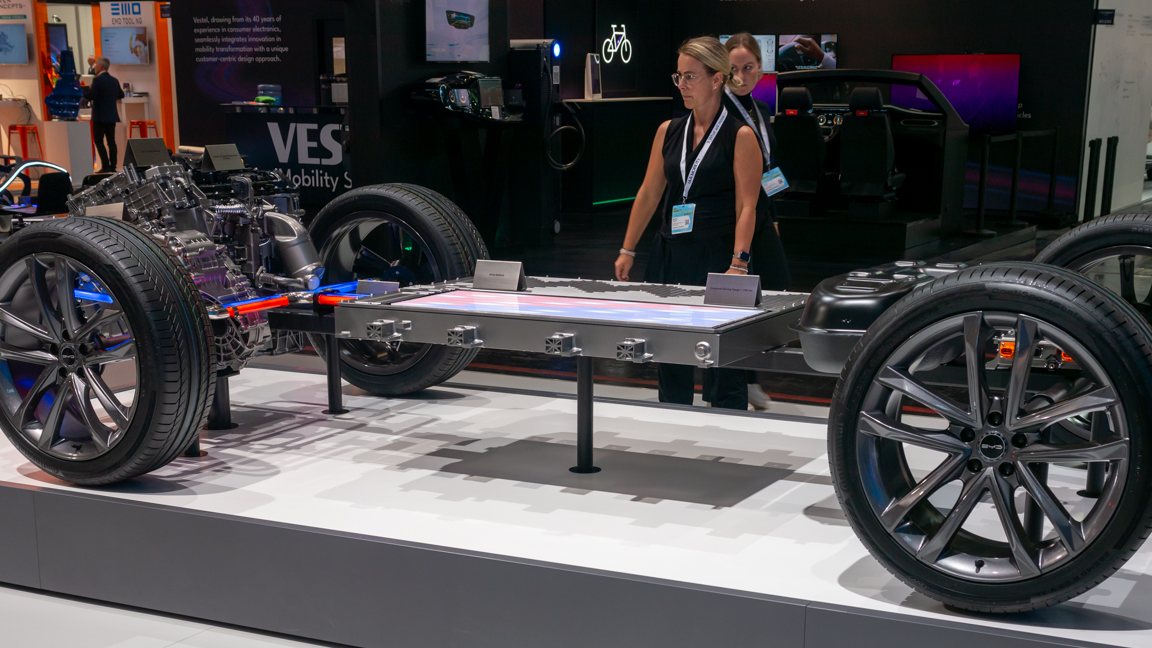
New Tesla Battery Technology! Tesla Model 2 LFP BATTERY SHOCK 5,000 Cycles Expose NMC EVs: The electric vehicle industry is experiencing one of its biggest transformations since the invention of the automobile. While most car buyers still focus on traditional metrics such as mileage, model year, and overall condition, a new factor is rapidly changing how electric vehicles are valued: battery chemistry.
As millions of EVs enter the used car market, experts are discovering that two electric vehicles with identical mileage can have dramatically different long-term value. The reason lies beneath the floorboards, where the battery pack determines not only performance and range but also the vehicle’s future lifespan.
The battle between Lithium Iron Phosphate (LFP) batteries and Nickel Manganese Cobalt (NMC) batteries is reshaping the entire EV industry. With Tesla increasingly embracing LFP technology for mainstream vehicles and reports showing battery lifespans reaching 5,000 charge cycles, many analysts believe the future of affordable EV ownership has arrived.
In this article, we explore how Tesla’s latest battery strategy is exposing weaknesses in traditional EV valuation methods and why LFP batteries are becoming the preferred choice for millions of drivers worldwide.
Why EV Battery Chemistry Matters More Than Mileage
For over a century, used car buyers relied on the odometer as the primary indicator of vehicle wear and value.
In gasoline-powered vehicles, this approach makes sense because every mile contributes to mechanical wear on components such as:
- Engine pistons
- Valves
- Timing systems
- Transmissions
- Fuel delivery systems
However, electric vehicles operate differently.
Instead of engine wear, EVs experience battery degradation through:
- Charge cycles
- Energy throughput
- Temperature exposure
- Charging habits
- Calendar aging
This means two identical Tesla vehicles showing 80,000 miles on the odometer can have completely different battery health levels.
One vehicle may still retain over 90% battery capacity, while another may have already lost a significant portion of its original range.
This is why battery chemistry has become the most important factor in evaluating a used EV.
The Great Battery Battle: LFP vs NMC
What Is an LFP Battery?
Lithium Iron Phosphate (LFP) batteries use iron and phosphate-based cathodes instead of expensive metals like nickel and cobalt.
Key advantages include:
- Exceptional durability
- High cycle life
- Improved thermal stability
- Lower manufacturing cost
- Reduced fire risk
- Ability to charge to 100% daily
These characteristics make LFP batteries ideal for mass-market electric vehicles and long-term ownership.
What Is an NMC Battery?
Nickel Manganese Cobalt (NMC) batteries prioritize:
- Higher energy density
- Longer maximum range
- Better cold-weather performance
- Strong acceleration capabilities
For years, NMC batteries dominated the EV industry because they offered the highest range figures.
However, this advantage comes with trade-offs, including faster degradation and stricter charging requirements.
Tesla’s LFP Battery Revolution
Tesla has steadily expanded the use of LFP batteries in several vehicle models, particularly entry-level and standard-range versions.
The reason is simple:
LFP batteries last significantly longer than traditional NMC batteries.
As battery technology evolves, Tesla’s strategy appears increasingly focused on maximizing durability and reducing ownership costs.
For consumers, this shift could completely change expectations surrounding EV longevity.
The 5,000-Cycle Shock That Is Changing Everything
One of the biggest revelations in the EV industry is the massive difference in cycle life between LFP and NMC batteries.
LFP Battery Cycle Life
Modern LFP batteries can typically withstand:
3,000 to 5,000 full charge cycles
before reaching approximately 80% battery health.
This level of durability was nearly unimaginable just a decade ago.
NMC Battery Cycle Life
Traditional NMC batteries generally achieve:
1,000 to 2,500 charge cycles
before reaching the same 80% health threshold.
While still impressive compared to older battery technologies, the difference becomes enormous over a vehicle’s lifetime.
Why 5,000 Cycles Matter
To understand the significance, consider a vehicle capable of driving 250 miles per charge.
With:
- 5,000 cycles × 250 miles
the theoretical lifetime travel distance exceeds:
1.25 million miles
Even after significant aging, such battery packs may continue operating effectively for decades.
This is one reason industry experts increasingly view LFP batteries as a major breakthrough in transportation.
The Used EV Odometer Trap
One of the biggest misconceptions in the EV market is assuming mileage tells the complete story.
Example 1: High-Mileage LFP Tesla
A Tesla equipped with an LFP battery may have:
- 80,000 miles driven
- Excellent battery health
- Minimal degradation
- Significant remaining lifespan
Despite high mileage, the battery could still have most of its useful life ahead.
Example 2: High-Mileage NMC Tesla
An NMC-powered Tesla with the same mileage may have experienced:
- Frequent fast charging
- High-temperature exposure
- Aggressive driving
- Prolonged storage at high charge levels
The result could be substantially greater battery degradation.
This means two identical-looking vehicles may have vastly different long-term value.
Why Daily Charging Habits Favor LFP Batteries
One of the strongest advantages of LFP technology is its ability to tolerate daily charging to 100%.
The NMC Limitation
Manufacturers typically recommend limiting daily charging of NMC batteries to:
80% State of Charge (SoC)
This recommendation exists because prolonged exposure to high charge levels accelerates chemical degradation.
Drivers are encouraged to reserve 100% charging only for long-distance trips.
The LFP Advantage
LFP batteries can routinely be charged to:
100% every day
without causing the same level of accelerated wear.
This creates a more convenient ownership experience and removes much of the anxiety associated with battery preservation.
Real-World Range: Spec Sheets vs Reality
Many buyers focus on advertised range figures, but practical daily usage often tells a different story.
Typical NMC Scenario
Advertised Range:
300+ miles
Recommended Daily Use:
Approximately 240 miles
because daily charging is typically limited to 80%.
Typical LFP Scenario
Advertised Range:
250 miles
Recommended Daily Use:
250 miles
because charging to 100% is generally acceptable.
Why the Gap Disappears
Although NMC batteries may advertise higher range, the daily usable range difference often becomes surprisingly small.
For commuters, families, and urban drivers, LFP batteries frequently provide all the range needed without requiring special charging habits.
Understanding Calendar Aging
Mileage is not the only factor affecting battery health.
Electric vehicle batteries also experience calendar aging.
This means degradation occurs simply with the passage of time.
Even when parked, batteries slowly lose capacity due to ongoing chemical reactions.
Factors influencing calendar aging include:
- High temperatures
- Long-term storage
- High state of charge
- Environmental conditions
Why Low Mileage Can Be Misleading
Traditional car buyers often assume lower mileage means better condition.
For EVs, that assumption can be dangerous.
Example
Vehicle A
- 2019 Tesla
- NMC battery
- 40,000 miles
Vehicle B
- 2022 Tesla
- LFP battery
- 70,000 miles
Many shoppers would instinctively choose Vehicle A.
However, if the older NMC battery spent years stored at high charge levels in hot conditions, it may have suffered substantial degradation.
The newer LFP vehicle could actually offer superior long-term reliability despite higher mileage.
Fleet Data Confirms LFP Superiority
As EV adoption grows, fleet operators are generating enormous amounts of battery performance data.
The results consistently support the durability advantages of LFP chemistry.
High-Mileage LFP Results
Many modern LFP battery packs retain:
89% to 93% capacity
after extensive usage.
High-Mileage NMC Results
Older NMC battery packs often retain:
71% to 83% capacity
after crossing major mileage milestones.
While individual results vary, the overall trend strongly favors LFP technology.
Why Fleet Operators Love LFP Batteries
Commercial fleet managers prioritize:
- Low maintenance costs
- Predictable performance
- Long service life
- High residual value
LFP batteries excel in all these categories.
This is why many large fleet operators increasingly prefer vehicles equipped with LFP chemistry.
The Cost Advantage of LFP Batteries
Another reason for Tesla’s growing interest in LFP technology is economics.
Lower Raw Material Costs
Unlike NMC batteries, LFP batteries do not require large amounts of:
- Nickel
- Cobalt
These materials are expensive and subject to supply chain volatility.
Manufacturing Benefits
LFP batteries can often be produced:
15% to 25% cheaper per kWh
than equivalent NMC batteries.
Lower production costs help reduce:
- Vehicle prices
- Replacement costs
- Repair expenses
This ultimately benefits consumers and supports broader EV adoption.
The Hidden Impact on Used EV Prices
As battery health data becomes more accessible, the used EV market is beginning to change.
Buyers are no longer evaluating vehicles solely based on:
- Age
- Mileage
- Cosmetic condition
Instead, battery chemistry and health reports are becoming major valuation factors.
Future EV pricing may increasingly depend on:
- Battery health score
- Remaining cycle life
- Charging history
- Climate exposure
This represents a fundamental shift in automotive economics.
The One Area Where NMC Still Wins
Despite the growing popularity of LFP batteries, NMC chemistry remains superior in certain situations.
Cold Weather Performance
One of LFP’s biggest weaknesses is extreme cold.
When temperatures fall below freezing:
- Ionic conductivity decreases
- Charging slows down
- Energy efficiency drops
- Range reductions become more severe
In harsh winter conditions, LFP batteries can experience temporary range losses exceeding 30%.
NMC Handles Winter Better
NMC batteries generally maintain stronger performance in:
- Snowy regions
- Mountain areas
- Northern climates
Drivers living in extremely cold environments may still benefit from NMC technology.
For them, cold-weather reliability can outweigh concerns about faster degradation.
Which Battery Is Best for You?
Choose LFP If You Want:
Long-Term Ownership
LFP batteries are ideal for drivers planning to keep their vehicle for many years.
Daily 100% Charging
You can charge to full capacity regularly without worrying about accelerated degradation.
Lower Costs
Both purchase and long-term ownership costs are often lower.
Urban and Suburban Driving
Most commuters rarely require more than the range offered by modern LFP batteries.
Choose NMC If You Need:
Maximum Range
NMC batteries generally offer higher peak range figures.
Cold Climate Performance
Winter performance remains one of NMC’s strongest advantages.
Performance-Oriented Driving
Many high-performance EVs continue using NMC chemistry due to superior power density.
Frequent Highway Travel
Long-distance drivers may appreciate the extra range buffer.
The Future of Tesla Model 2 and LFP Batteries
Industry observers increasingly expect Tesla’s future affordable vehicles, including the anticipated Tesla Model 2, to rely heavily on LFP battery technology.
The reasons are compelling:
- Lower production costs
- Greater durability
- Improved safety
- Strong resale value
- Reduced ownership stress
As battery prices continue falling, LFP could become the foundation of mass-market electric transportation worldwide.
Conclusion: Why Smart EV Buyers Are Looking Beyond Mileage
The electric vehicle market is entering a new era where the odometer alone no longer determines value.
Battery chemistry has become one of the most important factors influencing:
- Vehicle lifespan
- Resale value
- Ownership costs
- Daily usability
The emergence of 5,000-cycle LFP batteries is forcing consumers to rethink everything they know about used vehicle evaluation.
For most everyday drivers, LFP technology delivers a powerful combination of durability, affordability, and convenience. The ability to charge to 100% daily, maintain strong long-term battery health, and reduce ownership costs makes it an increasingly attractive choice.
Meanwhile, NMC batteries still play an essential role for drivers who need maximum range, strong cold-weather performance, and high-performance capabilities.
As Tesla and other manufacturers continue advancing battery technology, understanding the differences between LFP and NMC batteries will become essential for every EV buyer. In the coming years, the smartest consumers won’t simply ask how many miles a vehicle has traveled—they’ll ask what chemistry powers it.
FAQs
1. What is an LFP battery in a Tesla?
An LFP (Lithium Iron Phosphate) battery is a type of EV battery that uses iron and phosphate instead of nickel and cobalt. It is known for its long lifespan, improved safety, lower cost, and ability to charge to 100% daily without significant degradation.
2. What does NMC stand for in EV batteries?
NMC stands for Nickel Manganese Cobalt. These batteries offer higher energy density and longer maximum range, making them popular in performance-focused electric vehicles.
3. How many charge cycles can an LFP battery last?
Modern LFP batteries can typically last between 3,000 and 5,000 charge cycles before reaching around 80% of their original capacity, making them among the most durable EV batteries available.
4. How many charge cycles can an NMC battery last?
Most NMC batteries provide approximately 1,000 to 2,500 charge cycles, depending on usage patterns, charging habits, and environmental conditions.
5. Why is battery chemistry important when buying a used EV?
Battery chemistry determines battery lifespan, degradation rate, charging behavior, resale value, and long-term ownership costs, making it more important than mileage alone for many used EV buyers.
6. Is mileage still important when evaluating a used Tesla?
Yes, but battery health and chemistry are often more important. Two Teslas with identical mileage can have significantly different battery conditions depending on how they were charged and maintained.
7. Can LFP batteries be charged to 100% every day?
Yes. One of the biggest advantages of LFP batteries is that they can be routinely charged to 100% daily without causing accelerated battery degradation.
8. Why do Tesla owners with NMC batteries usually charge to only 80%?
Tesla and other EV manufacturers recommend limiting daily charging to 80% for NMC batteries because prolonged exposure to high charge levels can accelerate battery aging.
9. Which battery offers better real-world daily usability?
For many drivers, LFP batteries offer better daily usability because drivers can access the battery’s full capacity every day without worrying about long-term battery damage.
10. Do LFP batteries degrade slower than NMC batteries?
Generally, yes. Real-world fleet data shows that LFP batteries often retain a higher percentage of their original capacity over time compared to older NMC battery packs.
11. What is battery calendar aging?
Calendar aging refers to battery degradation that occurs naturally over time, even when a vehicle is not being driven. Factors like heat and high state of charge can accelerate this process.
12. Are low-mileage EVs always a better purchase?
No. A low-mileage EV with poor charging history or years of exposure to high temperatures may have worse battery health than a higher-mileage vehicle with a well-maintained battery.
13. Which battery performs better in cold weather?
NMC batteries generally perform better in freezing temperatures because they maintain energy-transfer efficiency more effectively than LFP batteries in cold conditions.
14. How much range can an LFP battery lose in extreme winter conditions?
In severe cold weather, an LFP battery may temporarily lose more than 30% of its driving range until temperatures rise or the battery warms up.
15. Why are LFP batteries cheaper to manufacture?
LFP batteries do not require expensive materials like nickel and cobalt, helping reduce manufacturing costs by approximately 15% to 25% per kWh compared to many NMC battery designs.
16. Will LFP batteries improve used Tesla resale values?
Many analysts believe LFP-equipped EVs could enjoy stronger long-term resale values because of their excellent durability, slower degradation, and lower replacement costs.
17. Is Tesla expected to use LFP batteries in future affordable EVs?
Industry experts widely expect future affordable Tesla models, including the rumored Tesla Model 2, to heavily utilize LFP battery technology because of its cost efficiency and durability.
18. Which battery chemistry is best for most drivers?
For drivers who mainly commute, run errands, and keep their vehicles for many years, LFP batteries are often the best choice. Drivers in extremely cold climates or those needing maximum range may prefer NMC batteries.
Read More:
- SpaceX ready for Starship Ship 40 Firing in Days —Progressing Fast Towards Launch
- SpaceX makes first acquisition post-IPO with coding leader Cursor
- Tesla deliveries get a big boost in expectations from Wall Street
- Apple is developing the missing link for Tesla to get CarPlay: report
- Tesla Cybertruck driver gets pickup seized for ‘legitimate concerns’ in UK