
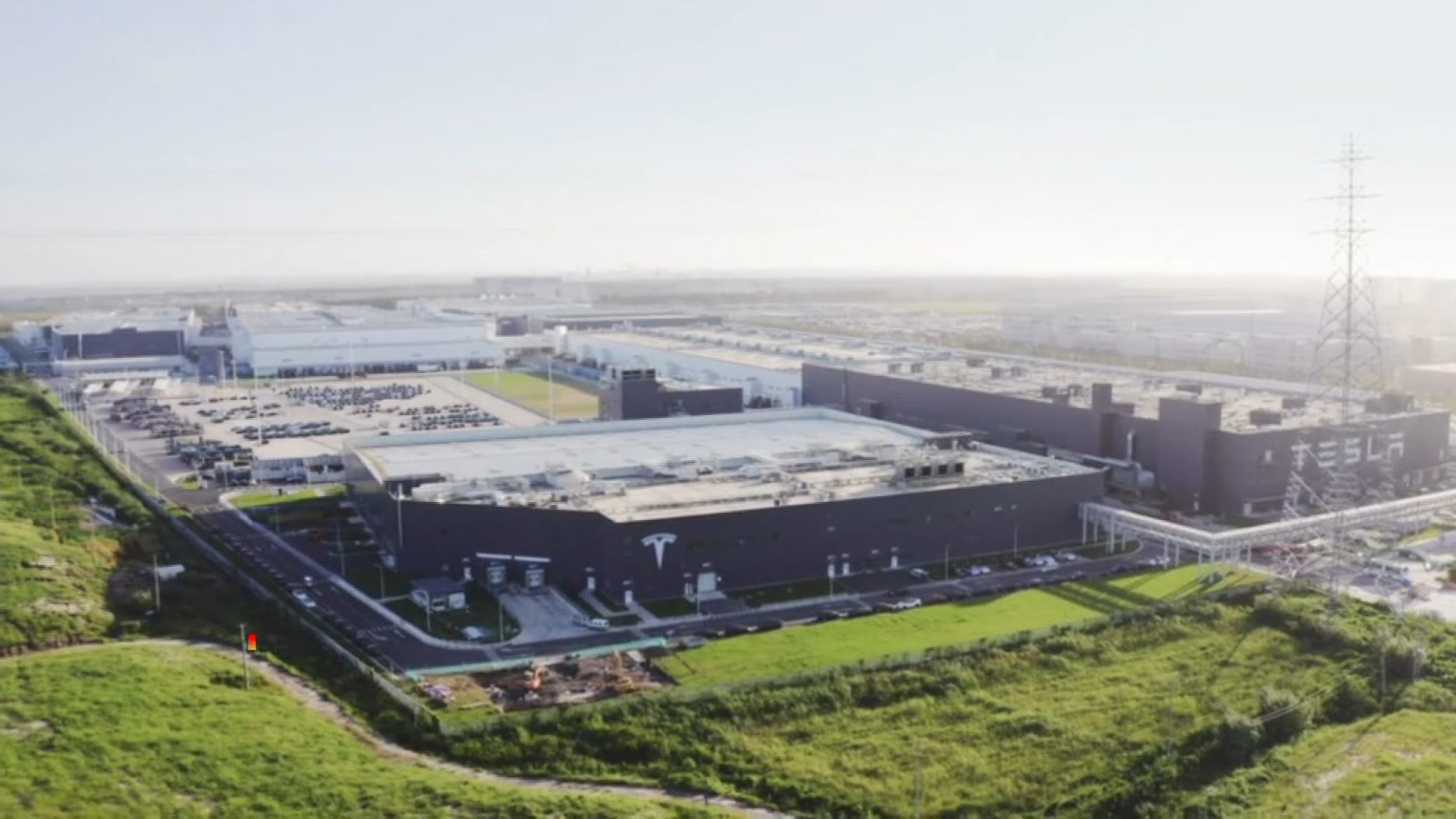
Elon Musk’s Giant $122B Tesla Terafab Outchip The Entire World: The race for artificial intelligence (AI) dominance is no longer just about software—it is rapidly becoming a battle for semiconductor manufacturing. In July 2026, reports revealed that Elon Musk is preparing one of the most ambitious industrial projects in history: Terrafab, a semiconductor manufacturing mega-complex valued at $122 billion.
Designed to power Tesla, SpaceX, xAI, and X, Terrafab aims to eliminate dependence on global chip suppliers while creating a fully integrated semiconductor ecosystem. If completed as planned, the project could reshape the global technology industry and establish Musk’s companies as leaders in AI computing.
What Is Tesla Terrafab?
Terrafab is a proposed next-generation semiconductor manufacturing campus planned for Grimes County, Texas. Unlike traditional chip production, which relies on multiple facilities across different countries, Terrafab intends to combine every major manufacturing stage under one roof.
The facility will include:
- Logic chip fabrication for advanced AI processors.
- High-Bandwidth Memory (HBM) production for ultra-fast data processing.
- Advanced 2.5D and 3D chip packaging to reduce manufacturing delays and shipping dependencies.
This vertically integrated manufacturing model is expected to reduce production cycles from months to just days, creating one of the most efficient semiconductor facilities ever built.
Why Elon Musk Is Investing $122 Billion
The primary motivation behind Terrafab is simple: the world cannot produce enough advanced AI chips.
Modern AI systems, autonomous vehicles, humanoid robots, and space-based computing require enormous processing power. According to reports, Musk believes that the combined production capacity of today’s semiconductor leaders would satisfy only a small fraction of his companies’ future computing requirements.
Instead of competing with other technology giants for limited chip supplies, Musk plans to manufacture his own processors at scale.
This strategy would provide long-term control over hardware production while reducing reliance on external suppliers.
Massive Scale of the Texas Terrafab
Terrafab is unlike any semiconductor project ever announced.
Planned Facility Size
The proposed manufacturing campus will reportedly cover 100 million square feet, making it one of the world’s largest industrial complexes.
Key projected targets include:
- 100 million square feet manufacturing campus
- 100–200 billion custom AI chips annually
- 100,000 wafer starts per month during initial production
- Expansion to 1 million wafer starts per month
- Target AI compute capacity of 1 terawatt annually
At full production, the facility could approach nearly 70% of the global manufacturing capacity currently associated with the world’s largest semiconductor foundries.
Complete Vertical Integration
One of Terrafab’s biggest advantages is its fully integrated manufacturing process.
Instead of transporting wafers, memory modules, and finished chips between multiple countries, everything would happen within a single synchronized campus.
Benefits include:
Faster Production
Manufacturing cycles could shrink dramatically by eliminating international shipping delays.
Lower Costs
Keeping production under one roof reduces logistics expenses and supply-chain risks.
Better Security
Owning the entire manufacturing pipeline improves intellectual property protection while reducing geopolitical vulnerabilities.
Intel Partnership Could Accelerate Development
Building advanced semiconductor fabrication plants requires decades of expertise.
Recognizing this challenge, Musk reportedly formed an alliance with Intel, one of the industry’s most experienced chip manufacturers.
An important development is the recruitment of Gary Jung, a veteran who spent 17 years at Intel and previously managed Intel’s advanced 18A manufacturing program.
His experience could significantly reduce the learning curve for Terrafab’s manufacturing operations.
Advanced 14A Manufacturing Technology
The partnership may also provide access to Intel’s cutting-edge 14A process node, which represents one of the most advanced semiconductor technologies currently under development.
This process utilizes:
- High-NA EUV lithography
- Higher transistor density
- Greater energy efficiency
- Improved AI processing performance
These technologies are expected to support future generations of AI hardware across Musk’s companies.
Why Tesla Needs More AI Chips
Tesla is rapidly evolving from an electric vehicle company into an AI and robotics company.
Its upcoming technologies require enormous computing power.
Full Self-Driving (FSD)
Tesla’s autonomous driving platform continuously processes camera feeds, navigation, obstacle detection, and decision-making in real time.
Each new generation demands significantly more computing performance.
Cybercab Robotaxi
The planned autonomous Robotaxi fleet requires reliable onboard AI processors capable of operating safely without human supervision.
Optimus Humanoid Robot
Perhaps the largest computing challenge comes from Tesla Optimus.
Unlike cars, humanoid robots must:
- Balance dynamically
- Understand natural language
- Recognize objects
- Perform complex physical tasks
- React instantly to changing environments
These capabilities require substantially more onboard processing than traditional consumer electronics.
How Terrafab Supports xAI
For xAI, semiconductor shortages have become a major obstacle.
Training large language models requires massive GPU clusters, and companies worldwide compete for limited hardware supplies.
Terrafab could allow xAI to manufacture custom AI processors specifically optimized for:
- AI model training
- Large-scale inference
- Continuous reasoning systems
- Future Grok model development
Owning its own semiconductor supply would reduce dependence on third-party manufacturers while lowering long-term infrastructure costs.
SpaceX’s D3 Chips for Space Computing
Terrafab is also expected to manufacture a specialized processor family known as D3.
Unlike terrestrial AI chips, D3 processors are designed specifically for operation in space.
Key features include:
Radiation Hardening
Protection against cosmic radiation that can damage conventional processors.
Thermal Resistance
Designed to survive rapid temperature changes experienced in low Earth orbit.
Vacuum Optimization
Engineered for efficient cooling without relying on traditional air-based cooling systems.
These processors could eventually transform Starlink satellites into an orbiting distributed AI computing network.
AI5, AI6, and AI7: Tesla’s Future AI Processors
Terrafab is expected to manufacture several proprietary AI chip generations.
AI5
Planned for production beginning in late 2026, AI5 will power future Tesla vehicles and autonomous driving systems.
AI6 and AI7
Future chip generations aim to deliver:
- Faster AI inference
- Improved energy efficiency
- Higher processing density
- Advanced edge computing capabilities
These processors could eventually enable decentralized AI directly inside Tesla vehicles and Optimus robots.
The Enormous Power Challenge
Terrafab’s computing ambitions are unprecedented.
The project targets approximately 1 terawatt of AI computing capacity annually.
To put this into perspective, the average continuous electrical load of the entire United States power grid is roughly 0.5 terawatts.
If fully realized, Terrafab’s computational output would represent one of the largest concentrations of AI processing power ever constructed.
Supporting such infrastructure would require billions of active processors operating simultaneously.
Risks Facing Tesla Terrafab
Despite its ambitious vision, Terrafab also represents one of the biggest industrial risks in modern history.
Semiconductor manufacturing is far more complex than battery production or automobile assembly.
Even microscopic contamination inside cleanrooms can destroy millions of dollars worth of silicon wafers.
Leading semiconductor companies such as Intel, Samsung, and TSMC have spent decades perfecting advanced manufacturing techniques.
Successfully replicating that expertise on such an enormous scale will be an extraordinary engineering challenge.
Final Thoughts
Terrafab represents far more than another Tesla factory. It is a bold attempt to create a sovereign semiconductor ecosystem capable of supporting the next generation of artificial intelligence, autonomous vehicles, humanoid robotics, and space computing.
If Elon Musk succeeds, Terrafab could fundamentally reshape the global semiconductor industry while giving Tesla, SpaceX, xAI, and X unprecedented control over their AI hardware infrastructure.
However, with $122 billion at stake and the technical complexity of advanced chip fabrication, Terrafab also stands as one of the most ambitious—and riskiest—industrial bets ever attempted. Whether it becomes a historic breakthrough or an engineering cautionary tale, the project has already captured the attention of the technology world.
FAQs
1. What is Elon Musk’s Terrafab project?
Terrafab is a proposed $122 billion semiconductor manufacturing mega-factory designed to produce advanced AI chips for Tesla, SpaceX, xAI, and X. The goal is to create a vertically integrated chip manufacturing ecosystem that reduces dependence on external suppliers.
2. Why is Elon Musk investing $122 billion in Terrafab?
Musk believes that global semiconductor production cannot keep up with the rapidly growing demand for artificial intelligence, autonomous vehicles, robotics, and space computing. Terrafab aims to secure a dedicated chip supply for his companies.
3. Where will Tesla Terrafab be located?
According to reports, Terrafab is planned for Grimes County, Texas, where the manufacturing campus is expected to span approximately 100 million square feet.
4. How large will the Terrafab facility be?
The proposed campus will cover around 100 million square feet, making it one of the largest industrial manufacturing complexes ever planned.
5. What types of chips will Terrafab manufacture?
Terrafab is expected to manufacture AI processors, High-Bandwidth Memory (HBM), advanced logic chips, and specialized space-grade processors for Tesla, xAI, and SpaceX.
6. How many chips could Terrafab produce each year?
The long-term production target is estimated at 100 billion to 200 billion custom processors annually, making it one of the world’s largest semiconductor manufacturing facilities.
7. Why does Tesla need its own semiconductor factory?
Tesla requires massive computing power for Full Self-Driving (FSD), Cybercab robotaxis, Optimus humanoid robots, and future AI applications. Producing chips internally would help secure a reliable supply.
8. How will Terrafab benefit xAI?
Terrafab could allow xAI to manufacture its own AI chips for training and running large language models, reducing dependence on third-party hardware suppliers and improving long-term scalability.
9. What is the AI5 chip?
The AI5 chip is expected to be Tesla’s next-generation AI processor designed for future electric vehicles, autonomous driving systems, and edge AI applications.
10. What are AI6 and AI7 processors?
AI6 and AI7 are future generations of Tesla’s custom AI chips expected to offer higher performance, greater efficiency, and faster AI processing for vehicles and humanoid robots.
11. What is the D3 chip architecture?
The D3 processor family is designed specifically for SpaceX’s Starlink satellites, featuring radiation resistance, thermal durability, and optimization for operation in the harsh conditions of space.
12. Will Terrafab compete with TSMC, Intel, and Samsung?
If completed successfully, Terrafab could become one of the world’s largest semiconductor manufacturing facilities, placing it in direct competition with major chipmakers such as TSMC, Intel, and Samsung.
13. What is vertical integration in semiconductor manufacturing?
Vertical integration means that chip fabrication, memory production, and advanced packaging are performed within the same manufacturing complex, reducing costs, shipping delays, and supply chain risks.
14. What challenges could Terrafab face?
Building an advanced semiconductor factory requires extreme precision, cleanroom technology, EUV lithography, experienced engineering teams, and billions of dollars in infrastructure, making it one of the most difficult industrial projects in the world.
15. When could Terrafab begin production?
Reports suggest the first phase of production could begin with AI5 chip manufacturing in late 2026, followed by gradual expansion as additional production modules come online.
16. Could Terrafab change the future of AI computing?
If the project achieves its goals, Terrafab could significantly increase the availability of AI processors, strengthen Tesla’s and xAI’s computing capabilities, and reshape the global semiconductor industry.
Read More:
- China Did Something Never Done before Surprised Us All! SpaceX Takes Changes on B20 before Test
- Tesla confirms crucial detail of Miami Robotaxi launch
- NASA taps SpaceX to launch the telescope that could unlock new worlds
- Tesla analyst says Full Self-Driving is about to have its iPhone moment
- Elon Musk admits he was ‘clearly wrong’ about Anthropic
Thank you for the invite