
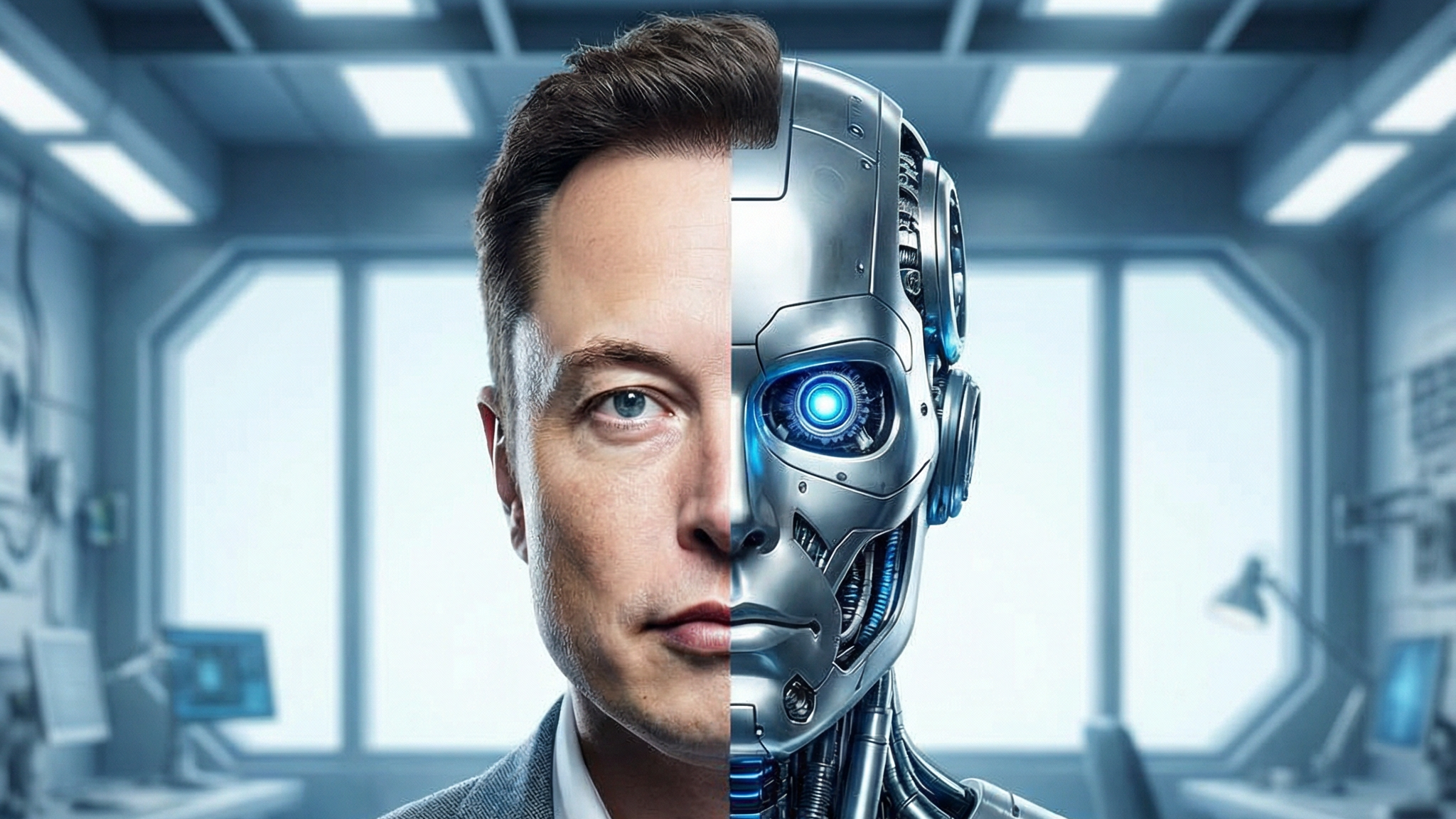
Tesla AI5 Optimus Chip Finally Enters Production: Tesla is entering a new era of artificial intelligence, and the company’s latest breakthrough is not a new electric vehicle or a bigger Gigafactory. Instead, it is a revolutionary custom processor designed to power the future of Full Self-Driving (FSD), the CyberCab robotaxi, and the Tesla Optimus humanoid robot.
The much-awaited Tesla AI5 Optimus Chip has officially reached a major production milestone after successfully completing the tape-out stage, with manufacturing beginning at Samsung Foundry’s advanced facility in Taylor, Texas. This next-generation AI processor is expected to deliver up to 8 times more computing performance than Tesla’s current AI4 hardware while dramatically improving memory bandwidth, efficiency, and real-time AI decision-making.
Here’s everything you need to know about Tesla’s most powerful AI chip yet.
Tesla AI5 Chip Officially Enters Production
Tesla’s next-generation AI5 chip has completed the critical semiconductor tape-out process, meaning the chip design is finalized and ready for large-scale manufacturing.
Production is now ramping up at Samsung Foundry’s Taylor, Texas fabrication plant, marking a significant milestone for Tesla’s AI hardware roadmap.
This achievement signals that Tesla’s future ambitions—including unsupervised Full Self-Driving, the CyberCab autonomous taxi network, and the Optimus humanoid robot—are moving closer to reality.
Unlike previous upgrades that mainly focused on software improvements, AI5 represents a massive leap in raw hardware capability.
Why the Tesla AI5 Chip Is a Game Changer
Tesla has always preferred designing its own Application-Specific Integrated Circuits (ASICs) instead of relying on third-party AI hardware.
While competitors like Waymo and Cruise use Nvidia-powered computing platforms, Tesla follows a vertically integrated approach, allowing both hardware and AI software to be developed together.
This strategy offers several major advantages:
- Higher AI performance
- Better energy efficiency
- Lower manufacturing costs
- Faster software optimization
- Reduced dependency on external suppliers
The AI5 chip is expected to become the foundation of Tesla’s next decade of AI development.
Tesla AI4 vs Tesla AI5: Massive Performance Upgrade
One of the biggest highlights of the new chip is its enormous increase in computational power.
Compute Performance
The current Dual AI4 system delivers approximately 300–500 TOPS (Trillion Operations Per Second).
The new AI5 processor is expected to reach an incredible 2,000–2,500 TOPS, representing a 5x to 8x performance increase.
Memory Improvements
The AI5 architecture also introduces:
- 9x larger memory capacity
- 5x higher memory bandwidth
- Dramatically reduced latency
- Faster AI inference speeds
These improvements allow Tesla’s neural networks to execute complex AI tasks directly on the chip instead of relying on slower software-based emulation.
The result is significantly faster decision-making and the ability to run much larger AI models inside the vehicle.
Samsung’s Advanced 2nm Technology Powers AI5
One of the most exciting aspects of the Tesla AI5 project is its manufacturing technology.
Samsung is producing the processor using its cutting-edge 2-nanometer Gate-All-Around (GAA) fabrication process.
Previously, many industry experts believed Tesla would reserve the 2nm node for a future AI6 processor. Instead, Tesla has accelerated its roadmap by adopting one of the world’s most advanced semiconductor manufacturing technologies for AI5.
The Taylor, Texas fabrication plant is located only about 30 miles from Tesla’s Gigafactory Texas, creating an efficient domestic semiconductor supply chain.
Tesla’s Dual Manufacturing Strategy
Rather than depending on a single manufacturer, Tesla has adopted a dual-source production strategy.
Samsung Foundry
Samsung will manufacture AI5 chips in Taylor, Texas, reducing shipping delays and minimizing geopolitical risks.
TSMC
Meanwhile, TSMC will provide additional production capacity to support Tesla’s rapidly expanding global vehicle fleet.
This approach gives Tesla greater flexibility while ensuring stable chip availability throughout the coming years.
Industry reports suggest Samsung’s partnership with Tesla could be worth tens of billions of dollars through 2033.
How AI5 Will Improve Full Self-Driving (FSD)
Tesla has repeatedly stated that its vision-based autonomous driving system is designed to eventually exceed human driving safety.
The AI5 chip provides the computational power needed to process vastly more information in real time.
Key improvements include:
Larger Vision Models
Tesla vehicles will be able to analyze multiple high-resolution camera feeds simultaneously with virtually zero processing delay.
Better Edge-Case Handling
Unexpected situations—such as pedestrians, construction zones, or sudden lane changes—can be evaluated much faster.
The AI system will instantly calculate multiple driving options before selecting the safest route.
Lower Latency
With significantly faster onboard processing, Tesla vehicles will rely less on cloud communication, making autonomous driving safer and more reliable.
Tesla CyberCab Gets a More Powerful Brain
The upcoming Tesla CyberCab robotaxi platform is one of the biggest beneficiaries of the AI5 chip.
Since robotaxis operate without human drivers, onboard computing power is absolutely critical.
AI5 enables CyberCab to:
- Process camera feeds in real time
- Reduce expensive external sensor hardware
- Make driving decisions within milliseconds
- Lower overall operating costs
The combination of AI5 and Tesla’s vision-only system could significantly improve autonomous ride-hailing performance.
Tesla Optimus Robot Will Become Smarter
While self-driving cars receive most of the attention, many analysts believe the Tesla Optimus humanoid robot could become an even larger business.
According to Elon Musk, AI5 will serve as the primary computing platform for Optimus during its factory deployment.
This upgrade is especially important because humanoid robots must make split-second decisions while working around people.
Real-Time Motion Planning
The robot will instantly predict movement around nearby workers and safely adjust its path.
Dynamic Hand Coordination
If an object shifts position or becomes slippery, Optimus can automatically change its grip strength without pausing.
Fluid Human-Like Movement
Instead of stopping to process information before acting, AI5 enables smoother, more natural movements with minimal hesitation.
These capabilities could dramatically improve factory productivity while increasing workplace safety.
Can Tesla AI5 Beat Nvidia?
Elon Musk believes the AI5 processor will become one of the world’s best AI inference chips, particularly for AI models containing fewer than 250 billion parameters.
Tesla expects AI5 to compete directly with specialized AI hardware from Nvidia by offering:
- Higher efficiency
- Lower power consumption
- Reduced operational costs
- Optimized neural network performance
Because Tesla controls both the hardware and software stack, it can optimize every layer of AI processing.
Tesla AI5 Production Timeline
Tesla continues to move at one of the fastest semiconductor development cycles in the industry.
The expected rollout schedule includes:
Late 2026
- Engineering samples demonstrated
- Initial testing begins
2027
- Large-scale production ramps up
- Early deployment in Tesla products
2028
- Widespread integration across Tesla vehicles
- Full deployment in CyberCab
- Expanded rollout for Tesla Optimus
Meanwhile, Tesla’s existing AI4-equipped fleet will continue collecting billions of miles of real-world driving data. These valuable datasets will train increasingly advanced neural networks that can immediately take advantage of AI5 once mass deployment begins.
Final Thoughts
The Tesla AI5 Optimus Chip represents one of the most significant hardware advancements in the company’s history. By combining 2nm semiconductor technology, up to 2,500 TOPS of AI performance, dramatically larger memory capacity, and ultra-fast onboard inference, Tesla is building the computing foundation for its next generation of intelligent machines.
Whether it’s powering Full Self-Driving, enabling the CyberCab robotaxi network, or making the Optimus humanoid robot more capable and responsive, AI5 is positioned to become the central brain behind Tesla’s AI ecosystem.
If production progresses as planned, the AI5 chip could redefine what is possible for autonomous vehicles, robotics, and real-world artificial intelligence over the next several years, reinforcing Tesla’s position as one of the industry’s most ambitious AI innovators.
FAQs
1. What is the Tesla AI5 chip?
The Tesla AI5 chip is Tesla’s next-generation custom AI processor designed to power Full Self-Driving (FSD), the CyberCab robotaxi, and the Optimus humanoid robot. It offers significantly higher computing power than the current AI4 hardware.
2. How much faster is the Tesla AI5 chip compared to AI4?
The AI5 chip is expected to deliver 2,000–2,500 TOPS (Trillion Operations Per Second) compared to 300–500 TOPS from the current dual-AI4 system, making it approximately 5 to 8 times more powerful.
3. What does TOPS mean in AI chips?
TOPS (Trillion Operations Per Second) measures how many AI calculations a processor can perform every second. Higher TOPS generally means faster AI inference and better real-time decision-making.
4. Who manufactures the Tesla AI5 chip?
The Tesla AI5 chip is primarily manufactured by Samsung Foundry using its advanced 2nm Gate-All-Around (GAA) process at the Taylor, Texas fabrication plant. TSMC will also provide additional manufacturing capacity.
5. What is the significance of the AI5 tape-out stage?
The tape-out stage means the chip’s design is complete and ready for fabrication. It is one of the most important milestones before mass production begins.
6. What manufacturing technology is used for Tesla AI5?
Tesla AI5 is built using Samsung’s 2-nanometer Gate-All-Around (GAA) semiconductor technology, which delivers improved performance, better energy efficiency, and higher transistor density.
7. How will AI5 improve Tesla Full Self-Driving (FSD)?
The AI5 chip enables Tesla vehicles to process larger AI models, analyze multiple high-resolution camera feeds simultaneously, reduce latency, and handle complex driving scenarios more effectively.
8. Will the AI5 chip power the Tesla CyberCab?
Yes. The Tesla CyberCab will use the AI5 chip as its primary onboard computer, enabling faster autonomous decision-making and reducing reliance on expensive external sensor hardware.
9. How will AI5 improve the Tesla Optimus robot?
AI5 allows Tesla Optimus to process visual information, movement planning, and AI reasoning simultaneously, resulting in smoother motion, faster reactions, and improved workplace safety.
10. Why does Tesla design its own AI chips?
Tesla designs custom ASIC (Application-Specific Integrated Circuit) chips to optimize both hardware and software together, improving performance, reducing power consumption, and lowering production costs.
11. How much more memory does AI5 have compared to AI4?
The AI5 chip is expected to offer 9 times more memory capacity and 5 times greater memory bandwidth than Tesla’s current AI4 platform.
12. Can the Tesla AI5 chip compete with Nvidia AI processors?
According to Elon Musk, AI5 is designed to become one of the world’s best AI inference chips for models with fewer than 250 billion parameters, offering competitive performance and better power efficiency than many existing AI accelerators.
13. When will Tesla AI5 enter mass production?
Engineering samples are expected to appear in late 2026, with mass production beginning in 2027 and broader deployment across Tesla vehicles and Optimus robots expected by 2028.
14. Why is Samsung’s Taylor, Texas factory important for Tesla?
The Taylor facility is located close to Gigafactory Texas, helping Tesla reduce shipping times, strengthen its domestic semiconductor supply chain, and minimize geopolitical risks.
15. Will current Tesla vehicles receive the AI5 chip?
Tesla has not officially confirmed retrofit plans. The AI5 processor is expected to be introduced in future Tesla vehicles and autonomous platforms as production ramps up.
16. Why is the Tesla AI5 chip considered a major breakthrough?
The AI5 chip combines 2nm manufacturing, up to 2,500 TOPS of computing power, significantly higher memory bandwidth, and ultra-fast AI inference, making it a foundational technology for Tesla’s future in autonomous driving, robotics, and artificial intelligence.
Read More:
- Model 2 The Truth Behind Tesla’s $25,000 EV
- Tesla makes the cut on California’s newest EV Rebate program
- Tesla Full Self-Driving v14.3.5 Early Impressions: new features and early performance
- Tesla owner attempts resale of Model S Signature Edition for over $260k
- Lucid denies rumors of bankruptcy after over 40% stock drop