
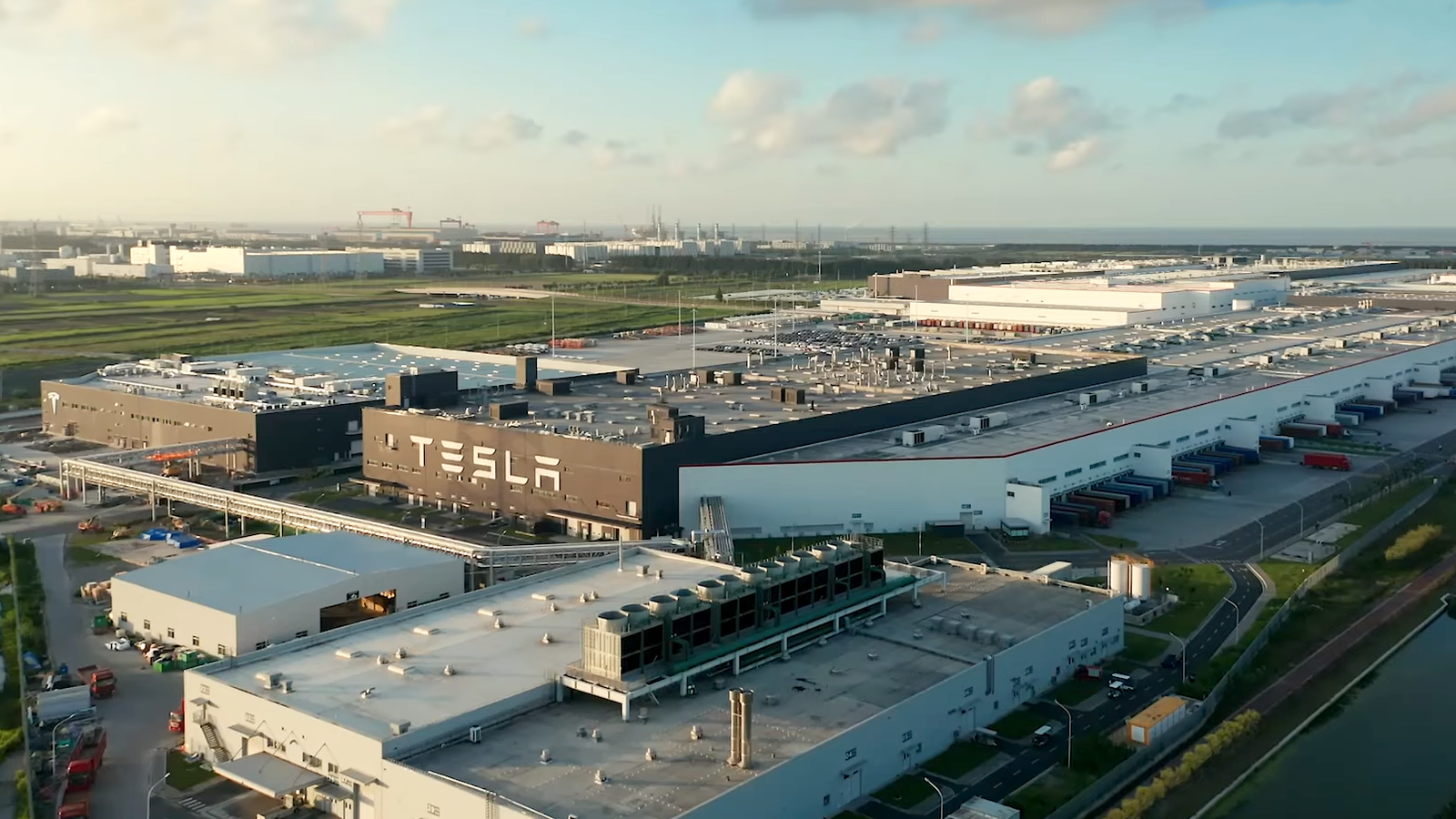
Elon Musk’s Terafab UPDATE Finally OutChip Entire The World: The semiconductor industry could be heading toward one of the most dramatic transformations in its history. Elon Musk has revealed the initial design and ambitious vision for Terafab, a proposed mega-semiconductor facility in Texas that is expected to operate on a scale unlike anything the world has seen before.
Rather than resembling a conventional chip factory, Terafab is envisioned as a futuristic, self-contained industrial city. With a proposed footprint of approximately 100 million square feet, the facility could become one of the largest and most technologically advanced buildings ever constructed.
More importantly, Terafab is designed to solve one of the biggest problems facing Tesla, SpaceX, and the broader AI ecosystem: the shortage of advanced computing hardware.
What Is Tesla’s Terafab?
Terafab is Musk’s proposed vertically integrated semiconductor manufacturing powerhouse in Texas. The facility is intended to manufacture the advanced processors required by Tesla’s rapidly expanding artificial intelligence, robotics, autonomous driving, and space-computing ambitions.
The project could create more than 3,000 high-quality engineering and manufacturing jobs while establishing a massive domestic semiconductor manufacturing ecosystem.
Musk’s long-term strategy goes far beyond electric vehicles. Tesla is increasingly positioning itself around artificial intelligence, autonomous transportation, and humanoid robotics. Two products are particularly important to this transformation:
- Optimus humanoid robot
- Cybercab autonomous robotaxi
Musk has argued that these technologies could eventually become as widespread as smartphones. However, achieving that scale requires enormous amounts of specialized computing power.
The AI Chip Bottleneck
The biggest challenge is not necessarily demand. It is chip supply.
Tesla and SpaceX require huge quantities of advanced processors, while xAI also needs massive computing clusters to train increasingly sophisticated AI systems. Existing global semiconductor manufacturing capacity may not be sufficient to support Musk’s ambitions.
According to the proposed Terafab vision, current supply could satisfy only a small fraction of the computing demand expected from Tesla and SpaceX.
Instead of relying entirely on external semiconductor manufacturers, Musk’s strategy is to bring chip production in-house.
The proposed investment could reach approximately $122 billion, creating a vertically integrated facility capable of designing, manufacturing, packaging, and supplying specialized processors.
Terafab Could Be 10 Times Bigger Than Gigafactory Texas
The numbers surrounding Terafab are extraordinary.
The proposed facility could cover around 100 million square feet, making it approximately 10 times larger than Tesla’s Gigafactory Texas, which covers roughly 10 million square feet.
To put that into perspective, the Terafab footprint could be comparable to approximately 1,300 soccer fields.
This enormous scale highlights the ambition behind the project. Terafab is not simply intended to be another semiconductor factory. It is envisioned as an industrial AI infrastructure hub capable of supporting several major technology platforms simultaneously.
Texas Infrastructure and Permits
The project has also moved beyond pure conceptual discussion. Permit filings have reportedly been submitted in Grimes County, Texas, indicating tangible development activity.
SpaceX has also reportedly fulfilled an early obligation under its local tax agreement by paying $10 million to Grimes County ahead of schedule.
Under the agreement, SpaceX receives a property tax abatement for the development site while committing to additional payments, including $20 million annually over a 35-year period.
A Fully Integrated Semiconductor Ecosystem
One of Terafab’s most important features is its proposed vertical integration.
Today’s semiconductor supply chain is highly fragmented. Raw silicon may be processed in one country, chip fabrication performed in another, memory produced elsewhere, and advanced packaging completed at another facility.
Terafab aims to bring critical stages together on a single massive campus.
Advanced Logic Manufacturing
The facility is expected to focus on manufacturing high-performance AI processors capable of handling the enormous computational requirements of autonomous vehicles and robots.
High-Bandwidth Memory
Terafab could also integrate High-Bandwidth Memory (HBM) technologies with advanced processors, helping deliver the speed required for modern AI workloads.
Advanced Chip Packaging
Advanced packaging would allow multiple semiconductor dies and components to be combined into sophisticated system-in-package solutions.
This integrated approach could significantly reduce supply-chain dependencies and potentially accelerate the development of future AI hardware.
Terafab’s Massive Production Targets
The proposed production numbers are equally ambitious.
Terafab could eventually target 100,000 wafers per month initially, with a long-term objective of reaching approximately 1 million wafers per month.
The project has also been associated with extraordinary computing and chip-output targets, including the possibility of producing tens or even hundreds of billions of specialized chips annually.
If such targets were achieved, Terafab would not merely support Tesla’s vehicles and robots. It could become a major source of the global computing infrastructure required for artificial intelligence.
Intel Expertise Could Help Close the Manufacturing Gap
Building an advanced semiconductor fab is vastly different from manufacturing vehicles or rockets.
Leading-edge semiconductor production requires extreme cleanliness, microscopic precision, advanced lithography, vibration control, and sophisticated process engineering.
A single microscopic contamination event can damage an entire wafer.
This is where Intel’s manufacturing expertise becomes strategically important.
Tesla appointed Gary Jang, a semiconductor manufacturing veteran with years of experience at Intel, as Terafab’s first official director. His experience in advanced semiconductor manufacturing could help Tesla address one of its biggest challenges: the lack of direct experience operating a leading-edge commercial chip foundry.
The broader relationship with Intel could potentially provide access to advanced manufacturing knowledge and future process technologies.
Two Silicon Families: AI on Earth and Computing in Space
Terafab’s planned output could serve two dramatically different environments.
AI5, AI6 and AI7 for Tesla
The first major chip family is designed for terrestrial AI applications.
Tesla’s future AI processors are expected to power autonomous vehicles, Cybercabs, and Optimus robots. These chips must process enormous amounts of sensor information in real time while making decisions about navigation, movement, and interaction.
For Optimus, the requirements are particularly demanding. A humanoid robot needs continuous balance control, spatial awareness, object recognition, movement coordination, and real-time decision-making.
D3 Chips for SpaceX and Starlink
The second family is intended for space-based computing.
SpaceX’s Starlink ecosystem could eventually evolve beyond satellite communications toward orbital AI data centers. Specialized D3 processors would need to operate in extremely harsh conditions, including radiation, vacuum, temperature extremes, and difficult heat-management environments.
This could create an entirely new category of space-grade AI computing hardware.
Tesla, SpaceX and xAI Could Share One Compute Engine
Terafab’s biggest strategic advantage may be its ability to serve several companies within Musk’s technology ecosystem.
Tesla needs inference processors for autonomous vehicles and humanoid robots.
xAI needs enormous quantities of computing hardware for AI model training and inference.
SpaceX and Starlink require specialized processors for satellites and potential orbital computing infrastructure.
Terafab could therefore become a shared semiconductor backbone connecting these businesses.
The Biggest Risks Facing Terafab
Despite its enormous potential, Terafab faces significant challenges.
Building a leading-edge semiconductor factory is among the most technically demanding industrial projects in the world. Tesla and SpaceX have impressive manufacturing achievements, but neither has historically operated a major commercial semiconductor foundry at the cutting edge.
The most difficult challenge may be achieving high semiconductor yields. Advanced fabs can require years of engineering, testing, process optimization, and extremely expensive equipment before production becomes efficient.
Musk’s supporters point to Tesla’s previous manufacturing history as evidence that the company can overcome difficult production bottlenecks. However, semiconductor manufacturing is considerably more complex than battery manufacturing.
Conclusion: Terafab Could Redefine AI Infrastructure
If Terafab is constructed and reaches its proposed production targets, it could become far more than a semiconductor factory.
A 100-million-square-foot AI manufacturing campus in Texas could provide the processors needed for Tesla’s autonomous vehicles, Optimus robots, xAI’s artificial intelligence systems, and SpaceX’s future orbital computing ambitions.
The project’s true significance lies in compute independence. Instead of allowing external semiconductor supply constraints to limit its ambitions, Musk is proposing an enormous industrial ecosystem capable of producing the hardware required by his technology companies.
Terafab therefore represents one of the boldest bets yet on the future of AI, robotics, autonomous transportation, and space computing. If Musk can turn the concept into reality, the project could reshape the semiconductor supply chain and establish a new blueprint for the infrastructure powering the next generation of artificial intelligence.
FAQs
1. What is Elon Musk’s Terafab?
Terafab is a proposed massive semiconductor manufacturing facility in Texas designed to produce advanced AI chips for Tesla, SpaceX, and xAI. The facility is intended to reduce reliance on external chip manufacturers and provide the computing hardware needed for AI, robotics, autonomous vehicles, and space applications.
2. Where will Terafab be located?
Terafab is proposed to be located in Grimes County, Texas. The project is planned as a massive industrial campus that could become one of the largest buildings and manufacturing facilities in the world.
3. How big will Terafab be?
The proposed Terafab campus could cover approximately 100 million square feet. That would make it around 10 times larger than Tesla’s Gigafactory Texas and comparable in footprint to roughly 1,300 soccer fields.
4. How much will Terafab cost?
The proposed Terafab investment has been estimated at approximately $122 billion. Such an investment would make the project one of the largest semiconductor manufacturing initiatives ever proposed.
5. Why does Elon Musk want to build Terafab?
The primary goal is to solve the growing AI semiconductor shortage. Tesla, SpaceX, and xAI require enormous amounts of computing power, and Musk wants greater control over the supply of advanced processors rather than depending entirely on external chip manufacturers.
6. Which Tesla products will use Terafab chips?
Terafab could produce processors for several future Tesla technologies, including the Optimus humanoid robot, Cybercab robotaxi, autonomous vehicles, and Full Self-Driving systems.
7. What chips could Terafab manufacture?
The proposed semiconductor portfolio includes AI5, AI6, and AI7 processors for terrestrial AI applications. It could also include specialized D3 processors designed for SpaceX’s Starlink and potential orbital computing applications.
8. What is the Tesla Optimus robot?
Optimus is Tesla’s humanoid robot project designed to perform a wide range of physical tasks. The robot requires powerful AI processors for real-time movement, balance, object recognition, spatial awareness, and interaction with its environment.
9. What is the Cybercab?
The Cybercab is Tesla’s proposed fully autonomous robotaxi. It is designed to operate without a human driver and could require substantial onboard computing power to process cameras, navigation information, and real-time driving decisions.
10. Could Terafab manufacture chips for SpaceX?
Yes. Terafab is envisioned as a semiconductor manufacturing platform that could support SpaceX and Starlink. Specialized processors could potentially be developed for satellites and future orbital data centers where chips must withstand radiation, temperature changes, and vacuum conditions.
11. What role could Intel play in Terafab?
Intel’s semiconductor manufacturing expertise could help Tesla overcome its lack of experience operating a leading-edge chip fabrication facility. Gary Jang, a semiconductor manufacturing veteran, has reportedly been appointed as Terafab’s first director.
12. How many chips could Terafab produce?
The proposed facility has been associated with extremely ambitious production targets, potentially reaching 100 billion to 200 billion custom chips annually. Actual production capacity would depend on the final design, manufacturing technology, equipment, and yield rates.
13. How many wafers could Terafab produce?
The proposed roadmap includes an initial target of approximately 100,000 wafers per month, with a potential long-term target of 1 million wafers per month if the facility reaches full scale.
14. What are the biggest challenges facing Terafab?
The biggest challenges include enormous construction costs, advanced semiconductor manufacturing complexity, equipment requirements, cleanroom standards, process development, and achieving high chip yields. Operating a leading-edge semiconductor fab is significantly more difficult than conventional manufacturing.
15. Could Terafab change the semiconductor industry?
If the proposed facility reaches its ambitious production goals, Terafab could significantly influence the global semiconductor industry. By combining chip fabrication, advanced packaging, memory integration, and AI hardware production on a massive campus, it could provide Tesla, SpaceX, and xAI with greater control over their computing supply chain and support the expansion of AI, robotics, autonomous vehicles, and space computing.
Read More:
- Tesla’s mysterious Robovan makes a sneak peek with Optimus in Terafab video
- The Boring Company’s newest Vegas Station has a permit quietly waiting behind it
- Elon Musk and SpaceX shrugs off the trading day Wall Street feared most
- Tesla’s First Unmanned CyberTrain Will Destroy the Auto Industry
- Elon Musk Confirms The BEST Tesla Bot Gen 3 To COOK, CLEAN & Serve BEER For $1/Hour