
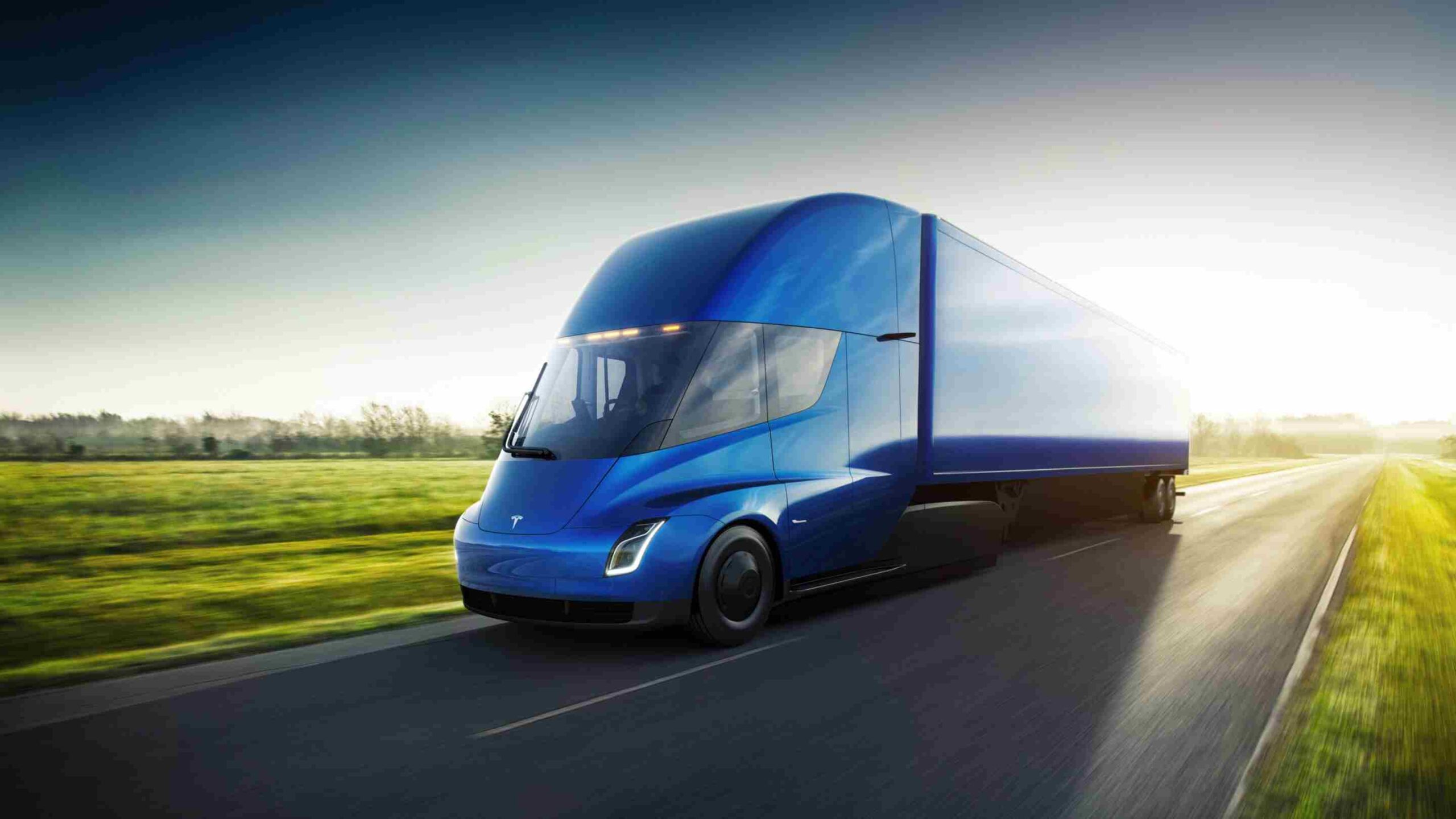
Tesla Semi Gen 2 Gets SHOCKING New Upgrade: The heavy-duty trucking industry is witnessing a historic transformation, and at the center of this revolution stands the Tesla Semi Gen 2. What many traditional automotive executives once dismissed as an unrealistic experiment has rapidly become one of the most disruptive forces in commercial transportation.
Recent reports reveal an extraordinary surge in demand for Tesla’s electric semi-truck. In a single 24-hour period, nearly 50% of Tesla Semi’s immediately available inventory was reportedly sold out. For a vehicle priced between $250,000 and $300,000, such rapid sales demonstrate that major logistics companies are no longer waiting on the sidelines. Instead, they are competing aggressively to secure early access to the next generation of freight transportation.
As Tesla accelerates production and expands its commercial footprint, the Semi is proving that electric trucks are not just viable—they may represent the future of global logistics.
Tesla Semi Demand Is Exploding Across the Logistics Industry
The growing popularity of the Tesla Semi Gen 2 reflects a major shift in fleet purchasing strategies. Large transportation companies are increasingly recognizing the long-term financial and operational advantages of electric trucking.
Industry observers note that the biggest challenge facing Tesla today is no longer convincing customers to buy the Semi. Instead, the primary obstacle is producing enough vehicles to meet the overwhelming demand.
Fleet Operators Are Racing to Secure Allocations
Major logistics providers are making substantial investments in Tesla’s electric trucking platform.
Some notable commitments include:
- WattEV placing a massive $100 million order for 370 Tesla Semi trucks.
- Initial deliveries of 50 vehicles expected within the current production cycle.
- California fleet programs recording over 1,095 heavy-duty electric truck commitments from dozens of logistics operators.
- Tesla capturing the overwhelming majority of these purchase allocations.
These developments indicate that fleet managers are increasingly viewing electric trucks as essential business assets rather than experimental technology.
Tesla Begins Mass Production at Gigafactory Nevada
A critical milestone arrived when Tesla officially launched mass production of the Semi at Gigafactory Nevada on April 29, 2026.
Scaling Toward 50,000 Trucks Per Year
Tesla’s manufacturing roadmap is ambitious:
- Thousands of Tesla Semis targeted for production by year-end.
- Long-term goal of 50,000 units annually.
- Significant expansion of battery production capacity.
- Dedicated assembly lines optimized specifically for commercial trucking.
This aggressive scaling strategy positions Tesla to dominate the emerging electric freight market before competitors can catch up.
Manufacturing Capacity Remains the Bottleneck
Industry analysts agree that current demand significantly exceeds available supply.
Unlike many competing electric truck programs struggling to find customers, Tesla’s challenge is expanding manufacturing capacity quickly enough to satisfy a rapidly growing order book.
Tesla Semi Gen 2 Battery Technology Changes Everything
One of the most impressive aspects of the Tesla Semi is its enormous battery system.
Traditional fleet operators demand vehicles capable of handling long distances, steep grades, heavy loads, and continuous operation. Tesla engineered its battery platform specifically to meet those requirements.
Massive Energy Storage Capacity
Battery specifications reveal the scale of Tesla’s engineering achievement.
Tesla Model 3
- Usable Capacity: 64 kWh
Tesla Semi Standard Range
- Usable Capacity: 548 kWh
Tesla Semi Long Range
- Usable Capacity: 822 kWh
The long-range Tesla Semi contains more than 12 times the usable battery capacity of a Tesla Model 3.
This enormous energy reserve enables:
- Up to 500 miles of range
- Full payload operation
- Gross combination weight of 82,000 pounds
- Real-world commercial hauling performance
For fleet operators, this means fewer compromises and more operational flexibility.
Megawatt Charging Delivers a Game-Changing Advantage
Charging time has long been viewed as one of the biggest barriers to electric trucking adoption.
Tesla addressed this challenge through its proprietary Megawatt Charging System (MCS).
Ultra-Fast Commercial Charging
The charging network delivers:
- Up to 1.2 megawatts of charging power
- Approximately 60% range recovery in 30 minutes
- Charging during mandatory driver rest periods
- Minimal operational downtime
This breakthrough allows fleet operators to maintain schedules similar to diesel-powered operations while benefiting from electric efficiency.
Why Charging Speed Matters
Commercial logistics depends on vehicle utilization.
The faster a truck returns to service, the more revenue it generates. Tesla’s megawatt charging solution significantly reduces idle time, making electric freight transportation far more practical than many industry critics anticipated.
Tesla Semi Pricing: More Expensive Than Diesel, But Far More Competitive
The pricing structure of the Tesla Semi has evolved since its original unveiling.
Current Tesla Semi Pricing
Standard Range (300 Miles)
- 2017 Projection: $150,000
- 2026 Price: $260,000
Long Range (500 Miles)
- 2017 Projection: $180,000
- 2026 Price: $300,000
At first glance, these increases appear substantial.
However, pricing becomes much more attractive when compared with competing electric Class 8 trucks.
Competitive Market Position
Average costs across the industry:
- Premium Diesel Tractor: Approximately $172,500
- Tesla Semi Long Range: Approximately $300,000
- Average Competing Electric Truck: Approximately $411,000
Tesla effectively occupies a strategic middle ground by offering superior technology while remaining significantly cheaper than many rival electric truck platforms.
Real-World Testing Proves Tesla Semi Can Handle Extreme Conditions
Perhaps the strongest evidence supporting the Tesla Semi comes from extensive fleet testing under demanding real-world conditions.
For years, critics argued that electric trucks could only succeed on short, flat routes.
Multiple fleet evaluations have now challenged that assumption.
Covenant Logistics Tests Tesla Semi on California’s Grapevine
One of the most demanding trucking routes in North America is the Grapevine section of Interstate 5.
Climbing the Tejon Pass
The route rises to approximately 4,160 feet above sea level.
Challenges include:
- Long uphill grades
- Heavy freight loads
- Significant power demands
- Constant speed management
Traditional diesel trucks often experience major performance limitations during these climbs.
The Tesla Semi, however, benefits from its tri-motor electric powertrain, which delivers maximum torque instantly from zero RPM.
Superior Hill-Climbing Performance
Drivers reported:
- Smooth acceleration
- Predictable handling
- Consistent speed maintenance
- No gear shifting requirements
The instant torque characteristics of electric motors create a driving experience fundamentally different from diesel trucks.
Regenerative Braking Creates a New Safety Standard
The downhill descent from Tejon Pass presents another significant challenge.
The Problem With Traditional Brakes
Diesel trucks rely heavily on friction braking during long descents.
This creates risks including:
- Brake overheating
- Brake fade
- Increased maintenance
- Reduced safety margins
Tesla’s Regenerative Braking Advantage
The Tesla Semi transforms downhill travel into an opportunity.
As the truck descends:
- Electric motors function as generators.
- Vehicle momentum generates electricity.
- Battery packs recharge.
- Friction brakes remain cooler.
This process not only improves safety but also recovers energy that would otherwise be wasted as heat.
The result is a safer and more efficient transportation system.
ArcBest Achieves Record-Breaking Efficiency Results
Another major validation came through testing conducted by ArcBest and its freight subsidiary.
A Demanding Mountain Route
The evaluation covered:
- 4,494 miles
- Three weeks of operation
- Donner Pass crossings
- Elevations exceeding 7,200 feet
- More than 320 miles per day
These conditions represent some of the toughest commercial trucking environments in North America.
Efficiency Numbers That Shocked the Industry
Tesla originally targeted:
- Approximately 1.70 kWh per mile
Industry benchmarks ranged between:
- 1.72–1.73 kWh per mile
ArcBest recorded:
- 1.55 kWh per mile
This represented roughly a 9% efficiency improvement over previous benchmark figures.
Such performance can significantly reduce operating costs over a truck’s lifespan.
Tesla’s Aerodynamic Design Delivers Major Savings
A substantial portion of the Semi’s efficiency comes from its advanced aerodynamic engineering.
Key Design Features
Tesla incorporated:
- Streamlined front profile
- Reduced drag surfaces
- Integrated airflow channels
- Optimized thermal management systems
Combined with Tesla’s software-driven energy optimization platform, these features maximize range and minimize energy consumption.
Software Plays a Critical Role
Tesla’s vertically integrated software ecosystem continuously manages:
- Battery temperatures
- Power delivery
- Energy recovery
- Route efficiency
This intelligent control system helps maintain peak performance across varying weather and terrain conditions.
Total Cost of Ownership Makes the Strongest Business Case
While the Tesla Semi’s purchase price exceeds that of a diesel truck, fleet managers increasingly focus on Total Cost of Ownership (TCO) rather than initial acquisition costs.
Comparing Long-Term Operating Costs
Ten-year projections indicate:
Diesel Truck
- Approximately $1.2 million lifecycle cost
Tesla Semi
- Approximately $795,000 lifecycle cost
Potential Fleet Savings
Estimated savings range from:
- $147,000
- To more than $400,000 per truck
Savings are influenced by:
- Electricity costs
- Diesel prices
- Route utilization
- Regional energy rates
For large fleets operating hundreds or thousands of vehicles, these savings can translate into hundreds of millions of dollars over time.
Government Incentives Accelerate Tesla Semi Adoption
Government programs continue to play an important role in accelerating electric truck deployment.
California’s Clean Commercial Freight Rebate Program
California introduced the CCFR program with:
- $250 million annual funding
- Expansion toward $1 billion through 2030
- Additional support for zero-emission trucking fleets
Tesla Dominates Voucher Applications
Previous incentive data showed:
- 1,067 total electric truck voucher applications
- 965 applications specifically for Tesla Semi
- Fewer than 100 applications combined for competing manufacturers
This overwhelming demand demonstrates Tesla’s growing dominance in the heavy-duty electric transportation market.
Incentives Can Eliminate Purchase Premiums
In some situations, fleets can combine multiple incentive programs and receive support totaling:
Up to $360,000 per vehicle
These incentives can effectively offset the entire purchase premium associated with electric trucks.
Why Tesla’s Vertical Integration Creates a Competitive Moat
One of Tesla’s greatest strengths is its fully integrated ecosystem.
Unlike traditional truck manufacturers that often rely on third-party suppliers for batteries, charging solutions, and software, Tesla controls nearly every major component.
Key Advantages Include
- Proprietary battery technology
- In-house power electronics
- Custom software architecture
- Megawatt charging infrastructure
- Integrated thermal management
This approach enables Tesla to optimize performance across the entire vehicle platform.
Competitors attempting to retrofit diesel truck designs face substantial engineering disadvantages.
The Future of Freight Transportation Has Arrived
The trucking industry is among the most conservative sectors in transportation. Fleet operators prioritize reliability, efficiency, safety, and cost above all else.
The Tesla Semi Gen 2 is increasingly proving that electric trucks can outperform diesel vehicles across all four categories.
Real-world results from major logistics providers show:
- Exceptional efficiency
- Strong mountain-pass performance
- Lower long-term ownership costs
- Faster charging capabilities
- Improved safety through regenerative braking
As production ramps up and infrastructure expands, Tesla appears positioned to reshape commercial transportation on a global scale.
Final Thoughts
The debate surrounding electric heavy-duty trucking is rapidly changing. The question is no longer whether electric trucks can perform demanding commercial work. The evidence from major fleet operators already provides that answer.
Instead, the new question is how quickly competitors can catch up.
With mass production underway, strong customer demand, breakthrough battery technology, industry-leading efficiency, and substantial long-term cost savings, the Tesla Semi Gen 2 is establishing itself as one of the most disruptive commercial vehicles ever built.
For fleet operators seeking the future of freight transportation, that future is already arriving—and it wears a Tesla badge.
FAQs
1. What is the Tesla Semi Gen 2?
The Tesla Semi Gen 2 is Tesla’s latest all-electric Class 8 heavy-duty truck designed for long-haul freight transportation. It features improved battery technology, enhanced efficiency, faster charging capabilities, and lower operating costs compared to traditional diesel trucks.
2. What is the driving range of the Tesla Semi Gen 2?
The long-range Tesla Semi offers up to 500 miles of real-world driving range on a single charge while carrying a fully loaded gross combination weight of up to 82,000 pounds.
3. How much does the Tesla Semi Gen 2 cost?
The current estimated pricing starts at approximately $260,000 for the 300-mile version and around $300,000 for the 500-mile long-range version.
4. How large is the Tesla Semi battery pack?
The Tesla Semi is available with battery capacities of approximately 548 kWh for the standard model and 822 kWh for the long-range version, making it one of the largest battery systems in the commercial trucking industry.
5. How fast can the Tesla Semi charge?
Using Tesla’s Megawatt Charging System (MCS), the Semi can recover approximately 60% of its driving range in just 30 minutes, significantly reducing downtime for fleet operators.
6. What is Tesla’s Megawatt Charging System?
The Megawatt Charging System is Tesla’s ultra-fast commercial charging technology capable of delivering up to 1.2 megawatts of power, specifically developed for heavy-duty electric trucks.
7. Can the Tesla Semi handle steep mountain routes?
Yes. Real-world testing by major fleet operators has demonstrated that the Tesla Semi can successfully navigate challenging routes such as California’s Grapevine and Donner Pass while maintaining strong performance and efficiency.
8. How does regenerative braking benefit the Tesla Semi?
Regenerative braking converts vehicle momentum into electricity during deceleration and downhill driving. This helps recharge the battery, reduce brake wear, improve safety, and increase overall efficiency.
9. Is the Tesla Semi cheaper to operate than a diesel truck?
According to Total Cost of Ownership (TCO) studies, the Tesla Semi can save fleet operators between $147,000 and over $400,000 per truck over a 10-year operating period, depending on usage and fuel costs.
10. What makes the Tesla Semi more efficient than competitors?
The Tesla Semi combines advanced aerodynamics, powerful electric motors, intelligent software controls, optimized thermal management, and regenerative braking to achieve industry-leading energy efficiency.
11. How many Tesla Semis does Tesla plan to produce annually?
Tesla aims to eventually scale production to approximately 50,000 Tesla Semi trucks per year as manufacturing capacity expands.
12. Which companies have ordered Tesla Semis?
Major companies and fleet operators including WattEV, ArcBest, DHL, and Covenant Logistics have either deployed or committed to purchasing Tesla Semi trucks for commercial operations.
13. What is the maximum weight the Tesla Semi can haul?
The Tesla Semi is designed to operate at a maximum gross combination weight rating (GCWR) of 82,000 pounds, making it suitable for heavy freight transportation.
14. Are government incentives available for Tesla Semi purchases?
Yes. Programs such as California’s Clean Commercial Freight Rebate (CCFR) and HVIP incentives can significantly reduce purchase costs, with some fleets potentially qualifying for incentives worth up to $360,000 per vehicle.
15. Why are logistics companies switching from diesel to electric trucks?
Fleet operators are attracted by lower fuel costs, reduced maintenance expenses, improved efficiency, government incentives, enhanced driver experience, and long-term sustainability goals.
16. Is the Tesla Semi the future of commercial trucking?
Many industry experts believe the Tesla Semi represents a major step toward the future of freight transportation due to its combination of efficiency, performance, lower operating costs, fast charging, and zero-emission operation.
Read More:
- SpaceX’s Much Safer Way to Land Starship on the Moon Shocked NASA
- Elon Musk UPDATE Neuralink 4.0 Chip Destroy Entire BCI Industry
- Elon Musk challenges Tesla credit rating from Moody’s after SpaceX gets a higher one
- Tesla gives its biggest signal yet that Cybercab launch is imminent
- Tesla Bot Gen 3 Is Ready For Work! Next-Gen AI6 Chip And Only $25K!
1 thought on “DELIVERY NOW! Tesla Semi Gen 2 Gets SHOCKING New Upgrade”