
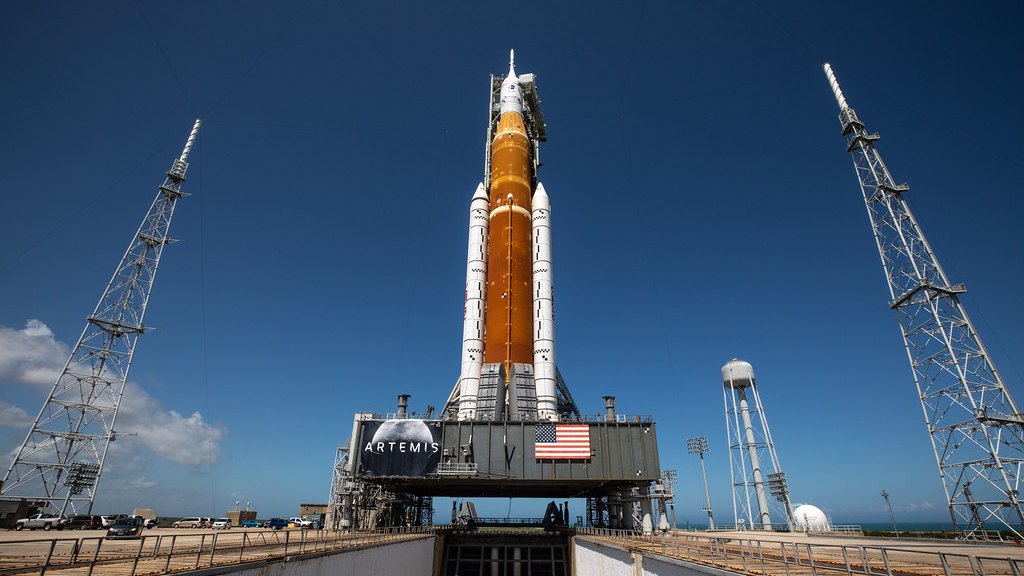
Disaster! China Did Something Never Done before with the Moon Rocket Shocked NASA, but SpaceX: The race to the Moon is accelerating faster than ever before. Under the leadership of NASA’s new administrator Jared Isaacman, the United States is pushing decisively toward returning astronauts to the lunar surface through the Artemis program. But as America prepares for Artemis 2, a powerful challenger is gaining momentum.
China has unveiled a series of major advancements in its lunar program—most notably, a dramatic new abort system launch test that has drawn attention and concern from NASA observers. At the same time, SpaceX remains the central force shaping the future of human spaceflight, with its fully reusable Starship system poised to redefine lunar exploration.
So what exactly did China accomplish? Why is NASA paying close attention? And where does SpaceX fit into this rapidly intensifying lunar competition?
Let’s break it down.
The New Lunar Space Race: USA vs China
The modern lunar race is no longer symbolic—it is strategic, technological, and economic.
NASA’s Artemis Architecture
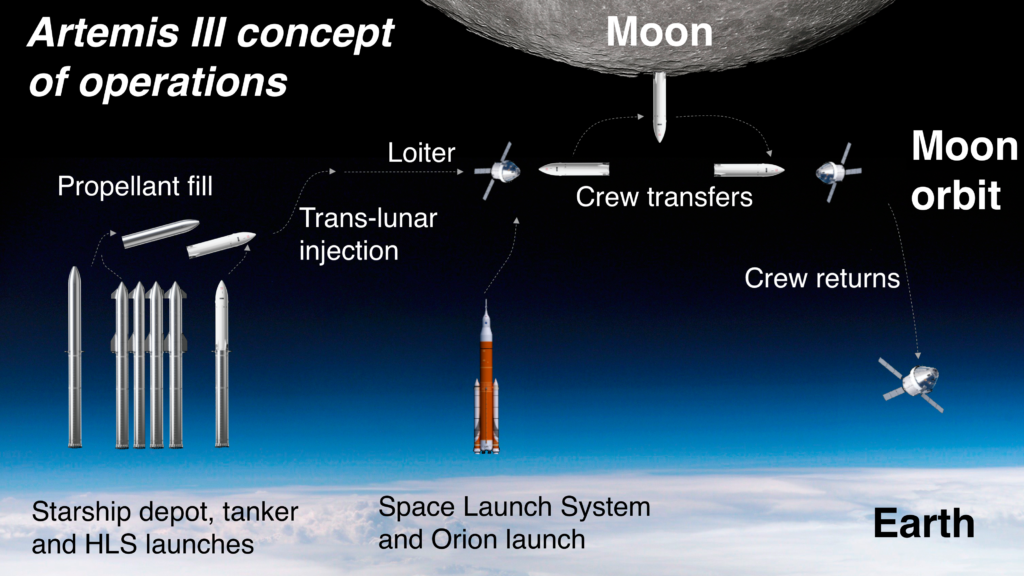
The United States is relying on several key systems for its return to the Moon:
- Space Launch System (SLS) – NASA’s heavy-lift rocket
- Orion spacecraft – Designed to carry astronauts beyond low Earth orbit
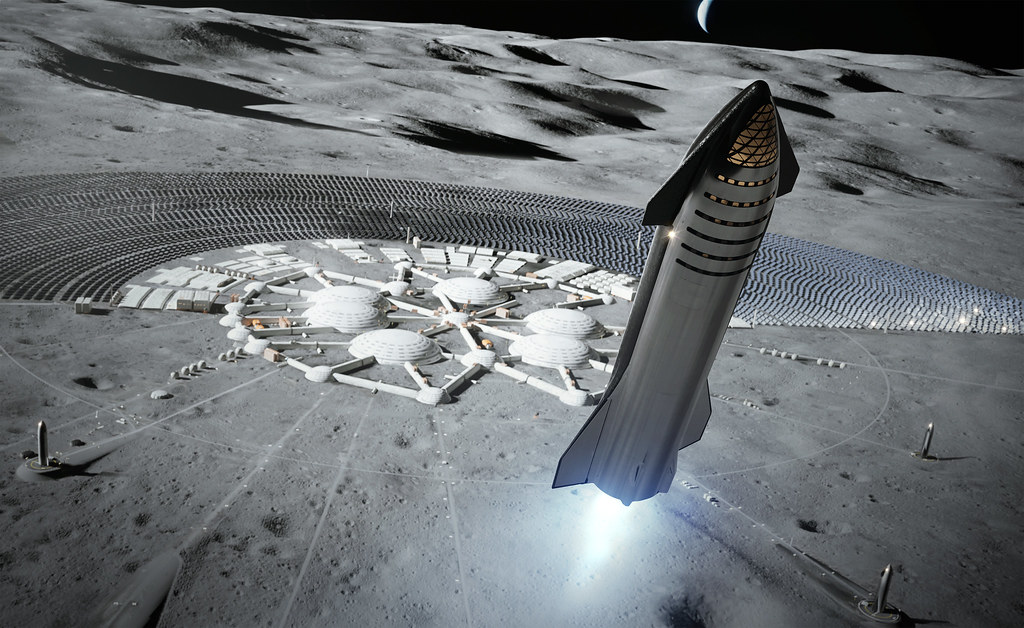
- SpaceX Starship Human Landing System (HLS) – The lunar lander variant
- Blue Origin’s Blue Moon lander – A competing landing system
Currently, Artemis 2 is being prepared as the first crewed mission of the Artemis era. However, delays, high costs, and technical challenges have slowed progress.
Meanwhile, China has been moving aggressively.
China’s Lunar Architecture: A Parallel Moon Program
China is building a complete lunar mission stack, including:
- Long March 10 (LM10) launch vehicle
- Mengzhou (Mango) crew spacecraft
- Lanyue lunar lander
Over the past year, progress has accelerated across all three systems. But one development stands out: a high-profile launch abort test using a realistic flight configuration.
China’s Bold Abort Test at Max Q
China recently conducted a major abort system test using the Mengzhou spacecraft, this time mounted atop a simulated Long March 10 prototype.
This marked a significant shift from last year’s test, where the spacecraft launched from a standalone platform. The new test recreated a more realistic launch environment.
Key Objectives of the Test
- Evaluate the launch abort system at Max Q
- Max Q is the point of maximum dynamic pressure.
- It is one of the most structurally demanding moments during ascent.
- Test integrated performance
- How the rocket and spacecraft perform together as a unified system.
How the Test Unfolded
- The rocket lifted off powered by seven engines.
- It ascended toward Max Q.
- At the designated moment, the abort sequence was triggered.
- The spacecraft separated cleanly.
- The launch escape system pulled the capsule safely away.
- The crew capsule descended under parachutes and landed as expected.
- The rocket executed a turnaround maneuver before completing a vertical water landing.
The result? A successful, integrated abort test—a major milestone in China’s lunar preparation.
Inside the Long March 10 Rocket Design
The Long March 10 resembles a Falcon Heavy-style architecture, featuring:
- A central core stage
- Two side boosters
- Multi-stage configuration
- Approximately 90 meters in height
Images from a vertical integration facility showed:
- The Mengzhou spacecraft
- Interstage connectors
- Booster with grid fins
- Structural interfaces
Although the setup appeared incomplete (likely missing at least one stage), it included all critical interfaces—suggesting China is prioritizing early compatibility testing.
This signals a transition from isolated component testing to full system integration—a pivotal moment in any launch program.
The Surprising Part: China’s Reusable Booster Strategy
Here’s where things get interesting.
China’s LM10A variant removes the side boosters and reduces the rocket from three stages to two. It appears designed primarily for low Earth orbit missions, including resupplying China’s Tiangong space station.
But the real surprise is its partial reusability concept.
Inspired by SpaceX? Absolutely.
The LM10A booster includes:
- Restartable engines
- Grid fins for atmospheric control
- Controlled descent capability
However, unlike Falcon 9 or Starship, China is not using landing legs.
Instead, they are developing a tethered landing system.
China’s “Navigator” Catch System
China recently revealed what appears to be a mature recovery infrastructure called Navigator.
It consists of:
- A large steel framework
- Four-legged tripod-like structure
- A barge positioned at sea
- A suspended booster in test imagery
How the Tethered Landing Concept Works
- Cables are tensioned by support towers.
- The descending booster enters through an open gap.
- Once aligned, cables retract and latch onto attachment points.
- The booster is suspended mid-air.
This hybrid concept combines elements of:
- SpaceX’s Starship catch system (Mechazilla arms)
- Falcon 9 drone ship landings
But China’s system appears mounted offshore—on a mobile sea platform.
Advantages of China’s Sea-Based Catch System
There are several potential benefits:
1. Reduced Structural Mass
No landing legs = more payload capacity.
2. Mobile Recovery Options
A barge allows flexibility across downrange trajectories.
3. Safety
Sea landings reduce risk to populated areas.
4. Potential Cost Efficiency
Reusable boosters could lower long-term launch costs.
If successful, this approach could significantly enhance China’s lunar mission sustainability.
The Challenges China Faces
However, this concept is not without risk.
Transport & Turnaround Issues
Recovering at sea requires transport back to port—slowing refurbishment compared to launch-site recovery.
Massive Infrastructure
A large offshore catch system is expensive and complex to scale.
Operational Complexity
Combining Falcon 9 and Starship recovery ideas introduces engineering and logistical hurdles.
Matching SpaceX’s operational tempo will be extremely difficult.
NASA’s Position: High Costs and Delays
While China advances integration and reusability, NASA faces ongoing challenges.
Artemis 1
- Nearly a decade from early development to flight.
Artemis 2
- Slipped beyond original schedule.
- Still confronting technical concerns.
Major Cost Drivers
- SLS rocket (expendable)
- Orion spacecraft
- Mobile launcher infrastructure
- Billions per launch
A key issue: Most Artemis hardware is not reusable, limiting cost reduction potential.
The Orion heat shield remains a notable technical concern.
In contrast, the commercial sector—especially SpaceX—is pursuing a radically different model.
SpaceX Starship: The Game Changer
Despite development challenges, Starship represents the most ambitious lunar vehicle ever designed.
What Makes Starship Different?
- Full reusability
- Massive payload capacity
- Rapid iteration manufacturing
- High flight cadence potential
If successful, Starship could:
- Slash launch costs
- Increase mission frequency
- Enable lunar base infrastructure
- Deliver large cargo and crew at scale
Unlike China’s incremental architecture, Starship is designed for exponential scalability.
Starship vs LM10A: Different Philosophies
| Feature | China LM10A | SpaceX Starship |
|---|---|---|
| Reusability | Partial | Full |
| Recovery | Tethered sea catch | Launch site catch (Mechazilla) + potential sea recovery |
| Payload Capacity | Moderate | Extremely high |
| Lunar Role | Crew transport | Crew + cargo + infrastructure |
China’s approach emphasizes gradual reliability.
SpaceX’s approach emphasizes transformational capability.
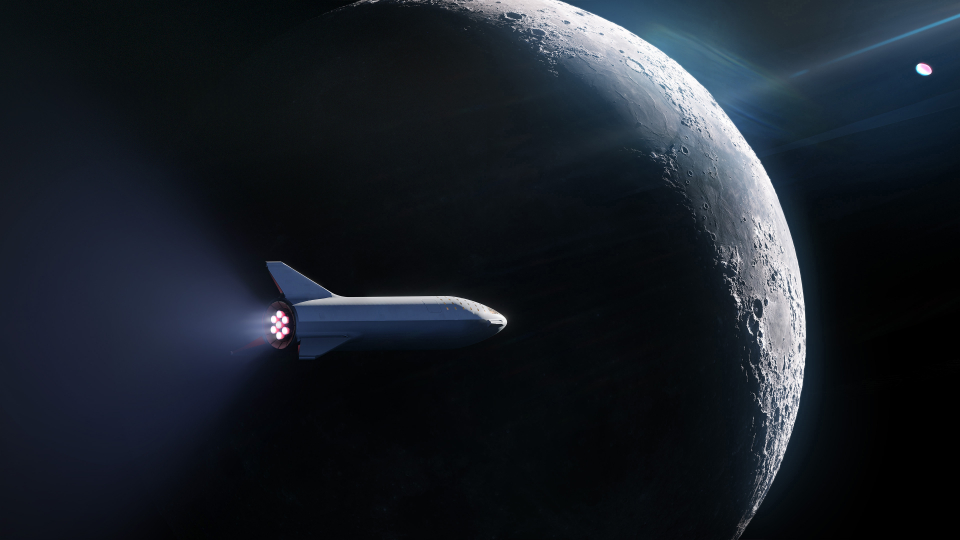
Musk’s Strategic Shift: Moon Before Mars
Recent signals from Elon Musk indicate a renewed focus on the Moon before Mars.
This aligns SpaceX directly with the accelerating lunar competition.
By prioritizing lunar missions:
- SpaceX supports NASA’s Artemis timeline.
- The US strengthens strategic leadership.
- Starship gains real-world operational validation.
Why NASA Is Watching Closely
China’s integrated abort test demonstrates:
- Serious progress
- Realistic flight configuration validation
- Movement toward operational readiness
Combined with reusable booster development, this raises the stakes.
If China achieves:
- Reliable crew transport
- Reusable launch systems
- Efficient lunar landing capability
It could narrow the gap in human deep-space operations.
NASA cannot afford further major delays.
The Bigger Picture: A Strategic Lunar Competition
This is no longer just about planting flags.
The Moon offers:
- Strategic high ground in space
- Resource potential (water ice, regolith)
- Gateway infrastructure for Mars missions
- Long-term geopolitical influence
China is moving steadily.
NASA is navigating complexity.
SpaceX is pushing disruptive innovation.
Who Has the Advantage?
China
- Rapid integration testing
- Strong centralized planning
- Growing reusable capability
NASA
- Established partnerships
- Decades of human spaceflight experience
- Artemis international coalition
SpaceX
- Reusability at scale
- Manufacturing velocity
- High-risk, high-reward development model
In a prolonged space race, cost per launch and cadence may become the deciding factors.
That is where Starship could redefine the equation.
Final Thoughts: The Moon Race Is Far from Over
China’s recent abort system test marks a major milestone in its lunar ambitions. The integration of spacecraft and launch vehicle at Max Q demonstrates maturity and confidence.
At the same time, NASA approaches a critical juncture with Artemis 2.
The outcome may ultimately depend on SpaceX’s ability to deliver on full reusability and operational efficiency.
One thing is certain:
The lunar race is intensifying.
The technology is evolving rapidly.
And the next chapter of human space exploration is unfolding right now.
As the United States, China, and commercial space giants push forward, the Moon is once again becoming the proving ground for technological supremacy.
FAQs
1. What did China recently accomplish with its Moon rocket?
China successfully conducted an integrated launch abort system test using its Mengzhou crew spacecraft mounted on a simulated Long March 10 rocket. The test evaluated the abort system at Max Q, one of the most stressful moments during launch.
2. Why is the abort test at Max Q significant?
Max Q represents the point of maximum aerodynamic pressure during ascent. Testing an abort at this moment proves the spacecraft can safely separate and protect astronauts under extreme conditions.
3. What is the Long March 10 rocket?
The Long March 10 (LM10) is China’s next-generation heavy-lift rocket designed to support crewed lunar missions, similar in purpose to NASA’s Space Launch System (SLS).
4. What is the Mengzhou spacecraft?
Mengzhou (sometimes referred to as Mango in translations) is China’s new crew spacecraft intended for lunar missions and future space station resupply operations.
5. How does China’s lunar program compare to NASA’s Artemis program?
Both nations are developing full lunar architectures. NASA uses SLS, Orion, and SpaceX Starship HLS, while China relies on Long March 10, Mengzhou spacecraft, and the Lanyue lunar lander.
6. Why is NASA concerned about China’s progress?
China’s rapid integration testing and reusable rocket development suggest it may close the gap in human deep-space missions, especially as NASA faces delays and high program costs.
7. What is the LM10A variant?
The LM10A is a modified version of the Long March 10 rocket with fewer stages and no side boosters, designed primarily for low Earth orbit missions but potentially adaptable for lunar support.
8. Is China developing reusable rockets like SpaceX?
Yes. China is working on partially reusable boosters featuring grid fins and restartable engines, inspired by SpaceX’s Falcon 9 recovery model.
9. What is China’s tethered landing system?
Instead of landing legs, China plans to use a tethered catch system called “Navigator,” where cables secure and suspend the descending booster—potentially on a sea-based platform.
10. How does China’s recovery system compare to SpaceX’s?
China’s approach combines elements of Falcon 9 drone ship landings and Starship’s Mechazilla catch system, but it appears to rely on a large offshore structure rather than a land-based tower.
11. What are the advantages of sea-based rocket recovery?
Sea-based recovery offers:
- Increased safety
- Flexible downrange landing options
- Potential payload optimization
However, it can slow refurbishment due to transport logistics.
12. What challenges does NASA’s Artemis program face?
Major challenges include:
- High costs per launch
- Schedule delays
- Technical issues like the Orion heat shield
- Reliance on largely expendable hardware
13. How is SpaceX’s Starship different from other lunar systems?
Starship is designed for full reusability, massive payload capacity, and rapid launch cadence—potentially reducing costs dramatically compared to traditional expendable rockets.
14. Could China land astronauts on the Moon before the United States?
While both countries are targeting the late 2020s or early 2030s, progress rates, technical hurdles, and political factors will ultimately determine who lands first.
15. What role does Jared Isaacman play in NASA’s lunar plans?
As NASA’s administrator, Jared Isaacman is leading the agency’s strategic direction, including pushing forward Artemis missions amid rising global competition.
16. Why is reusability so important in the lunar race?
Reusable rockets significantly reduce costs and increase flight frequency, making sustained lunar operations and long-term exploration economically feasible.
17. What does this mean for the future of the Moon race?
The renewed competition between the U.S., China, and commercial space companies like SpaceX signals a new era of space exploration. The Moon is becoming a strategic and technological proving ground, shaping the future of humanity’s expansion beyond Earth.
Read More:
- I figured out how to charge my Tesla at my rented townhouse – Here’s how
- Tesla Semi DESTROY Rivals with 800 Miles per Charge, Mass Production Started
- NASA $23.8 B Moon Rocket in Big Trouble, SpaceX’s new Starship Solution 100x BETTER
- SpaceX pursues 5G-level connectivity with Starlink Mobile V2 expansion
- Tesla arson suspect pleads guilty, faces up to 70 years in prison