
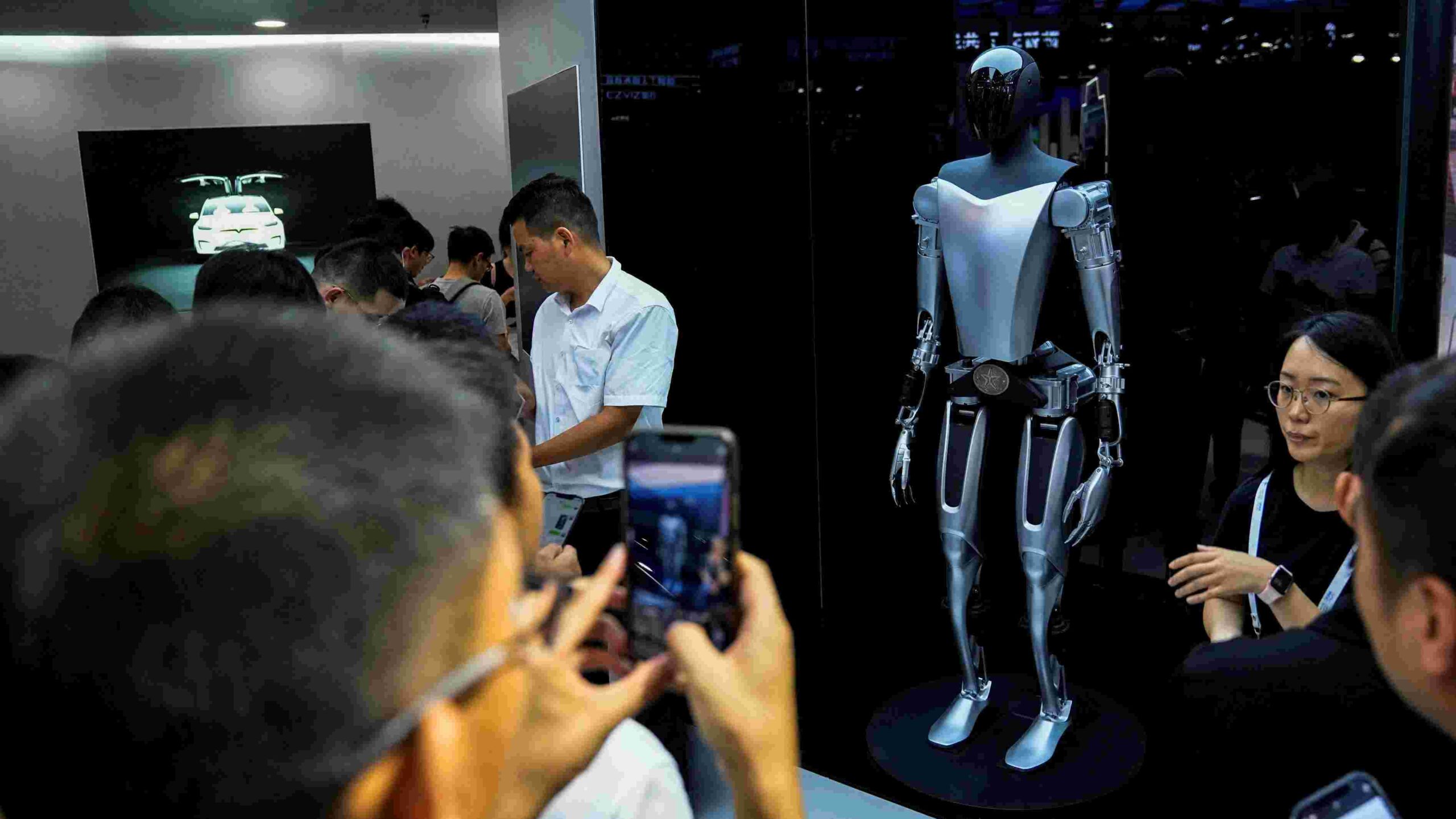
Elon Musk Announces 3 MAJOR Tesla AI Products Take Over ALL Industry 2026: Artificial Intelligence is often described as a technology that will fully mature in five to ten years. Many experts believe we are still early in the AI revolution. However, Elon Musk strongly disagrees. According to him, the future is not decades away—it is almost here.
Tesla is preparing to launch three fully autonomous, AI-powered products that could reshape labor, transportation, and global logistics as early as 2026. These products are not incremental upgrades. They represent a fundamental shift in how AI operates in the real world.
Tesla is no longer just an electric vehicle company. Its recent stock surge is not driven by car sales alone. Instead, investors are reacting to something much bigger: Tesla’s dominance in real-world AI deployment. Optimus, the Cyber Cab Robo Taxi, and the Tesla Semi together form a powerful AI ecosystem that could permanently alter how humans work and move.
This article breaks down each product, explains why they matter, and explores how Tesla’s AI strategy is different from every other company on Earth.
Tesla’s AI Vision: Beyond Cars and Screens
For years, AI lived mostly behind screens—chatbots, recommendation engines, and data analysis tools. Tesla’s vision is radically different. Elon Musk believes AI must enter the physical world, where it can see, move, manipulate objects, and make real-time decisions.
Tesla’s advantage comes from one key principle:
A single unified AI system trained on massive real-world data.
Instead of building narrow AI for one task, Tesla designs general-purpose intelligence capable of adapting to countless situations. This approach powers all three major products launching in 2026.
Product #1: Optimus – Tesla’s Humanoid Robot
The Biggest Product Tesla Has Ever Built
According to Elon Musk, Optimus is the most important product Tesla has ever created—bigger than cars, bigger than energy, and potentially bigger than smartphones.
Musk has stated that Optimus could one day sell billions of units, making it the most widely adopted consumer product in history.
Why Optimus Is Different from Any Robot Before It
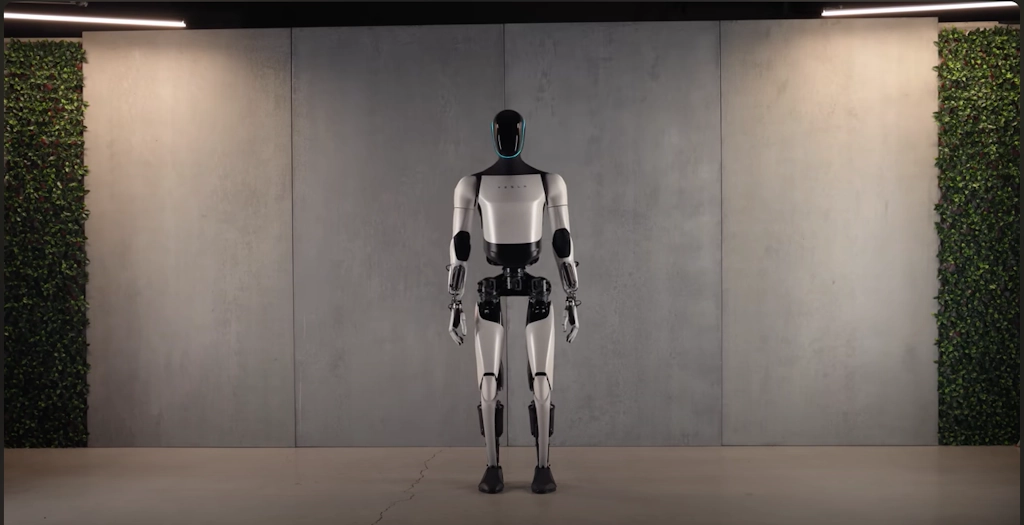
Optimus is not a factory robot, warehouse robot, or novelty machine. It is designed as a general-purpose humanoid robot, capable of performing roughly 80% of human jobs.
Key design features include:
- Human-like size: 5’10” tall, ~140 lbs
- Vision-based AI using 2D cameras (no LiDAR)
- Tesla-designed AI chip in the chest
- Unified neural network brain controlling vision, movement, and reasoning
Unlike traditional robots that rely on rigid programming, Optimus learns the way humans do.
How Optimus Learns: Watching, Understanding, Improving
Optimus is trained using the same AI foundation as Tesla’s Full Self-Driving system. Instead of step-by-step instructions, it learns through:
- Observation
- Trial and error
- Simulation
- Video-based learning
A remarkable feature is task extensibility. Optimus can learn new skills simply by watching videos, including regular how-to content. For example, it can watch a cleaning tutorial and understand:
- The goal of the task
- The required motion patterns
- The correct sequence of actions
With integration from large language models like Grok, Optimus doesn’t just follow commands—it understands context. Saying “I’m thirsty” could prompt the robot to fetch water without explicit instructions.
Two-Handed Coordination and Real-World Deployment
Recent demonstrations show Optimus using both hands simultaneously, a massive leap in robotic complexity. This requires:
- Real-time balance control
- Collision avoidance
- Precise multi-limb coordination
Optimus is already performing tasks such as:
- Cleaning and vacuuming
- Cooking and using appliances
- Sorting and assembling factory components
Tesla plans to deploy Optimus directly inside Gigafactories, where robots will help build other robots—a milestone known as machines building machines.
Optimus Production Timeline
- Optimus Version 3 launches in Q1 2026
- 10,000+ units targeted for initial production
- First true commercial-grade humanoid robot
Elon Musk has even suggested Optimus could make human labor optional, potentially redefining wealth and productivity in society.
Product #2: Cyber Cab Robo Taxi – Autonomous Transportation at Scale
A Robot on Wheels
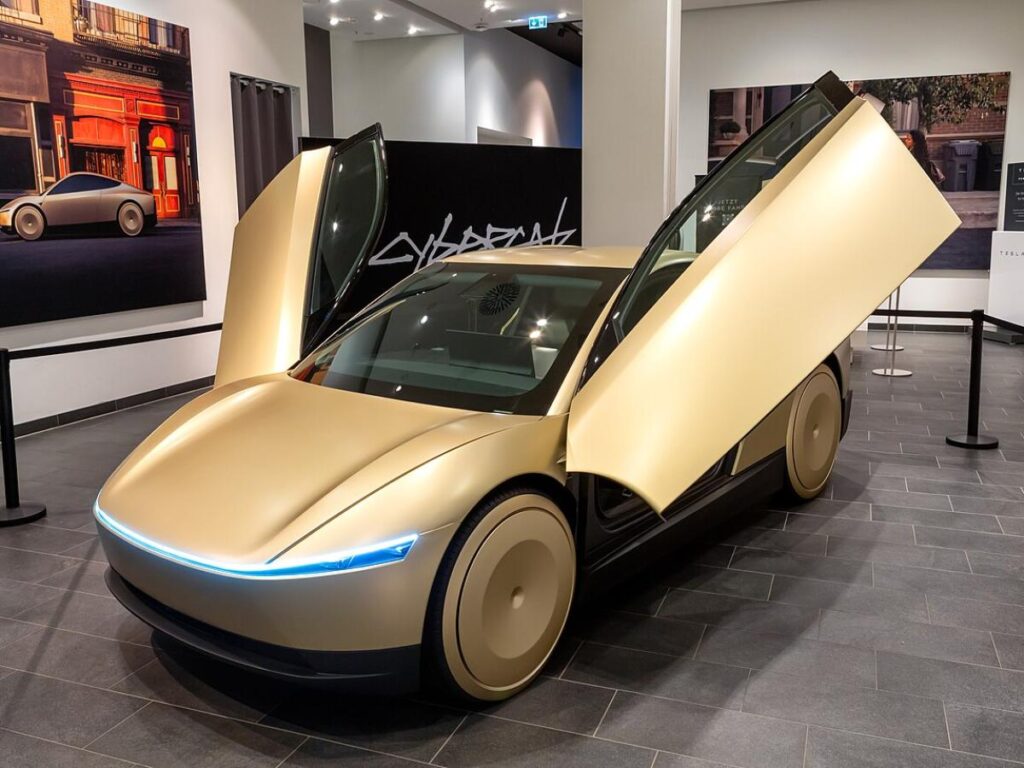
If Optimus is a robot with arms and legs, the Tesla Cyber Cab is a robot on wheels.
Tesla’s Robo Taxi is designed to operate completely without a driver, safety supervisor, or remote operator. Every decision—from steering to braking—is handled by AI.
This marks a major breakthrough. Most so-called self-driving systems still rely on humans for supervision. Tesla is actively removing that dependency.
Why Tesla’s Approach to Autonomy Is Unique
Unlike competitors that rely on:
- LiDAR sensors
- High-definition static maps
- Geofenced operating zones
Tesla uses:
- Vision-only AI
- Neural networks
- Billions of miles of real-world driving data
Every Tesla on the road contributes to AI training. Every mistake, near-miss, and unusual scenario becomes valuable data.
This creates a system that improves continuously, just like a human driver gaining experience over time.
Scalability: Tesla’s Secret Weapon
Most autonomous vehicle systems only work in tightly controlled areas. Tesla aims for the opposite:
A system that can drive anywhere a human can.
Because Tesla uses mass-produced vehicles, autonomy can scale rapidly. Not just the Cyber Cab, but potentially Model 3 and Model Y vehicles could operate as robo taxis.
Cyber Cab Production and Cost Targets
- Mass production begins: Q2 2026 (Giga Texas)
- Target price: Under $30,000
- Operating cost: ~$0.20 per mile
- No charging port: Uses wireless charging pads autonomously
Combined with Hardware 5 and FSD Version 14, Tesla believes Robo Taxi reliability has reached a tipping point.
Redefining Urban Transportation
Tesla’s goal is not just removing drivers. It wants AI that:
- Takes responsibility for road behavior
- Reduces accidents
- Optimizes traffic flow
- Improves city efficiency
This could fundamentally reshape urban transportation systems worldwide.
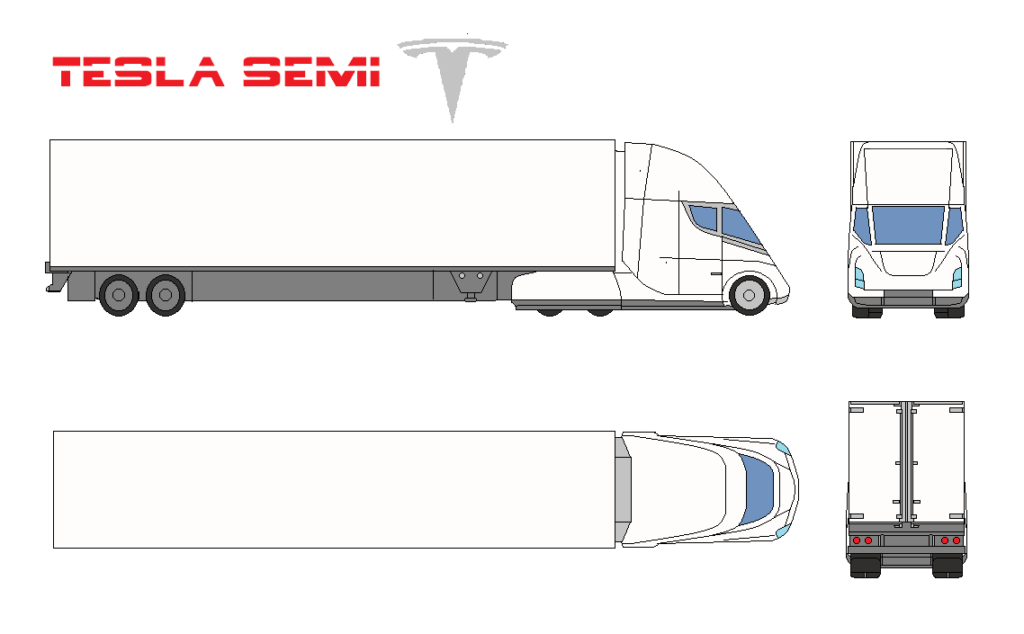
Product #3: Tesla Semi – AI at the Highest Possible Stakes
Why the Tesla Semi Matters More Than You Think
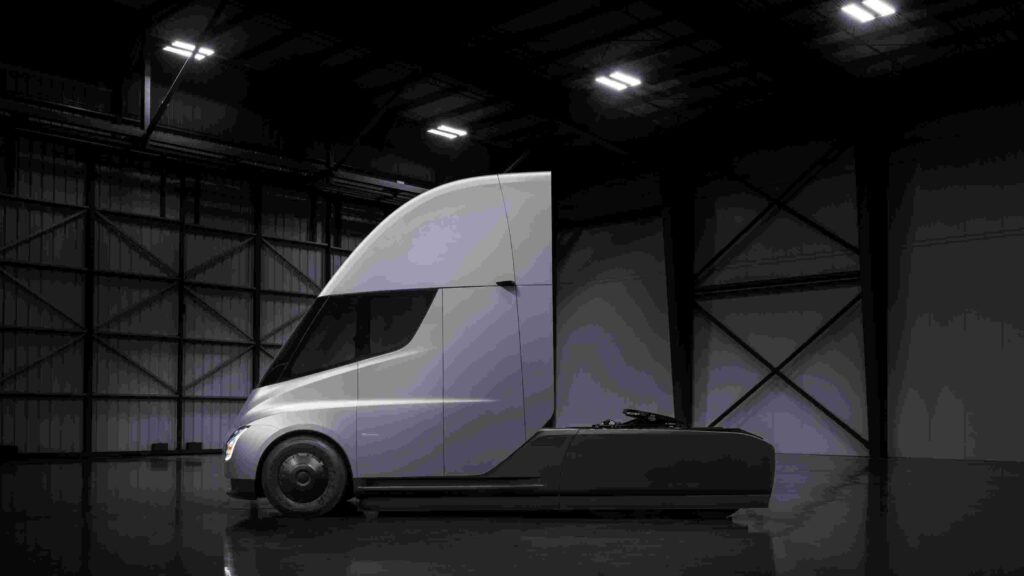
At first glance, a heavy-duty truck may not seem like an AI breakthrough. In reality, the Tesla Semi is one of the most demanding AI challenges imaginable.
Consider the variables:
- 80,000 lbs gross weight
- Long braking distances
- Continuous operation
- Highway-speed autonomy
Mistakes are no longer minor—they are measured in human lives.
Full Self-Driving Comes to Heavy Trucks
Elon Musk has confirmed that Full Self-Driving will be integrated into the Tesla Semi, with autonomous testing expected by the end of 2026.
New design elements, such as an additional camera above the front wheel arch, signal that the Semi is being optimized for autonomy.
Solving the Truck Driver Shortage
The trucking industry faces a severe crisis:
- More drivers are leaving than entering
- Long hours and fatigue increase accident risk
- Harsh working conditions deter new workers
Tesla’s AI-driven Semi doesn’t eliminate drivers—it transforms their role.
Instead of constant manual driving, drivers become:
- Technology supervisors
- Safety monitors
- Logistics coordinators
This reduces fatigue, improves safety, and keeps goods moving efficiently.
Challenges and Why Tesla Has the Advantage
Autonomous trucking must handle:
- Dense fog and poor visibility
- Construction zones with hand signals
- Complex vehicle dynamics
- Emergency maneuvers without jackknifing
Tesla’s edge lies in billions of miles of real-world data. Every Semi becomes a learning system, continuously improving through neural network training.
Once regulatory approval is achieved, the Tesla Semi could redefine global logistics.
Why 2026 Is a Defining Year for AI
Together, Optimus, Cyber Cab, and the Tesla Semi represent a unified vision:
- AI leaving screens and entering the physical world
- Robots working alongside humans
- Autonomous vehicles reshaping cities
- Self-driving trucks transforming supply chains
Tesla is not just launching products—it is building the foundation for a new industrial era.
Final Thoughts: A New Chapter for Humanity
Elon Musk’s vision is controversial, ambitious, and undeniably bold. These three AI-powered products challenge how we think about work, transportation, and productivity.
Whether you see this future as exciting or unsettling, one thing is clear:
Tesla is pushing AI further into real life than any company in history.
2026 may not just be a big year for Tesla—it may be the year AI truly changes how humanity operates at scale.
What do you think about Optimus, Robo Taxi, and the Tesla Semi?
The conversation is just beginning.
FAQs
1. What are the three major Tesla AI products launching in 2026?
Tesla plans to roll out three AI-driven products: Optimus (humanoid robot), Cyber Cab Robo Taxi, and the Tesla Semi with Full Self-Driving. Together, they represent Tesla’s push to bring AI into the physical world at scale.
2. Why is Tesla no longer considered just an electric car company?
Tesla’s recent growth is driven by its AI and autonomy advancements, not just vehicle sales. The company is positioning itself as a real-world AI leader, using the same neural networks across robots, cars, and trucks.
3. What makes Optimus different from other humanoid robots?
Optimus is a general-purpose humanoid robot, not designed for one specific task. It uses a single unified AI system, human-like vision, and real-world learning to perform up to 80% of human jobs.
4. Can Optimus really replace human jobs?
Elon Musk has stated that Optimus could make human labor optional for many tasks. While it may not replace all jobs, it could handle repetitive, dangerous, or time-consuming work, allowing humans to focus on higher-value activities.
5. How does Optimus learn new tasks?
Optimus learns by observing videos, simulations, and real-world demonstrations. It does not rely on rigid programming and can adapt quickly using task extensibility and large language models.
6. When will Optimus be available for commercial use?
Tesla expects to release Optimus Version 3 in Q1 2026, with around 10,000 units targeted for initial production as the first true commercial version.
7. What is the Tesla Cyber Cab Robo Taxi?
The Cyber Cab is a fully autonomous vehicle designed to operate without a driver or safety supervisor. All driving decisions are made by Tesla’s AI system using vision-based neural networks.
8. How is Tesla’s Robo Taxi different from competitors like Waymo?
Tesla relies on camera-based vision and real-world data, not LiDAR or pre-mapped routes. This allows Tesla’s system to scale globally rather than being limited to specific cities.
9. Will regular Tesla cars become robo taxis?
Potentially yes. Tesla’s approach allows vehicles like the Model 3 and Model Y to function as robo taxis, depending on software updates and regulatory approval.
10. How much will the Tesla Cyber Cab cost?
Tesla aims to price the Cyber Cab under $30,000, with operating costs estimated at around $0.20 per mile, making autonomous transport far more affordable.
11. How will the Cyber Cab recharge without human help?
The Cyber Cab will use wireless charging pads, allowing it to autonomously recharge without plugging in, enabling fully unattended operation.
12. What role does AI play in the Tesla Semi?
The Tesla Semi will integrate Full Self-Driving, making it one of the most advanced autonomous heavy-duty trucks ever built and a major testing ground for Tesla’s AI.
13. Why is autonomy important for the trucking industry?
The industry faces a severe driver shortage and high accident rates due to fatigue. Autonomous driving can reduce stress, improve safety, and keep logistics moving efficiently.
14. Will the Tesla Semi completely eliminate truck drivers?
No. Tesla’s vision is to elevate drivers into supervisory roles, allowing AI to handle long highway stretches while humans manage oversight and complex situations.
15. What are the biggest challenges facing autonomous Tesla Semi deployment?
Challenges include regulatory approval, complex vehicle dynamics, poor visibility conditions, and handling unpredictable edge cases like construction zones.
16. Why is 2026 such a critical year for Tesla and AI?
2026 marks the point where AI moves from theory to large-scale real-world deployment, with robots, robo taxis, and autonomous trucks operating together in a unified AI ecosystem.
Read More:
- SpaceX Revealed Starship Raptor 4 Totally Humiliated Blue Origin’s Upgraded BE-4
- Waymo scrutinized after self-driving taxis cause traffic jams during SF blackout
- Elon Musk Announces 2026 Tesla Optimus Bot Gen 3 Under $2,579
- Elon Musk’s Tesla Model 2 $14.990 Finally HERE! How He’s DESTROY the EV Market
- SpaceX Reveals Genius Solution To Reach The Moon in 2026! Can It Even Be Done?
- Delaware Supreme Court reinstates Elon Musk’s 2018 Tesla CEO pay package
1 thought on “Elon Musk Announces 3 MAJOR Tesla AI Products Take Over ALL Industry 2026! This Is Huge”