
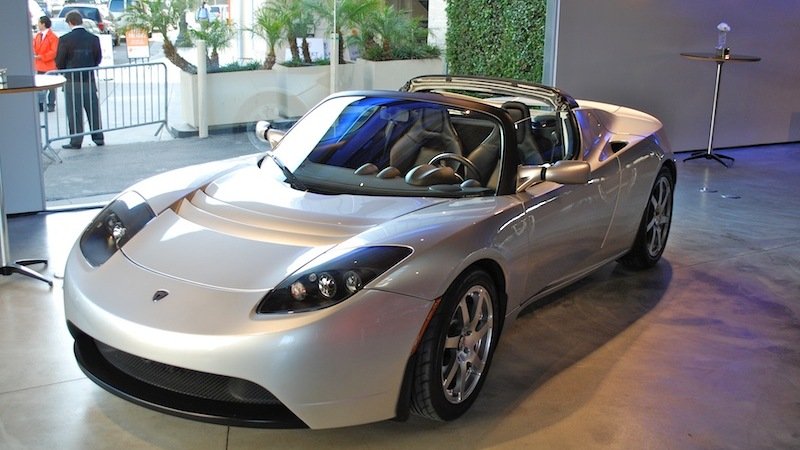
Elon Musk’s Next-Gen Motor Destroy Entire EV Industry: The electric vehicle (EV) industry is entering a new phase of innovation, where reducing manufacturing costs and improving supply chain stability are becoming just as important as increasing battery range and acceleration. One of the most significant engineering challenges involves rare earth elements, which are widely used in permanent magnet electric motors.
Tesla, led by Elon Musk, has explored different electric motor architectures to improve efficiency, reduce dependence on critical materials, and support large-scale vehicle production. The development of rare-earth-free electric motors could become an important step toward making electric vehicles more affordable and easier to manufacture worldwide.
If these technologies achieve the expected performance and cost targets, they could reshape competition across the global EV market. From affordable electric cars and robotaxis to high-volume manufacturing, next-generation motor technology has the potential to influence the future of transportation.
Why Rare Earth Elements Matter in Electric Motors
Modern electric vehicles rely on sophisticated powertrain systems that convert electrical energy into mechanical motion. Many high-performance EVs use Permanent Magnet Synchronous Motors (PMSMs) because they deliver strong torque, compact dimensions, and excellent efficiency.
These motors commonly use rare earth elements such as neodymium, while dysprosium and terbium may be added to improve magnetic performance under demanding operating conditions.
The Advantages of Permanent Magnet Motors
Rare earth magnets provide several important benefits:
- High magnetic strength: Powerful magnetic fields allow manufacturers to build compact motors.
- Excellent efficiency: Permanent magnets help reduce certain electrical losses during operation.
- Strong acceleration: High torque output supports responsive acceleration.
- Compact design: Smaller motors can help reduce drivetrain weight and packaging requirements.
Despite these advantages, permanent magnet motors introduce challenges involving material availability, pricing, and sourcing.
The Problem With Rare Earth Supply Chains
Rare earth materials are not necessarily scarce in the Earth’s crust, but economically viable mining, separation, and refining capacity is concentrated in particular regions.
China plays a major role in the global rare earth supply chain, making international trade policies and export restrictions important considerations for manufacturers.
Price volatility can also affect production budgets. If magnet materials become more expensive, automakers may face higher powertrain costs, particularly when manufacturing millions of vehicles.
Environmental concerns surrounding mining and refining create additional pressure to develop alternatives with lower material and processing impacts.
How Tesla’s Next-Generation Motor Technology Could Work
A rare-earth-free electric motor must deliver competitive performance without relying on powerful permanent magnets. One possible solution involves induction motors, synchronous reluctance motors, and hybrid motor architectures that combine different electromagnetic principles.
Tesla has used induction motors in some of its vehicles, demonstrating that permanent magnets are not essential for every electric drivetrain application. However, the exact architecture, production specifications, and cost targets of any future rare-earth-free drive unit should be distinguished from proposed engineering concepts.
Understanding Magnetic Reluctance
Magnetic reluctance describes the resistance a magnetic circuit presents to magnetic flux. In a synchronous reluctance motor, the rotor is engineered to guide magnetic flux along preferred paths, generating torque without permanent magnets.
Engineers can improve performance through carefully designed steel laminations, internal rotor barriers, optimized air gaps, and advanced electromagnetic simulations.
These improvements may help increase torque density and reduce energy losses. Nevertheless, matching the efficiency and compactness of permanent magnet motors across every operating condition remains a significant engineering challenge.
Advanced Windings and Silicon Carbide Inverters
Motor performance depends on more than rotor design. Stator windings, copper utilization, cooling systems, and power electronics all influence efficiency and durability.
Advanced hairpin windings can improve copper packing density, while optimized thermal management helps motors sustain demanding workloads.
Silicon carbide (SiC) inverters can also reduce switching losses in suitable power electronics applications. Combined with sophisticated software controls, these technologies could help manufacturers develop more efficient and cost-effective electric drivetrains.
Could Rare-Earth-Free Motors Reduce EV Manufacturing Costs?
One of the biggest potential benefits of rare-earth-free motor technology is its effect on production economics. If manufacturers eliminate expensive permanent magnets, they may reduce exposure to material price fluctuations and simplify sourcing.
Illustrative comparison based on the proposed strategy, not verified specifications of a production Tesla motor.
| Feature | Traditional Permanent Magnet Motor | Proposed Rare-Earth-Free Motor |
|---|---|---|
| Permanent magnets | Required | Not required |
| Rare earth materials | Often used | Potentially zero |
| Supply chain exposure | Includes magnet suppliers | Reduced rare earth exposure |
| Manufacturing materials | Copper, steel, magnets | Copper, steel, aluminum |
| Production cost | Depends on design and volume | Potential savings require validation |
| Efficiency | Generally strong | Depends on motor architecture |
Supporting Affordable Electric Cars
Lower drivetrain costs could help manufacturers develop more affordable electric vehicles. This matters because the final purchase price remains an important consideration for consumers comparing electric cars with conventional vehicles.
If Tesla reduces motor material costs, simplifies assembly, and improves manufacturing throughput, those savings could potentially support lower vehicle prices or stronger production margins.
Some proposed scenarios suggest substantial savings, including a potential 65% reduction in motor costs and a 50% reduction in manufacturing footprint. However, these figures should be treated as projections rather than confirmed Tesla production results unless supported by official technical disclosures.
Scaling Robotaxis and High-Volume Production
Future autonomous vehicle fleets could require large numbers of electric drive units. A simplified motor design using widely available materials could help manufacturers reduce supply risks as production volumes increase.
The same principles could apply to robotaxis, commercial vehicles, delivery fleets, and industrial robotics. However, each application has different requirements for torque, operating hours, thermal performance, and maintenance.
Why Global Rare Earth Supply Chains Matter
Rare earth supply chains have become an important consideration for manufacturers across the automotive, electronics, energy, and defense industries.
According to the International Energy Agency, China accounted for approximately 60% of global mined production of magnet rare earths and 91% of refined output in 2024. China also represented approximately 94% of global permanent magnet production that year.
IEA
+1
These figures demonstrate why manufacturers are exploring alternatives and additional suppliers.
Reducing Exposure to Trade Disruptions
Export restrictions, geopolitical tensions, shipping problems, and sudden price increases can disrupt the availability of specialized components.
A motor that does not require rare earth magnets could reduce one particular vulnerability. Manufacturers would still need reliable access to copper, electrical steel, aluminum, semiconductors, and other materials, but they could diversify their sourcing strategies.
Environmental Considerations
Rare earth mining and processing can generate substantial waste and environmental challenges when operations are poorly managed. Eliminating rare earth magnets could reduce exposure to some of these impacts.
However, a genuinely sustainable electric motor must be evaluated across its entire lifecycle, including electricity consumption, metal production, manufacturing emissions, durability, and recycling.
Rare-earth-free does not automatically mean zero environmental impact. The overall benefits depend on the complete production process and the motor’s real-world efficiency.
How the EV Industry Could Respond
Tesla’s approach to powertrain engineering illustrates a wider trend: automakers are looking for ways to reduce component costs while making production more resilient.
Challenges for Traditional Automakers
Manufacturers using permanent magnet motors may need to evaluate alternative architectures, improve magnet sourcing, or invest in recycling technologies.
Companies including Bosch, ZF, and Nidec operate in the broader automotive powertrain and motor supply industries, where efficiency, cost, and material availability remain important engineering priorities.
If rare-earth-free motors become competitive at scale, suppliers may face greater pressure to offer different motor designs and manufacturing processes.
Performance Must Still Come First
Removing rare earth elements is only valuable if the resulting motor meets the vehicle’s requirements.
Manufacturers must assess efficiency, acceleration, sustained power, reliability, noise, vibration, thermal management, and manufacturing cost. A motor that costs less to build but consumes substantially more energy may not deliver the expected overall savings.
This is why testing under real-world driving conditions and independent performance validation will remain essential.
The Future of Rare-Earth-Free Electric Motors
The future of electric mobility will depend on more than batteries and charging networks. Electric motor innovation, manufacturing automation, power electronics, and material efficiency will also shape the industry’s development.
For Tesla, rare-earth-free motor technology represents a potential opportunity to reduce supply chain risks and expand manufacturing flexibility. For the wider EV industry, it highlights the importance of engineering alternatives to components that depend on concentrated global supply chains.
However, claims about specific cost reductions, factory footprint improvements, or future production volumes require confirmation through official announcements and independently verifiable data.
Conclusion
Elon Musk’s next-generation motor strategy highlights an important challenge facing the electric vehicle industry: how to manufacture efficient, affordable vehicles without becoming overly dependent on specialized raw materials.
Rare-earth-free motors could provide manufacturers with greater sourcing flexibility, reduced exposure to magnet price volatility, and new opportunities for scalable production. Combined with advanced power electronics and optimized manufacturing, these designs may help lower the cost of electric transportation.
The ultimate impact will depend on real-world performance, production economics, durability, and commercial adoption. If manufacturers can achieve competitive efficiency and reliability without permanent magnets, the technology could become an important part of the next phase of EV development.
FAQs
1. What is Tesla’s rare-earth-free motor strategy?
Tesla’s strategy involves developing electric motors without rare earth permanent magnets, potentially reducing material costs and supply-chain dependence.
2. Why are rare earth elements used in EV motors?
Rare earth elements such as neodymium provide powerful magnetic fields that help motors achieve strong torque, efficiency, and compact dimensions.
3. What are the benefits of eliminating rare earth materials?
A rare-earth-free motor could reduce exposure to material price volatility, concentrated supply chains, and some environmental challenges associated with mining and refining.
4. How can an electric motor work without permanent magnets?
Potential approaches include induction motors and synchronous reluctance motors, which generate torque through electromagnetic fields and specially engineered rotor designs.
5. What is magnetic reluctance?
Magnetic reluctance is the resistance a magnetic circuit presents to magnetic flux. Synchronous reluctance motors use carefully designed rotor paths to generate torque without permanent magnets.
6. Could a rare-earth-free motor reduce Tesla’s production costs?
Potentially. Eliminating permanent magnets could reduce certain material and sourcing costs, although actual savings depend on the final motor design and production scale.
7. Could Tesla’s motor strategy make EVs more affordable?
Lower drivetrain costs could potentially support more affordable electric vehicles or improve manufacturing economics, depending on how much savings are achieved.
8. What is the proposed reduction in motor manufacturing costs?
The source discusses a potential 65% reduction in motor costs, but this figure is presented as a projection rather than a confirmed production specification.
9. Could rare-earth-free motors improve Tesla’s supply chain?
Yes, they could reduce dependence on rare-earth mining and permanent-magnet suppliers, while still requiring reliable supplies of copper, steel, aluminum, semiconductors, and other materials.
10. What role do silicon carbide inverters play?
Silicon carbide (SiC) inverters can reduce switching losses in suitable power-electronics applications and work with advanced software controls to improve drivetrain efficiency.
11. Could rare-earth-free motors be used in robotaxis?
Potentially. Robotaxis and other high-volume fleets could benefit from scalable drive units, although each application still requires appropriate torque, thermal performance, reliability, and durability.
12. Why is China important to the rare earth industry?
China plays a major role in the global rare earth supply chain, including mining, refining, and permanent-magnet production, making supply diversification an important consideration for automakers.
13. Does eliminating rare earth elements make an electric motor completely sustainable?
No. Rare-earth-free does not automatically mean zero environmental impact. The complete lifecycle—including mining, manufacturing, electricity consumption, durability, and recycling—must be considered.
14. Will other automakers develop rare-earth-free motors?
The source identifies induction and synchronous reluctance technologies as alternative architectures that manufacturers can explore as they seek greater material and supply-chain flexibility.
15. Could rare-earth-free motors transform the EV industry?
They could become an important part of future EV development if manufacturers achieve competitive efficiency, power, reliability, cost, and production scalability without permanent rare-earth magnets.
Read More:
- Elon Musk’s AI Grok Bot can now handle banking while your Tesla FSD handles the road
- Tesla has a ‘no human contact’ approach for Semi production
- Tesla Cybercab fleet doubles to well over 100 units
- SpaceX turned a heralding moment for Starship into its greatest moment
- Elon Musk revealed Starship’s Full REUSE Plan in Months…But the First Ship Catching?