
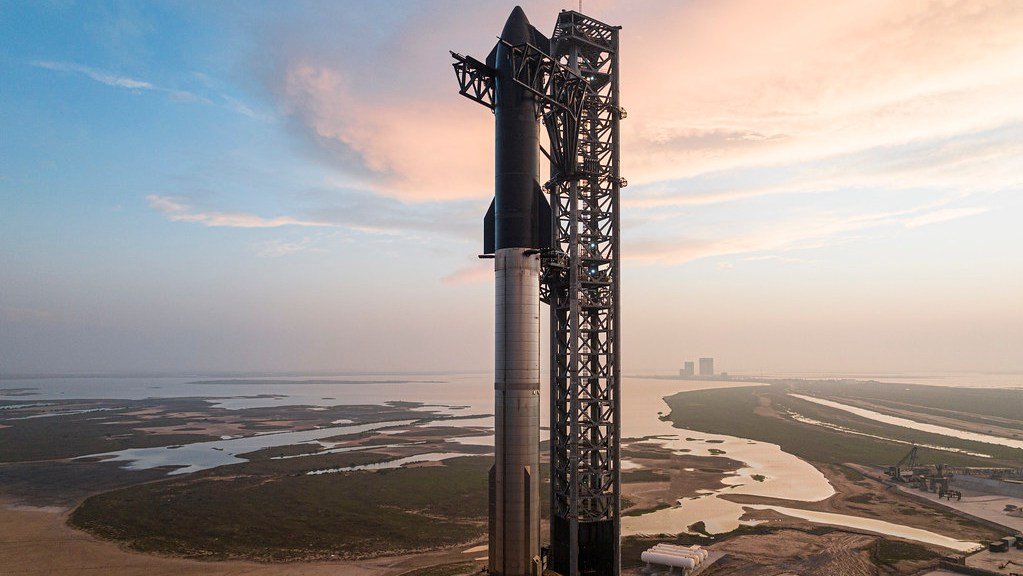
SpaceX’s Starship program has reached an important regulatory milestone that could reshape the company’s approach to future orbital test flights. The Federal Aviation Administration (FAA) has updated its environmental and airspace documentation to support new Starship landing trajectories, creating a formal pathway for vehicles to return toward Starbase in Boca Chica, Texas.
The development is significant because SpaceX has been working toward a future in which both stages of its massive launch system can be rapidly reused. Instead of relying primarily on ocean splashdowns or expendable flight profiles, the updated framework could provide SpaceX with greater flexibility to guide returning Starship vehicles toward its launch and catch infrastructure.
FAA Approval Opens the Door for New Starship Return Trajectories
The latest FAA documentation includes a Tiered Environmental Assessment and a Finding of No Significant Impact (FONSI). Together, these regulatory actions address potential re-entry and contingency operations associated with Starship missions.
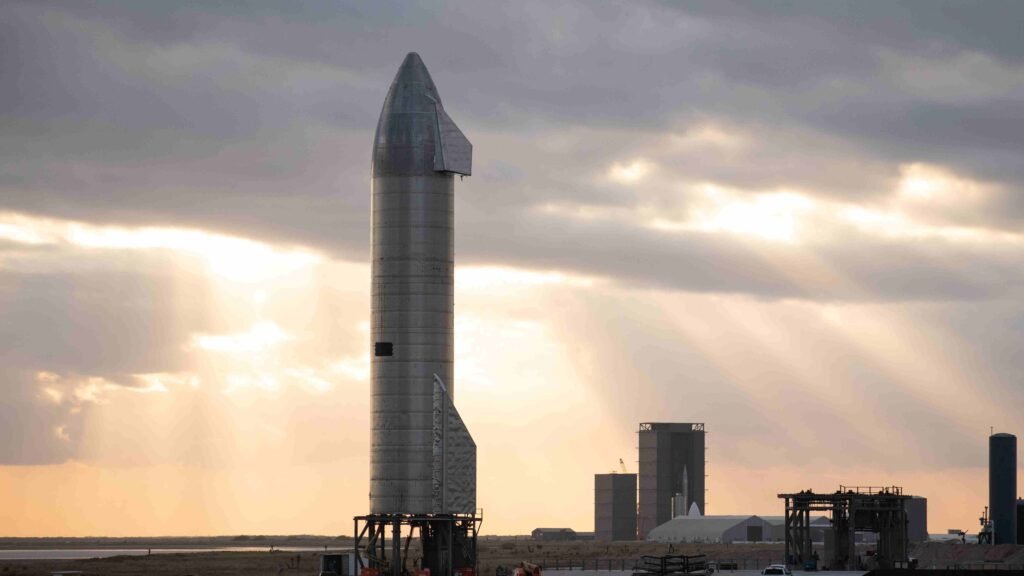
One of the most important aspects is the expansion of potential Pacific Ocean flight corridors. These corridors give SpaceX additional options when managing Starship’s trajectory before a controlled re-entry.
The updated framework covers areas including the Hawaii region, Central Pacific, Southeast Pacific, and Northeast Pacific. Expanding these areas can provide mission controllers with additional room to manage orbital mechanics and prepare a vehicle for its return toward Texas.
Expanded Pacific Recovery Corridors
A broader recovery zone can be particularly useful for future Starship missions because orbital re-entry requires precise timing, navigation, and energy management.
Under the updated framework, a potential mission could follow a sequence similar to:
Starbase Launch → Orbital Insertion → Mission Profile → Pacific Re-Entry → Return Corridor → Boca Chica → Mechazilla Catch Attempt
If conditions are not suitable for a land-based return, the mission could instead transition toward a designated Pacific Ocean splashdown.
This approach provides SpaceX with a degree of operational redundancy while it continues developing its ambitious Starship catch-and-reuse architecture.
Temporary Airspace Closures and Risk Management
The FAA framework also addresses temporary airspace restrictions associated with re-entry operations. Such closures are essential when a spacecraft travels through controlled airspace during a planned return trajectory.
Another important feature is redundant risk mitigation. If telemetry reveals unexpected vehicle behavior, thermal protection problems, or instability during re-entry, a designated ocean area can serve as an alternative target.
This layered approach could become increasingly important as SpaceX moves from experimental flights toward more repeatable Starship operations.
Starbase Production Continues at High Speed
Regulatory progress is only one part of SpaceX’s broader Starship development campaign. At Starbase in Boca Chica, manufacturing, stacking, testing, and vehicle integration continue simultaneously.
The production system is designed around a continuous cycle in which new vehicles are assembled while earlier vehicles undergo testing and launch preparation.
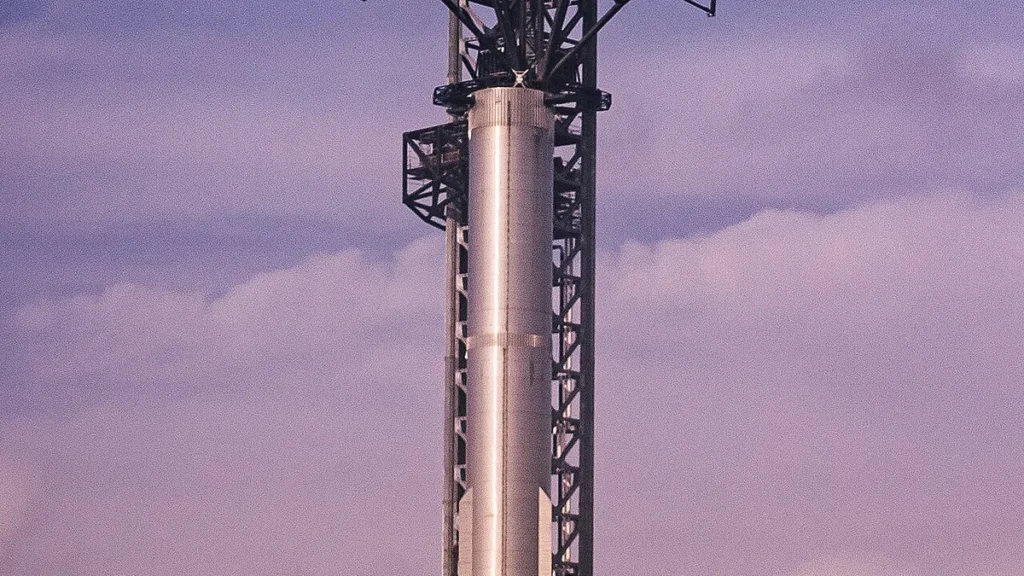
Booster 22 and Ship 42 Milestones
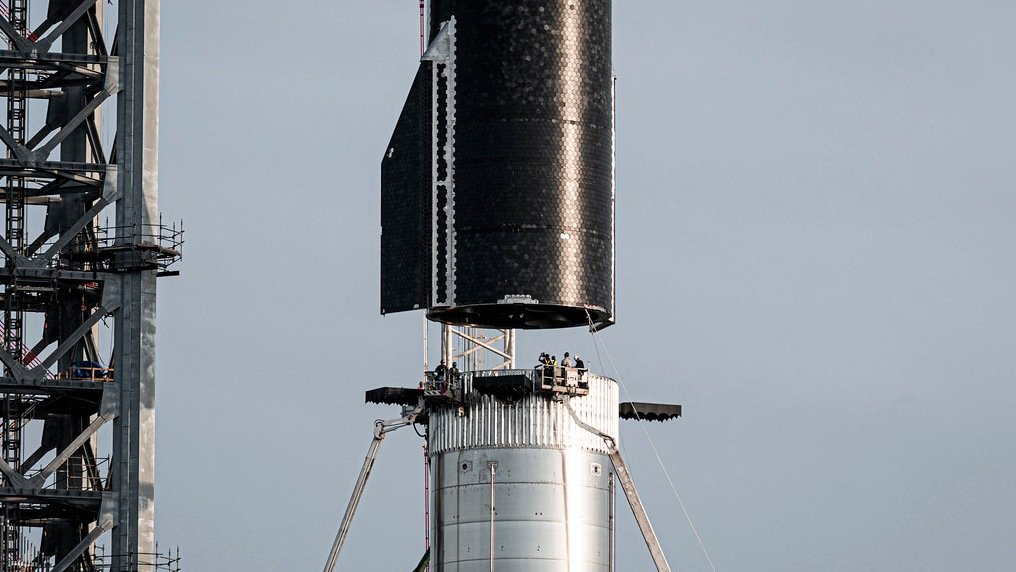
Booster 22 has reached an important assembly stage, while Ship 42 is progressing through thermal protection system inspections and testing preparations.
Ship 42’s TPS tile checks are particularly important because Starship must withstand extreme temperatures during atmospheric re-entry. Following inspection work, the spacecraft can move toward additional cryogenic and structural testing.
At the same time, production teams can begin work on the hardware required for subsequent missions.
Booster 23 and Ship 43 Enter the Pipeline
As testing continues on the current flight hardware, Booster 23 and Ship 43 are moving through assembly operations.
This staggered approach allows SpaceX to maintain a steady manufacturing pipeline instead of waiting for one vehicle to complete its entire flight cycle before beginning the next.
The broader objective is a high-cadence launch system in which manufacturing, testing, launch operations, and recovery become increasingly synchronized.
Static Fire and Flight 15 Preparation
Booster 22 and Ship 42 are expected to progress toward static-fire testing, a major step before a potential flight campaign.
Static-fire tests allow engineers to evaluate propulsion systems and vehicle performance while the spacecraft remains secured to ground infrastructure.
The hardware could ultimately support Flight 15, providing another opportunity to gather data on Starship’s increasingly complex flight and recovery objectives.
NASA and SpaceX Crew-13 Mission Faces Temporary Delay
While Starship development continues at Boca Chica, another SpaceX operation has encountered a technical delay.
The planned NASA-SpaceX Crew-13 mission to the International Space Station was paused following pre-launch diagnostics involving the Dragon spacecraft.
Engineers reportedly identified an oxidizer leak within the Dragon reaction control system (RCS) during propulsion-system checks. NASA and SpaceX subsequently began technical reviews to identify the source, address affected components, and verify the spacecraft before another launch attempt.
Crewed missions require extremely strict safety standards, meaning even relatively small propulsion-system anomalies must be thoroughly investigated before launch.
Crew-13 Mission Objectives
Crew-13 is designed to support the International Space Station, with its crew expected to conduct science activities, station maintenance, and other orbital operations during an extended expedition.
The mission highlights another important part of SpaceX’s role in modern human spaceflight: while Starship represents the company’s next-generation heavy-lift architecture, Dragon remains a critical operational spacecraft for crew transportation to low Earth orbit.
China’s Pallas-1 Adds to the Reusability Race
The global push toward reusable launch systems is not limited to SpaceX.
Chinese commercial launch company Galactic Energy has also advanced its reusable rocket ambitions with the maiden flight of Pallas-1 from the Jiuquan Satellite Launch Center.
Pallas-1 is a medium-lift launch vehicle designed for missions to Low Earth Orbit (LEO). Its first flight successfully delivered its test payload to the targeted orbital destination.
Pallas-1 Reusable Rocket Technology
Although the inaugural mission used an expendable configuration, the vehicle’s first stage has been designed with future recovery operations in mind.
Key planned features include:
- Height: Approximately 52 meters
- LEO payload capacity: About 7,000 kilograms
- Recovery technology: Grid fins and deployable landing legs
- Target first-stage lifespan: Approximately 25 reuses
- First recovery attempt: Targeted for the second half of 2027
If Galactic Energy successfully demonstrates propulsive first-stage recovery, Pallas-1 could become another important entrant in the growing commercial reusable rocket market.
What the FAA Update Means for Starship’s Future
The FAA’s updated environmental framework represents more than a paperwork milestone. It provides regulatory flexibility for SpaceX to explore increasingly sophisticated Starship return profiles.
The ability to plan a trajectory that can potentially bring a Starship vehicle back toward Starbase is especially important for SpaceX’s long-term goal of creating a fully reusable transportation system.
A successful return to Texas could eventually reduce dependence on ocean recovery operations and enable faster turnaround between flights. Combined with rapid vehicle manufacturing at Starbase, this could help SpaceX move closer to its vision of frequent and reusable orbital launches.
At the same time, the program remains highly experimental. Each flight must demonstrate that Starship can safely manage propulsion, thermal protection, guidance, re-entry, and landing operations.
Conclusion
The latest FAA Starship update gives SpaceX additional regulatory pathways for future Pacific re-entry and potential returns toward Starbase, Texas. Expanded airspace corridors, contingency splashdown zones, and temporary flight restrictions provide the operational framework needed for increasingly ambitious Starship missions.
Meanwhile, Booster 22, Ship 42, Booster 23, and Ship 43 represent the next wave of hardware moving through SpaceX’s production and testing pipeline. As the company continues refining its launch-and-catch strategy, the ultimate objective remains clear: make Starship rapidly reusable and dramatically increase launch frequency.
With NASA’s crewed operations continuing alongside Starship development and companies such as Galactic Energy pursuing their own reusable rockets, the global launch industry is entering an increasingly competitive era.
The next major milestone could come when Starship moves beyond experimental recovery profiles and demonstrates a reliable path from launch to orbital mission, re-entry, landing, and eventual reuse. If that happens, the FAA’s latest regulatory changes could prove to be an important step toward making full Starship reusability a practical reality.
FAQs
1. What is the latest FAA update on SpaceX Starship?
The FAA has updated its environmental and airspace documentation to provide additional pathways for future Starship re-entry trajectories, including potential return routes toward Starbase in Boca Chica, Texas.
2. Can SpaceX Starship return directly to Starbase?
The updated regulatory framework provides a pathway for SpaceX to plan Pacific re-entry trajectories toward Starbase. A successful return would support the company’s long-term goal of recovering and reusing Starship vehicles.
3. What is the new Starship landing trajectory?
The potential trajectory would allow Starship to re-enter over the Pacific Ocean and follow a designated return corridor toward Boca Chica, Texas, where SpaceX could attempt a controlled landing or catch operation.
4. What is the purpose of the FAA environmental assessment?
The FAA’s environmental assessment evaluates the potential environmental and operational effects of proposed Starship activities. Its associated Finding of No Significant Impact (FONSI) helps establish the regulatory framework for the updated operations.
5. Which Pacific regions are covered by the expanded Starship corridors?
The updated framework addresses potential flight corridors involving the Hawaii, Central Pacific, Southeast Pacific, and Northeast Pacific regions, giving mission planners additional flexibility during Starship operations.
6. Why does SpaceX need temporary airspace closures for Starship?
Temporary airspace closures help protect aircraft and people during high-risk launch and re-entry operations. They create controlled areas where normal aviation activity can be restricted while Starship passes through the region.
7. What happens if Starship cannot return to Starbase?
A designated Pacific Ocean splashdown area can provide a contingency option if Starship experiences an issue during re-entry or cannot safely complete its planned return trajectory.
8. What is Starbase?
Starbase is SpaceX’s major Starship development, manufacturing, testing, and launch complex near Boca Chica in South Texas. It is central to the company’s plans for developing a rapidly reusable launch system.
9. What are Booster 22 and Ship 42?
Booster 22 and Ship 42 are Starship flight hardware being prepared through SpaceX’s manufacturing and testing pipeline. Their development is part of the company’s ongoing effort to produce increasingly capable Starship vehicles.
10. What is the purpose of a Starship static-fire test?
A static-fire test allows SpaceX engineers to test a vehicle’s engines and propulsion systems while the vehicle remains secured to ground infrastructure. It provides important performance data before an actual flight.
11. What could Flight 15 mean for Starship?
Flight 15 could provide another important opportunity for SpaceX to test Starship systems and gather data on flight, re-entry, and recovery operations as the company works toward more advanced reusable mission profiles.
12. What happened to the NASA-SpaceX Crew-13 launch?
The Crew-13 mission experienced a temporary delay after engineers identified an oxidizer leak during propulsion-system checks on the Dragon spacecraft. NASA and SpaceX began technical reviews and corrective work before rescheduling the mission.
13. Why is the Dragon spacecraft important to SpaceX?
The Dragon spacecraft remains an important part of SpaceX’s human-spaceflight operations, transporting astronauts to and from the International Space Station while Starship continues its development as a next-generation heavy-lift system.
14. What is China’s Pallas-1 rocket?
Pallas-1 is a reusable-architecture launch vehicle developed by Chinese commercial aerospace company Galactic Energy. The rocket is designed for medium-lift missions and includes provisions for future first-stage recovery.
15. How does Pallas-1 compare with SpaceX Starship?
Pallas-1 and Starship both pursue rocket reusability, but they belong to very different vehicle classes. Starship is designed as a much larger, fully reusable heavy-lift system, while Pallas-1 is intended for medium-lift orbital missions.
16. Why is rocket reusability important for the future of spaceflight?
Rocket reusability can potentially reduce launch costs, shorten turnaround times, and increase launch frequency. SpaceX, along with emerging international competitors, is investing heavily in reusable technology to make orbital access more efficient.
Read More:
- The Tesla Cybercab Takeover Has Finally Begun
- Tesla Cybercab sightings broaden well outside of Austin with autonomy in focus
- Tesla Robotaxi riders will face the best dilemma when booking a ride
- NEW Tesla Cell Phone ( Pi Phone ): Starlink Direct-to-Cell, Grok AI & No Towers
- Tesla 100GW Solar Factory First Look SHOCKING The World