
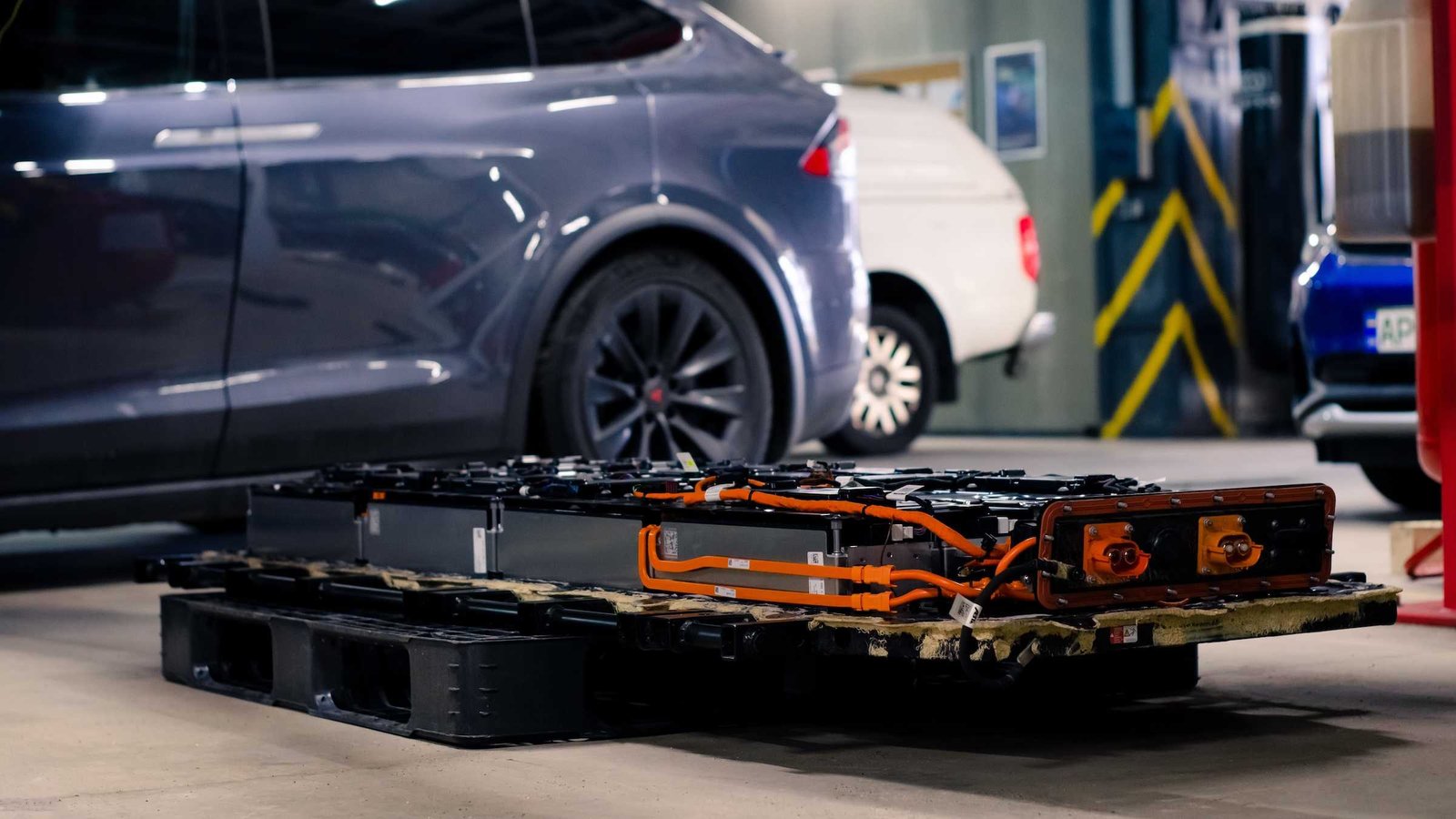
New CATL 2000 Mile Range Battery & $63/kWh Change Everything: The electric vehicle (EV) market is entering a potentially transformative phase as battery technology advances on two critical fronts: range and cost. For more than a decade, EV adoption has faced three major barriers—range anxiety, vehicle weight, and high upfront prices.
Now, CATL (Contemporary Amperex Technology Co., Limited), one of the world’s largest battery manufacturers, is pursuing a strategy designed to address these challenges simultaneously. Its work spans futuristic Lithium-Air battery technology, which could theoretically enable extremely high energy density, and affordable LFP battery cells targeting prices around $63 per kWh.
If these developments continue to mature, they could significantly reshape the economics and engineering of electric vehicles.
The 2,000-Mile EV Battery Vision
The idea of an EV traveling 2,000 miles (more than 3,200 km) on a single charge sounds almost impossible by today’s standards. Most modern electric cars are nowhere near that range.
The fundamental problem is straightforward: increasing EV range generally requires a larger battery pack. But larger batteries add weight, and heavier vehicles require stronger chassis components, suspension systems, and tires. They also consume more energy.
This creates a difficult cycle:
More range → larger battery → more weight → higher energy consumption → higher cost.
A dramatic improvement in battery energy density could break this cycle.
Instead of installing hundreds of additional kilograms of batteries, automakers could potentially store substantially more energy within a similar physical and weight envelope.
Why Lithium-Air Batteries Are Different
Today’s lithium-ion batteries contain most of the materials needed for their electrochemical reactions inside the battery cell. These include cathode materials, graphite, electrolytes, separators, and other components.
A Lithium-Air (Li-Air) battery takes a fundamentally different approach. It uses a lithium-metal anode and draws oxygen from the surrounding atmosphere as the cathode reactant.
Because oxygen does not have to be stored entirely inside the battery, the theoretical weight of the electrochemical system can be dramatically reduced.
That creates an extraordinary theoretical energy-density ceiling.
Battery Energy Density: How Far Could It Go?
Different battery technologies have very different theoretical and practical energy-density limits.
- Current automotive lithium-ion: approximately 250–300 Wh/kg
- Target solid-state designs: approximately 400–600 Wh/kg
- Advanced laboratory prototypes: around 1,200 Wh/kg
- Theoretical Lithium-Air limit: potentially around 12,000 Wh/kg
- Gasoline: approximately 13,000 Wh/kg of chemical energy
These numbers need an important qualification. Theoretical cell energy density is not the same as usable vehicle-pack energy density. Real batteries also require packaging, cooling systems, electronics, structural components, safety systems, and other hardware.
Nevertheless, the potential difference is enormous.
A practical battery capable of reaching even 1,000–1,200 Wh/kg while maintaining acceptable durability would represent a major improvement over today’s automotive lithium-ion technology.
The Real-World Problems With Lithium-Air
The enormous theoretical potential of Lithium-Air technology does not mean that a 2,000-mile EV battery is ready for mass production.
In fact, several major engineering challenges remain.
Air Contamination and Chemical Reactions
The atmosphere is not pure oxygen. It contains moisture, carbon dioxide, nitrogen, and other contaminants.
When these substances interact with a Lithium-Air battery, unwanted chemical reactions can occur. One major concern is the formation of lithium carbonate, which can damage electrode surfaces and reduce battery performance.
A practical Lithium-Air system therefore needs sophisticated approaches to managing air intake and unwanted reactions.
Efficiency Challenges
Conventional lithium-ion batteries can achieve roughly 90% round-trip efficiency under appropriate conditions.
Early Lithium-Air systems have generally struggled to match that performance, with reported efficiency varying significantly depending on the chemistry and experimental design.
Low efficiency means more energy is lost as heat during charging and discharging, making the technology less attractive for everyday vehicles.
Cycle Life and Durability
EV batteries need to survive thousands of charging cycles while retaining a useful percentage of their original capacity.
Early Lithium-Air prototypes have faced serious degradation problems. Improving cycle life, stability, charging efficiency, and resistance to environmental contaminants will be essential before the technology can become commercially viable.
Research Is Moving Lithium-Air Forward
Despite these obstacles, research institutions are making measurable progress.
In 2024, researchers associated with the University of Illinois Chicago, Argonne National Laboratory, and California State University, Northridge reported operating a Lithium-Air cell for more than 700 cycles under room-temperature conditions.
In 2025, researchers from Argonne National Laboratory and the Illinois Institute of Technology demonstrated a prototype with energy density of approximately 1,200 Wh/kg and a reported lifespan of roughly 1,000 cycles at room temperature.
These results do not mean that a 2,000-mile production EV is imminent. Instead, they demonstrate that the underlying chemistry is moving beyond purely theoretical discussion.
A commercial cell delivering 1,000–1,200 Wh/kg with long cycle life could fundamentally change the design of electric vehicles.
CATL’s $63/kWh LFP Strategy
While Lithium-Air represents the long-term technological frontier, CATL is also targeting a much more immediate problem: battery cost.
The company has been expanding direct business-to-business purchasing channels for industrial battery cells in China. This approach can reduce reliance on distributors and potentially lower costs for commercial buyers.
One important product category is 314 Ah Lithium Iron Phosphate (LFP) cells, with pricing reported at approximately $63/kWh.
What Does $63/kWh Mean for EV Batteries?
Consider a hypothetical 100 kWh battery pack.
At a cell price of $63/kWh:
100 kWh × $63 = $6,300
That is the approximate cell-level cost represented by the quoted price, before adding pack components, manufacturing, thermal management, electronics, logistics, labor, and other expenses.
It therefore should not be interpreted as the final retail cost of a complete EV battery pack.
Nevertheless, continued reductions in cell prices could have a substantial impact on the overall cost of electric vehicles.
Long Battery Life Adds More Value
CATL’s LFP cells are also associated with a claimed cycle life of around 8,000 cycles before capacity falls to approximately 70%.
At one full cycle per day, 8,000 cycles theoretically corresponds to more than 20 years of operation.
Actual vehicle battery life depends on temperature, charging behavior, depth of discharge, battery management, and other factors. Even so, long cycle life makes LFP chemistry particularly attractive for applications where durability and cost are more important than maximum energy density.
CATL’s Bigger Sustainability Strategy
Battery sustainability is not limited to eliminating tailpipe emissions.
The production of batteries also involves mining, refining, chemical processing, manufacturing, and transportation. These activities can contribute significantly to a battery’s overall carbon footprint.
This makes the battery supply chain an increasingly important part of EV sustainability.
Carbon-Neutral Battery Manufacturing
CATL has reported that all 20 of its operating battery manufacturing facilities achieved carbon neutrality under ISO standards beginning in 2023.
The company has also reported using more than 18 billion kWh of carbon-free electricity and reducing energy consumption per unit by 28% compared with its 2022 baseline.
However, factory emissions represent only part of the picture.
More than 80% of battery lifecycle emissions can originate upstream, depending on the battery chemistry, sourcing, energy mix, and methodology used for lifecycle accounting.
Tracking the Supply Chain
CATL has reported developing more than 1,000 product carbon-footprint models covering raw materials and production processes.
It has also collected primary carbon data from more than 100 Tier-1 suppliers.
Under its reported 2027 sustainability requirements, new suppliers are expected to provide verified product carbon-footprint data while meeting requirements related to renewable energy and energy efficiency.
This could make supply-chain carbon accounting an increasingly important requirement for battery manufacturers and their suppliers.
The Three-Front Battery Revolution
CATL’s strategy can be understood as a three-part approach to the future of electric mobility.
1. Increase Energy Density
Research into technologies such as Lithium-Air batteries could eventually push energy density far beyond today’s lithium-ion systems.
2. Reduce Battery Costs
Scaling LFP battery production and targeting prices around $63/kWh could make EVs and energy-storage systems more affordable.
3. Reduce Lifecycle Emissions
Carbon-neutral manufacturing and greater supply-chain transparency could reduce the environmental impact associated with battery production.
Together, these three developments address the biggest questions surrounding EV adoption: How far can an EV travel? How much will it cost? And how sustainable is the battery?
What the Future of EV Batteries Could Look Like
The most important takeaway is that the 2,000-mile battery and the $63/kWh battery cell represent very different stages of technological development.
The $63/kWh LFP strategy is focused on the commercial present, where lower costs and long cycle life can directly benefit today’s energy-storage and electric-mobility markets.
Lithium-Air, by comparison, remains a long-term research challenge. Its theoretical energy density is extraordinary, but issues involving efficiency, contamination, durability, safety, and manufacturing must be solved before it can compete with established battery technologies.
If researchers can overcome those barriers, however, the consequences could be enormous.
Future EVs may not need massive battery packs to achieve long distances. Instead, higher energy density could deliver longer range with less weight, while cheaper LFP and next-generation chemistries could push EV prices downward.
The future of electric vehicles may therefore depend not on a single breakthrough, but on simultaneous improvements in energy density, battery cost, durability, manufacturing efficiency, and supply-chain sustainability.
CATL’s approach illustrates how the battery industry is increasingly attacking all of these challenges at once—and that could make the next generation of electric vehicles very different from the cars on the road today.
FAQs
ChatGPT said:
15 FAQs About CATL’s 2,000-Mile Battery and $63/kWh Cells
1. What is CATL’s 2,000-mile battery?
CATL’s 2,000-mile battery concept refers to the potential of next-generation battery technologies, particularly Lithium-Air chemistry, to achieve dramatically higher energy density than today’s EV batteries. It is a theoretical long-term possibility rather than a production battery currently available in mainstream vehicles.
2. Can an EV really travel 2,000 miles on one charge?
A 2,000-mile EV range is theoretically possible with sufficiently high energy density, but current commercial EVs do not offer anything close to this range. Significant advances in battery chemistry, durability, efficiency, safety, and manufacturing would be required.
3. What is a Lithium-Air battery?
A Lithium-Air battery uses lithium metal as an anode and draws oxygen from the surrounding air as part of its electrochemical reaction. Unlike conventional lithium-ion batteries, it does not need to store all of its cathode reactant inside the cell, potentially allowing for much higher energy density.
4. How much energy density can Lithium-Air batteries theoretically achieve?
The theoretical energy-density ceiling for Lithium-Air technology is often estimated at around 12,000 Wh/kg. This is dramatically higher than the roughly 250–300 Wh/kg range associated with many current automotive lithium-ion cells. However, theoretical values should not be confused with practical, pack-level performance.
5. Is CATL’s Lithium-Air battery available for purchase?
No. Lithium-Air batteries remain a research-stage technology and are not currently available as mass-produced automotive batteries. Researchers still need to solve major problems involving efficiency, degradation, contamination, cycle life, and manufacturing.
6. What problems do Lithium-Air batteries have?
Major challenges include moisture and carbon dioxide contamination, unwanted chemical reactions, low efficiency in some prototypes, electrode degradation, and limited cycle life. These issues make large-scale commercial production considerably more difficult than conventional lithium-ion battery manufacturing.
7. What is CATL’s $63/kWh battery?
The $63/kWh figure refers to reported pricing for certain CATL 314 Ah LFP (Lithium Iron Phosphate) cells sold through direct industrial purchasing channels. It represents a cell-level price and should not be interpreted as the final cost of a complete EV battery pack.
8. How much would a 100 kWh battery cost at $63/kWh?
At a cell price of $63 per kWh, a hypothetical 100 kWh battery would represent approximately $6,300 in cell costs. The final battery-pack cost would be higher because it also includes components such as cooling systems, battery-management electronics, structural materials, manufacturing, logistics, and other expenses.
9. Why are LFP batteries important for electric vehicles?
LFP batteries are attractive because they can offer a combination of relatively low cost, good durability, safety characteristics, and long cycle life. They generally have lower energy density than some nickel-rich chemistries, but their cost and longevity make them particularly useful for many EV and energy-storage applications.
10. How long can CATL’s LFP batteries last?
CATL has reported a cycle life of approximately 8,000 cycles for certain LFP cells before capacity falls to around 70%. If a battery completed one full cycle every day, 8,000 cycles would theoretically represent more than 20 years. Actual service life varies according to temperature, charging habits, usage, and battery-management conditions.
11. Will cheaper batteries make electric cars more affordable?
Potentially, yes. The battery pack is a major component of an EV’s cost, so continued reductions in cell prices can create opportunities for lower vehicle prices or better specifications at the same price. However, vehicle pricing also depends on manufacturing, materials, software, labor, distribution, taxes, and other costs.
12. What is the difference between Lithium-Air and solid-state batteries?
Solid-state batteries generally aim to replace or modify the liquid electrolyte used in conventional lithium-ion cells with a solid electrolyte, potentially improving energy density, safety, and other characteristics. Lithium-Air batteries use oxygen from the atmosphere as part of the cathode reaction and have a much higher theoretical energy-density ceiling. Both technologies still face commercialization challenges.
13. How could higher battery energy density reduce range anxiety?
Higher energy density allows a battery to store more energy without proportionally increasing its weight. Instead of continuously adding larger and heavier battery packs to increase range, automakers could potentially achieve longer driving distances using a lighter or similarly sized battery pack.
14. How is CATL reducing the environmental impact of batteries?
CATL has reported efforts covering both factory operations and the wider supply chain. These include carbon-neutral manufacturing facilities, increased use of carbon-free electricity, improved energy efficiency, carbon-footprint modeling, and greater carbon-data collection from suppliers. Supply-chain emissions remain an important challenge because mining, refining, processing, and transportation can account for a large share of battery lifecycle emissions.
15. Will CATL’s battery technology change the future of electric vehicles?
CATL’s combination of lower-cost LFP batteries, advanced energy-density research, and supply-chain decarbonization could contribute significantly to the future of electric mobility. However, the 2,000-mile concept should be viewed as a long-term technological possibility rather than an immediately available EV feature. The biggest breakthroughs will depend on whether researchers can turn laboratory-level energy density into batteries that are affordable, safe, efficient, durable, and scalable.
Read More:
- Tesla Cybercab uses a unique strategy for picking up the right rider
- Police sergeant recounts his Neuralink journey with Elon Musk’s brain chip
- Tesla Semi’s biggest adoptee gives an update on production timeline
- Tesla Theater might be getting plenty more streaming platforms
- Wow! SpaceX Loaded S40 onto the Forte vessel & Began Return to Starbase
1 thought on “New CATL 2000 Mile Range Battery & $63/kWh Change Everything”