
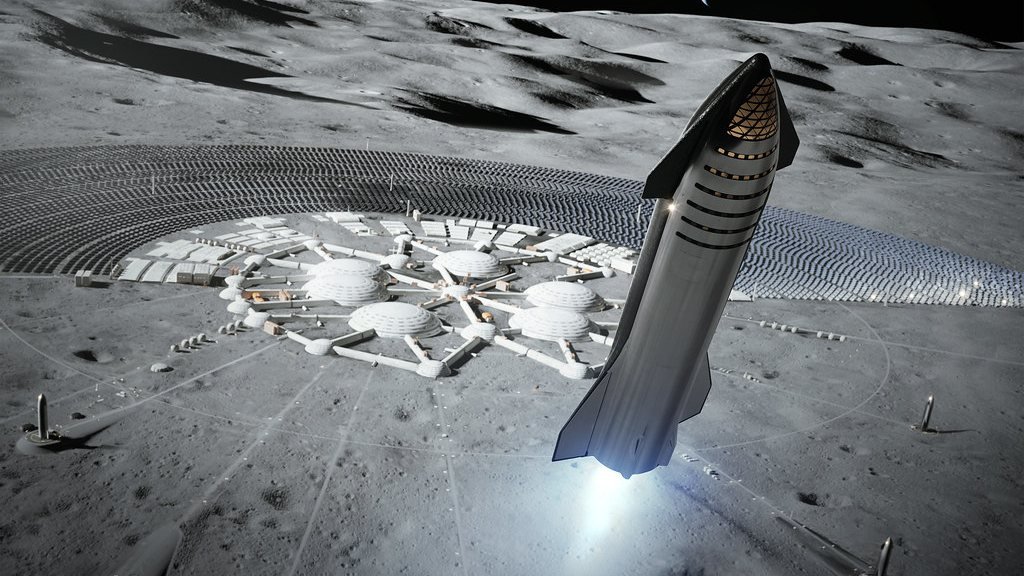
SpaceX Ready to Make Massive Surprise in Starship Flight 15, Totally Destroys the Industry: SpaceX Starship Flight 15 could become one of the most important milestones in the history of modern spaceflight. While many Starship launches have focused on testing the rocket’s basic capabilities, the next phase could involve something far more ambitious: orbital refueling.
If SpaceX successfully demonstrates the ability to transfer huge quantities of cryogenic propellant between Starships in orbit, it could completely change how humanity approaches missions to the Moon, Mars, and beyond. More importantly, this technology could give SpaceX a major advantage in the rapidly developing commercial space industry.
Why Starship Flight 15 Could Be So Important
SpaceX’s Starship is being designed as a fully reusable transportation system capable of carrying enormous payloads into space. However, even a gigantic rocket faces a fundamental problem: Earth’s gravity requires tremendous amounts of propellant to escape its gravitational well.
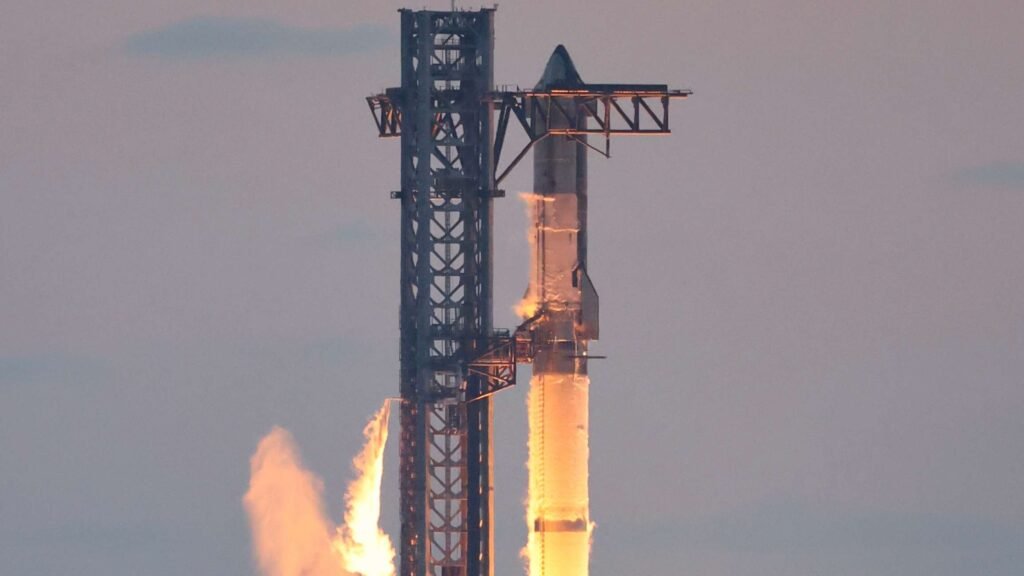
A spacecraft launched from Earth can use most of its fuel simply reaching orbit. That leaves limited propellant for traveling to distant destinations.
This is where orbital refueling becomes revolutionary.
Instead of launching a spacecraft with all the fuel it needs for its entire journey, SpaceX can launch a Starship into Low Earth Orbit (LEO) and then refill its tanks using another Starship acting as a tanker.
That approach could allow a refueled Starship to carry massive payloads to the Moon or Mars, including equipment, scientific instruments, habitat components, power systems, construction machinery, and other infrastructure.
Turning Starship Into a Deep-Space Truck
The concept is relatively simple in theory.
A Starship launches from Earth and reaches orbit. A second Starship carrying additional propellant launches afterward. The two vehicles rendezvous in orbit, connect, and transfer fuel.
Once refueling is complete, the primary Starship has enough propellant to begin a much longer journey.
This could transform Starship from a conventional launch vehicle into a space transportation system capable of moving industrial-scale cargo throughout the solar system.
Orbital Refueling Is Essential for NASA’s Artemis Program
The technology is particularly important because of NASA’s Artemis lunar exploration program.
SpaceX’s Starship has been selected as the Human Landing System (HLS) for planned Artemis missions. The lunar Starship will need substantial quantities of propellant to travel from Earth orbit to the Moon and support lunar landing operations.
That means SpaceX cannot simply launch one fully loaded Starship and expect it to complete the entire mission.
Instead, the architecture requires multiple tanker launches and potentially an orbital propellant depot.
This makes orbital refueling one of the most critical technologies SpaceX needs to master before regular crewed lunar missions become practical.
The Massive Technical Challenge Behind Orbital Refueling
Although the concept sounds straightforward, transferring propellant between two enormous spacecraft in space is an extraordinarily difficult engineering challenge.
Precision Rendezvous and Docking
Two Starships could be traveling at orbital speeds of roughly 27,000 km/h. Successfully bringing them together requires extremely accurate navigation, guidance, and control.
The spacecraft must approach each other safely and establish a stable connection before fuel transfer begins.
Even a small error during docking could create a major operational problem, which is why rendezvous and docking reliability will be essential.
Managing Cryogenic Propellant in Space
Starship uses liquid methane and liquid oxygen, both of which must remain extremely cold.
Managing these cryogenic fluids in microgravity presents another major challenge. Liquids do not naturally behave inside tanks the same way they do under Earth’s gravity.
SpaceX must develop reliable methods for settling propellant, controlling tank pressure, minimizing boil-off, and transferring potentially enormous quantities of fuel.
The ability to move hundreds of tons of cryogenic propellant safely would represent a significant technological achievement.
Repeated Demonstrations Are Necessary
A single successful demonstration would not prove that orbital refueling is ready for routine missions.
SpaceX would need to conduct multiple tests to demonstrate reliability and understand how the system behaves under different conditions.
This is why future Starship flights could become increasingly important as the company moves from individual launch tests toward a complete orbital transportation architecture.
How Flight 15 and Flight 16 Could Work Together
The proposed architecture could involve two Starships operating as a team.
The Flight 15 Starship could serve as the primary or target spacecraft. After reaching orbit, it would remain operational while waiting for another vehicle.
A subsequent Flight 16 Starship could potentially serve as the tanker or chaser. It would launch, reach orbit, rendezvous with the first Starship, and attempt the propellant-transfer operation.
The basic sequence would look like this:
Flight 16 Tanker → Rendezvous & Docking → Flight 15 Target → Propellant Transfer in LEO → Deep-Space Mission
If successfully demonstrated, this would provide SpaceX with a foundation for future Moon and Mars missions.
Why Flight 14 Matters Before Flight 15
For Flight 15 to attempt increasingly ambitious objectives, earlier flights must establish a reliable foundation.
Flight 14 is expected to play an important role in demonstrating fundamental Starship capabilities, including orbital operations, payload-related functions, engine performance, and controlled re-entry.
Reliability is especially important because SpaceX’s long-term strategy depends on launching Starships and Super Heavy boosters at a much higher frequency.
If technical problems continue to limit flight rates, the development schedule for orbital refueling and future lunar missions could face additional pressure.
The Race Against the Artemis Timeline
Time is another major factor.
NASA’s planned Artemis III and Artemis IV missions create a demanding schedule for SpaceX. Before Starship can perform operational lunar landing missions, the company needs to demonstrate not just one successful launch, but an entire chain of capabilities.
These include:
- Frequent Starship launches
- Tanker operations
- Orbital rendezvous
- Cryogenic propellant transfer
- Reliable re-entry
- Booster and spacecraft recovery
- Lunar mission operations
Starting orbital-refueling experiments as early as practical could give SpaceX valuable time to identify problems, improve the hardware, and repeat demonstrations before critical lunar missions.
How Orbital Refueling Could Disrupt the Aerospace Industry
If SpaceX makes orbital refueling reliable and combines it with full vehicle reusability, the consequences could extend far beyond the Starship program.
1. A New Reusable Space Infrastructure
Starship’s reusable architecture, combined with Super Heavy booster recovery and rapid launch operations, could create something closer to a transportation network than a traditional rocket program.
Instead of treating every launch as an isolated event, SpaceX could build an interconnected system of launch vehicles, tankers, depots, and spacecraft.
That could dramatically change the economics of moving large quantities of material into space.
2. Heavy Industrial Activity in Space
Today’s space industry is heavily focused on satellites, scientific missions, and relatively limited payloads.
A mature Starship system could potentially enable industrial-scale transportation.
Large quantities of equipment could be moved to the Moon, where future missions might construct habitats, energy systems, communication infrastructure, and scientific facilities.
Over a longer period, similar logistics could support ambitious Mars exploration and settlement concepts.
3. Increased Pressure on Competitors
A successful Starship refueling system could put enormous competitive pressure on traditional aerospace companies and other emerging launch providers.
Companies developing next-generation rockets may have to consider a new question: How do you compete with a reusable system designed to move massive amounts of cargo beyond Earth orbit?
The competition could shift away from simply building more powerful rockets toward building complete space transportation infrastructure.
The Bigger Picture: From Rocket to Space Transportation Network
The most significant aspect of Starship Flight 15 may not be the flight itself.
It could be the beginning of a transition from experimental launches toward permanent space infrastructure.
Orbital refueling would allow Starship to separate the task of launching from Earth from the task of traveling through deep space. Tanker spacecraft could repeatedly deliver propellant to a vehicle already in orbit, effectively creating a fuel supply chain around Earth.
That concept could eventually make ambitious missions to the Moon and Mars more achievable.
Conclusion
SpaceX Starship Flight 15 could represent much more than another test flight. If SpaceX begins demonstrating the technologies required for orbital propellant transfer, it could take a major step toward creating a reusable transportation network for deep space.
The challenges remain enormous. Docking two giant spacecraft, handling cryogenic methane and oxygen, transferring large quantities of propellant, and repeating the process reliably will require extensive testing.
However, the potential rewards are equally enormous.
Successful orbital refueling could help make heavy lunar missions, permanent space infrastructure, and future Mars exploration increasingly practical. Combined with reusable launch vehicles and rapid flight operations, it could also force the broader aerospace industry to rethink how humanity moves people and cargo beyond Earth.
In that sense, Starship Flight 15 could become an important turning point—not because it is simply another rocket launch, but because it could help establish the foundation for an entirely new era of space logistics and interplanetary transportation.
FAQs
1. What is SpaceX Starship Flight 15?
SpaceX Starship Flight 15 is a planned Starship test flight that could help advance the vehicle’s orbital capabilities and potentially support future testing related to orbital refueling.
2. Why is Starship Flight 15 important?
Starship Flight 15 could be important because it may represent a step toward in-space propellant transfer, a technology SpaceX needs for ambitious Moon and Mars missions.
3. What is orbital refueling?
Orbital refueling is the process of transferring rocket propellant from one spacecraft to another while both vehicles are in space. It can allow a spacecraft to carry much larger payloads on deep-space missions.
4. Why does Starship need orbital refueling?
A Starship uses a large amount of propellant to reach orbit from Earth. Refueling in Low Earth Orbit (LEO) could give it the additional fuel needed to travel to the Moon, Mars, or other deep-space destinations.
5. How could orbital refueling help NASA’s Artemis program?
Orbital refueling could provide the Starship Human Landing System with enough propellant to travel from Earth orbit to the Moon and support lunar landing operations.
6. Could Starship carry more than 100 tons to the Moon?
A successfully refueled Starship could potentially transport very large payloads beyond Earth orbit. The exact payload capability will depend on the final vehicle design, mission profile, and operational performance.
7. How would two Starships transfer fuel in space?
A tanker Starship would first rendezvous and dock with another Starship in orbit. After establishing a secure connection, the spacecraft would transfer cryogenic propellant between their tanks.
8. What type of fuel does Starship use?
Starship is designed to use liquid methane (CH₄) as fuel and liquid oxygen (LOX) as its oxidizer. Both must be maintained at cryogenic temperatures.
9. What makes cryogenic propellant transfer difficult?
In microgravity, liquids behave differently than they do on Earth. SpaceX must manage propellant settling, tank pressure, boil-off, temperature, and reliable fluid transfer during the operation.
10. What is the role of a Starship tanker?
A Starship tanker would transport additional propellant into orbit and transfer it to another Starship. This could create a fuel supply chain for future lunar and Mars missions.
11. How could Starship change the aerospace industry?
If Starship achieves high-frequency reusability and orbital refueling, it could significantly reduce the cost and complexity of transporting large quantities of cargo into space and beyond Earth orbit.
12. Could orbital refueling help SpaceX reach Mars?
Yes. Orbital refueling is considered a key capability for ambitious Starship Mars missions because it could allow a spacecraft launched from Earth to receive additional propellant before beginning its journey to Mars.
13. What challenges must SpaceX overcome before orbital refueling becomes routine?
SpaceX must demonstrate reliable launches, rendezvous, docking, cryogenic fluid transfer, spacecraft control, re-entry, and vehicle recovery before orbital refueling can become a routine operation.
14. Will Starship Flight 15 definitely perform orbital refueling?
Not necessarily. Flight plans and mission objectives can change as SpaceX develops and tests Starship. Any specific Flight 15 objective should be treated as a potential development milestone rather than a guaranteed mission event.
15. Why could Starship Flight 15 be a major turning point?
If the Starship program successfully progresses toward orbital refueling and reusable deep-space transportation, Flight 15 could be part of a much larger transition from experimental rocket testing to building a scalable Moon and Mars transportation system.
Read More: