
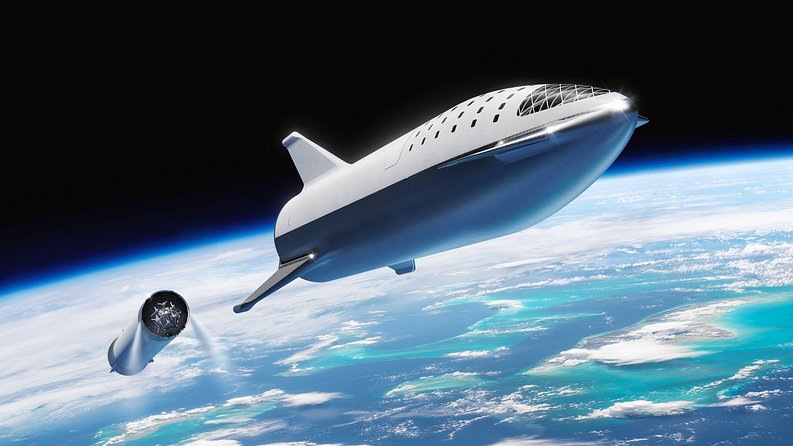
The journey of SpaceX has always been defined by bold goals, rapid innovation, and a willingness to push engineering to its absolute limits. From reusable Falcon rockets to private astronaut missions, the company has consistently changed the global aerospace industry. Now, all eyes are focused on the next giant leap — Starship Flight 13.
Unlike previous Starship test missions that mainly concentrated on launch survival, atmospheric control, and re-entry demonstrations, Flight 13 is expected to mark the beginning of the spacecraft’s true operational era. This mission is not just another rocket launch. It could become one of the most important milestones in modern spaceflight history.
With a planned orbital insertion, extended coast phase experiments, possible satellite deployment, and the dramatic possibility of a Mechazilla tower catch, Flight 13 may redefine what humanity believes is possible in reusable space transportation.
The Evolution of SpaceX’s Starship Program
Since its inception, the Starship program has evolved at an astonishing pace. Traditional aerospace programs often require years between prototypes, but SpaceX adopted a radically different strategy — rapid iteration.
Instead of waiting for perfect designs on paper, SpaceX builds, tests, fails, learns, and improves at incredible speed. This philosophy has transformed Starship development into one of the most exciting engineering projects ever attempted.
The massive Starship system consists of two stages:
- Super Heavy Booster — the gigantic first-stage booster
- Starship Upper Stage — the spacecraft designed for orbit, Moon missions, and eventually Mars colonization
The ultimate goal is complete reusability. Unlike conventional rockets that are discarded after launch, SpaceX aims for both stages to return safely and fly again quickly, dramatically lowering the cost of space travel.
Flight 13 represents the point where Starship moves beyond experimental suborbital testing and begins operating like a real orbital spacecraft.
What Makes Flight 13 Different?
Previous Starship launches primarily followed suborbital trajectories. These tests focused on:
- Launch performance
- Booster recovery
- Re-entry survivability
- Heat shield behavior
- Flip maneuver testing
However, Flight 13 is expected to achieve something far more significant — true orbital insertion.
According to mission planning documents and regulatory filings, Ship 40 could enter orbit at approximately 250 kilometers above Earth. This transition changes everything because orbital missions introduce entirely new engineering challenges that suborbital flights cannot simulate.
This is the moment where Starship stops behaving like a prototype and starts acting like a real spacecraft.
The Flight 13 Mission Profile
True Orbital Insertion
For the first time, Starship is expected to remain in orbit long enough to conduct multiple operational tests.
Achieving orbit requires incredible precision. The spacecraft must accelerate to roughly 28,000 km/h — fast enough to continuously “fall” around Earth without crashing back immediately.
This is a major leap compared to previous flights that simply traveled up and then descended back toward Earth.
The orbital mission profile allows SpaceX engineers to study long-duration spacecraft behavior in actual space conditions.
Two Possible Endings for Ship 40
One of the most fascinating aspects of Flight 13 is that the spacecraft may follow two very different paths at mission end.
1. The Historic Mechazilla Catch
The most ambitious objective is a full tower catch at Starbase in Boca Chica, Texas.
This process sounds almost science fiction-like:
- Ship 40 completes orbital operations
- It performs a de-orbit burn
- It re-enters Earth’s atmosphere at hypersonic speed
- It executes the famous flip maneuver
- It descends vertically
- Mechazilla’s giant chopstick arms catch the spacecraft mid-air
If successful, this would become one of the greatest engineering achievements in aerospace history.
Unlike traditional rocket landings that use landing legs, SpaceX wants Starship to be directly captured by launch infrastructure. This approach could dramatically improve launch turnaround times and support rapid reuse.
2. Controlled Pacific Ocean Splashdown
If conditions are not ideal for a tower catch, SpaceX has a backup strategy.
Ship 40 may instead conduct a controlled re-entry followed by a soft splashdown in the Pacific Ocean.
While less visually dramatic, this option still provides critical engineering data while reducing the risk of damaging expensive ground infrastructure.
Even a splashdown mission would be considered highly successful if the spacecraft completes its orbital objectives.
Why the Coast Phase Matters So Much
The Real Mission Happens in Space
Most casual viewers focus on launch and landing, but aerospace engineers are often most interested in what happens between those moments.
During Flight 13, Ship 40 is expected to spend several hours in orbit without engine power. This period is called the Coast Phase, and it may be the most important part of the entire mission.
Suborbital tests simply cannot reproduce the harsh conditions of long-duration orbital flight.
Cryogenic Propellant Management
One of the biggest challenges for future Moon and Mars missions is storing cryogenic propellants in space.
Starship uses:
These substances must remain extremely cold. In orbit, however, spacecraft experience constant heating and cooling cycles.
Engineers will carefully study:
- Propellant boil-off rates
- Pressure changes
- Tank stability
- Thermal insulation effectiveness
Understanding how fuel behaves in orbit is essential for future deep-space missions.
Without solving this problem, long-duration interplanetary travel becomes nearly impossible.
Extreme Temperature Swings
Space is an incredibly hostile environment.
During orbit, Ship 40 will repeatedly transition between:
- Intense direct sunlight
- Freezing darkness behind Earth
These thermal cycles stress every component of the spacecraft.
Flight 13 will help SpaceX evaluate:
- Structural durability
- Heat shield performance
- Electronic reliability
- Material expansion and contraction
This information is vital for designing future operational Starships.
Raptor Engine Restart in Space
One of the most important objectives is testing whether Starship can restart its Raptor engines after prolonged exposure to space.
This capability is absolutely critical for:
- Lunar landings
- Mars missions
- Orbital refueling
- Deep-space trajectory corrections
Engines behave differently in vacuum conditions after extended cold soaking.
A successful restart test would significantly increase confidence in Starship’s future mission capabilities.
Potential Payload Deployment
Flight 13 may also include payload demonstrations.
There is speculation that SpaceX could test:
- Payload bay door operations
- Experimental cargo deployment
- Starlink V3 satellite release systems
If successful, this would prove Starship’s capability as a next-generation heavy-lift orbital platform.
The spacecraft’s enormous payload capacity could revolutionize satellite deployment economics.
Why Starship Cannot Simply Stay in Orbit
The Danger of Space Debris
Some people wonder why Ship 40 cannot simply remain in orbit permanently.
The answer is straightforward: space debris poses a serious global threat.
A fully fueled Starship upper stage weighs roughly 120 tons. Leaving such a massive object uncontrolled in orbit would create enormous risks for satellites and future missions.
Understanding Kessler Syndrome
The biggest concern is something called the Kessler Syndrome.
This scenario occurs when orbital collisions create debris clouds that trigger further collisions, causing a chain reaction.
Over time, certain orbital regions could become unusable because of the overwhelming amount of dangerous debris.
A collision involving Starship-sized hardware could generate thousands of fragments traveling at extreme speeds.
Even tiny debris particles can destroy spacecraft because orbital velocities are so high.
Responsible Space Operations
To comply with international sustainability guidelines, SpaceX must safely de-orbit Ship 40.
This ensures the spacecraft either:
- Lands safely
- Burns up during re-entry
- Splashes down in a controlled zone
Responsible orbital management is becoming increasingly important as Earth orbit grows more crowded.
The Incredible Engineering Behind Re-entry
Returning from orbit is one of the most difficult tasks in aerospace engineering.
Starship must survive temperatures and aerodynamic forces that push materials to their limits.
Step 1: The De-orbit Burn
To begin its return, Ship 40 must slow down slightly.
The spacecraft rotates and fires its Raptor engines opposite its direction of travel.
This maneuver lowers its orbital trajectory enough for gravity to pull it into Earth’s atmosphere.
Precision is crucial. Even small calculation errors could dramatically alter the landing zone.
Step 2: The Famous Belly Flop Maneuver
Starship’s re-entry strategy is unlike anything seen before.
Instead of returning nose-first like traditional spacecraft, Starship turns sideways into a horizontal “belly flop” position.
This orientation creates massive atmospheric drag, helping slow the spacecraft naturally.
The maneuver reduces heating stress while improving aerodynamic control.
The Heat Shield System
During re-entry, plasma temperatures can exceed 2,000°C.
To survive these conditions, Starship relies on thousands of hexagonal heat shield tiles.
These tiles are designed to:
- Absorb intense heat
- Protect internal systems
- Prevent structural damage
Heat shield reliability has been one of the most critical areas of Starship development.
Flight 13 will provide invaluable real-world thermal performance data.
Step 3: The Final Flip
As Starship descends to lower altitude, it performs its dramatic flip maneuver.
The spacecraft reignites its engines and rapidly rotates from horizontal to vertical orientation.
This is one of the most visually stunning moments in modern rocketry.
The flip must happen perfectly:
- Too early wastes fuel
- Too late risks impact
- Incorrect angles can destabilize the vehicle
If successful, Starship transitions into a controlled vertical descent.
SpaceX Is Entering Real Operational Mode
From Experimental Program to Launch Network
SpaceX is no longer treating Starship as a simple experimental prototype.
The company is building infrastructure for high-frequency operations.
This shift marks the transition from development testing to industrial-scale launch capability.
Massive Expansion Across Multiple Launch Sites
Florida Launch Capacity
LC-39A
At Kennedy Space Center, LC-39A could support:
- Up to 44 launches annually
- Up to 88 landings per year
This legendary launch pad once supported Apollo and Space Shuttle missions.
Now it may become central to Mars transportation systems.
SLC-37 Development
Another Florida launch site, SLC-37, could support:
- Up to 76 launches annually
This dramatically increases SpaceX’s potential launch cadence.
Starbase Texas Operations
At Starbase in Texas, current approval levels allow:
- Up to 25 launches annually
However, expansion plans continue rapidly.
A second launch pad is expected in the near future, increasing overall capacity even further.
145 Flights Per Year
Combined approvals across Florida and Texas could eventually support approximately:
145 Starship flights annually
That number would completely transform global space access.
No previous heavy-lift rocket system has ever approached such operational scale.
The Enormous Logistics Challenge
A Rocket That Consumes Massive Fuel Quantities
Each Starship launch requires roughly:
5,000 metric tons of propellant
This creates extraordinary supply chain demands.
Hundreds of Truck Deliveries
Currently, a single launch may require approximately:
- 440 truck deliveries
These shipments include:
- Liquid oxygen
- Methane
- Nitrogen
Managing this scale of logistics is extremely difficult.
SpaceX’s Self-Sufficiency Strategy
To reduce dependency on external suppliers, SpaceX is building on-site production systems.
These include Air Separation Units (ASUs), which can generate oxygen and nitrogen directly at launch facilities.
Benefits include:
- Faster launch preparation
- Reduced transportation costs
- Improved operational reliability
- Higher launch cadence capability
This approach mirrors the company’s philosophy of vertical integration.
The FAA and Airspace Challenges
Rocket Launches Affect Commercial Aviation
Modern Starship launches temporarily disrupt air traffic.
Current launch windows can affect:
Up to 600 aircraft
Large airspace closures create challenges for airlines and air traffic controllers.
Reducing Airspace Closure Times
SpaceX is working closely with the FAA to streamline launch operations.
The goal is reducing closure windows from:
- Approximately 2 hours
- Down to 30–60 minutes
This is similar to the increasingly efficient Falcon 9 launch process.
Efficient airspace integration will be essential if Starship launches become frequent.
The Road to the Moon and Mars
Why Flight 13 Matters for Artemis
NASA plans to use Starship as the Human Landing System for the Artemis III Moon mission.
Before astronauts can rely on Starship, SpaceX must prove:
- Orbital reliability
- Engine restart capability
- Controlled re-entry
- Long-duration flight performance
Flight 13 directly supports these objectives.
Every successful test reduces uncertainty for future lunar missions.
Mars Colonization Begins with Missions Like This
The long-term vision remains clear:
Human settlement on Mars
To achieve this goal, SpaceX must master:
- Orbital refueling
- Rapid reuse
- Long-duration spaceflight
- High launch frequency
- Massive cargo transport
Flight 13 may become one of the foundational missions enabling that future.
Conclusion
Starship Flight 13 is far more than another rocket test.
It represents a turning point where the world’s most ambitious spacecraft begins transitioning from experimental hardware into a functional orbital system.
Whether Ship 40 achieves a historic Mechazilla catch or ends with a controlled ocean splashdown, the mission’s true importance lies in the data collected during orbital operations.
From cryogenic fuel management and engine restarts to thermal testing and payload demonstrations, every second of Flight 13 contributes to the future of human spaceflight.
The phrase “May or May Not Return” captures the uncertainty of pushing technological boundaries. Yet regardless of the final landing outcome, Flight 13 has the potential to become one of the most important aerospace missions ever attempted.
If successful, it could accelerate humanity’s journey toward reusable orbital transportation, lunar exploration, and ultimately, life on Mars.
FAQs
1. What is SpaceX Starship Flight 13?
Starship Flight 13 is the next major test mission by SpaceX that aims to push the Starship program into its true orbital operational phase. The mission is expected to test orbital insertion, re-entry systems, engine restarts, and possibly payload deployment.
2. Why is Flight 13 considered historic?
Flight 13 could become historic because it may achieve a true orbital mission combined with a possible Mechazilla tower catch, something never successfully done before with a spacecraft of this size.
3. What is the main goal of Starship Flight 13?
The primary goal is to demonstrate that Starship can operate as a fully functional orbital spacecraft, including surviving extended time in space and safely returning to Earth.
4. Will Ship 40 really “never return”?
The phrase “May or May Not Return” refers to the uncertainty surrounding the landing strategy. Ship 40 may either attempt a tower catch or perform a controlled ocean splashdown depending on mission conditions.
5. What is orbital insertion?
Orbital insertion happens when a spacecraft reaches enough speed and altitude to continuously orbit Earth instead of falling back immediately after launch.
6. What altitude will Flight 13 reach?
Starship Flight 13 is expected to reach an orbital altitude of approximately 250 kilometers above Earth.
7. What is the Mechazilla catch system?
Mechazilla is the massive launch tower at Starbase equipped with giant “chopstick” arms designed to catch Starship and its booster during landing.
8. Why is the Coast Phase important?
The Coast Phase allows engineers to study how Starship behaves in real space conditions, including fuel management, temperature changes, and spacecraft stability.
9. What is propellant boil-off?
Propellant boil-off occurs when super-cold liquid fuels like methane and oxygen slowly evaporate in space due to temperature changes.
10. Why does Starship perform the belly flop maneuver?
The famous belly flop maneuver helps Starship slow down during atmospheric re-entry by maximizing drag and reducing heating stress.
11. What temperatures does Starship face during re-entry?
During atmospheric re-entry, Starship may experience temperatures exceeding 2,000°C due to intense plasma heating.
12. Why can’t Starship stay in orbit permanently?
Leaving Starship in orbit would create dangerous space debris and increase the risk of Kessler Syndrome, where collisions create massive debris chains in space.
13. How much fuel does one Starship launch require?
A single Starship launch may require around 5,000 metric tons of propellant, including liquid oxygen and methane.
14. How often could Starship launch in the future?
With future infrastructure expansion, SpaceX could potentially support up to 145 Starship flights per year across Texas and Florida launch sites.
15. How does Flight 13 help future Moon and Mars missions?
Flight 13 helps validate critical technologies needed for future missions, including orbital refueling, engine restarts, reusable landings, and long-duration spaceflight for both Moon and Mars exploration.
Read More:
- Tesla expands its mass-market color palette in the U.S.
- Tesla Semi gets strange-but-understandable comparison from Jay Leno
- Tesla Bot Gen 3 Production Just Changed Everything – Gen 2 Is Over
- Tesla Cybercab Robotaxi Ramp Up Is Insane
- Tesla crushes NHTSA’s brand-new ADAS safety tests – first vehicle to ever pass
1 thought on “SpaceX’s Starship Flight 13 “NEVER Return” will Make History… Never seen Before”