
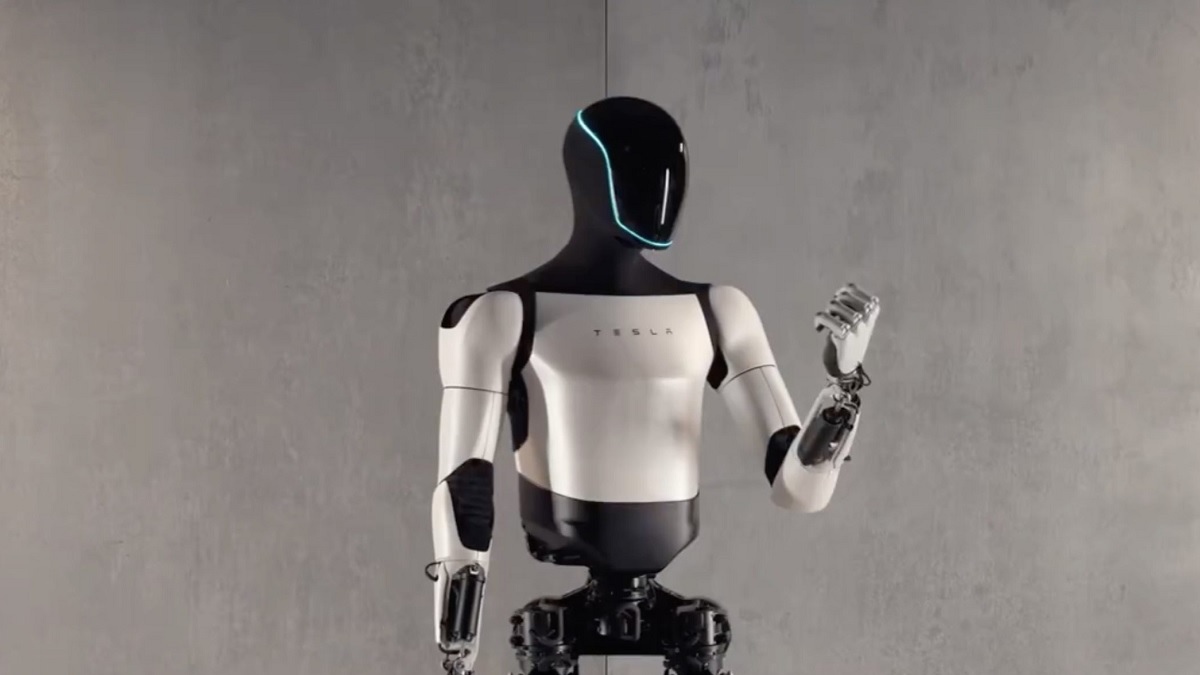
Tesla Bot Gen 3 Production Just Changed Everything – Gen 2 Is Over: Tesla has officially entered a new industrial era. In one of the most dramatic transformations in modern manufacturing, Tesla is shutting down production of the legacy Model S and Model X lines at its Fremont factory to focus on a revolutionary new mission: mass-producing the Tesla Optimus humanoid robot.
This bold move marks the end of the Gen 2 phase and the beginning of the highly anticipated Gen 3 Optimus production ecosystem. The shift is more than just a factory upgrade—it represents Tesla’s transition from an electric vehicle company into a full-scale artificial intelligence and robotics powerhouse.
With a 120-day factory conversion underway, Elon Musk and Tesla are betting billions on the future of humanoid robotics. If successful, the Optimus Gen 3 could become one of the most disruptive technological products of the decade.
Tesla Fremont Factory Begins Historic Transformation
Tesla’s Fremont factory has long been known as one of the world’s most advanced automotive manufacturing plants. However, May 2026 introduced a completely different vision for the facility.
Instead of focusing on premium electric sedans and SUVs, Tesla is now redesigning the factory around humanoid robot production. This transformation signals the official end of the Gen 2 Optimus era and the beginning of scalable Gen 3 manufacturing.
The company believes humanoid robots could eventually surpass electric vehicles in both demand and revenue. That explains why Tesla is willing to pause vehicle production to prioritize Optimus.
The transition is not minor. Tesla is rebuilding the production architecture from the ground up to support robotic assembly systems, modular testing environments, AI calibration labs, and advanced actuator integration.
For Tesla, this is not simply a product launch. It is an industrial revolution.
The Modular Assembly Breakthrough Behind Optimus Gen 3
One of the biggest reasons Tesla believes it can mass-produce humanoid robots efficiently is its new modular assembly strategy.
Traditional robotics manufacturing is expensive, slow, and highly complex. Tesla aims to change that with a five-layer modular breakdown system designed to simplify development and reduce manufacturing costs dramatically.
The ultimate target is ambitious: bringing the production cost of each Optimus robot down to approximately $20,000.
Tesla’s Plug-and-Play Robotics Architecture
Tesla’s Gen 3 production process allows different robot subsystems to be independently developed, tested, and calibrated before final assembly.
This approach creates several advantages:
- Faster quality control
- Reduced assembly errors
- Easier repairs and upgrades
- Improved production scalability
- Lower manufacturing costs
Instead of assembling a robot as one giant integrated machine, Tesla treats each body component as an intelligent standalone module.
This is very similar to how Tesla simplified electric vehicle manufacturing with giga-casting and structural battery packs.
Now, the same philosophy is being applied to humanoid robotics.
The Gen 3 Arm and Hand Mimic Human Biology
Perhaps the most fascinating engineering achievement in Optimus Gen 3 is the redesign of the hands and arms.
Tesla engineers focused heavily on reducing weight while improving dexterity and movement speed.
Actuator Relocation Improves Speed
One major innovation involves relocating heavy actuators from the hands into the forearms.
This creates several advantages:
- Reduced hand weight
- Faster finger movement
- Lower energy consumption
- Improved precision handling
By moving mechanical load away from the hands, Tesla allows the robot to perform more natural and human-like actions.
Cable-Driven Tendons Create Human-Like Movement
Tesla’s Gen 3 hand uses ultra-thin cable-driven tendon systems inspired directly by human anatomy.
This new architecture enables:
- 22 degrees of freedom
- More fluid motion
- Better object handling
- Increased flexibility
Compared to Gen 2, the new hand system doubles the movement capability.
That improvement is critical because hands are considered one of the hardest challenges in humanoid robotics.
Tasks humans take for granted—like gripping tools, folding clothes, or opening doors—require extremely advanced dexterity for robots.
Tesla believes its tendon-inspired design could become a major competitive advantage.
Plug-and-Play Testing Accelerates Development
The robot’s 28 actuators can now be independently tested before attachment to the main chassis.
Tesla uses load responsiveness simulations to ensure each actuator behaves properly under stress.
This modular testing system dramatically improves production efficiency because problems can be identified before full robot assembly begins.
The result is faster iteration cycles and better reliability.
Tesla’s Leg and Joint System Is Built for Industrial Strength
The lower body of Optimus Gen 3 represents another massive engineering leap.
Humanoid robots must maintain balance while walking, lifting objects, and navigating unpredictable environments.
Tesla is solving this challenge through highly advanced joint and leg systems.
Planetary Roller Screws Deliver High-Torque Motion
Each Optimus leg functions as an independent mechanical unit.
Tesla uses planetary roller screw technology to generate powerful yet precise movement.
These systems provide:
- High torque output
- Smooth movement
- Better durability
- Improved balance control
Before any electrical systems are activated, Tesla performs center-of-gravity stability testing on the mechanical structure.
This mechanical-first philosophy ensures the robot maintains stable motion even before AI calibration begins.
Precision Calibration Is Essential
Tesla estimates actuators account for approximately 35% of the robot’s total production cost.
Because of this, Tesla calibrates each actuator individually at the component level.
This process ensures:
- Biological precision
- Consistent movement
- Reduced hardware failure
- Better energy efficiency
Achieving natural human-like motion requires extraordinary calibration accuracy.
Even tiny inconsistencies can create balance issues or robotic instability.
Tesla’s approach attempts to solve these challenges before final assembly.
The AI Torso Turns Optimus Into an Intelligent Machine
The torso serves as the central command center for Optimus Gen 3.
This section contains two of the robot’s most important systems:
- The battery pack
- The AI supercomputer
Together, these systems transform Optimus from a mechanical machine into an intelligent autonomous platform.
Billions of Calculations Per Second
Tesla’s onboard AI hardware allows Optimus to process enormous amounts of real-time data.
The robot continuously analyzes:
- Visual inputs
- Motion tracking
- Object positioning
- Human interaction
- Environmental navigation
This creates a machine capable of making rapid decisions in dynamic environments.
Tesla Vision Replaces Radar and Lidar
Just like Tesla vehicles, Optimus relies primarily on camera-based perception systems.
The robot’s head contains:
- Cameras
- Perception sensors
- AI vision processors
Tesla intentionally avoids bulky radar and Lidar systems.
This strategy keeps the robot:
- Lighter
- Simpler
- More affordable
- Easier to mass produce
Tesla believes advanced neural networks can outperform expensive sensor-heavy systems over time.
Why Tesla Is Prioritizing Learning Over Mass Production
Despite the factory transformation, Tesla is not rushing into full automation.
Surprisingly, many parts of the Gen 3 assembly process remain semi-manual.
This decision is intentional.
Elon Musk believes maintaining “maximum learning speed” is more important than maximizing production volume early on.
Every Robot Is a Learning Experiment
Tesla currently views every Optimus unit as a valuable data source.
Each robot helps engineers improve:
- Hardware design
- AI training
- Movement precision
- Manufacturing workflows
- Real-world task performance
Since the hardware evolves almost daily, Tesla wants flexibility rather than rigid automated systems.
Current Capabilities Remain Limited
While Tesla’s long-term vision is enormous, early Optimus robots still face significant limitations.
Current Gen 3 capabilities include:
- Pre-programmed industrial tasks
- AI communication through Grok
- Basic object handling
- Simple workplace assistance
More advanced goals—such as surgery assistance, household labor, and construction work—remain future ambitions.
Tesla’s $25 Billion Robotics Gamble
Tesla is backing the Optimus project with one of the largest industrial investments in company history.
For 2026, Tesla announced a staggering $25 billion capital expenditure plan.
Tesla Is Becoming an AI and Robotics Company
Historically, Tesla invested between $8.5 billion and $11 billion annually.
The jump to $25 billion signals a dramatic strategic shift.
Tesla is no longer positioning itself solely as an automaker.
Instead, the company is aggressively pursuing dominance in:
- Artificial intelligence
- Robotics
- Automation
- AI infrastructure
- Advanced manufacturing
The Global Supply Chain Is Being Reshaped
The Optimus program is already transforming manufacturing ecosystems around the world.
Tesla Targets 100,000 Optimus Units
Tesla aims to achieve first-line production capacity of 100,000 units by Q4 2026.
Automotive Suppliers Pivot Toward Robotics
Companies previously focused on car systems are now building ultra-precise robotic components.
This transition is challenging because humanoid robotics requires much tighter engineering tolerances than traditional vehicles.
Tesla Faces Serious Competition in Humanoid Robotics
Tesla is no longer alone in the humanoid robot race.
Boston Dynamics Advances Atlas Deployment
Boston Dynamics continues pushing forward with its electric Atlas robot.
Figure AI Gains Momentum
Figure AI has emerged as another serious challenger.
Agility Robotics Is Already Commercializing Digit
Agility Robotics has also achieved meaningful commercial progress with its Digit robot.
Conclusion
Tesla’s Gen 3 Optimus production strategy could become one of the most important industrial transformations of the decade.
By converting the Fremont factory from luxury EV production into a humanoid robotics manufacturing hub, Tesla is making a clear statement about its future priorities.
The company believes humanoid robots represent the next trillion-dollar industry.
Success will depend entirely on Tesla’s ability to execute faster and more effectively than rivals in an increasingly crowded market.
One thing is already clear: the Gen 2 era is over, and the age of mass-produced humanoid robotics has officially begun.
FAQs
1. What major change is Tesla making at its Fremont factory?
Tesla is shifting from producing Model S and Model X vehicles to focusing on mass production of the Optimus humanoid robot.
2. Why is Tesla stopping production of Model S and Model X?
Because Tesla is prioritizing its new mission of becoming a robotics and AI company, centered around Optimus Gen 3 production.
3. What is Tesla Optimus Gen 3?
It is Tesla’s next-generation humanoid robot, designed for industrial tasks, advanced mobility, and AI-driven automation.
4. What does Gen 3 Optimus represent for Tesla?
It marks Tesla’s transition from an electric vehicle company to a full-scale AI and robotics powerhouse.
5. What is special about the Gen 3 production system?
It uses a modular assembly strategy, allowing robot parts to be built, tested, and calibrated independently.
6. What is Tesla’s target cost for each Optimus robot?
Tesla aims to reduce production cost to approximately $20,000 per robot.
7. How is Tesla improving robot hand performance?
By using cable-driven tendon systems inspired by human anatomy for more natural movement.
8. What improvement does Gen 3 hand design offer?
It provides 22 degrees of freedom and nearly double the movement capability of Gen 2.
9. Why are actuators moved from hands to forearms?
To reduce hand weight, increase speed, improve precision, and lower energy consumption.
10. What role do actuators play in Optimus?
Actuators control movement, and they account for about 35% of total robot cost.
11. How does Tesla test Optimus components?
Each actuator is tested individually using load responsiveness simulations before full assembly.
12. What technology is used in Optimus legs?
Tesla uses planetary roller screws for strong, smooth, and precise movement.
13. Why is balance important in Optimus design?
Because humanoid robots must walk and operate in dynamic environments without falling.
14. What powers Optimus Gen 3 intelligence?
An onboard AI supercomputer integrated into the torso processes real-time data.
15. What kind of data does Optimus AI process?
Visual input, motion tracking, object detection, human interaction, and navigation data.
16. Does Optimus use radar or lidar sensors?
No, it relies mainly on camera-based Tesla Vision systems for perception.
17. Why is Tesla focusing on semi-manual production?
To maximize learning speed and rapid iteration rather than immediate mass automation.
18. What is Tesla’s production target for Optimus?
Tesla aims to produce up to 100,000 Optimus units by Q4 2026.
Read More:
1 thought on “Tesla Bot Gen 3 Production Just Changed Everything – Gen 2 Is Over”