
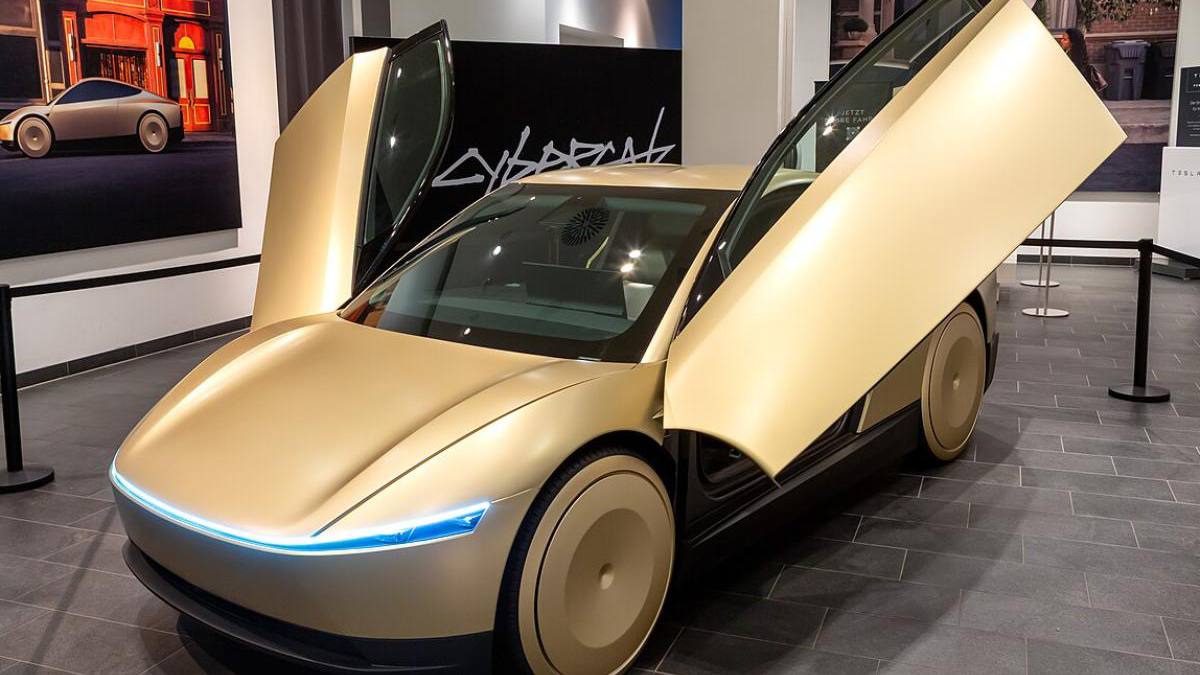
The autonomous vehicle revolution is no longer a futuristic concept confined to tech conferences and concept videos. In 2026, Tesla’s Cybercab Robotaxi program is rapidly transforming into a real-world transportation network with active deployments, mass production, and groundbreaking manufacturing innovations.
As Tesla pushes deeper into full autonomy, the Cybercab project is becoming one of the most ambitious mobility initiatives ever attempted. From nighttime autonomous driving in Texas to the revolutionary “Unboxed” manufacturing process at Giga Texas, the Cybercab is redefining how vehicles are built, operated, and integrated into society.
This massive transition is not just about replacing human drivers. It represents a complete restructuring of urban mobility, logistics, energy efficiency, and healthcare transportation.
In this detailed guide, we’ll explore everything happening with Tesla’s Cybercab Robotaxi ramp-up in May 2026 and why the automotive world is paying close attention.
The Cybercab Program Has Entered a New Era
For years, Tesla’s autonomous driving ambitions faced skepticism from competitors and regulators alike. Critics questioned whether a camera-only system could truly compete with lidar-heavy robotaxi systems developed by companies like Waymo.
Now, Tesla is proving that its strategy may actually scale faster and cheaper than anything currently on the market.
The Cybercab project has officially moved beyond prototype testing and into operational deployment and manufacturing expansion. Tesla’s dedicated Robotaxi ecosystem is gathering billions of miles of real-world driving data while simultaneously refining the software that powers autonomous navigation.
The significance of this moment cannot be overstated.
Unlike traditional ride-sharing services, Tesla’s long-term vision is a fully autonomous transportation network that operates continuously with minimal human involvement. The Cybercab is specifically engineered for that mission.
Nighttime Autonomous Driving Is a Major Breakthrough
Tesla’s Robotaxis Are Now Operating at Night
One of the biggest recent milestones for Tesla’s Robotaxi network is the successful expansion into nighttime unsupervised driving operations in Austin, Texas.
Nighttime driving has always been one of the hardest challenges for autonomous systems because visibility conditions become dramatically more complex. Glare from headlights, reflections from wet roads, shadows, poor lighting, and unpredictable pedestrian behavior all create difficult scenarios for AI systems.
Yet Tesla is now running unsupervised nighttime operations using only cameras and artificial intelligence.
That achievement is enormous.
Vision-Only Autonomy Is Beating Expectations
Most autonomous driving competitors rely heavily on expensive lidar and radar systems to navigate difficult environments. Tesla chose a radically different approach by focusing almost entirely on vision-based AI.
Instead of creating expensive sensor arrays, Tesla trained neural networks to interpret visual information similarly to how humans drive.
The success of nighttime Robotaxi operations suggests Tesla’s Full Self-Driving system has reached a new level of visual understanding and environmental awareness.
This is especially important because vision-only systems are dramatically cheaper to scale.
Lower hardware costs could eventually allow Tesla to deploy millions of Cybercabs globally at a fraction of the operational cost faced by competitors.
Tesla Appears to Be Solving “Edge Cases”
One of the biggest obstacles in autonomous driving is handling rare and unpredictable situations known as “edge cases.”
These include:
- Construction zones
- Poor weather conditions
- Sudden pedestrian movements
- Obstructed lane markings
- Bright light interference
- Low-visibility intersections
Tesla’s latest improvements suggest the company has made substantial progress in solving many nighttime-related edge cases.
The company’s neural networks are becoming increasingly capable of making split-second decisions in complex environments without direct human supervision.
This capability is critical for scaling a truly autonomous transportation network.
Tesla’s Robotaxi Fleet Is Growing Rapidly
Current Fleet Deployment
Tesla’s unsupervised Robotaxi fleet in Texas currently consists of approximately 25 vehicles:
- 19 vehicles in Austin
- 3 vehicles in Dallas
- 3 vehicles in Houston
At the moment, Tesla is still using modified Model Y vehicles for many of these operations.
However, dedicated Cybercab units are expected to gradually replace them as production ramps up at Giga Texas.
This transition matters because the Cybercab was designed specifically for autonomous ride-hailing operations from the ground up.
Why the Cybercab Design Matters
Traditional vehicles are designed around human drivers.
The Cybercab is not.
Tesla engineered the Cybercab for continuous high-utilization operation, meaning it can remain active for long periods with minimal downtime.
This creates major advantages:
- Lower operating costs
- Higher passenger throughput
- Reduced maintenance complexity
- Better energy efficiency
- Simplified charging logistics
The result could be a transportation system dramatically cheaper than traditional ride-sharing services.
FSD Version 14.3.2 Is a Massive Upgrade
Tesla’s AI Is Improving at Incredible Speed
The release of Full Self-Driving version 14.3.2 represents another major leap forward for Tesla’s autonomy stack.
The update includes several important improvements:
Advanced Reinforcement Learning
Tesla has significantly enhanced reinforcement learning systems, allowing vehicles to improve driving behavior through large-scale data training.
Faster Compiler Performance
A rewritten compiler reportedly delivers response times that are approximately 20% faster than previous versions.
Faster decision-making is essential for handling real-world driving scenarios safely.
Improved Image Encoders
Tesla also upgraded low-visibility image processing systems, helping vehicles navigate difficult nighttime and weather conditions more effectively.
These improvements directly support the expansion of autonomous Robotaxi operations.
Tesla’s Data Advantage Is Becoming Unstoppable
Billions of Miles Are Fueling the AI
One of Tesla’s greatest competitive advantages is the sheer volume of real-world driving data collected by its global fleet.
According to recent figures, Tesla vehicles are now generating approximately 10 billion miles of Full Self-Driving data every 11.5 months.
That scale is almost impossible for competitors to replicate.
To put this into perspective:
Tesla owners collectively drive around 1,000 miles using FSD every 3 seconds.
Every mile helps train Tesla’s neural networks.
Every edge case improves the AI.
Every difficult driving condition strengthens the system further.
This creates a feedback loop where Tesla’s software improves faster as more vehicles join the network.
Why Data Scale Matters in Autonomous Driving
Autonomous driving is fundamentally an AI problem.
And AI systems improve through data.
The larger and more diverse the dataset, the better the neural network becomes at recognizing patterns and making safe decisions.
Tesla’s massive fleet gives the company an enormous advantage because its cars continuously gather information from real-world roads globally.
This includes:
- Rural roads
- Urban traffic
- Weather conditions
- Different driving styles
- Pedestrian behavior
- Construction environments
The Cybercab ecosystem directly benefits from this continuously expanding intelligence network.
The “Unboxed” Manufacturing Process Is Revolutionary
Tesla Is Reinventing Car Manufacturing
The Cybercab isn’t just technologically different.
It’s also built differently.
Tesla has abandoned the traditional linear assembly line in favor of an entirely new manufacturing philosophy called the “Unboxed” process.
This could become one of the most important manufacturing innovations in automotive history.
How the Unboxed Process Works
Parallel Module Assembly
Traditional factories build cars sequentially along long production lines.
Tesla’s new approach breaks the Cybercab into independent modules assembled in parallel.
The vehicle consists of five major sections:
- Front end
- Rear end
- Structural battery pack
- Left side section
- Right side section
These modules are built simultaneously rather than sequentially.
At the end of production, Tesla joins them together using high-precision lasers and advanced fastening systems.
Why This Manufacturing Method Is Important
The benefits are enormous.
Tesla claims the Unboxed process reduces:
- Factory footprint by 40%
- Labor costs by 30%
This creates a far more scalable manufacturing model.
Smaller factories can produce more vehicles with fewer workers and lower operational complexity.
That could allow Tesla to expand Cybercab production globally at unprecedented speed.
Tesla Eliminated the Paint Shop Entirely
A Radical Manufacturing Simplification
One of the most surprising Cybercab innovations is the complete removal of the paint shop.
Traditional automotive paint shops are incredibly expensive and environmentally intensive.
Tesla solved this problem using polyurethane body panels with embedded color finishes.
Instead of painting the exterior after production, the color is integrated directly into the material during molding.
Benefits of Embedded Color Panels
This innovation creates several advantages:
Lower Production Costs
Eliminating paint facilities drastically reduces manufacturing expenses.
Improved Durability
Because the pigment runs throughout the material, scratches do not expose a different color underneath.
Faster Production
Removing paint processes shortens production timelines significantly.
Environmental Improvements
Paint shops consume large amounts of energy and chemicals. Eliminating them reduces environmental impact.
This is another example of Tesla redesigning automotive manufacturing from first principles.
Cybercab Technical Specifications Are Built for 24/7 Operations
Small Battery, Big Efficiency
Unlike many EVs chasing massive battery packs, the Cybercab uses a relatively small 35 kWh structural battery pack.
Why?
Because efficiency matters more than maximum range for autonomous ride-sharing fleets.
Smaller batteries reduce:
- Vehicle weight
- Charging time
- Production costs
- Energy consumption
The structural battery is integrated directly into the floor, improving both rigidity and safety.
48-Volt Electrical Architecture
Tesla is also shifting to a 48-volt electrical architecture.
This modernized system reduces the need for heavy copper wiring while improving electrical efficiency.
Combined with Ethernet-based networking, Tesla is simplifying vehicle electronics dramatically.
This reduces manufacturing complexity while improving reliability.
Wireless Inductive Charging Changes Everything
The Cybercab is designed around autonomous operation, and that includes charging.
Tesla’s inductive charging system reportedly exceeds 90% efficiency and allows vehicles to recharge wirelessly without human assistance.
That means Cybercabs can autonomously:
- Drive to charging stations
- Recharge automatically
- Return to service immediately
This creates near-continuous operational capability.
For fleet economics, that’s a game changer.
Cybercab Could Transform Healthcare Transportation
The “Mobile Healthcare” Vision
One of the least discussed but potentially most impactful applications of the Cybercab is healthcare logistics.
Transportation remains a major barrier to medical care for millions of people.
In 2017 alone, nearly 6 million Americans reportedly delayed medical treatment because they lacked reliable transportation.
Autonomous ride-hailing could dramatically reduce that problem.
Cybercab Could Become a Mobile Medical Intake Room
A New Type of Patient Experience
Because the Cybercab has no steering wheel or pedals, the interior can function as more than just a transportation cabin.
Tesla’s Robotaxi platform could eventually support:
- Biometric health screening
- Digital medical intake
- Patient education systems
- Telemedicine integration
- Medication reminders
The journey itself could become part of the healthcare process.
Patients could complete paperwork, receive instructions, and even begin preliminary screenings before arriving at clinics or hospitals.
Healthcare Logistics Could Be Huge
The Cybercab network could also transform medical logistics.
Autonomous vehicles could transport:
- Lab samples
- Sterilized equipment
- Prescription deliveries
- Medical supplies
Because these vehicles operate autonomously with precise scheduling, they could improve efficiency and reduce delivery delays.
This opens entirely new commercial opportunities beyond passenger transportation.
Tesla Still Faces Major Regulatory Challenges
European Regulations Remain Difficult
Despite the rapid progress, Tesla still faces substantial regulatory hurdles.
The company is currently showcasing the Cybercab in major European cities including:
- Paris
- London
- Berlin
The goal is to familiarize both consumers and policymakers with the technology.
However, Europe’s UNECE regulatory framework is significantly stricter than U.S. standards.
Obtaining approval for fully unsupervised autonomous operation may take years in some regions.
Liability Remains a Critical Issue
Who Is Responsible in an Autonomous World?
One of the biggest unresolved questions in autonomous transportation is liability.
Waymo already accepts legal responsibility for many level 4 autonomous operations.
Tesla’s situation is more complicated.
Currently, Tesla still places responsibility on the human driver in many scenarios.
However, new California regulations beginning in July 2026 may shift greater responsibility toward manufacturers.
This legal transition could have major implications for Tesla’s Robotaxi rollout strategy.
Mass Deployment Is Still Coming Slowly
Elon Musk Warns Initial Production Will Be Slow
Despite the excitement surrounding the Cybercab, Elon Musk has acknowledged that early production ramp-up will remain relatively limited.
Large-scale unsupervised deployment is now expected no earlier than Q4 2026.
That timeline reflects the enormous complexity involved in scaling:
- Manufacturing
- AI systems
- Regulations
- Charging infrastructure
- Fleet management
Still, the underlying trajectory appears incredibly aggressive compared to traditional automotive timelines.
Why Tesla’s Cybercab Could Change Everything
Tesla is not simply building another electric vehicle.
The company is attempting to redesign transportation from the ground up.
The Cybercab combines:
- Autonomous AI
- Scalable manufacturing
- Low-cost operation
- Wireless charging
- Fleet optimization
- Healthcare applications
- Urban mobility integration
Few companies are pursuing such a vertically integrated strategy.
If Tesla successfully scales the Cybercab network globally, the economic impact could be enormous.
Transportation costs may fall dramatically.
Car ownership models could change permanently.
Cities may eventually redesign infrastructure around autonomous mobility networks.
Final Thoughts
Tesla’s Cybercab Robotaxi ramp-up in 2026 represents one of the most ambitious technological transformations currently underway.
The combination of nighttime autonomous operations, AI-driven Full Self-Driving improvements, revolutionary manufacturing methods, and scalable fleet economics positions Tesla as a dominant force in the future of transportation.
Challenges still remain.
Regulatory approval, legal liability, public trust, and production scaling are all significant obstacles.
But the pace of progress is accelerating rapidly.
The Cybercab is no longer just a futuristic concept.
It is becoming a real, operational system capable of reshaping industries far beyond transportation itself.
And if Tesla succeeds, the automotive world may never look the same again.
FAQs
1. What is Tesla Cybercab?
Tesla Cybercab is Tesla’s upcoming fully autonomous Robotaxi vehicle designed specifically for ride-hailing services without a human driver. It is optimized for low-cost, high-efficiency transportation.
2. Is Tesla Cybercab already operating?
Yes, Tesla has already started limited unsupervised Robotaxi operations in Texas using modified Model Y vehicles while dedicated Cybercab production ramps up.
3. Where is Tesla testing its Robotaxi service?
Tesla is currently operating Robotaxi services in:
- Austin
- Dallas
- Houston
Austin remains the primary testing location.
4. Does Tesla Cybercab use lidar technology?
No. Tesla relies mainly on a vision-only system powered by cameras and artificial intelligence instead of lidar and radar sensors.
5. What makes Tesla’s Full Self-Driving system unique?
Tesla’s FSD system improves using billions of miles of real-world driving data collected from Tesla vehicles worldwide, giving it a massive AI training advantage.
6. What is FSD version 14.3.2?
FSD 14.3.2 is Tesla’s latest Full Self-Driving software update featuring:
- Faster response times
- Better reinforcement learning
- Improved low-light image processing
- Enhanced autonomous driving performance
7. What is Tesla’s “Unboxed” manufacturing process?
The Unboxed process is Tesla’s new production method where major vehicle sections are assembled separately in parallel before final assembly, reducing factory size and production costs.
8. Why did Tesla remove the paint shop?
Tesla eliminated traditional paint shops by using polyurethane body panels with embedded color, making production cheaper, faster, and more durable.
9. What battery does the Cybercab use?
The Cybercab uses a 35 kWh structural battery pack integrated directly into the vehicle floor for improved rigidity, efficiency, and safety.
10. Does Tesla Cybercab support wireless charging?
Yes. Tesla Cybercab is designed with inductive wireless charging technology, allowing autonomous charging without human assistance.
11. How efficient is Tesla’s wireless charging system?
Tesla’s wireless charging system reportedly delivers over 90% charging efficiency, making it practical for continuous Robotaxi operations.
12. How many Robotaxis does Tesla currently operate?
Tesla’s current unsupervised Robotaxi fleet includes approximately 25 vehicles operating across Texas.
13. Can Cybercab operate at night?
Yes. Tesla recently expanded into nighttime autonomous operations, demonstrating major advancements in low-visibility driving capabilities.
14. How could Cybercab help healthcare transportation?
Cybercab could provide:
- Affordable medical transportation
- Mobile patient intake systems
- Medical supply deliveries
- Transport for lab samples and prescriptions
15. What are the biggest challenges facing Tesla Cybercab?
Major challenges include:
- Government regulations
- Legal liability
- Public trust
- Manufacturing scale-up
- Global autonomous driving approval
16. When will Tesla fully launch Cybercab services?
Tesla expects broader unsupervised deployment to begin no earlier than Q4 2026, although early production has already started.
17. Why is Tesla Cybercab important for the future?
Tesla Cybercab could dramatically change:
- Urban transportation
- Ride-sharing economics
- Car ownership models
- Autonomous logistics
- Smart city infrastructure
It represents one of the most ambitious transportation innovations of the decade.
Read More:
- Tesla crushes NHTSA’s brand-new ADAS safety tests – first vehicle to ever pass
- Tesla Semi’s official battery capacity leaked by California regulators
- Elon Musk Announces 2026 Tesla Optimus Bot Gen 3 Under $2,579
- Tesla’s Robotaxi Just Did Something Insane
- SpaceX officially Confirmed Starship Launch in Days after Fixing Pad Problems, But New Lawsuit!?
2 thoughts on “Tesla Cybercab Robotaxi Ramp Up Is Insane”