
Starship Flight 14 Launch Date just Changed Again, No Launch This Week: Starship Flight 14 is shaping up to be one of the most important tests in SpaceX’s development of a fully reusable orbital launch system. However, the Starship Flight 14 launch date has changed again, meaning there will be no launch this week as the company continues preparations, testing, and regulatory work at Starbase in Boca Chica, Texas.
SpaceX has developed Starship around an iterative “test, learn, and iterate” philosophy. Instead of waiting for every component to be perfected through years of ground testing, the company uses increasingly ambitious flight tests to collect real-world data and improve the vehicle.
Flight 14 is expected to represent another major step toward orbital payload operations, with the mission profile focusing on orbital insertion, satellite deployment, booster recovery, and atmospheric reentry.
What Is Starship Flight 14?
Starship Flight 14 is planned as an integrated launch of a Starship upper stage and Super Heavy booster. The configuration described for the mission consists of Ship 41 mounted on Super Heavy Booster 21.
The two-stage architecture is designed to make Starship completely reusable over time.
Starship Upper Stage
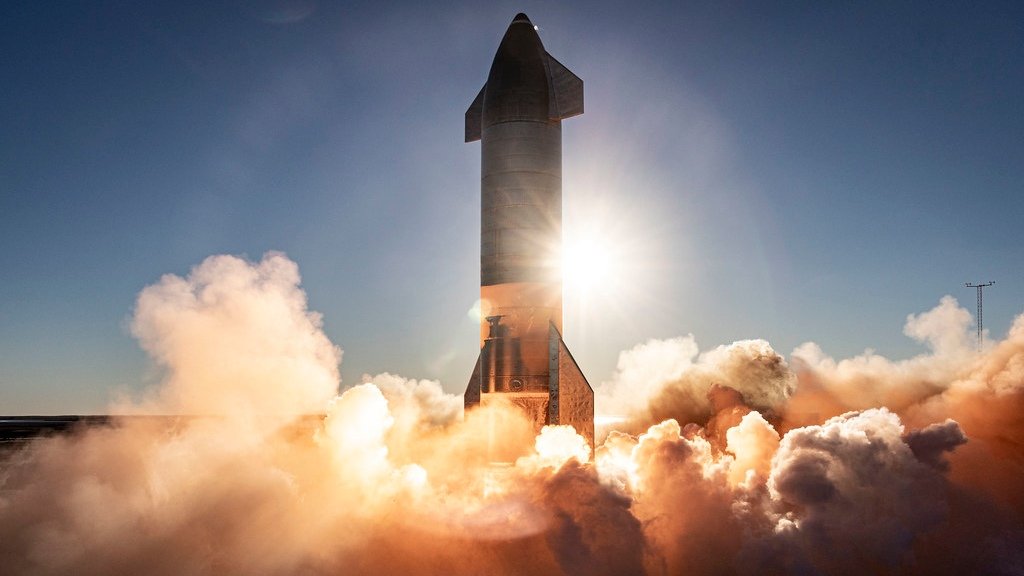
The upper stage is designed to operate in space and eventually return to Earth. Ship 41 is described as featuring six Raptor engines, including three sea-level engines and three vacuum-optimized engines.
Its major objectives include:
- Orbital insertion
- Payload deployment
- Controlled atmospheric reentry
- Thermal protection testing
- Future reuse operations
Super Heavy Booster
The Super Heavy first stage uses 33 Raptor engines powered by liquid methane and liquid oxygen.
After launch and stage separation, the booster performs a boostback maneuver before attempting a controlled landing sequence. Successful recovery is critical to SpaceX’s long-term goal of dramatically reducing launch costs through rapid hardware reuse.
Why Was the Starship Flight 14 Launch Date Changed?
The Starship program operates on a schedule that can change as hardware testing and regulatory requirements progress. A launch date is not simply determined by vehicle readiness.
Several factors can affect the Starship Flight 14 launch schedule, including static-fire testing, vehicle inspections, range availability, regulatory approval, and weather conditions.
Because Flight 14 introduces more demanding orbital objectives, SpaceX needs to verify that the vehicle and ground systems are ready before attempting the mission.
This means the latest schedule change should be viewed as part of the development process rather than as an indication that the Starship program has stopped moving forward.
Key Objectives of Starship Flight 14
Flight 14 is expected to introduce several important milestones for the Starship program.
1. Full Orbital Insertion
One of the biggest objectives is demonstrating orbital insertion.
Earlier Starship tests focused heavily on proving vehicle ascent, stage operations, controlled flight, and reentry characteristics. A mission designed for orbital insertion requires substantially more precise navigation, propulsion management, and upper-stage operations.
Achieving orbit would represent an important transition toward operational orbital missions.

2. Starlink V3 Satellite Deployment
Another major objective is the deployment of next-generation Starlink V3 satellites.
The mission profile described for Flight 14 calls for the deployment of up to 26 satellites. If demonstrated successfully, this would provide valuable experience with Starship’s payload deployment mechanism under actual spaceflight conditions.
Payload deployment is especially important because Starship is ultimately intended to become a high-capacity launch vehicle for commercial, scientific, and government missions.
3. Super Heavy Booster Recovery
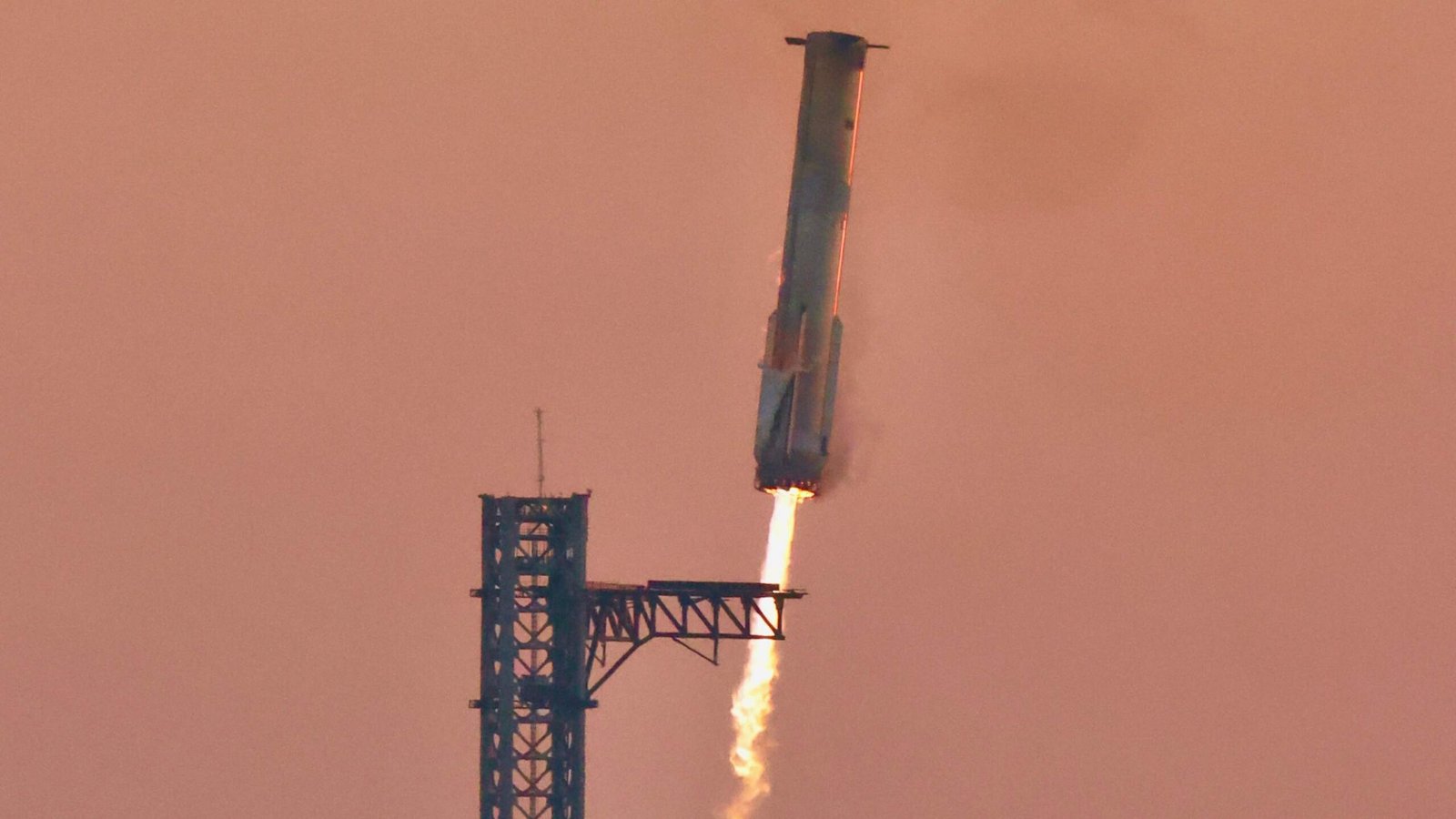
Following hot-staging, Super Heavy Booster 21 is expected to conduct a boostback maneuver and controlled landing sequence.
Booster recovery remains one of the most important parts of SpaceX’s reusable architecture. Data collected during the flight can help engineers improve guidance, engine performance, thermal protection, and landing procedures.
4. Thermal Protection Testing
The upper stage must survive one of the most challenging phases of the entire mission: high-speed atmospheric reentry.
Ship 41 reportedly incorporates changes involving its thermal protection system, including updated tile placement and metallic shielding.
These modifications are intended to provide additional information about how Starship handles the extreme heating environment encountered during orbital reentry.
Starship Flight 14 Countdown Timeline
A mission involving thousands of tonnes of cryogenic propellant requires a carefully coordinated countdown.
The planned sequence described for Flight 14 includes major milestones such as:
| Time | Event | Description |
|---|---|---|
| T-50 minutes | Flight Director Poll | Final readiness checks |
| T-36:33 | Booster Tanking | Super Heavy receives sub-cooled LOX |
| T-34:13 | Ship Tanking | Starship receives methane and LOX |
| T-21:40 | Engine Chilldown | Raptor engines undergo thermal conditioning |
| T-00:03 | Engine Startup | Raptor startup sequence begins |
| T+00:00 | Liftoff | Starship leaves the launch mount |
| T+02:22 | Hot-Staging | Ship separates from Super Heavy |
| T+08:11 | Engine Cutoff | Upper-stage main engine operation ends |
| T+25:28 | Orbital Insertion | Planned orbital maneuver |
Actual mission timing can change depending on the final flight profile and launch operations.
The Biggest Challenge: Starship Reentry
Reentry represents one of the most difficult engineering challenges for a reusable orbital spacecraft.
At orbital velocity, Starship can travel at approximately 7.8 km/s, or around Mach 25. The spacecraft must transform enormous kinetic energy into heat while maintaining structural integrity.
Extreme Thermal Loads
During atmospheric entry, air is compressed ahead of the spacecraft and forms an extremely hot plasma environment.
This creates intense thermal loads across the vehicle, particularly around areas where aerodynamic surfaces meet the main body.
Body Flaps
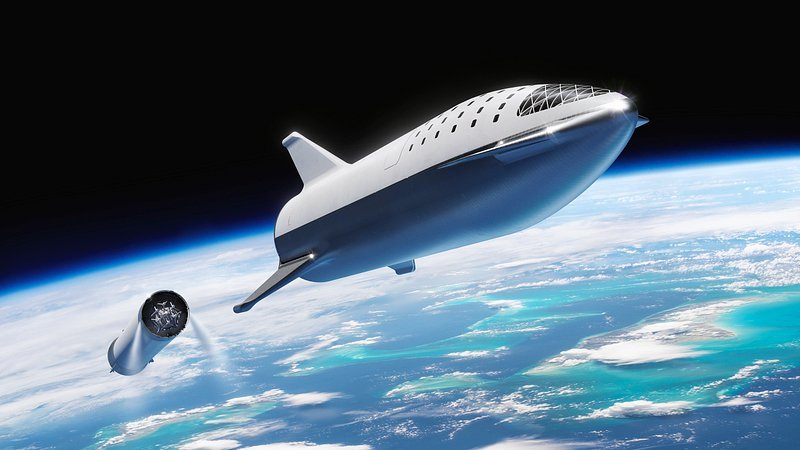
Starship uses large body flaps to control its orientation during atmospheric descent.
These aerodynamic surfaces help manage pitch, yaw, and roll as the vehicle transitions through increasingly dense layers of the atmosphere.
Flap Hinge Protection
The areas surrounding flap hinges are particularly challenging because they combine aerodynamic forces, mechanical movement, and extreme heating.
For this reason, improvements to flap geometry, seals, and thermal protection can provide important data for future Starship iterations.
Why Starship Flight 14 Could Matter
The importance of Flight 14 goes beyond a single launch.
SpaceX is attempting to develop a launch architecture capable of repeatedly flying, landing, and flying again with minimal refurbishment.
Lower-Cost Heavy-Lift Launches
A reusable Starship could eventually carry very large payloads to orbit. High payload capacity combined with vehicle reuse could change the economics of heavy-lift space transportation.
NASA’s Artemis Program
A modified Starship known as Starship Human Landing System (HLS) is part of NASA’s Artemis lunar architecture.
Orbital operations, propulsion management, and reliable spacecraft performance are important technologies for future lunar missions.
Future Mars Missions
SpaceX also envisions Starship supporting interplanetary transportation.
The architecture includes the concept of orbital propellant transfer, allowing spacecraft to receive additional liquid methane and liquid oxygen in orbit before undertaking missions beyond Earth orbit.

When Will Starship Flight 14 Launch?
With the Starship Flight 14 launch date changing again, there is currently no launch expected this week based on the schedule described in the source material.
SpaceX’s Starship launch dates remain subject to change as testing, regulatory approvals, weather, and vehicle readiness evolve.
For viewers tracking the mission, the most important indicators will be static-fire testing, final vehicle preparations, regulatory milestones, and an official launch-window announcement.
Starship Flight 14 Launch Updates
The delay does not change the larger objective of the Starship program: moving from experimental test flights toward a fully reusable orbital transportation system.
Every test provides engineers with additional information about propulsion, flight dynamics, thermal protection, staging, payload deployment, and recovery.
As SpaceX continues preparing for Flight 14, the next major milestones could provide a clearer indication of when the vehicle will actually be ready to fly.
For additional analysis of the changing schedule, Starbase preparations, and booster qualification work, viewers can also follow the referenced Starship Flight 14 launch updates video.
FAQs
1. What is Starship Flight 14?
Starship Flight 14 is a planned test flight of SpaceX’s Starship launch system, consisting of a Starship upper stage and a Super Heavy booster. The mission is intended to test orbital operations, payload deployment, stage separation, and vehicle recovery.
2. When will Starship Flight 14 launch?
The Starship Flight 14 launch date has changed again, and there is no launch expected this week according to the information provided. SpaceX’s launch schedule can change based on vehicle readiness, testing, regulations, and weather.
3. Why was the Starship Flight 14 launch date delayed?
The schedule can be affected by several factors, including static-fire testing, technical inspections, FAA regulatory requirements, range availability, and weather conditions. SpaceX must complete these activities before proceeding with an orbital test.
4. Where will Starship Flight 14 launch from?
Starship Flight 14 is planned to launch from SpaceX’s Starbase facility in Boca Chica, Texas. Starbase serves as the primary development, testing, and launch location for the Starship program.
5. What is the main goal of Starship Flight 14?
One of the primary goals is to demonstrate more advanced orbital flight operations. The mission is also designed to test payload deployment, booster recovery, thermal protection, and other systems needed for future operational Starship missions.
6. Will Starship Flight 14 reach orbit?
The described mission profile targets full orbital insertion. This would be a significant step because orbital flight requires precise propulsion, navigation, trajectory control, and spacecraft operations.
7. Will Starship Flight 14 deploy Starlink satellites?
Yes. The planned mission profile includes the deployment of up to 26 next-generation Starlink V3 satellites. This would test Starship’s payload deployment capabilities in an actual spaceflight environment.
8. What booster will be used for Starship Flight 14?
The provided mission configuration identifies Super Heavy Booster 21 as the first stage. Super Heavy is designed to provide the primary thrust needed to lift Starship from Earth before separating and attempting its return maneuver.
9. How many engines does Super Heavy have?
Super Heavy is designed with 33 Raptor engines. These engines use liquid methane and liquid oxygen (LOX) as propellants.
10. How many engines does the Starship upper stage have?
The described Ship 41 configuration has six Raptor engines: three sea-level engines and three vacuum-optimized engines. The different engine configurations are designed to support atmospheric and spaceflight operations.
11. What is hot-staging during Starship Flight 14?
Hot-staging is a stage-separation technique in which the upper-stage engines begin operating while the booster is still attached. The upper stage then separates from Super Heavy, allowing each vehicle to continue its respective flight profile.
12. Will Super Heavy Booster 21 be recovered?
The mission profile calls for Booster 21 to perform a boostback maneuver and controlled landing attempt. The recovery sequence is intended to provide additional data about reusable booster operations.
13. Why is Starship’s heat shield important?
The heat shield must protect the spacecraft during high-speed atmospheric reentry. Starship can return from orbit at approximately 7.8 km/s, creating extremely demanding thermal conditions.
14. How does Starship control itself during reentry?
Starship uses large body flaps to control its orientation during atmospheric descent. These aerodynamic surfaces help manage the spacecraft’s pitch, yaw, and roll as it slows down through the atmosphere.
15. Why is Starship Flight 14 important for SpaceX?
Flight 14 could provide valuable real-world data about orbital insertion, satellite deployment, thermal protection, staging, and booster recovery. These technologies are central to SpaceX’s long-term goal of developing a fully reusable heavy-lift spacecraft for Earth orbit, lunar missions, and potentially future interplanetary missions.
Read More:
- Elon Musk’s New Update On $119B Terafab, Biggest Building On Earth
- Tesla looks to expand into new Asian market, strengthening presence
- Elon Musk’s Boring Company has big plans for Las Vegas by year’s end
- Tesla Roadster unveiling is getting hyped up by Elon Musk
- Elon Musk gives his most telling Tesla-SpaceX merger conversation yet