
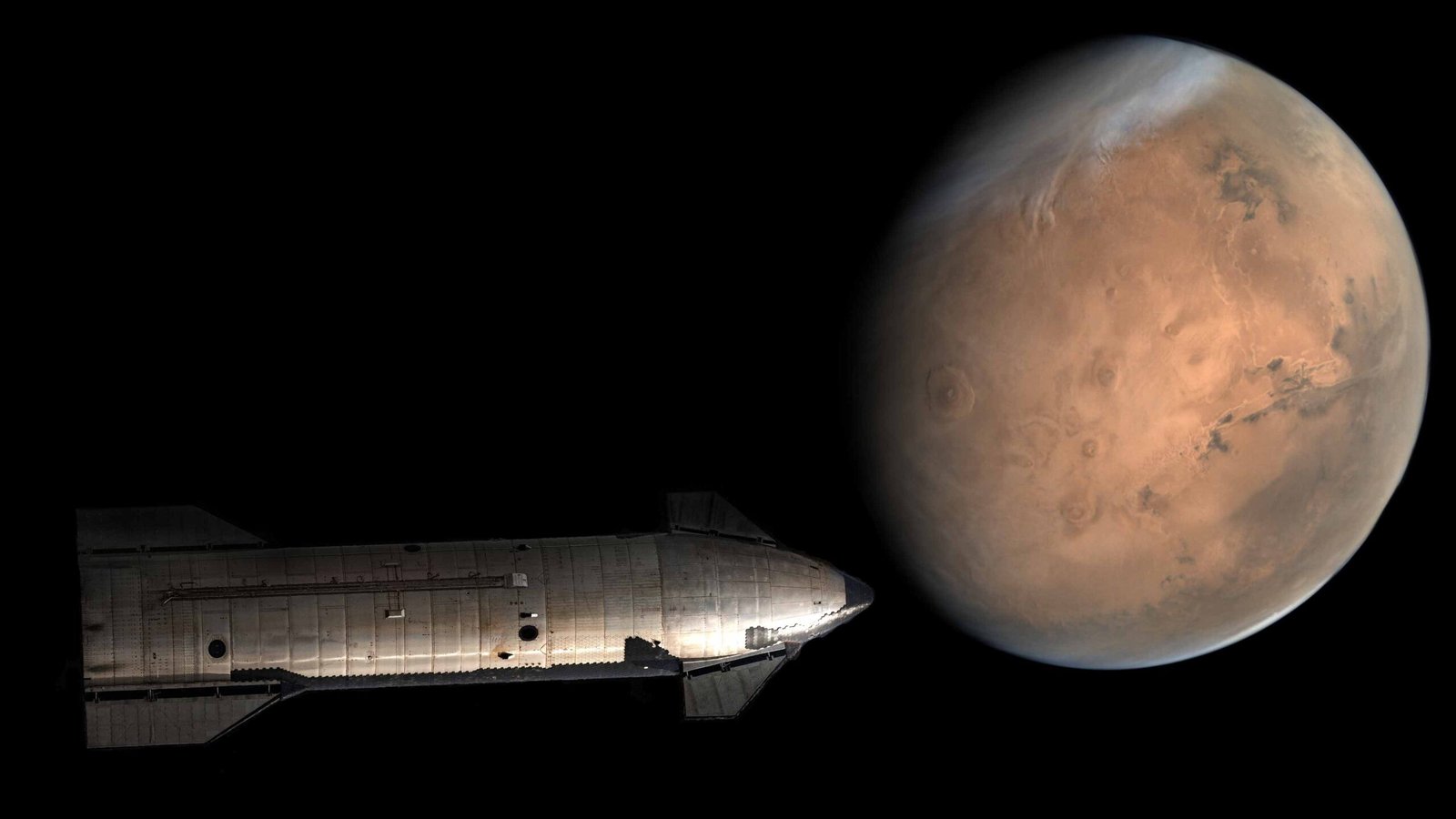
Starship Flight 16 Booster Completed First Test for Launch : The aerospace industry is entering an exciting new era as SpaceX advances its Starship development program, Tesla explores the boundaries of electric vehicle performance, and NASA continues making history on Mars.
From the latest testing of Starship Flight 16 Booster 23 (B23) to the experimental next-generation Tesla Roadster and the record-breaking journey of NASA’s Perseverance rover, these developments demonstrate how rapidly modern engineering is evolving.
SpaceX is focusing on improving rocket reliability and reusability, Tesla is exploring the connection between electric vehicle technology and aerospace engineering, and NASA is expanding our understanding of the Red Planet. Together, these projects highlight the possibilities of advanced propulsion, reusable transportation, and interplanetary exploration.
SpaceX Starship Flight 16: Booster 23 Completes Its First Major Tests
Booster 23 Advances Toward Cryogenic Testing Milestones
SpaceX continues preparing for upcoming Starship missions at its Starbase facility in South Texas. One of the major developments involves Super Heavy Booster 23 (B23), which is being prepared for the planned Starship Flight 16 mission.
On October 13, B23 was transported to Massey’s test site for ambient pressure testing. This initial testing phase helps engineers evaluate the booster’s structural systems and identify potential issues before exposing the vehicle to more demanding conditions.
On October 15, SpaceX conducted a critical cryogenic proof test, marking another important step in the booster’s development.
During cryogenic testing, the vehicle’s tanks are exposed to extremely cold fluids, commonly including liquid nitrogen, to simulate demanding operating conditions. The resulting temperature changes and pressure loads allow engineers to examine the performance of the tank structures, plumbing, and related systems.
The thick layer of white frost that forms across the booster’s exterior during these tests is a visible reminder of the extreme temperatures involved.
Cryogenic testing is essential for rocket safety and reliability. Before a booster can proceed toward more advanced testing, engineers must establish confidence in its ability to withstand the stresses associated with loading and handling cryogenic propellants.
What Comes Next for Starship Flight 16?
Following its initial tests, Booster 23 is expected to return to Mega Bay 1 for additional inspections and preparation work. Potential next steps include engine installation, further system checks, and a static fire campaign, depending on the vehicle’s readiness.
There has also been discussion of Florida as a potential launch location for Starship Flight 16. If the mission uses Florida infrastructure, some hardware may need to undergo preliminary testing in Texas before being transported east by barge.
Moving a massive rocket booster between facilities presents significant logistical challenges. SpaceX must coordinate transportation, ground infrastructure, launch-site readiness, and testing schedules to ensure that the vehicle can be integrated safely.
Although completing an initial test does not mean that B23 is ready for launch, it represents meaningful progress toward the next stage of Starship development.
SpaceX McGregor: Raptor Engine Testing and Rocket Reliability
Why Raptor Engines Matter
While Starbase handles much of Starship’s vehicle integration, SpaceX’s McGregor, Texas, facility plays a crucial role in Raptor engine development and testing.
Raptor engines power Starship and its Super Heavy booster. These engines use liquid methane and liquid oxygen and are designed to support the high performance required for orbital launches and eventual deep-space missions.
Developing reliable rocket engines requires extensive testing under extreme temperatures, pressures, and operating conditions. Engineers must evaluate combustion stability, mechanical performance, cooling systems, and other critical components.
The goal is not simply to produce powerful engines. SpaceX also aims to make them reliable, maintainable, and reusable.
Ship 42 and the Importance of Additional Testing
Recent development activities have also focused on Starship Ship 42 (S42). Following a previous cryogenic test, engines were reportedly installed before being removed ahead of another testing cycle.
The precise reason for the engine removal has not been publicly confirmed in the supplied report. Therefore, it would be premature to conclude that the change resulted from a particular technical failure.
However, engine removal and reinstallation can form part of a complex development process involving inspections, configuration changes, troubleshooting, and preparation for subsequent tests.
Resolving unexpected behavior is particularly important as SpaceX works toward more dependable launch operations.
Rapid rocket reuse depends on reliable hardware, effective inspections, and repeatable procedures. Every additional test provides engineers with opportunities to identify weaknesses, improve system integration, and reduce uncertainty before flight.
Tesla Roadster: Bringing Rocket-Derived Technology to Electric Vehicles
Cold Gas Thrusters and Experimental Performance
Tesla’s next-generation Roadster has attracted attention because of its ambitious performance goals and its proposed connection to SpaceX technology.
According to the supplied report, a Roadster prototype was demonstrated on October 15 with experimental systems derived from aerospace engineering. The demonstration reportedly included cold gas thrusters, which release pressurized gas to produce short bursts of thrust.
In spacecraft applications, cold gas propulsion can provide controlled movement without conventional combustion. A vehicle incorporating such technology could potentially use brief thrust bursts for specialized demonstrations, although a practical road-going implementation would require extensive engineering and safety validation.
The reported Roadster demonstration also included brief airborne movements and obstacle-clearance stunts. These should be understood as claims about an experimental prototype rather than evidence that a production vehicle can routinely fly on public roads.
Can the Tesla Roadster Drive Upside Down?
One of the most unusual demonstrations described in the report involved the Roadster traveling along a C-shaped track and continuing while inverted.
The concept reportedly relied on a specialized suction system to help the vehicle remain attached to the track.
This is different from ordinary automotive traction. A conventional electric car depends on its tires maintaining contact with the road, while an inverted vehicle would require an additional mechanism to counteract gravity and maintain controlled movement.
Such a demonstration would require careful coordination between vehicle dynamics, track design, adhesion systems, and safety equipment.
The prototype also reportedly cleared a lineup of five Tesla vehicles, including the Model 3, Model Y, Cybertruck, Semi, and Cybercab.
Aiming for 0–60 MPH in 1.1 Seconds
The supplied report highlights a claimed 0–60 mph acceleration time of just 1.1 seconds for the experimental Roadster.
That figure would place the vehicle among the most extreme performance concepts in the automotive world. However, it should not be treated as an independently verified production specification without supporting test data and confirmation from Tesla.
The Roadster’s wider appeal comes from the possibility of combining electric powertrain performance with technologies inspired by aerospace engineering.
If practical and safe systems emerge from this research, they could demonstrate how lessons from rocketry may influence future vehicle design. Nevertheless, experimental demonstrations and commercially available features remain two different things.
NASA Perseverance Rover Breaks a Historic Mars Driving Record
More Than 28 Miles Across the Martian Surface
While SpaceX and Tesla explore new transportation technologies, NASA continues advancing robotic exploration beyond Earth.
On October 11, according to the supplied report, NASA’s Perseverance rover surpassed 28.10 miles (45.22 kilometers) of cumulative driving on Mars. This reportedly exceeded the previous record of approximately 28.06 miles (45.16 kilometers), achieved by NASA’s Opportunity rover.
The milestone is significant because driving on Mars presents challenges that do not exist in ordinary terrestrial environments.
Perseverance must navigate rocky terrain, manage its power and thermal systems, and operate with instructions transmitted across the enormous distance between Earth and Mars. Autonomous navigation capabilities help the rover plan and execute portions of its journeys while avoiding obstacles.
According to the report, Perseverance reached the milestone in approximately 5.5 years, compared with the roughly 14 years Opportunity spent accumulating its record distance.
The Long-Term Goal: Reaching 100 Kilometers
Perseverance was designed primarily as a scientific exploration platform, not simply as a long-distance vehicle. Its mobility allows scientists to investigate different geological formations and collect samples from locations that may preserve evidence of ancient environmental conditions.
The mission team reportedly believes the rover could potentially approach 100 kilometers of total driving if its systems remain healthy and mission conditions permit.
That remains a target rather than a guarantee. Future progress depends on the rover’s mechanical condition, terrain, scientific priorities, and operational planning.
Searching for Ancient Signs of Life
Perseverance is exploring Jezero Crater, a region selected because of evidence that water once played an important role in its geological history.
The rover’s scientific objectives include studying rocks, analyzing minerals, and collecting carefully selected samples for potential future return to Earth.
The supplied report highlights the southern crater rim and the Rainbow Falls region, where clay minerals such as kaolinite may help scientists investigate past water-rock interactions.
These geological clues could improve our understanding of ancient Mars and whether the planet once supported environments suitable for microbial life.
Importantly, finding evidence of past water does not prove that life existed there. Instead, it helps researchers identify locations where potential biosignatures may be preserved.
Conclusion: The Future of Aerospace and Automotive Engineering
The latest developments involving Starship Flight 16, Raptor engine testing, the experimental Tesla Roadster, and NASA’s Perseverance rover illustrate the extraordinary range of modern engineering.
Booster 23’s testing advances SpaceX’s efforts to develop a reusable launch system, while Raptor engine development remains central to improving propulsion reliability. Tesla’s experimental Roadster concepts explore the boundaries of electric vehicle performance, and Perseverance continues demonstrating the value of long-duration robotic exploration.
Each project faces different technical challenges, but they share a common objective: turning ambitious engineering concepts into dependable systems.
As testing continues and scientific discoveries accumulate, these programs could help shape the future of transportation, commercial spaceflight, and planetary exploration. The next milestones will depend on careful validation, technical progress, and the ability to transform experimental achievements into repeatable results.
FAQs
1. What is Starship Flight 16?
Starship Flight 16 is a planned mission in SpaceX’s Starship development program. It involves continued testing of the fully reusable transportation system designed for future orbital missions, satellite deployment, and potential journeys to the Moon and Mars.
2. What is Booster 23 (B23)?
Booster 23 (B23) is a Super Heavy booster associated with preparations for Starship Flight 16. It is undergoing testing to evaluate its structural integrity and readiness for additional development milestones before a potential launch.
3. When did SpaceX conduct Booster 23’s cryogenic proof test?
According to the supplied report, SpaceX conducted the cryogenic proof test on October 15. The test exposed the booster’s tanks to extremely cold conditions to evaluate their ability to withstand demanding pressure and temperature loads.
4. Why is cryogenic testing important for Starship?
Cryogenic testing helps engineers verify the strength and reliability of rocket tanks, plumbing, and associated systems under extreme conditions. It allows SpaceX to identify potential problems before proceeding to more advanced tests and flight preparations.
5. What happens to Booster 23 after its initial testing?
Following its initial testing, B23 is expected to return to Mega Bay 1 for inspections and further preparation. Potential next steps include engine installation, additional system checks, and static fire testing, depending on the booster’s condition and schedule.
6. Could Starship Flight 16 launch from Florida?
Florida has been discussed as a potential launch location for Flight 16. However, the launch location and schedule should be considered tentative unless officially confirmed by SpaceX. Hardware may require preliminary testing in Texas before transportation to Florida.
7. What is the SpaceX Raptor engine?
The Raptor engine is a rocket engine developed by SpaceX that uses liquid methane and liquid oxygen. It powers Starship and the Super Heavy booster, providing the thrust needed for launch, ascent, and the company’s broader spaceflight ambitions.
8. Why does SpaceX test Raptor engines at McGregor, Texas?
SpaceX’s McGregor test facility supports engine development and testing under demanding operating conditions. Engineers evaluate propulsion performance, combustion stability, cooling systems, and reliability to identify potential problems before flight.
9. What is happening with Starship Ship 42 (S42)?
According to the supplied report, Ship 42 completed a cryogenic test and subsequently had engines installed and removed before another testing cycle. The exact reason for the engine removal has not been confirmed, and additional testing may help prepare the vehicle for future milestones.
10. What makes the next-generation Tesla Roadster different from other electric cars?
The next-generation Tesla Roadster is associated with ambitious performance goals and experimental concepts inspired by aerospace technology. These include potential cold gas thrusters and advanced vehicle dynamics, although experimental demonstrations should not be confused with confirmed production features.
11. What are cold gas thrusters in the Tesla Roadster concept?
Cold gas thrusters use pressurized gas released through a nozzle to generate thrust. In aerospace applications, they can help control spacecraft movement. A Roadster incorporating similar technology would require extensive engineering, validation, and safety measures before any practical use.
12. Can the Tesla Roadster really drive upside down or fly over obstacles?
The supplied report describes experimental demonstrations involving an inverted track and obstacle clearance. These concepts reportedly rely on specialized adhesion systems and thruster technology. However, they should not be treated as proof that a production Roadster can routinely fly or drive upside down on public roads.
13. How fast is the next-generation Tesla Roadster expected to accelerate?
The supplied report cites a claimed 0–60 mph acceleration time of 1.1 seconds. This would represent extraordinary performance, but the figure should be treated as a reported claim rather than an independently verified production specification.
14. What record has NASA’s Perseverance rover achieved on Mars?
According to the supplied report, NASA’s Perseverance rover surpassed 28.10 miles (45.22 kilometers) of cumulative driving on October 11, exceeding the previous distance record attributed to the Opportunity rover. This achievement highlights Perseverance’s mobility and continued operational progress on Mars.
15. What is NASA Perseverance’s main mission on Mars?
Perseverance explores Jezero Crater to study Martian geology, investigate evidence of ancient water, and collect rock and soil samples for potential future return to Earth. Scientists are searching for geological evidence and possible biosignatures that could improve our understanding of whether Mars once supported microbial life.
Read More:
- Amazon shuts out Elon Musk’s Grok Bot so he may just build his own rival store
- Tesla Roadster: Three configs, one can fly, 0-60 in 0.8 seconds
- How Tesla’s Roadster fan system and thrusters are built to dominate the corners
- Tesla’s flying Roadster just revealed something bigger than the car
- Elon Musk Has Finally Unveiled a Flying Tesla Roadster 2026