
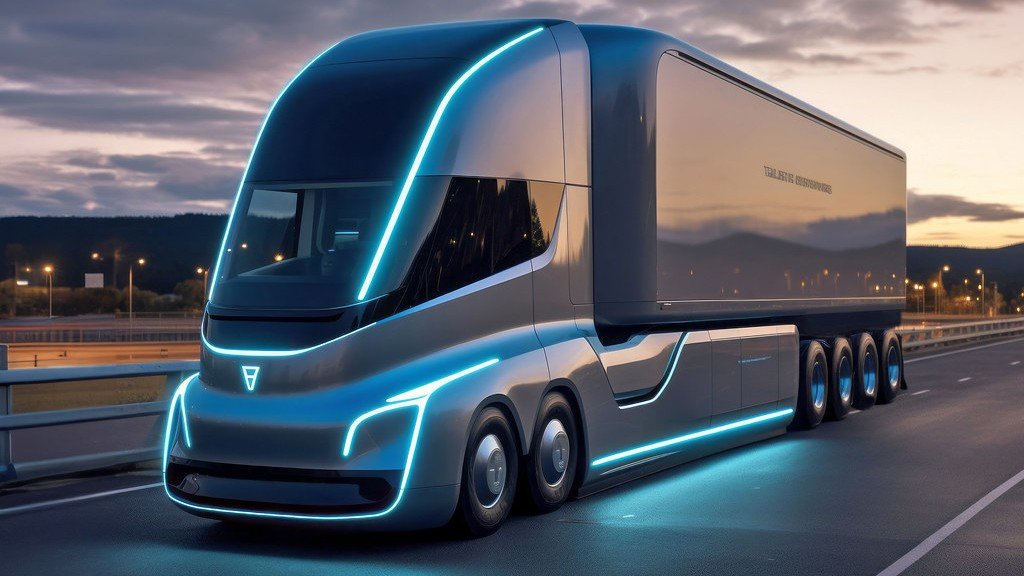
500 TESLA SEMI 2.0 DELIVERED! NEW PRICE & 4 BIG Upgrades Revealed: The Tesla Semi 2.0 is entering a new chapter in the electric trucking revolution. What was once viewed as a limited pilot program is increasingly becoming a serious commercial alternative to traditional diesel Class 8 trucks. A major milestone is Einride’s reported order for approximately 500 Tesla Semis, a deal that could dramatically expand the role of battery-electric trucks in large-scale freight operations.
The order would take Einride’s electric fleet from roughly 250 vehicles to more than 750 trucks, making it one of the most significant publicly announced Tesla Semi fleet commitments. More importantly, the deployment puts Tesla’s heavy-duty electric truck technology to the test across multiple U.S. freight markets.
The bigger question is no longer simply whether an electric semi can operate. It is whether the Tesla Semi can deliver better economics, charging efficiency, fleet utilization, and long-term scalability than diesel trucks.
Tesla Semi 2.0: From Pilot Project to Commercial Fleet
The planned Einride deployment represents a major shift in the commercial trucking industry. Instead of limiting electric trucks to controlled demonstrations or short regional routes, the vehicles are expected to operate across major freight hubs in California, Texas, New Jersey, Illinois, and Georgia.
The multi-state rollout is important because it exposes the Tesla Semi to different climates, road conditions, traffic patterns, electricity prices, and freight routes.
Tesla’s collaboration with Einride and Amazon also creates an interesting technology ecosystem. Amazon provides significant commercial freight demand, while Einride’s fleet-management technology can help optimize routes, charging, energy consumption, and vehicle utilization.
The Einride Software Advantage
Electric trucks require more than a large battery. Fleet operators need software capable of managing energy, charging schedules, routes, and vehicle availability.
Einride’s Saga platform is designed to provide this digital layer. Its potential functions include:
- Predictive route planning based on traffic, load, weather, and energy consumption.
- Dynamic charging management to reduce charging costs and avoid unnecessary downtime.
- Fleet utilization monitoring to keep trucks productive.
- Real-time vehicle data for operational decision-making and maintenance planning.
This combination of hardware and software could become one of the most important advantages of electric freight fleets.
Tesla Semi Price and Operating Economics
One of the biggest questions surrounding the Tesla Semi is its price. Electric Class 8 trucks generally require a higher upfront investment than comparable diesel trucks, but purchase price alone does not determine fleet profitability.
Commercial operators focus heavily on total cost of ownership (TCO), including fuel, electricity, maintenance, downtime, financing, and vehicle utilization.
According to the figures outlined in the supplied analysis, the Tesla Semi can consume approximately 1.7 kWh per mile under load. The estimated energy cost is around $0.20 per mile, compared with approximately $0.67 per mile for diesel fuel under the stated assumptions.
That creates a potential operating advantage of roughly $0.47 per mile.
Potential Annual Savings
For a truck traveling 100,000 miles annually:
- Diesel energy cost: approximately $67,000
- Tesla Semi electricity cost: approximately $20,000
- Potential annual energy savings: approximately $47,000 per truck
If those assumptions hold in real-world fleet operations, the savings can become substantial over several years.
For 500 trucks traveling 100,000 miles each year, the fleet would cover approximately 50 million miles annually. At $0.47 in estimated energy savings per mile, that represents a theoretical $23.5 million in annual fuel or energy savings.
Actual savings will vary according to electricity prices, diesel prices, payload, route conditions, charging efficiency, weather, and utilization.
Four Big Tesla Semi Upgrades and Improvements
The Tesla Semi 2.0 story is about more than adding vehicles to production. The next generation of Tesla’s heavy-duty truck strategy centers around several important improvements.
1. Higher-Volume Manufacturing
Tesla is developing dedicated Semi manufacturing capacity near Gigafactory Nevada. The long-term goal is to move from limited production toward significantly higher annual output.
Higher production volume could reduce manufacturing costs, improve supply-chain efficiency, and make electric trucks more accessible to large fleet operators.
For commercial transportation, scale is critical. A fleet customer needs confidence that hundreds or thousands of vehicles can eventually be delivered, serviced, and supported.
2. 1.2 MW Megacharging
Charging is arguably the biggest operational challenge for electric freight.
Tesla’s 1.2-megawatt charging technology is designed to dramatically reduce charging time for heavy-duty trucks. Under the figures presented in the supplied material, a 30-minute charging session could restore enough energy for roughly 300 additional miles, depending on operating conditions.
This creates the possibility of integrating charging into normal driver rest periods.
For example, instead of treating charging as an additional stop, a fleet could coordinate a truck’s charging session with its scheduled break.
3. Smarter Fleet Software
The third major improvement is the increasing importance of fleet intelligence.
Electric trucks generate large amounts of operational data. Fleet-management software can use that information to determine:
- Which truck should take a specific route
- When a vehicle should charge
- How much energy a route is likely to require
- Which charging station has available capacity
- How weather could affect range
- When maintenance may be required
This software layer could help fleet operators maximize the economic benefits of electrification.
4. Autonomous-Ready Technology
The fourth major area is autonomous freight technology.
Tesla has increasingly connected its vehicle-development strategy with advanced driver-assistance and autonomous driving ambitions. For trucking companies, successful autonomous freight technology could eventually reduce driver-related operating costs and increase vehicle utilization.
However, fully autonomous commercial trucking remains a developing technology, and regulatory, safety, technical, and operational challenges still need to be addressed.
Why the 1.2 MW Charging Network Matters
A large electric truck fleet requires more than individual charging stations. It needs an entire energy infrastructure ecosystem.
A single 1.2 MW charger represents enormous electrical demand. Ten trucks charging simultaneously could theoretically require around 12 MW, while 50 trucks could require approximately 60 MW at peak power.
That creates challenges for utilities and fleet operators.
Battery Storage Could Help
Large charging facilities may use stationary battery storage to reduce grid pressure and manage electricity costs. Energy storage can potentially charge when electricity is cheaper and provide additional power during periods of high charging demand.
This makes charging infrastructure, energy storage, and fleet software important parts of the overall Tesla Semi business model.
Tesla Semi vs. Diesel Trucks
The electric-versus-diesel debate ultimately comes down to economics.
Diesel trucks remain highly established, with extensive fueling infrastructure, long operating ranges, mature maintenance networks, and well-understood logistics.
The Tesla Semi offers a different proposition:
- Lower energy costs under favorable electricity pricing
- Fewer mechanical components
- Regenerative braking
- Potentially lower routine maintenance requirements
- Fast megawatt charging
- Integrated fleet software
- A pathway toward future autonomous operations
The challenge is the higher upfront vehicle cost and the need to build suitable charging infrastructure.
For high-mileage fleets operating predictable routes, however, the potential operating savings can make electrification increasingly attractive.
What the 500-Truck Order Means for the Trucking Industry
The importance of the Einride order extends beyond Tesla.
If large commercial fleets can demonstrate that electric Class 8 trucks provide competitive total cost of ownership, other logistics companies may accelerate their own electrification strategies.
That could increase demand for:
- Heavy-duty batteries
- Megawatt charging equipment
- Grid upgrades
- Fleet-management software
- Stationary energy storage
- Electric truck maintenance services
In other words, the Tesla Semi could help accelerate the development of an entire electric freight ecosystem.
The Future of Electric Freight
The commercial trucking industry is moving toward a convergence of electric powertrains, high-speed charging, artificial intelligence, fleet software, and autonomous driving.
The 500-truck Einride deployment is particularly important because it tests these technologies under real commercial conditions rather than isolated demonstrations.
If Tesla and its partners can achieve high vehicle utilization, reliable charging, competitive energy costs, and strong fleet uptime, electric Class 8 trucks could become a mainstream option for freight operators.
Final Thoughts
The Tesla Semi 2.0 represents a potentially significant turning point for heavy-duty transportation. The combination of large-scale fleet deployment, 1.2 MW megawatt charging, advanced fleet software, manufacturing expansion, and future autonomous capabilities creates a compelling commercial proposition.
The reported 500 Tesla Semi order is therefore more than a large vehicle purchase. It is a real-world experiment in whether electric trucks can outperform diesel on the metrics that matter most to fleet operators: cost per mile, uptime, utilization, energy efficiency, and scalability.
If the economics prove successful across multiple states and freight routes, the impact could extend far beyond Tesla and Einride. It could mark the beginning of a much larger transformation in the U.S. commercial trucking industry, with electric heavy-duty freight moving from experimental technology toward everyday fleet operations.
FAQs
1. What is the Tesla Semi 2.0?
The Tesla Semi 2.0 is Tesla’s next-generation electric Class 8 heavy-duty truck, designed for commercial freight and long-distance transportation. Its key advantages include electric power, improved efficiency, high-speed charging, and integration with advanced fleet-management technology.
2. How many Tesla Semis has Einride reportedly ordered?
Einride has reportedly announced an order for approximately 500 Tesla Semi trucks. The deployment would significantly expand Einride’s electric fleet and represents one of the largest publicly announced Tesla Semi orders.
3. Where will the Tesla Semi trucks be deployed?
The planned deployment covers several major U.S. freight markets, including California, Texas, New Jersey, Illinois, and Georgia. Operating across different regions will provide valuable real-world data on electric freight performance.
4. Who will use the Tesla Semi fleet?
Amazon is expected to be an important commercial freight customer associated with the deployment, while Einride will provide fleet-management and logistics technology. This creates a combination of vehicle technology, freight demand, and digital fleet optimization.
5. What is the expected Tesla Semi price?
The exact final price can vary depending on configuration, financing, infrastructure, and commercial agreements. The supplied analysis estimates a Tesla Semi purchase price in the range of approximately $260,000 to $290,000, although buyers should verify current commercial pricing before making purchasing decisions.
6. How much energy does the Tesla Semi use per mile?
The figures in the supplied analysis estimate Tesla Semi energy consumption at approximately 1.7 kWh per mile under load. Actual consumption can vary based on payload, speed, weather, terrain, traffic, temperature, and driving conditions.
7. Is the Tesla Semi cheaper to operate than a diesel truck?
It can be, particularly for high-mileage fleets with favorable electricity prices. The supplied estimates suggest an energy cost of around $0.20 per mile for the Semi compared with approximately $0.67 per mile for diesel under the stated assumptions. Actual operating costs will vary.
8. How much can a fleet save by using Tesla Semis?
Using the assumptions in the supplied analysis, a truck traveling 100,000 miles annually could potentially save around $47,000 per year in energy costs compared with diesel. Maintenance, electricity rates, charging costs, financing, and utilization can significantly affect the actual savings.
9. What is Tesla’s 1.2 MW Megacharger?
The 1.2 MW Megacharger is an ultra-high-power charging system designed specifically for heavy-duty electric trucks. Its purpose is to minimize charging downtime and make electric trucks more practical for demanding commercial freight operations.
10. How quickly can the Tesla Semi charge?
According to the figures provided in the analysis, a 1.2 MW charging session could restore approximately 60% of the truck’s battery capacity in about 30 minutes, potentially adding around 300 miles of usable range under suitable conditions.
11. Why is megawatt charging important for electric trucks?
Heavy-duty trucks require significantly more energy than passenger vehicles. Megawatt charging can provide large amounts of energy in a relatively short period, allowing fleet operators to better integrate charging into driver breaks and scheduled logistics operations.
12. What is Einride’s Saga software?
Saga is Einride’s fleet-management technology platform. It can help coordinate route planning, charging schedules, fleet utilization, energy management, and operational data, giving fleet operators greater visibility into electric truck operations.
13. Will the Tesla Semi be autonomous?
Tesla has indicated that autonomous driving and advanced driver-assistance technology are important areas of development for its vehicle strategy. However, fully autonomous commercial freight operations still involve significant technological, regulatory, and safety challenges.
14. How does the Tesla Semi compare with a diesel Class 8 truck?
The Tesla Semi can potentially offer lower energy costs, fewer mechanical components, regenerative braking, and reduced routine maintenance requirements. Diesel trucks, meanwhile, benefit from mature fueling infrastructure, established service networks, and long-standing commercial operating experience.
15. Why is Einride’s 500-truck Tesla Semi order important?
The order is significant because it represents a move toward large-scale commercial electric trucking rather than small pilot programs. If these trucks achieve strong reliability, utilization, charging performance, and operating economics, the deployment could encourage other major freight companies to accelerate their transition from diesel to electric Class 8 trucks.
Read More:
- Elon Musk gives a timeline for SpaceX’s first Starship catch attempt
- Tesla admits to slow Model Y Robotaxi integration, but for a good reason
- SpaceX’s New Starship Heat Shield Upgrades after Elon Says Problems are Solved
- Gen 2 Tesla Roadster Flying BIG Launch Event, New Massive Specs
- Tesla is opening Cybercab rides to a select few
1 thought on “500 TESLA SEMI 2.0 DELIVERED! NEW PRICE & 4 BIG Upgrades Revealed”