
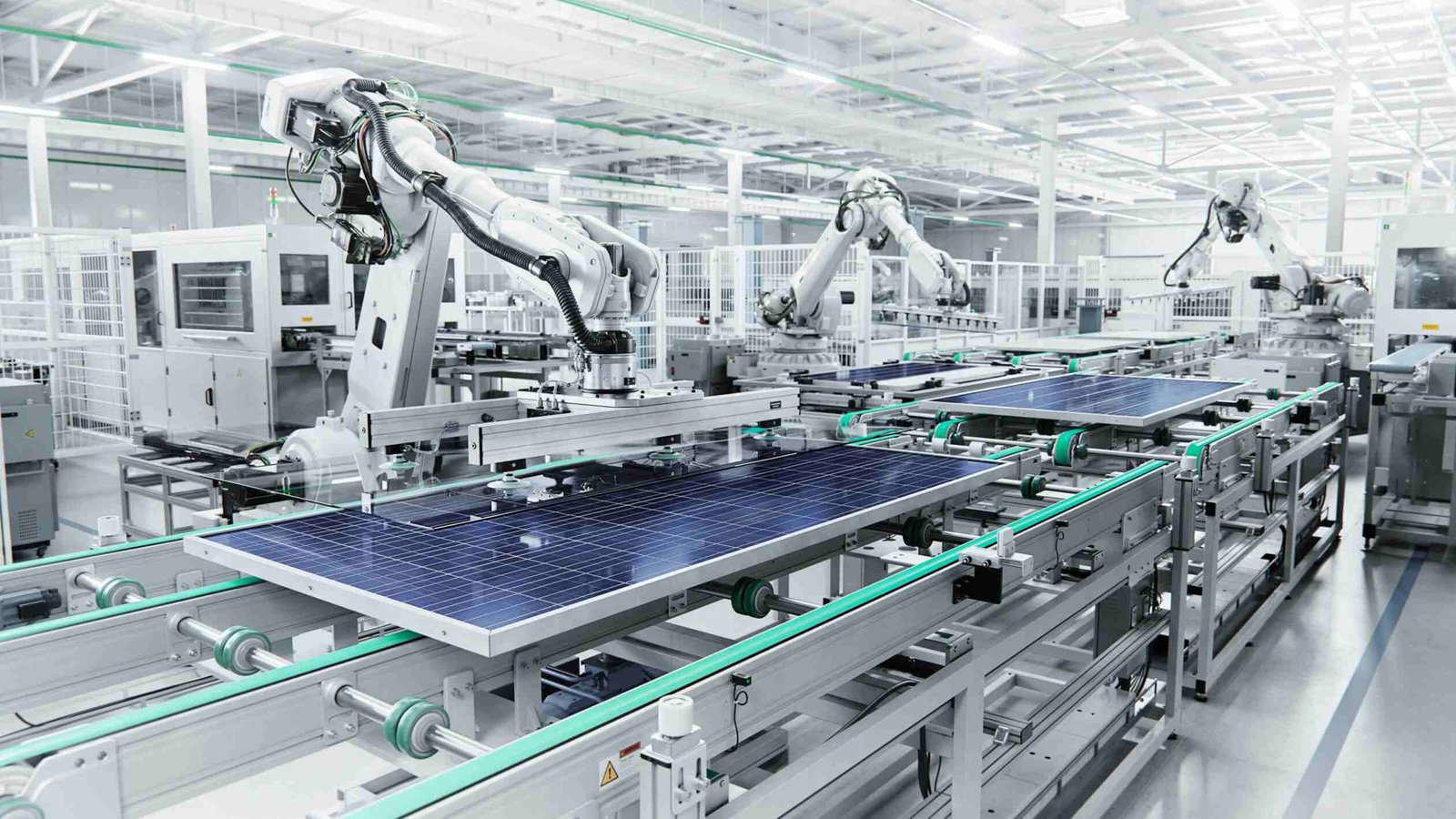
Tesla 100GW Solar Factory First Look SHOCKING The World: Nearly a decade ago, Tesla introduced an ambitious vision for residential clean energy: the Tesla Solar Roof. Instead of installing conventional solar panels over existing shingles, Tesla proposed replacing the roof itself with sleek glass tiles capable of generating electricity.
At the time, the concept looked revolutionary. But nearly ten years later, the company appears to be moving in a dramatically different direction. Reports suggest that Tesla is quietly winding down its residential Solar Roof business, while simultaneously preparing for a much larger bet: a potential 100-gigawatt solar manufacturing facility in Texas.
This isn’t simply a story about Tesla abandoning solar energy. Instead, it could represent a major strategic shift from customized residential installations to massive, standardized industrial solar production.
Tesla Solar Roof: A Revolutionary Idea That Struggled to Scale
The original Solar Roof concept was simple but ambitious. Traditional solar panels are standardized products that can be manufactured in enormous quantities and installed relatively quickly.
Tesla’s approach was fundamentally different.
The company wanted the roofing material and solar technology to become one product. That meant producing different glass tiles and designing systems around the unique characteristics of individual homes.
The problem was economics.
Customization Made the Solar Roof Expensive
Every house is different. Roofs have different angles, valleys, chimneys, skylights, structural requirements and layouts. Scaling a highly customized manufacturing and installation process is considerably harder than producing standardized solar modules.
Traditional solar panels benefit from mass production and modular installation. Tesla’s Solar Roof, by contrast, required considerably more customization.
At one point, Tesla targeted production of approximately 1,000 Solar Roof installations per week. In practice, reports suggested the company was producing only a fraction of that volume, with installations reportedly reaching just a few dozen roofs per week at certain points.
Pricing also became a major challenge. Some customer quotes reportedly increased from around $72,000 to $146,000, making the product difficult to justify compared with conventional solar panels.
The lesson is important: great technology does not automatically create a great business model.
Tesla’s Solar Strategy Is Moving Toward Gigawatt Scale
While the residential Solar Roof struggled with customization, Tesla appears to be pursuing a radically different approach to solar manufacturing.
The centerpiece of this strategy is a proposed $10.1 billion solar manufacturing complex in Brookshire, Texas, west of Houston.
The scale of the proposal is extraordinary.
Brookshire Solar Factory: Key Numbers
- Production target: 100 gigawatts (GW) of solar capacity annually
- Estimated investment: Approximately $10.1 billion
- Production equipment investment: About $2.9 billion
- Potential permanent jobs: Approximately 10,000
- Production scope: Ingots, silicon wafers, solar cells and finished utility-scale modules
- Initial production target: 2029
If realized at the proposed scale, this would not be another boutique clean-energy project. It would be an industrial-scale solar manufacturing operation designed to produce enormous quantities of standardized modules.
That difference may explain Tesla’s apparent shift away from the Solar Roof.
Why 100GW Would Be So Significant
To understand how ambitious a 100GW solar factory would be, consider the size of the U.S. solar market.
The United States installed approximately 32 GW of new solar capacity in 2023. A factory capable of producing 100 GW annually would therefore have a theoretical output exceeding three times the entire amount of new U.S. solar capacity installed that year.
The comparison becomes even more striking against individual manufacturers.
Tesla’s Potential Solar Manufacturing Advantage
First Solar has been expanding its manufacturing footprint and has projected substantial future production capacity. Yet a 100GW Tesla facility would be several times larger than the roughly 17.7GW target cited for First Solar by 2027.
Tesla’s existing Buffalo Gigafactory solar operation is tiny by comparison, with capacity around the hundreds-of-megawatts scale.
The proposed Brookshire operation would therefore represent a completely different manufacturing philosophy.
Instead of optimizing a complicated residential product, Tesla could be attempting to dominate solar through volume, automation and vertical integration.
The Gigafactory Playbook
This strategy resembles Tesla’s approach in other industries.
The company has historically invested heavily in manufacturing capacity with the expectation that scale will eventually reduce costs and unlock demand.
The same philosophy was used in battery manufacturing and electric vehicles.
Rather than waiting for demand to become obvious before building factories, Tesla has often attempted to create enormous production capacity ahead of the market.
Scale Can Become a Competitive Weapon
Solar panels are particularly well suited to this strategy because they are highly standardized products.
A residential roof can be unique, but a solar module can be produced millions of times with the same basic specifications.
That creates opportunities for:
- Automation
- Lower manufacturing costs
- Faster production
- Simplified logistics
- Higher factory utilization
- Large-scale purchasing of raw materials
This could make industrial solar manufacturing a much better fit for Tesla’s manufacturing philosophy than customized roofing systems.
The Solar Learning Curve Could Change Everything
One of the most important forces behind the solar industry is the learning curve.
The Swanson/Wright learning-curve concept suggests that as cumulative solar manufacturing capacity doubles, module costs can decline by roughly 20%.
Over several decades, solar module prices have fallen dramatically—by approximately 10,000 times according to the figures cited in the source material.
That creates a powerful feedback loop.
More Production Can Lead to Cheaper Solar
The cycle looks something like this:
More factory capacity → greater production → lower costs → stronger demand → even more production.
This is one reason massive manufacturing facilities could become increasingly important.
Unlike fossil-fuel power plants, solar installations don’t require a continuous supply of fuel. The sun provides the energy source, while the major expenditure comes upfront in the hardware and infrastructure.
Once the system is installed, its fuel cost is effectively zero.
Why AI Could Make Solar Even More Important
Tesla’s solar strategy also intersects with another enormous technology trend: artificial intelligence.
Modern AI requires extraordinary amounts of computing power. Training advanced models and operating large-scale inference systems requires data centers packed with GPUs and other specialized hardware.
But computing hardware isn’t the only constraint.
Electricity is becoming one of the most important infrastructure requirements for AI.
Large data centers can require enormous amounts of power, while future automated factories, robotics facilities and transportation systems could add further electricity demand.
This creates a potentially important connection between solar manufacturing and the AI economy.
If electricity demand grows rapidly, the world needs to build generation capacity quickly. Solar has several advantages: it can be deployed at scale, manufacturing can be standardized, and its energy source doesn’t need to be extracted or transported.
From Solar Roof to Solar Factory
Tesla’s apparent Solar Roof retreat may therefore look disappointing on the surface, but it could actually represent a broader industrial optimization strategy.
The company appears to have learned that replacing an entire home’s roof with solar-generating glass tiles is difficult to scale profitably.
A standardized solar module is a very different proposition.
Instead of building a complicated product for thousands of individual homes, Tesla could potentially manufacture billions of dollars worth of standardized solar hardware for utility-scale projects and large energy customers.
That is a much more natural environment for factory automation.
What the Tesla 100GW Strategy Could Mean
If Tesla ultimately builds the proposed Brookshire facility at its full scale, the consequences could extend beyond the company itself.
A 100GW annual production target would represent an enormous increase in solar manufacturing capacity and could help accelerate competition around manufacturing costs, supply chains and energy deployment.
The bigger idea is that Tesla may be betting on a future where energy becomes one of the world’s most valuable industrial products.
The Solar Roof was an attempt to bring solar generation directly into millions of homes.
The 100GW factory concept is something much bigger: building the infrastructure capable of supplying vast quantities of solar power to the grid, industrial facilities and potentially the rapidly expanding AI economy.
Conclusion: Tesla Isn’t Leaving Solar—It’s Going Bigger
The story of Tesla’s Solar Roof may ultimately become a lesson in the difference between innovation and scalability.
The Solar Roof was visually impressive and technologically ambitious, but its customized manufacturing and installation requirements made it difficult to turn into a mass-market product.
Tesla’s proposed Texas solar factory represents the opposite approach.
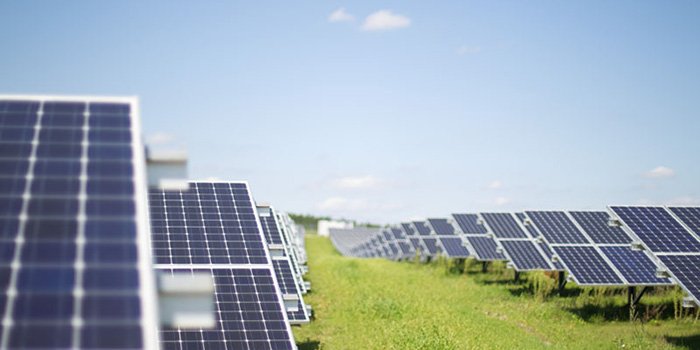
Standardized products. Massive factories. Vertical integration. Automation. Gigawatt-scale production.
If the Brookshire project reaches its proposed 100GW annual capacity, Tesla would be making one of the boldest bets yet on the future of solar manufacturing.
The company may not be abandoning residential solar because it believes solar has failed. It may be doing the opposite: betting that the future of clean energy is simply too large to be built one customized rooftop at a time.
FAQs
1. What is Tesla’s 100GW solar factory?
Tesla’s proposed 100GW solar factory is a large-scale manufacturing project planned for Brookshire, Texas. The facility is intended to produce solar components and finished modules at an unprecedented industrial scale.
2. Where will Tesla’s 100GW solar factory be located?
The proposed facility is planned for Brookshire, Texas, west of Houston. The location would provide access to major transportation networks, industrial infrastructure and a large U.S. energy market.
3. How much will Tesla invest in the solar factory?
The proposed investment is approximately $10.1 billion, with around $2.9 billion reportedly allocated directly toward production equipment.
4. How much solar capacity could the factory produce?
Tesla has proposed an annual production capacity of approximately 100 gigawatts (GW). If achieved, that would make the facility one of the largest solar manufacturing operations in the world.
5. When could Tesla’s Texas solar factory begin production?
The current proposal targets initial production around 2029. Actual timing could change depending on construction, permitting, investment and market conditions.
6. How many jobs could the Tesla solar factory create?
The proposed project could create approximately 10,000 permanent manufacturing jobs, making it potentially significant for the Texas economy.
7. Is Tesla abandoning the Solar Roof?
Reports indicate Tesla is pulling back from its residential Solar Roof product, including indications that certified installers may no longer be able to order certain solar glass tiles. This appears to be a strategic shift rather than an abandonment of solar energy.
8. Why did Tesla’s Solar Roof struggle?
The biggest challenge was customization. Every residential roof has different angles, dimensions, valleys and structural requirements. Producing and installing customized solar roofing is much more complicated and expensive than manufacturing standardized solar panels.
9. Is the Tesla Solar Roof more expensive than traditional solar panels?
In many reported cases, Solar Roof installations became significantly more expensive than customers initially expected. Traditional solar panels generally offer more predictable pricing because the technology is standardized and easier to install.
10. What is the difference between the Solar Roof and traditional solar panels?
Traditional solar panels are mounted on top of an existing roof. Tesla’s Solar Roof was designed to make the roofing material itself generate electricity. This created a cleaner appearance but also introduced considerably greater manufacturing and installation complexity.
11. Why is Tesla focusing on large-scale solar manufacturing?
Large-scale manufacturing allows Tesla to pursue automation, standardization and economies of scale. Instead of producing customized systems for individual homes, the company can potentially manufacture enormous quantities of standardized solar modules.
12. Would 100GW be a huge amount of solar production?
Yes. For perspective, the United States installed roughly 32GW of new solar capacity in 2023. A 100GW annual manufacturing target would therefore be more than three times that figure.
13. How could Tesla’s solar factory reduce solar costs?
Mass production can reduce manufacturing costs through economies of scale, automation and improved production efficiency. Solar technology has historically followed a strong learning curve in which costs decline as cumulative production increases.
14. What is the solar learning curve?
The solar learning curve describes how the cost of solar technology tends to fall as global manufacturing and deployment increase. The Swanson/Wright learning effect is commonly associated with substantial cost reductions as cumulative capacity doubles.
15. Could Tesla’s solar factory help power artificial intelligence?
Potentially. The rapid growth of AI data centers and computing infrastructure is increasing demand for electricity. Large-scale solar manufacturing could help provide additional generation capacity as electricity consumption rises.
16. Does Tesla’s Solar Roof strategy mean Tesla is leaving the solar industry?
No. The apparent shift suggests Tesla may be moving away from difficult, customized residential installations toward large-scale solar manufacturing. If the proposed 100GW factory is built, Tesla could actually become more deeply involved in the global solar supply chain.
Read More:
- SpaceX tells the FCC that Starship Flight 14 is going to orbit
- Tesla Cybercab event gains steam ahead of massive launch
- Tesla Model Y L gets suspension complaints in over odd issue China
- SpaceX Ready to Make Massive Surprise in Starship Flight 15, Totally Destroys the Industry
- Amazing INSIDE Elon Musk’s World’s Biggest Terafab $119B
1 thought on “Tesla 100GW Solar Factory First Look SHOCKING The World”