
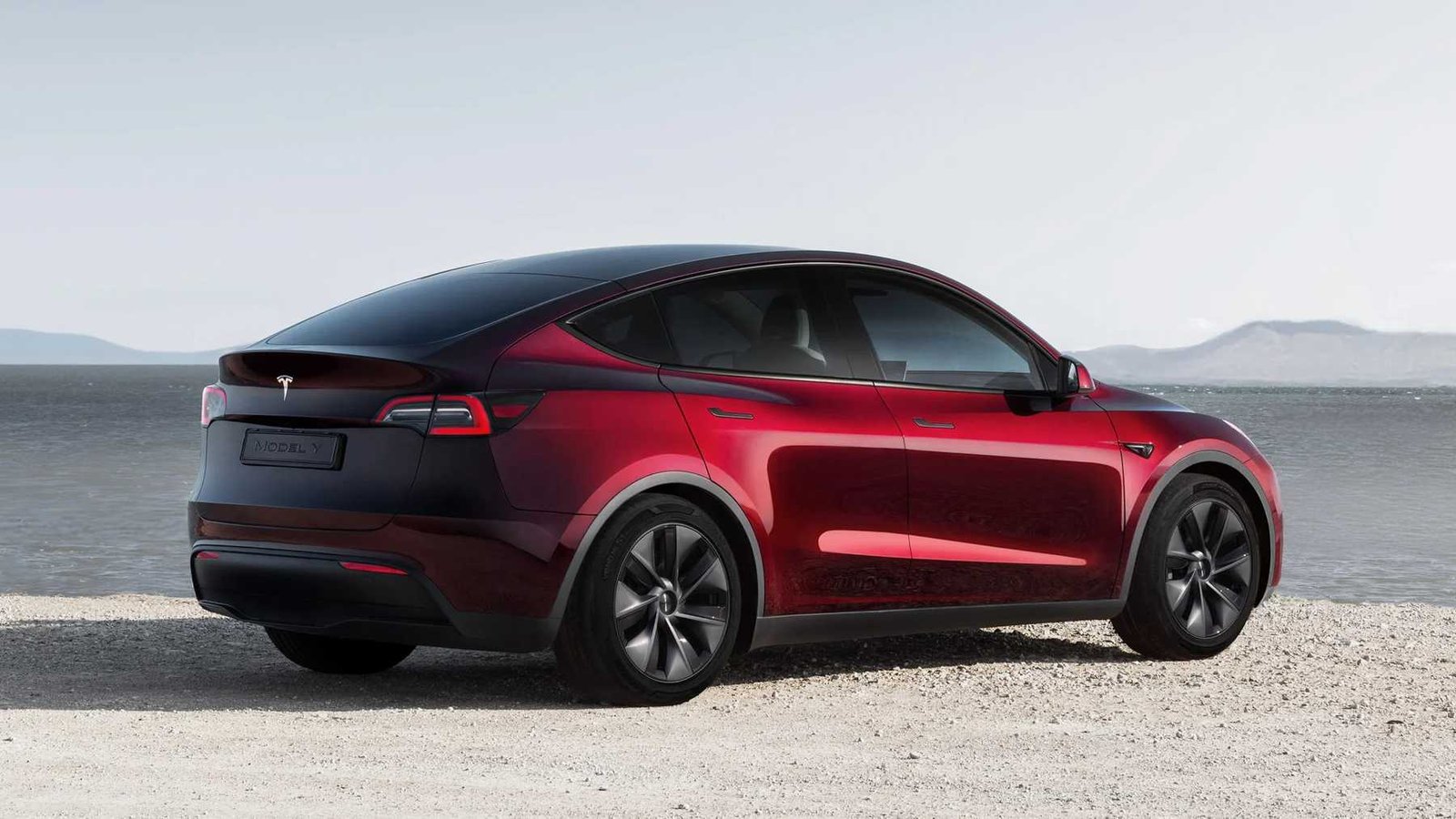
New Tesla Model 2 IT’S REAL! Costs Just $18,000 To Build And Erases 100 Welds: The idea of a low-cost Tesla Model 2 has attracted enormous attention, but the bigger story may be the manufacturing technology required to make an affordable electric vehicle possible. According to the supplied source, achieving an $18,000 to $22,000 raw production cost would require Tesla to fundamentally rethink how vehicles are designed, assembled, wired, and powered.
Rather than simply making an existing Tesla smaller or removing expensive features, the proposed manufacturing strategy centers on parallel assembly, structural adhesives, simplified electrical architecture, and lower-cost LFP battery technology.
These changes could create a new manufacturing blueprint for mass-market EVs.
Tesla’s Unboxed Manufacturing Could Eliminate Around 100 Welds
For more than a century, conventional automobile factories have relied on a sequential assembly process. A vehicle body moves through numerous stations while workers and machines progressively weld components together. The source explains that this traditional approach requires thousands of spot welds across the manufacturing process.
Tesla’s Unboxed Process represents a different philosophy.
Replacing Traditional Welding With Structural Adhesives
Instead of relying entirely on traditional spot welding, the Unboxed concept uses high-performance structural adhesives alongside parallelized manufacturing.
One of the most striking claims is the potential elimination of approximately 100 weld stations. Self-aligning structural adhesives can bond panels while helping compensate for extremely small alignment differences as the adhesive cures.
This isn’t simply about removing welds. The larger objective is to change the entire factory workflow.
Four Major Vehicle Modules
The vehicle can be divided into independent structural sub-assemblies, including the front section, rear section, structural battery pack, and cabin interior.
These modules can be constructed simultaneously in separate production areas before being brought together during final assembly.
That parallel approach could reduce factory floor requirements, equipment overhead, and assembly time per vehicle.
Beyond Giga Casting: A Completely Different Factory Layout
Tesla’s Giga Casting technology has already demonstrated the potential benefits of producing large vehicle structures as fewer pieces. However, the Unboxed strategy goes beyond simply making larger castings.
The supplied material describes an integrated manufacturing system where large castings and structural modules work together in a synchronized process. The objective is to reduce the physical footprint of the factory while lowering capital equipment requirements and shortening production time.
For a vehicle targeting the mass market, these manufacturing efficiencies could be just as important as the vehicle’s battery or motors.
The 48-Volt Electrical System Could Save Weight and Copper
Another major cost-reduction opportunity comes from the vehicle’s electrical architecture.
Traditional vehicles commonly use a 12-volt electrical system, while the proposed next-generation architecture moves toward a 48-volt bus. The source explains that increasing voltage allows the same power to be delivered using substantially lower current.
Why 48 Volts Matters
The relationship can be summarized using the basic equation:
Power = Voltage × Current
If voltage increases by four times, the current required for the same power delivery can decrease substantially. That allows engineers to use thinner electrical cables.
According to the supplied material, the transition can reduce copper usage by more than 70% in key circuits, while main distribution lines could become approximately 85% lighter. Across the vehicle, the source estimates a potential harness weight reduction of 11 to 22 pounds, or roughly 5 to 10 kilograms.
For a low-cost EV, saving material and simplifying automated assembly can have a significant impact.
LFP Batteries Could Become the Key to Lower EV Costs
The battery remains one of the largest expenses in electric vehicle manufacturing. Consequently, lowering the cost of an affordable Tesla requires more than cheaper body construction.
The supplied source highlights Lithium Iron Phosphate (LFP) chemistry as an important part of the strategy.
Why LFP Chemistry Is Attractive
LFP batteries avoid nickel and cobalt, reducing dependence on those materials and their associated supply chains.
According to the source, baseline LFP cell architectures can be approximately 20% cheaper than nickel-rich chemistry, potentially saving $1,000 or more per vehicle at the pack level.
For a vehicle designed around affordability, that difference could be significant.
Direct-Synthesis Cathode Manufacturing
The source also points to Tesla patent filings describing direct-synthesis processes for LFP cathode production.
The proposed process bypasses multiple conventional stages involving heating, mixing, and granulation. By reducing these processing steps, the technology could lower energy consumption and capital requirements associated with cathode production.
That makes battery manufacturing itself part of the broader cost-reduction strategy.
Tesla Could Cut Features Without Cutting Safety
Making an affordable EV does not necessarily mean eliminating important safety technology.
The supplied material describes a deliberate distinction between convenience features and core safety systems. Optional equipment such as tow-hitch assemblies, larger speaker systems, and certain interior trim elements can potentially be simplified or removed.
Safety Systems Remain a Priority
The source states that post-November 2025 production models passed updated NHTSA ADAS benchmarks, including testing involving pedestrian automatic emergency braking, lane keeping, and blind-spot intervention.
The broader manufacturing philosophy is therefore to reduce unnecessary complexity while retaining structural and active-safety engineering.
This distinction is crucial for a potential mass-market Tesla: affordability can come from simplifying manufacturing rather than simply removing safety technology.
Could These Technologies Make an $18,000 Tesla Possible?
The supplied material identifies $18,000 to $22,000 as a raw production-cost target, not a confirmed retail price for an officially announced Model 2.
That distinction matters.
A vehicle’s raw production cost is different from its final consumer price because retail pricing can also include transportation, distribution, research and development, taxes, warranty costs, corporate expenses, and other factors.
Nevertheless, the technologies described in the source show how Tesla could theoretically attack costs from multiple directions simultaneously.
The potential formula is straightforward:
Fewer weld stations + parallel assembly + less copper + cheaper battery chemistry + simplified features = lower manufacturing complexity and cost.
The Bigger Picture for Tesla’s Future
The pursuit of a sub-$20,000 production cost represents more than a cheaper vehicle. It could signal a broader transformation in automotive manufacturing.
The source identifies three central technologies: parallel Unboxed Assembly, 48-volt electrical architecture, and direct-synthesis LFP cathodes.
Together, they address three major manufacturing expenses: factory construction and assembly, electrical materials, and battery production.
If successfully implemented at large scale, such technologies could make EV manufacturing more efficient while opening the door to vehicles aimed at a much broader consumer market.
Conclusion: The Real Revolution May Be the Factory
The potential Tesla Model 2 story is ultimately about more than an inexpensive electric car.
The most important innovation may happen inside the factory. An Unboxed manufacturing system could eliminate roughly 100 traditional weld stations, modular production could enable parallel assembly, a 48-volt architecture could reduce copper and wiring weight, and LFP battery technology could lower one of the biggest costs in an EV.
The supplied material does not establish that Tesla has officially confirmed an $18,000 retail Model 2. Instead, it presents the engineering and manufacturing concepts that could support a much lower-cost EV platform.
If these technologies reach the required production scale, the resulting change could extend well beyond one Tesla model and influence the economics of mass-market electric vehicles across the automotive industry.
FAQs
1. Is the new Tesla Model 2 officially confirmed?
The supplied source discusses manufacturing technologies and an $18,000–$22,000 raw production-cost target, but it does not provide confirmation of an officially announced Tesla Model 2 or a final retail price.
2. How much could the Tesla Model 2 cost to build?
The source identifies a potential raw production cost of approximately $18,000 to $22,000 for a next-generation mass-market electric vehicle.
3. How could Tesla reduce Model 2 manufacturing costs?
The proposed strategy combines Unboxed manufacturing, structural adhesives, modular assembly, a 48-volt electrical system, LFP batteries, and feature simplification.
4. What is Tesla’s Unboxed manufacturing process?
The Unboxed Process is a manufacturing approach that breaks a vehicle into multiple structural modules that can be produced simultaneously before being joined during final assembly.
5. Can the new Tesla manufacturing process eliminate 100 welds?
According to the supplied source, the process could eliminate approximately 100 traditional weld stations by using structural adhesives and parallel manufacturing.
6. What are structural adhesives used for in Tesla manufacturing?
Structural adhesives can bond vehicle panels while distributing stress and helping compensate for very small alignment differences during the curing process.
7. What vehicle components could be built separately?
The source identifies four major sub-assemblies: the front section, rear section, structural battery pack, and cabin interior.
8. How is Unboxed manufacturing different from traditional car production?
Traditional manufacturing generally moves a vehicle body through a sequential production line. Unboxed manufacturing allows multiple modules to be constructed in parallel before final integration.
9. What is a 48-volt electrical architecture?
A 48-volt electrical architecture increases the operating voltage of vehicle low-voltage systems compared with conventional 12-volt systems, allowing lower current for the same power delivery.
10. How much copper could a 48-volt system save?
The supplied material states that key circuits could use more than 70% less copper, while main distribution lines could become approximately 85% lighter.
11. How much weight could Tesla save with 48-volt wiring?
The source estimates that vehicle-wide harness changes could save approximately 11 to 22 pounds (5 to 10 kilograms) of wiring weight.
12. Why is LFP battery chemistry important for an affordable Tesla?
Lithium Iron Phosphate (LFP) chemistry avoids nickel and cobalt and can provide a lower-cost battery solution. The source estimates baseline LFP cell architectures at roughly 20% lower cost than nickel-rich chemistry.
13. How much could LFP batteries reduce vehicle costs?
According to the supplied source, switching to an LFP-based architecture could potentially save $1,000 or more per vehicle at the battery-pack level.
14. What is direct-synthesis LFP manufacturing?
The source describes Tesla patent filings involving direct-synthesis processes for LFP cathodes that can bypass several conventional heating, mixing, and granulation stages.
15. Will a cheaper Tesla remove important safety features?
The source describes a strategy of reducing non-essential convenience features while retaining core structural and active-safety systems. Examples of retained systems include pedestrian automatic emergency braking, lane-keeping guidance, and blind-spot intervention.
16. What features could be removed to lower Tesla Model 2 costs?
The source identifies potential reductions involving tow-hitch hardware, larger speaker arrays, simplified roof trims, and other non-essential interior features.
17. Is the $18,000 figure the expected retail price?
No. The supplied material describes $18,000–$22,000 as a raw production-cost target, not a confirmed consumer retail price. A final retail price could be higher because of additional business, distribution, transportation, taxation, warranty, and other costs.
18. Could these technologies make mass-market EVs cheaper?
The source argues that combining parallel assembly, reduced welding, 48-volt electrical architecture, direct-synthesis LFP production, and targeted feature reductions could establish a lower manufacturing-cost baseline for mass-market electric vehicles.
Read More:
- SpaceX revealed Starship Flight 14 Orbital Plans & B20 Failure Cause Shocked the Entire Industry
- Elon Musk’s First Tesla Cyberbike Prototype Shocked the Industry
- SpaceX’s next Starship launch is about to attempt its biggest leap yet
- Starship Flight 14 Launch Date just Changed Again, No Launch This Week
- Elon Musk’s New Update On $119B Terafab, Biggest Building On Earth