
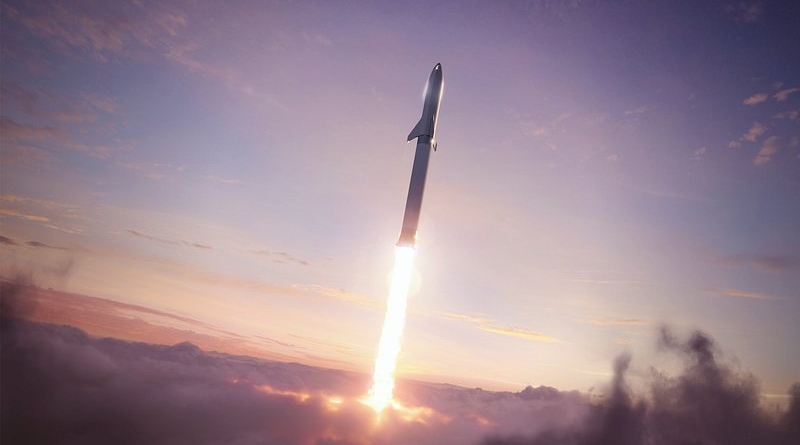
The world of aerospace engineering witnessed a historic moment when SpaceX launched the highly anticipated Starship Version 3 (V3) during Flight 12. While the mission successfully demonstrated significant technological advancements, it also revealed unexpected anomalies that are now driving a major strategic shift within the company.
Rather than focusing on headline-grabbing demonstrations such as dramatic booster catches, SpaceX is reportedly moving toward a more measured, data-driven development strategy. The lessons learned from Flight 12 are reshaping the future of Starship, influencing everything from Flight 13 objectives to long-term plans for orbital operations, lunar missions, and eventual journeys to Mars.
This change signals a crucial evolution in the Starship program—from rapid experimentation to a phase centered on engineering reliability, operational consistency, and commercial readiness.
Flight 12: A Turning Point for the Starship Program
When Starship V3 lifted off from Starbase in Texas, it carried immense expectations from the aerospace community. The launch came after months of engineering refinements, regulatory reviews, and extensive testing.
Although Flight 12 did not achieve a flawless mission profile, SpaceX never intended perfection to be the primary objective.
The company’s philosophy has always been:
Fail Fast, Learn Faster
Instead of aiming for a perfect mission, Flight 12 was designed to gather vast amounts of real-world operational data. The mission subjected Starship V3 to extreme aerodynamic, thermal, and structural conditions, providing engineers with invaluable information.
The result was a treasure trove of telemetry that is now guiding future design improvements and mission planning.
Why Flight 12 Was Still a Success
Despite encountering several issues, Flight 12 accomplished critical objectives:
- Validated the structural integrity of the new V3 architecture
- Demonstrated improved aerodynamic stability
- Collected extensive thermal protection system data
- Verified performance during high-speed ascent
- Established a realistic pathway toward orbital missions
Most importantly, the mission confirmed that Starship V3 possesses the necessary structural margins to pursue true orbital operations.
The Real Goal: Achieving Sustainable Orbital Flight
One of the biggest revelations following Flight 12 is that orbital insertion has moved from a future ambition to an immediate operational target.
Recent regulatory filings indicate that SpaceX is preparing to push Starship toward achieving stable orbit much sooner than previously expected.
However, reaching orbit is only one piece of a much larger puzzle.
Challenges Beyond Orbit
To become a fully operational spacecraft capable of supporting Moon and Mars missions, Starship must demonstrate:
Reliable Vacuum Engine Restarts
In-space engine relights are essential for:
- Orbital adjustments
- Lunar missions
- Deep-space navigation
- Controlled deorbit operations
Propellant Transfer Technology
Future missions will require transferring cryogenic fuel between tanks in microgravity environments.
Atmospheric Reentry Performance
Starship must survive:
- Extreme plasma heating
- High dynamic pressures
- Controlled descent through Earth’s atmosphere
Precision Booster Recovery
The Super Heavy booster must repeatedly return safely and accurately for rapid reuse.
Flight 12 showed Starship can fly.
Flight 13 must prove it can operate as a complete transportation system.
SpaceX’s Major Plan Change: Booster Catch Attempts Could Pause
Perhaps the most surprising outcome of Flight 12 is the possibility that SpaceX may temporarily suspend booster catch attempts.
The dramatic tower catches performed using the giant “Mechazilla” arms have become iconic moments in modern spaceflight.
However, new data suggests these operations currently involve unacceptable risks.
What Happened During Booster 19’s Descent?
During the final stages of Flight 12, Booster 19 experienced several engine-related anomalies.
Engineers observed:
- Inconsistent thrust levels
- Unstable engine restarts
- Delayed landing burn timing
- Pressure fluctuations inside propellant systems
These issues emerged during critical descent maneuvers.
Had the booster attempted a tower catch under these conditions, even a slight deviation could have caused a catastrophic collision with launch infrastructure.
Why This Matters
Damage to the launch tower could potentially:
- Halt launch operations for months
- Delay future Starship flights
- Increase development costs significantly
- Slow Mars mission timelines
As a result, SpaceX appears willing to sacrifice short-term spectacle in favor of long-term reliability.
Ocean Splashdowns May Return for Flight 13
Rather than attempting another tower catch, SpaceX may direct Booster 20 toward an ocean splashdown.
While this may seem like a step backward, it actually provides substantial engineering benefits.
Advantages of Ocean Recovery Testing
By avoiding the launch tower, engineers gain the freedom to:
- Push performance limits further
- Test more aggressive flight profiles
- Experiment with fuel margins
- Gather additional engine data
- Eliminate risks to critical infrastructure
This approach creates a safer testing environment while accelerating problem-solving efforts.
For engineers, it’s not a setback.
It’s a strategic move toward building a more reliable launch system.
Two Possible Paths for Flight 13
SpaceX now faces an important decision regarding the next Starship mission.
Two primary mission profiles are reportedly under consideration.
Path 1: Conservative Suborbital Flight
The first option involves another high-energy suborbital trajectory.
This strategy would prioritize testing key systems before committing to orbit.
Key Objectives
- Validate vacuum engine relights
- Test in-space operations
- Gather additional thermal data
- Improve flight software
The major advantage is safety.
Even if engine restarts fail, the vehicle naturally returns to Earth.
Path 2: Full Orbital Mission
The second option is far more ambitious.
SpaceX could attempt a genuine orbital insertion.
Achieving orbit would validate:
- V3 structural design
- Orbital guidance systems
- Aerodynamic performance
- Vehicle mass efficiency
However, orbital missions leave almost no margin for error.
Even a tiny deviation in engine performance could significantly affect the final trajectory.
If successful, Flight 13 could become one of the most significant milestones in aerospace history.
Starlink V3 Deployment Could Begin
Another exciting possibility involves the deployment of Starlink V3 satellites.
Previous Starship flights primarily carried:
- Steel mass simulators
- Sensor equipment
- Monitoring hardware
Flight 13 could mark the first operational payload deployment.
Why Starlink Deployment Matters
Deploying actual satellites transforms Starship from an experimental vehicle into a commercially useful platform.
This would demonstrate:
- Payload bay functionality
- Precision deployment systems
- In-space attitude control
- Commercial mission readiness
Even deploying a small number of satellites would represent a major achievement.
The Importance of Deorbit Operations
One of the most overlooked aspects of orbital missions is the deorbit burn.
Many people focus on launch and orbit.
However, returning safely is equally challenging.
How Deorbiting Works
To leave orbit, Starship must:
- Rotate into the correct orientation
- Ignite engines precisely
- Reduce orbital velocity
- Enter the atmosphere at the correct angle
A small mistake can have severe consequences.
Risks of Incorrect Entry Angles
Too Steep
Results may include:
- Excessive heating
- Thermal protection failure
- Structural breakup
Too Shallow
Potential outcomes include:
- Atmospheric skipping
- Failure to reenter
- Uncontrolled orbit persistence
Achieving the perfect entry profile is critical for mission success.
The Engineering Lessons from Flight 12
The most important discovery from Flight 12 involved a phenomenon known as propellant sloshing.
What Is Propellant Sloshing?
When the massive Super Heavy booster performs rapid maneuvers, enormous quantities of liquid methane and liquid oxygen move violently inside the tanks.
This creates:
- Pressure fluctuations
- Fuel feed instability
- Gas bubble formation
- Engine performance issues
The result can be engine shutdowns during critical flight phases.
SpaceX’s Solution to the Sloshing Problem
SpaceX engineers are implementing multiple improvements for future boosters.
Mechanical Anti-Slosh Baffles
New internal structures will:
- Reduce fuel movement
- Stabilize liquid flow
- Improve engine feed consistency
Dynamic Tank Pressurization
Updated software will actively manage tank pressures during aggressive maneuvers.
Improved Engine Start Sequences
Raptor engines will ignite in optimized sequences to allow fuel settling before full thrust demand.
Together, these modifications are expected to significantly improve reliability.
Ship 39 Receives Major Upgrades
The upper-stage vehicle, Ship 39, is also receiving substantial enhancements.
Advanced Engine-Out Software
Flight 12 demonstrated that Starship can compensate for engine failures.
However, future software updates will improve:
- Gimbal response
- Trajectory correction
- Attitude control
- Mission continuity
Enhanced Heat Shield Protection
Engineers identified localized thermal stress areas during Flight 12 inspections.
To address this, Ship 39 will feature:
- Denser thermal protection tiles
- Improved insulation materials
- Stronger seam protection
- Better flap-joint shielding
These changes are intended to improve survivability during atmospheric reentry.
A New Era: Reliability Over Spectacle
Perhaps the biggest takeaway from Flight 12 is that SpaceX’s development philosophy is evolving.
For years, Starship testing was characterized by:
- Explosive failures
- Rapid experimentation
- Dramatic engineering risks
- Viral launch moments
That era is gradually ending.
The Shift Toward Operational Maturity
As Starship transitions from prototype to operational spacecraft, priorities are changing.
Future success will be measured by:
- Consistency
- Reliability
- Safety
- Repeatability
In aerospace, boring is often a sign of success.
Commercial aircraft do not make headlines because they operate predictably.
SpaceX wants Starship to achieve that same level of confidence.
Why This Strategy Could Accelerate Mars Missions
At first glance, slowing down booster catches and emphasizing reliability may seem counterproductive.
In reality, it is likely the fastest path toward making Starship mission-ready.
Every successful Mars mission will depend on:
- Reliable engine restarts
- Safe atmospheric entry
- Accurate landings
- Durable thermal protection systems
- Predictable spacecraft behavior
These capabilities cannot rely on luck.
They require relentless engineering refinement.
The Future of Starship After Flight 12
Flight 12 may ultimately be remembered as one of the most important missions in the history of the Starship program.
Not because it was perfect.
Not because it captured headlines.
But because it revealed exactly where improvements were needed.
The mission exposed critical weaknesses, generated enormous quantities of engineering data, and forced SpaceX to rethink its immediate priorities.
As Flight 13 approaches, the company appears focused on building a stronger foundation rather than chasing dramatic demonstrations.
This shift from rapid experimentation to disciplined reliability represents the next stage in Starship’s evolution.
If successful, it will pave the way for:
- Routine orbital operations
- Large-scale Starlink deployment
- Lunar landing missions
- Deep-space exploration
- Human settlement on Mars
The path forward may look less exciting to casual observers.
Yet this quieter, more deliberate approach could ultimately become the key that unlocks humanity’s future among the stars.
Conclusion
The aftermath of Flight 12 has revealed a major change in SpaceX’s Starship strategy. Instead of prioritizing high-profile booster catches and attention-grabbing milestones, the company is now concentrating on solving the engineering challenges that stand between Starship and true operational readiness.
With improvements to Raptor engines, propellant management systems, thermal protection technology, and orbital mission planning, Flight 13 could mark the beginning of Starship’s transformation from an experimental rocket into the world’s first fully reusable interplanetary transportation system.
The future of space exploration may not be defined by spectacular moments alone. It may be defined by consistency, reliability, and the relentless pursuit of engineering excellence.
And according to everything revealed after Flight 12, that future is arriving faster than ever.
FAQs
1. What was the primary objective of SpaceX’s Flight 12 mission?
The primary goal of Flight 12 was to test the new Starship Version 3 (V3) architecture under real-world flight conditions and gather critical engineering data rather than achieve a flawless mission.
2. Why is Flight 12 considered a success despite the anomalies?
Flight 12 successfully validated the structural integrity, aerodynamic stability, and thermal performance of Starship V3 while generating valuable telemetry that will help improve future missions.
3. What major plan change is SpaceX making after Flight 12?
SpaceX is reportedly prioritizing engineering reliability and operational consistency over high-profile demonstrations such as booster tower catches.
4. Why might SpaceX pause Starship booster catch attempts?
Flight 12 revealed engine restart inconsistencies that could increase the risk of damaging critical launch infrastructure during a tower catch, prompting a more cautious approach.
5. What issues did Booster 19 experience during Flight 12?
Booster 19 encountered engine restart anomalies, thrust inconsistencies, and delayed landing burn timing during its descent phase.
6. What is propellant sloshing, and why is it important?
Propellant sloshing occurs when liquid fuel moves violently inside a rocket’s tanks during rapid maneuvers, causing pressure fluctuations that can disrupt engine performance.
7. How is SpaceX addressing the propellant sloshing problem?
SpaceX is introducing anti-slosh baffles, dynamic tank pressurization systems, and optimized engine ignition sequences to improve fuel stability.
8. What are the two possible mission profiles for Flight 13?
SpaceX may choose either a suborbital refinement mission focused on testing systems or an ambitious orbital insertion mission aimed at reaching true orbit.
9. Why is achieving orbit such a significant milestone for Starship?
Reaching orbit would validate Starship’s structural design, guidance systems, and operational capabilities, bringing it closer to commercial and deep-space missions.
10. Could Flight 13 deploy Starlink V3 satellites?
Yes. Flight 13 could potentially deploy the first operational Starlink V3 satellites, marking Starship’s transition toward commercial launch operations.
11. What is a deorbit burn, and why is it critical?
A deorbit burn slows a spacecraft enough to leave orbit and reenter Earth’s atmosphere safely. Incorrect execution can lead to vehicle loss or uncontrolled orbital behavior.
12. What upgrades are being made to Ship 39?
Ship 39 is receiving improved engine-out software, enhanced thermal protection tiles, stronger insulation materials, and better reentry protection systems.
13. How does Flight 12 impact future Moon and Mars missions?
The mission provided crucial data that will help improve Starship’s reliability, a requirement for future lunar landings, Mars missions, and long-duration space travel.
14. Why is SpaceX focusing more on reliability than spectacle?
As Starship evolves into an operational spacecraft, consistent performance and safety become more important than dramatic demonstrations or experimental risks.
15. What does the future hold for the Starship program?
The future of Starship includes routine orbital missions, Starlink deployments, Moon exploration, and eventually human missions to Mars, supported by a stronger focus on engineering excellence and reliability.
Read More:
- Tesla Bot Gen 3 Finally UPDATED, New AI Secret LEAKED
- Elon Musk revealed Why SpaceX Raptor 3 is Worse than Expected! New SpaceX Solution
- Tesla saves its passengers again – This time after a 300-foot cliff fall in Malibu
- Tesla plans ingenious improvement to one of its best features
- It Happened: Elon Musk Finally Unveiled the First Prototype of the Flying Tesla Car
1 thought on “SpaceX Revealed Major Plan Change for Starship after Flight 12 Surprised the Industry”