
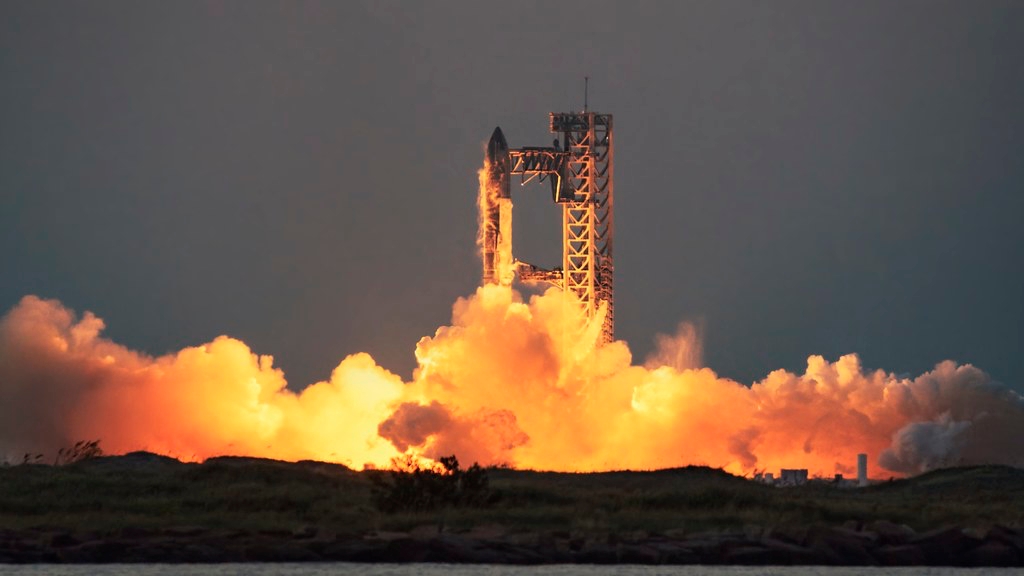
The development of SpaceX’s Starship program has become one of the most ambitious engineering projects ever attempted in human history. At the heart of this revolutionary spacecraft lies the Raptor 3 engine, a next-generation rocket engine designed to power humanity toward a multiplanetary future.
When SpaceX first unveiled the sleek and highly integrated Raptor 3 design, many aerospace enthusiasts believed the company had achieved a major breakthrough. The engine appeared cleaner, simpler, and more advanced than any previous Raptor version. However, recent flight tests, technical anomalies, and statements from Elon Musk have revealed a more complicated reality.
Despite its futuristic appearance and incredible performance potential, the Raptor 3 engine is currently facing significant engineering challenges. These issues involve turbopumps, combustion stability, cryogenic fuel flow, thermal management, and multi-engine synchronization. As SpaceX pushes Starship toward unprecedented levels of performance, engineers are discovering that achieving maximum thrust is far more difficult than expected.
In this article, we explore why Elon Musk admitted that the current Raptor 3 performance is below expectations, what caused the failures observed during recent Starship flights, and the innovative solutions SpaceX is implementing to achieve its ultimate goal of 10,000 tons of launch thrust.
The Raptor 3 Engine: SpaceX’s Most Advanced Rocket Engine Yet
The Raptor 3 represents the latest evolution of SpaceX’s methane-powered rocket engine family. Compared to Raptor 1 and Raptor 2, the new design appears dramatically simplified.
Visible wiring harnesses, external sensors, and exposed plumbing have largely disappeared. Instead, engineers integrated many systems directly into the engine structure, creating a compact and visually clean design.
This streamlined architecture offers several advantages:
- Reduced weight
- Improved reliability
- Lower manufacturing complexity
- Better thermal protection
- Faster production rates
However, beneath the elegant exterior lies one of the most complex propulsion systems ever built.
Why Raptor 3 Looks Better But Performs Below Expectations
After recent Starship testing, Elon Musk responded to discussions regarding the theoretical maximum thrust generated by a full Super Heavy booster equipped with 33 Raptor 3 engines.
Many observers estimated that the booster could exceed 9,200 tons of thrust. Musk’s response was surprisingly straightforward:
“Less thrust than that today.”
This statement confirmed that SpaceX is currently operating Raptor 3 below its maximum design capability.
The reason is not a lack of engine power. Instead, the challenge lies in operating 33 engines simultaneously without triggering dangerous system-wide failures.
While a single Raptor 3 can achieve remarkable performance during isolated testing, coordinating dozens of engines under extreme conditions introduces entirely different engineering challenges.
Understanding the Full-Flow Staged Combustion Cycle
One of the primary reasons Raptor 3 is so powerful—and so difficult to perfect—is its use of a Full-Flow Staged Combustion Cycle (FFSCC).
This engine architecture is widely considered the most efficient rocket engine cycle ever developed.
How the System Works
Unlike traditional rocket engines, Raptor uses separate preburners for both methane fuel and liquid oxygen.
The process follows these steps:
Liquid Oxygen Path
- Liquid oxygen enters the oxygen turbopump
- Pressure increases dramatically
- Oxygen-rich gas enters the combustion chamber
Methane Path
- Liquid methane enters a separate turbopump
- Fuel is pressurized to extreme levels
- Methane-rich gas flows into the combustion chamber
Final Combustion
Both high-pressure streams combine inside the main chamber, generating enormous thrust.
The result is exceptional efficiency and power, but it also creates extreme mechanical stresses.
Major Engineering Problems Limiting Raptor 3
Although Raptor 3 represents a major advancement in rocket propulsion, several critical technical obstacles remain.
1. Cryogenic Cavitation
One of the most dangerous challenges involves cryogenic cavitation.
When super-cooled liquids travel through pumps at extremely high speeds, localized pressure drops can occur.
These pressure drops cause tiny vapor bubbles to form.
As the bubbles move into higher-pressure regions, they collapse violently.
The consequences include:
- Impeller erosion
- Severe vibration
- Reduced flow efficiency
- Structural damage
- Pump instability
Engineers often describe cavitation as microscopic explosions occurring inside the turbopumps.
Over time, these destructive events can significantly reduce engine lifespan.
2. Turbopump Fatigue
The turbopumps inside Raptor 3 operate under extraordinary conditions.
They must withstand:
- Extreme rotational speeds
- Massive centrifugal forces
- Cryogenic temperatures
- High-pressure environments
- Constant thermal cycling
Even legendary rocket engines like NASA’s RS-25 encountered turbopump durability limitations.
SpaceX is attempting to push these components even further than previous aerospace programs.
As thrust increases, turbopump stress rises dramatically, making durability a major concern.
3. Combustion Chamber Instability
Another critical challenge is maintaining stable combustion at extremely high chamber pressures.
The progression of Raptor chamber pressure has been remarkable:
- Raptor 1: Approximately 250 bar
- Raptor 2: Around 300 bar
- Raptor 3: Approximately 350 bar
At these pressures, even tiny fluctuations can create destructive acoustic resonance.
When pressure waves align with the engine’s natural vibration frequencies, catastrophic damage can occur.
Potential consequences include:
- Injector plate destruction
- Cooling channel failure
- Chamber wall damage
- Complete engine loss
Maintaining combustion stability at 350 bar places Raptor 3 among the most demanding rocket engines ever built.
What Happened During Super Heavy Booster 19’s Flight?
The flight of Super Heavy Booster 19 (B19) provided valuable insight into the real-world challenges facing SpaceX.
While the mission demonstrated impressive progress, it also exposed several critical weaknesses.
Liftoff Engine Failure
Shortly after launch, one Raptor engine experienced a complete failure.
This was not a temporary power reduction.
The engine shut down entirely.
Inside a cluster of 33 tightly packed engines, a failure of this magnitude can be dangerous because:
- Hot gas can damage neighboring engines
- Debris may strike surrounding components
- Sensor systems can be disrupted
- Thermal shielding can be compromised
Even though Starship’s architecture includes engine-out capability, each failure increases system complexity.
Boostback Burn Anomalies
The next major issue occurred during the boostback maneuver.
This phase requires the booster to reverse direction and begin its return toward the landing zone.
Telemetry indicated several unusual events:
- Inconsistent engine relights
- Unexpected throttle variations
- Fluctuating active engine counts
- Irregular ignition timing
Initial observers speculated these were planned test procedures.
However, later analysis suggested SpaceX software was actively managing pressure fluctuations and propellant flow irregularities in real time.
This highlights the difficulty of synchronizing dozens of engines under rapidly changing flight conditions.
The Catastrophic Landing Burn Failure
The most dramatic issue occurred during the final landing attempt.
The landing burn ignited too late.
Several engines either failed to restart or failed to achieve their required thrust levels.
As a result, Booster 19 could not decelerate sufficiently.
Telemetry indicated the booster was still traveling approximately 1,400 km/h at just 100 meters above the ocean surface.
The outcome was inevitable.
The booster impacted the water at extremely high velocity, resulting in total destruction.
Why the Failure Could Have Been Much Worse
Fortunately, Booster 19 was directed toward the Gulf of Mexico rather than attempting a tower catch.
This distinction is critical.
SpaceX ultimately intends for Super Heavy boosters to be captured by the massive Mechazilla tower arms at Starbase.
Had B19 attempted a tower catch while descending at over 1,400 km/h, the consequences could have been catastrophic.
Potential damage might have included:
- Destruction of Mechazilla arms
- Severe launch tower damage
- Infrastructure loss
- Extended launch delays
- Multi-month recovery operations
The failed landing therefore provided valuable engineering data without jeopardizing Starbase’s launch capabilities.
SpaceX’s Path Toward 10,000 Tons of Thrust
Despite these setbacks, SpaceX remains committed to dramatically increasing Starship’s power.
The long-term objective is clear:
Current Performance
- Approximately 280 tons of thrust per engine
- Roughly 9,240 tons total booster thrust
Future Target
- 300 tons of thrust per engine
- 10,000 tons total launch thrust
Achieving this milestone would establish Starship as the most powerful launch vehicle ever created.
New SpaceX Solutions to Fix Raptor 3 Problems
To overcome current limitations, SpaceX is implementing several major engineering improvements.
More Aggressive Engine Testing
One of the biggest changes involves stricter validation procedures.
SpaceX is increasing acceptance testing intensity before engines are approved for flight.
Benefits include:
- Early defect detection
- Improved reliability
- Reduced engine failure rates
- Better performance consistency
For important missions, engineers are increasingly selecting only the highest-performing engines from production batches.
Enhanced Thermal Protection
The compact design of Raptor 3 introduces a new challenge.
Because systems are tightly integrated, heat can spread more easily between components.
A localized failure may rapidly affect neighboring hardware.
To address this issue, SpaceX is implementing:
Advanced Thermal Coatings
These coatings reduce heat transfer and protect sensitive equipment.
High-Temperature Insulation
Additional insulation prevents thermal cross-talk between systems.
Fire Detection Systems
Advanced sensors can identify abnormal temperatures before visible damage occurs.
Fire Suppression Technology
Rapid-response systems help contain localized failures before they spread.
Improved Propellant Flow Management
Increasing thrust requires moving larger volumes of methane and oxygen through the engine.
This creates new fluid dynamics challenges.
During aggressive maneuvers, fuel movement inside tanks can become unstable.
This phenomenon, known as propellant sloshing, can introduce gas bubbles into feed lines.
If gas reaches the turbopumps, engine performance can deteriorate rapidly.
To solve this problem, SpaceX is refining:
Internal Tank Baffles
These structures reduce liquid movement during flight.
Feed System Geometry
Optimized plumbing improves propellant delivery consistency.
Injector Design
Wider injector throats support higher flow rates while maintaining stability.
Pressure Vessel Monitoring
SpaceX is also focusing heavily on its Composite Overwrapped Pressure Vessels (COPVs).
These vessels maintain tank pressure throughout flight.
Any COPV failure could trigger severe propulsion system disruptions.
To improve reliability, engineers are deploying:
- Acoustic monitoring systems
- Real-time strain sensors
- Structural health diagnostics
- Continuous pressure surveillance
These technologies provide early warning signs of potential issues.
Booster 20 and Flight 13: The Next Major Test
Following lessons learned from Booster 19, SpaceX is moving quickly toward the next test campaign.
Booster 20 has already entered critical validation phases including:
- Cryogenic proof testing
- Structural evaluations
- Static fire campaigns
The results of these tests will directly influence the timeline for Flight 13.
Current projections suggest a launch window in late June or early July.
This mission will be a major milestone in evaluating whether the latest engineering upgrades successfully address previous failures.
Starship’s Future Beyond Launch and Landing
The expectations placed on Raptor 3 continue to expand.
Early Starship missions primarily focused on reaching near-orbital trajectories.
Future missions will demand much more.
Orbital Insertion Burns
Precise multi-engine burns must place Starship into stable orbits.
Long-Duration Space Operations
The spacecraft must remain functional for extended missions.
Payload Deployment
Future Starships will deploy large satellite constellations and deep-space payloads.
In-Orbit Refueling
Perhaps the most critical future capability is ship-to-ship propellant transfer.
This technology is essential for lunar and Mars missions.
Each of these operations depends on the reliability of the Raptor propulsion system.
The Ultimate Goal: Rapid Reusability
The true objective of the Starship program extends far beyond achieving record-breaking thrust.
SpaceX wants complete and rapid reusability.
Traditional rockets are discarded after launch.
Starship aims to change that model entirely.
A fully reusable system must:
- Launch repeatedly
- Require minimal maintenance
- Avoid major engine overhauls
- Support airline-like operations
The Raptor engine’s methane-based architecture provides significant advantages in this area because it generates far less soot than traditional kerosene engines.
In theory, this allows engines to fly again almost immediately after landing.
However, achieving this vision requires solving the remaining challenges involving:
- Cavitation
- Combustion instability
- Thermal management
- Propellant flow control
- Multi-engine synchronization
Conclusion
The Raptor 3 engine represents one of the most ambitious rocket propulsion systems ever developed. While its sleek appearance suggests a mature and perfected design, recent testing has revealed a more complex reality.
As Elon Musk acknowledged, SpaceX is currently operating below the engine’s theoretical maximum capability. The challenges involve everything from cryogenic cavitation and turbopump durability to combustion stability and multi-engine integration.
The failures observed during Booster 19’s flight highlight just how difficult it is to coordinate 33 high-performance rocket engines simultaneously. Yet these setbacks are also providing SpaceX with invaluable data.
Through enhanced testing, improved thermal protection, advanced fluid management systems, and sophisticated monitoring technologies, SpaceX is steadily working toward its ultimate goal of 10,000 tons of launch thrust and full rapid reusability.
If successful, the solutions being developed today could transform Starship into the most powerful and cost-effective launch system ever created, opening the door to large-scale lunar missions, Mars colonization, and a new era of space exploration.
FAQs
1. Why did Elon Musk say the Raptor 3 engine is performing below expectations?
Elon Musk revealed that the Raptor 3 engine is currently producing less thrust than its theoretical maximum during full booster operations. While individual engines perform exceptionally well in testing, operating 33 engines simultaneously introduces challenges involving pressure management, fuel flow stability, and system-wide reliability.
2. What is the Raptor 3 engine?
The Raptor 3 is SpaceX’s latest methane-fueled rocket engine designed for the Starship launch system. It uses a full-flow staged combustion cycle, making it one of the most advanced and efficient rocket engines ever developed.
3. How much thrust can a Raptor 3 engine produce?
Current Raptor 3 engines are estimated to produce around 280 tons of thrust per engine, while SpaceX aims to increase this to 300 tons per engine in future versions.
4. What is the total thrust of the Super Heavy booster?
With 33 Raptor engines, the current Super Heavy booster can theoretically generate over 9,200 tons of thrust. SpaceX’s long-term goal is to reach 10,000 tons of total launch thrust.
5. What is a full-flow staged combustion cycle?
A full-flow staged combustion cycle (FFSCC) is an advanced rocket engine design where both fuel and oxidizer pass through separate preburners before entering the main combustion chamber. This increases efficiency, power, and engine lifespan.
6. What is cryogenic cavitation and why is it a problem?
Cryogenic cavitation occurs when pressure drops inside turbopumps cause super-cooled liquids to form vapor bubbles. When these bubbles collapse, they create shockwaves that can damage pump components and reduce engine reliability.
7. Why are Raptor 3 turbopumps difficult to engineer?
The turbopumps must operate at extremely high speeds while handling cryogenic methane and liquid oxygen under enormous pressure. These conditions create intense mechanical stress, thermal fatigue, and durability challenges.
8. What is combustion instability in rocket engines?
Combustion instability occurs when pressure fluctuations inside the combustion chamber create destructive vibrations. If not controlled, these oscillations can damage injectors, cooling channels, and other critical engine components.
9. What happened to Super Heavy Booster 19?
Booster 19 experienced multiple issues during flight, including an engine failure at liftoff, inconsistent relights during boostback, and a failed landing burn that caused the booster to impact the ocean at high speed.
10. Why did Booster 19 fail its landing attempt?
The landing burn ignited too late because several engines failed to restart or reach their required power levels. As a result, the booster could not slow down enough before impact.
11. What is Mechazilla?
Mechazilla is SpaceX’s giant launch tower equipped with mechanical arms designed to catch returning Super Heavy boosters and Starship vehicles, eliminating the need for traditional landing legs.
12. How is SpaceX fixing the Raptor 3 issues?
SpaceX is implementing stricter engine testing, improved thermal protection systems, upgraded propellant management technology, enhanced fire detection systems, and better pressure vessel monitoring to improve reliability.
13. What are COPVs and why are they important?
Composite Overwrapped Pressure Vessels (COPVs) store high-pressure gases used to maintain tank pressure during flight. Any failure in these systems can significantly affect engine performance and vehicle stability.
14. What is SpaceX’s goal for future Raptor engines?
SpaceX aims to develop upgraded variants capable of producing 300 tons of thrust per engine, allowing the Super Heavy booster to achieve approximately 10,000 tons of total thrust.
15. Why is rapid reusability important for Starship?
Rapid reusability dramatically reduces launch costs by allowing rockets to fly multiple times with minimal maintenance. This capability is essential for frequent missions to the Moon, Mars, and beyond.
16. How will Raptor 3 help future Mars missions?
The Raptor 3 engine is designed to power fully reusable Starship vehicles capable of carrying large payloads, supporting orbital refueling, and enabling long-duration missions that are necessary for establishing a human presence on Mars.
Read More:
- It Happened: Elon Musk Finally Unveiled the First Prototype of the Flying Tesla Car
- Blue Origin in Big Trouble after Test Failure, Can’t Launch in Artemis 2027! SpaceX to Save NASA
- Elon Musk strikes down reports on SpaceX IPO rumors
- Tesla Full Self-Driving expansion in Europe continues with new addition
- New Tesla Battery Technology! Tesla Model 2: 5,000-cycle LFP, 90% after 10 years, 9min cell rejected
1 thought on “Elon Musk revealed Why SpaceX Raptor 3 is Worse than Expected! New SpaceX Solution”