
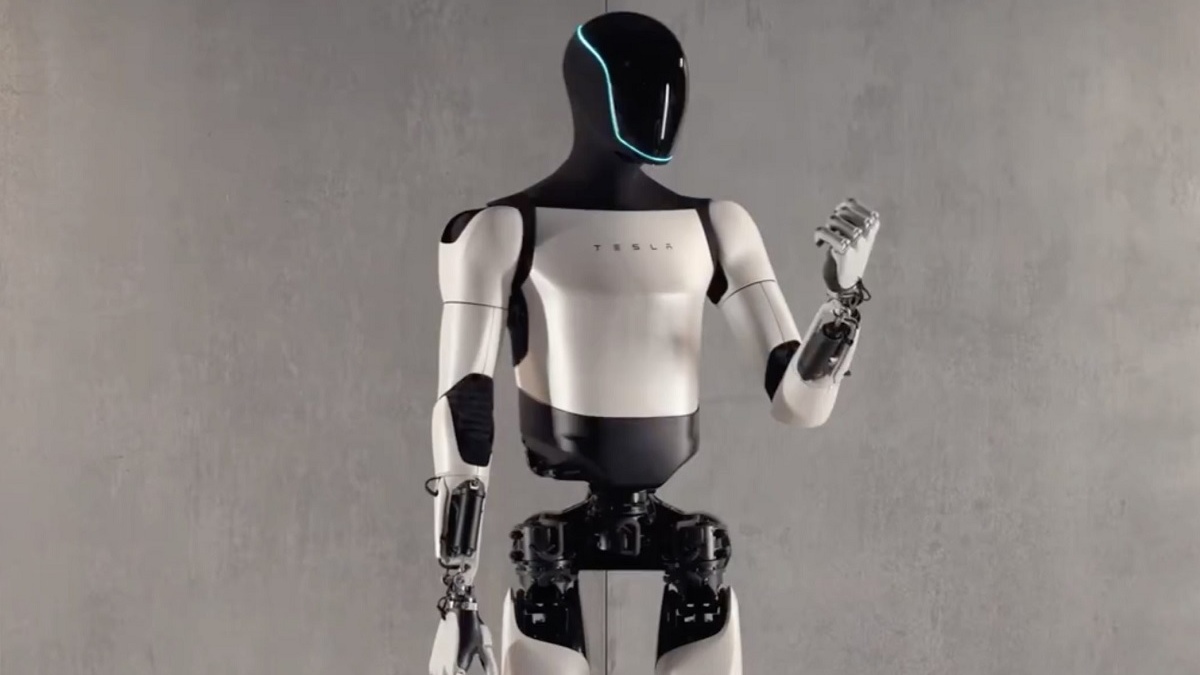
Elon Musk Revealed All New Tesla Robot Models Coming in 2026: The global technology industry is entering a revolutionary new chapter. Just as automobiles transformed transportation in the early 20th century and smartphones reshaped communication in the 21st century, 2026 is set to become the defining year of the humanoid robotics revolution. What was once confined to science fiction movies and futuristic predictions is rapidly becoming reality.
Today, leading technology companies are investing billions of dollars into developing advanced humanoid robots capable of working alongside humans, understanding natural language, and performing complex physical tasks autonomously. At the center of this transformation is Tesla, led by Elon Musk, whose ambitious Optimus robot project aims to redefine the future of labor, manufacturing, and personal assistance.
However, Tesla is not alone. Companies like Boston Dynamics, Apple, and China’s UB Tech are aggressively competing to dominate what many experts believe could become the largest industry in human history.
In this article, we explore the latest developments in Tesla’s robot ecosystem, the emergence of industrial-scale humanoid machines, the competitive landscape, and the economic and social implications of a world increasingly powered by intelligent robots.
The Rise of Humanoid Robotics in 2026
For decades, robots have primarily existed within highly controlled industrial environments. Traditional manufacturing robots excelled at repetitive tasks but lacked flexibility, mobility, and adaptability.
The new generation of humanoid robots changes everything.
Powered by multimodal artificial intelligence, advanced sensors, computer vision systems, and highly sophisticated mechatronics, these machines can:
- Understand spoken language
- Interpret visual information
- Navigate complex environments
- Learn from observation
- Perform physical tasks independently
- Collaborate with human workers
This technological convergence is accelerating the transition from experimental prototypes to commercially viable humanoid assistants capable of operating in homes, offices, factories, and public spaces.
Tesla Optimus: The Centerpiece of Elon Musk’s Robotics Vision
Tesla’s Optimus robot remains one of the most talked-about humanoid robotics projects in the world. Initially introduced as a universal assistant designed to automate repetitive tasks, Optimus has evolved into a broader platform with multiple applications.
Tesla’s competitive advantage stems from its ability to leverage technologies already developed for its electric vehicles.
These include:
- Computer vision systems
- Neural network architectures
- AI training infrastructure
- Full Self-Driving (FSD) technology
- xAI computing resources
Instead of navigating roads, Optimus applies these technologies to understand and navigate human environments.
Standard Tesla Optimus Platform
The current Optimus platform is designed primarily for homes, offices, and light industrial environments.
Key Features
- Height: Approximately 1.7 meters
- Payload Capacity: Up to 20 kilograms
- Human-like dexterity
- Advanced object recognition
- Natural language understanding
- Autonomous navigation
One of the most impressive features is the robot’s hand design. Tesla engineers have developed hands with approximately 28 degrees of freedom, allowing Optimus to manipulate delicate objects with remarkable precision.
This capability enables the robot to:
- Fold laundry
- Organize inventory
- Carry groceries
- Assist elderly individuals
- Perform office-related tasks
The ultimate goal is to create a general-purpose assistant capable of integrating seamlessly into everyday life.
The Secretive “Optimus Industrial” Project
While the standard Optimus platform receives significant public attention, industry insiders suggest Tesla is developing a much larger and more powerful robotic platform.
Often referred to informally as Optimus Industrial, this next-generation machine could transform heavy industry.
What Makes Optimus Industrial Different?
Unlike the standard humanoid robot, Optimus Industrial is reportedly designed for large-scale industrial operations.
Expected Specifications
- Height: 3.5 to 4 meters
- Weight: More than 2 metric tons
- Payload Capacity: 5 to 10 metric tons
- Heavy-duty electric actuators
- Advanced autonomous operation systems
These specifications place the robot in an entirely different category from conventional humanoid machines.
Potential Applications
The industrial version could be deployed in:
Construction Sites
Construction remains one of the most hazardous industries globally. Large humanoid robots could handle:
- Steel beam placement
- Material transportation
- Heavy equipment support
Mining Operations
Mining environments often expose workers to dangerous conditions. Industrial humanoids could perform tasks such as:
- Ore transportation
- Tunnel support operations
- Hazardous environment inspections
Ports and Logistics Centers
Ports require constant movement of heavy cargo. Tesla’s industrial robots could:
- Load containers
- Unload freight
- Operate around the clock
Metallurgical Facilities
High-temperature industrial environments could benefit from robots capable of handling dangerous tasks without risking human safety.
Tesla’s Battery-Swapping Advantage
One of the biggest challenges facing large-scale robotics deployment is power management.
Tesla is reportedly developing modular battery-swapping systems for its industrial robots.
Instead of waiting hours for charging, robots could:
- Automatically navigate to a service station.
- Remove depleted batteries.
- Install fully charged replacements.
- Return to work within minutes.
This innovation could dramatically increase operational efficiency and enable nearly continuous operation.
Boston Dynamics Strikes Back with Electric Atlas
For years, Boston Dynamics was considered the leader in advanced robotics.
Although some analysts believed newer competitors were gaining ground, the unveiling of the Fully Electric Commercial Atlas changed the conversation dramatically.
Atlas represents a fundamentally different philosophy compared to Tesla’s approach.
Rather than strictly imitating human movement, Boston Dynamics focuses on creating superhuman capabilities.
Superhuman Mobility and Flexibility
The electric Atlas robot features an astonishing 56 degrees of freedom.
This enables movement capabilities far beyond those of a human being.
360-Degree Joint Rotation
Major joints including:
- Neck
- Waist
- Shoulders
- Hips
can rotate continuously through a full 360 degrees.
As a result, Atlas can perform tasks more efficiently than a human worker.
Instead of turning its entire body to access an object, Atlas can simply rotate specific sections independently.
This significantly reduces movement time and increases productivity.
Industrial Performance Specifications
Atlas is designed specifically for enterprise environments.
Key Capabilities
- Continuous payload capacity of 50 kilograms
- IP67 waterproof protection
- Dustproof construction
- Operation in temperatures from -20°C to +40°C
- Autonomous battery management
- 24/7 industrial operation
These features make Atlas suitable for warehouses, manufacturing facilities, and logistics operations.
Google DeepMind Powers Atlas Intelligence
Perhaps the most significant advancement is Atlas’ integration with Google DeepMind’s Gemini robotics framework.
This partnership dramatically improves robot learning capabilities.
Zero-Shot Learning
Traditional robots require extensive programming and simulation before learning new skills.
Atlas takes a different approach.
The robot can:
- Observe a task
- Analyze visual information
- Create an execution strategy
- Perform the task immediately
This process is often referred to as zero-shot learning.
Observational Intelligence
Imagine a factory worker demonstrating a new assembly procedure once.
Atlas can watch the process and immediately replicate it using its advanced AI system.
This drastically reduces training costs and deployment time.
Apple’s Entry into Humanoid Robotics
Although Apple remains highly secretive about future products, evidence suggests the company is making substantial investments in robotics.
A Privacy-First Robot Assistant
Apple’s strategy differs significantly from many competitors.
The company appears focused on developing a highly personal domestic assistant that prioritizes privacy.
Local AI Processing
Rather than relying heavily on cloud infrastructure, Apple is reportedly designing robots that process data locally using specialized chips.
This approach offers several advantages:
- Enhanced privacy
- Faster response times
- Reduced cloud dependence
- Better security
Personal information such as:
- Home layouts
- Daily routines
- Voice interactions
could remain entirely within the device.
This aligns closely with Apple’s broader commitment to user privacy.
China’s UB Tech and Collective Cloud Intelligence
China is rapidly emerging as one of the world’s most influential robotics markets.
At the center of this effort is UB Tech and its expanding U1 humanoid platform.
Massive Manufacturing Scale
China benefits from an extensive manufacturing ecosystem that enables rapid production and deployment.
As labor demographics shift, humanoid robots are increasingly viewed as a solution to workforce shortages.
The Power of Collective Cloud Intelligence
UB Tech’s most innovative concept is known as Collective Cloud Intelligence.
The idea is simple but incredibly powerful.
When one robot learns a new skill:
- The experience is recorded.
- Data is uploaded to a centralized neural network.
- The skill is analyzed and optimized.
- Updates are distributed across the entire robot fleet.
As a result, millions of robots can benefit from a single learning event.
Real-World Example
If one robot discovers a more efficient method for handling a uniquely shaped package, that knowledge can quickly be shared with every connected robot.
This creates a continuously improving ecosystem capable of learning at an unprecedented scale.
The Economic Impact of Humanoid Robots
The widespread deployment of humanoid robots will fundamentally reshape the global economy.
Why Businesses Are Investing
The financial case for robotics is compelling.
A humanoid robot may cost:
- $20,000 for mass-market systems
- Up to $150,000 for premium industrial platforms
Although the initial investment is significant, robots offer several advantages:
- Continuous operation
- No vacations
- No health insurance costs
- Reduced workplace injuries
- Consistent performance
Many organizations could recover their investment within 12 to 18 months.
Industries Most Likely to Be Transformed
Several sectors are expected to experience rapid automation.
Logistics
Warehouses and distribution centers could become heavily automated.
Hospitality
Hotels may deploy robots for:
- Check-in assistance
- Room service
- Cleaning support
Manufacturing
Assembly lines could become increasingly autonomous.
Retail
Customer support and inventory management may see extensive robotic integration.
Universal Basic Income and Workforce Transition
One of the biggest societal concerns surrounding robotics is job displacement.
As robots become more capable, certain categories of work may decline significantly.
Experts are increasingly discussing Universal Basic Income (UBI) as a potential solution.
Why UBI Is Being Considered
UBI could:
- Provide financial stability
- Support displaced workers
- Facilitate retraining programs
- Reduce economic disruption
Governments worldwide are beginning to evaluate policies that address the changing nature of employment.
Legal and Regulatory Challenges
The rise of autonomous humanoid robots raises important legal questions.
Who Is Responsible?
If a robot causes damage or injury, determining liability becomes complicated.
Possible responsible parties include:
- Software developers
- Hardware manufacturers
- Robot owners
- Service providers
Existing legal frameworks were not designed for autonomous physical AI systems.
Safety Mechanisms and Kill Switches
To address safety concerns, robotics companies are implementing multiple layers of protection.
Independent Safety Systems
Many manufacturers are developing:
- Mechanical kill switches
- Emergency stop functions
- Human proximity sensors
- Autonomous shutdown protocols
Importantly, these systems are often isolated from the robot’s AI architecture.
This ensures that safety functions remain operational even if the primary AI experiences errors.
The Future of Human-Robot Coexistence
Between 2026 and 2028, humanoid robots are expected to move from limited deployments to mainstream commercial adoption.
The next few years will likely determine how successfully humanity integrates intelligent machines into everyday life.
Key questions remain:
- How will society adapt to large-scale automation?
- What regulations will govern autonomous robots?
- How will businesses balance efficiency with workforce stability?
- Can humans and intelligent machines coexist safely?
What is clear is that humanoid robotics is no longer a distant concept.
The technology is arriving faster than many experts predicted, and companies like Tesla, Boston Dynamics, Apple, and UB Tech are driving one of the most significant technological transformations in modern history.
Conclusion
The race to build the world’s most advanced humanoid robot is accelerating at an extraordinary pace. Tesla’s Optimus, the rumored Optimus Industrial, Boston Dynamics’ Electric Atlas, Apple’s privacy-focused robotics initiatives, and China’s rapidly expanding UB Tech ecosystem represent different visions of the same future.
As artificial intelligence continues to advance and robotics hardware becomes increasingly capable, humanoid assistants may soon become as common as smartphones and personal computers are today.
Whether in homes, factories, warehouses, construction sites, or public spaces, these machines are poised to redefine productivity, reshape labor markets, and transform the global economy. The age of intelligent humanoid robotics has officially begun, and 2026 may ultimately be remembered as the year that changed everything.
FAQs
FAQ 1: What is Tesla Optimus?
Tesla Optimus is a humanoid robot developed by Tesla to perform repetitive, dangerous, and everyday tasks in factories, businesses, and eventually homes. It uses advanced AI, computer vision, and robotics technology derived from Tesla’s autonomous driving systems.
FAQ 2: When will Tesla Optimus be available?
Tesla is expected to expand production and commercial deployment of Optimus robots throughout 2026 and beyond. Initial deployments are likely to focus on Tesla factories before broader commercial availability.
FAQ 3: What tasks can Tesla Optimus perform?
Tesla Optimus can perform tasks such as carrying objects, sorting inventory, operating machinery, assisting with household chores, and supporting logistics operations. Future versions are expected to handle increasingly complex tasks.
FAQ 4: What is the Optimus Industrial project?
Optimus Industrial is a rumored large-scale version of Tesla’s humanoid robot designed for heavy-duty industries such as construction, mining, ports, and manufacturing. It is expected to lift several metric tons and operate in hazardous environments.
FAQ 5: How tall is Tesla Optimus?
The standard Tesla Optimus robot is approximately 1.7 meters (5.6 feet) tall. Reports suggest the industrial version could stand between 3.5 and 4 meters tall.
FAQ 6: How does Tesla Optimus use artificial intelligence?
Tesla Optimus uses advanced AI systems, neural networks, and computer vision technology. It processes visual and environmental data to understand surroundings, make decisions, and perform tasks autonomously.
FAQ 7: What makes Boston Dynamics Atlas different from Tesla Optimus?
Boston Dynamics Atlas focuses on superhuman mobility and flexibility with 56 degrees of freedom and 360-degree joint rotations. Tesla Optimus focuses on scalability, affordability, and integration with Tesla’s AI ecosystem.
FAQ 8: Can Atlas learn new tasks without programming?
Yes. Atlas uses Google DeepMind’s Gemini robotics framework, allowing it to learn tasks through observation and execute them using zero-shot learning techniques.
FAQ 9: Is Apple developing a humanoid robot?
Industry reports indicate that Apple is investing heavily in robotics research. Apple’s approach appears focused on privacy-first personal assistants that process most data locally instead of relying on cloud systems.
FAQ 10: What is UB Tech’s Collective Cloud Intelligence?
Collective Cloud Intelligence allows UB Tech robots to share learned experiences through a centralized cloud network. When one robot learns a new skill, the entire robotic fleet can receive that knowledge through software updates.
FAQ 11: Will humanoid robots replace human workers?
Humanoid robots are expected to automate many repetitive and physically demanding jobs. However, they may also create new opportunities in robotics maintenance, AI development, engineering, and advanced technical roles.
FAQ 12: How much will humanoid robots cost?
Entry-level humanoid robots may cost around $20,000, while advanced industrial models could exceed $150,000, depending on capabilities, payload capacity, and AI systems.
FAQ 13: Are humanoid robots safe to work around?
Manufacturers are implementing multiple safety systems, including emergency stop mechanisms, proximity sensors, and independent kill switches designed to prevent accidents and protect human workers.
FAQ 14: What industries will benefit the most from humanoid robots?
Industries likely to benefit include:
- Manufacturing
- Warehousing
- Logistics
- Construction
- Mining
- Healthcare
- Hospitality
- Retail
FAQ 15: What are the biggest challenges facing humanoid robotics?
Major challenges include battery life, safety regulations, legal liability, affordability, public acceptance, and ensuring reliable performance in unpredictable real-world environments.
FAQ 16: Why is 2026 considered a breakthrough year for humanoid robots?
Many experts believe 2026 marks the beginning of mass-market humanoid robotics because major companies are transitioning from prototypes to commercial deployments, bringing advanced AI-powered robots into factories, businesses, and eventually homes worldwide.
Read More:
- IT’S HERE! Tesla Model 2 Gigacasting Could Turn Small Crashes Into Total Loss
- Tesla Semi spotted with ground truth validation equipment as launch looms
- The Real Reason Why SpaceX’s new Raptor 4 is the Best Engine Ever Made
- Tesla Reveals Major New Cybercab Update
- Crazy Solution to Land Astronauts from Starship HLS on the Moon Without 35m Elevator