
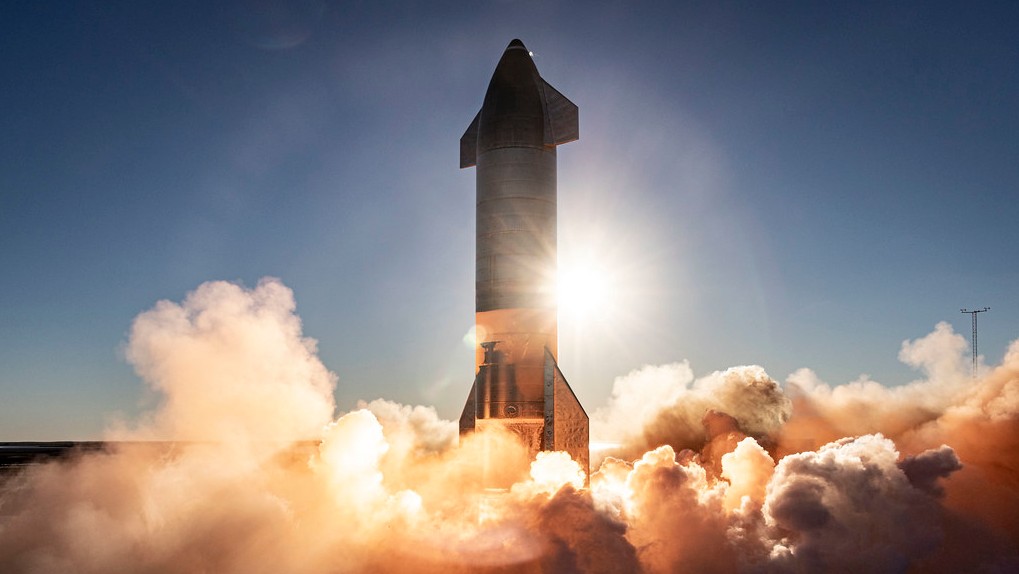
SpaceX just Made History after 1st Starfall Reentry Capsule Launch Demo! S40’s Fire test in Hours: The final week of June 2026 has delivered some of the most significant developments the global aerospace industry has witnessed this year. From SpaceX’s groundbreaking Starfall reentry capsule launch to the return of intense testing activities at Starbase, the arrival of NASA’s next-generation space telescope, and Europe’s record-setting Ariane 6 mission, the space sector is entering a new era.
For years, the primary objective of the commercial space industry was simply getting payloads into orbit. Today, that goal is rapidly evolving. Companies and space agencies are increasingly focused on orbital manufacturing, automated logistics, heavy-lift deployment, and deep-space scientific exploration. These developments signal a future where space is not merely a destination but an active industrial and scientific ecosystem.
In this article, we explore four major aerospace milestones that are reshaping the future of space operations.
SpaceX Launches First Starfall Reentry Capsule Demo Mission
Falcon 9 Successfully Deploys Starfall Into Orbit
On June 23, 2026, SpaceX successfully launched its first-ever Starfall orbital reentry capsule aboard a Falcon 9 rocket from Space Launch Complex 40 (SLC-40) at Cape Canaveral, Florida.
While Falcon 9 launches have become routine, the payload on this mission represented a major strategic shift for SpaceX. The Starfall vehicle is designed as a fully automated orbital cargo and reentry platform capable of supporting manufacturing operations in microgravity and safely returning products to Earth.
Mission Profile:
Falcon 9 Launch → Low Earth Orbit Manufacturing Operations → Controlled Reentry → Pacific Ocean Splashdown
Following deployment, SpaceX confirmed that Starfall entered its intended orbital trajectory and began testing critical onboard systems including:
- Autonomous flight software
- Orbital guidance systems
- Thermal protection systems
- Reentry navigation algorithms
- Recovery operations
The mission is expected to conclude with a precision splashdown approximately 800 miles west of California.
Why Starfall Could Transform Orbital Manufacturing
The launch of Starfall marks SpaceX’s direct entry into the rapidly growing microgravity manufacturing market.
Microgravity environments allow scientists and manufacturers to produce materials that are impossible or extremely difficult to create on Earth. These include:
- Advanced semiconductors
- High-purity optical fibers
- Pharmaceutical compounds
- Protein crystals
- Novel industrial materials
Until now, companies such as Varda Space Industries have dominated this niche by launching small manufacturing capsules into orbit.
SpaceX now intends to scale this market dramatically.
Rather than focusing on small experimental payloads, Starfall aims to support industrial-scale production in orbit while providing a reliable and affordable return system.
This move could significantly reduce costs and increase access for commercial customers looking to manufacture products in space.
Starfall vs Varda: A Massive Difference in Scale
Comparing Payload Capabilities
One of Starfall’s most impressive features is its enormous cargo capacity.
| Specification | Varda Capsule | SpaceX Starfall |
|---|---|---|
| Diameter | ~0.9 m | 3.1 m |
| Height | ~0.74 m | 0.75 m |
| Vehicle Mass | ~300 kg | ~2,000 kg |
| Payload Capacity | Few dozen kg | Up to 1,000 kg |
The numbers tell the story.
Starfall offers more than three times the diameter of competing systems and can return up to one metric ton of material per mission.
That increase transforms orbital manufacturing from a research-focused activity into a potentially profitable industrial operation.
Manufacturers will no longer be limited to small-scale experiments. Instead, they can begin considering mass production in low Earth orbit.
Starfall’s Unique Safety Architecture
According to FAA documentation, Starfall utilizes a two-section modular design.
Upper Module
The upper section houses:
- Manufacturing payloads
- Research equipment
- Guidance electronics
- Attitude control systems
Lower Module
The lower section contains:
- Carbon fiber heat shield
- Reentry systems
- Parachute deployment mechanisms
- Nitrogen gas attitude control hardware
One of the most notable design choices is Starfall’s complete absence of hazardous propellants.
Instead, the capsule uses compressed nitrogen gas for orientation adjustments during flight.
This approach provides multiple safety advantages:
- No toxic fuel onboard
- Reduced environmental risks
- Simpler recovery procedures
- Lower regulatory complexity
Before splashdown, all pressurized systems are vented to ensure safe ocean recovery operations.
Starship Flight 13 Testing Activity Returns to Starbase
The End of the “Starship Ice Age”
After the completion of Flight 12, activity at Starbase in Boca Chica, Texas slowed considerably.
Observers jokingly referred to the period as the “Starship Ice Age.”
However, behind the scenes, SpaceX engineers were conducting extensive analysis of Flight 12 telemetry while implementing facility upgrades and preparing future vehicles.
That quiet period officially ended between June 23 and June 24 when Ship 40 (S40) rolled out from Mega Bay 2 and traveled to Massey’s Test Site.
Operational Flow:
Mega Bay 2 → Rollout Operations → Massey’s Test Site → Static Fire Testing
The movement of Ship 40 indicates that SpaceX has entered the next major phase of the Starship Flight 13 campaign.
Investigating Flight 12 Raptor Engine Issues
One of the primary objectives of Ship 40’s testing campaign is addressing anomalies detected during Flight 12.
During that mission, telemetry indicated that one of the vacuum-optimized Raptor engines shut down unexpectedly after stage separation.
Video footage also revealed visible smoke near the engine section.
Investigation Path:
Stage Separation → Vacuum Raptor Anomaly → Engineering Review → Design Improvements
Potential causes under review include:
- Thermal protection concerns
- Plumbing system issues
- Engine hardware anomalies
- High-temperature structural interactions
The upcoming static fire campaign will place the propulsion system under significant stress to validate recent design modifications.
Successful testing is critical before Flight 13 receives final approval.
Booster 20 Progress and Flight 13 Timeline
While Ship 40 receives propulsion testing, Booster 20 continues advancing through its own qualification program.
Recent achievements include:
- Successful cryogenic pressure tests
- Structural validation
- Systems integration checks
The booster is expected to move to Pad 2 in early July for a full static fire campaign.
If both vehicles complete testing successfully, Flight 13 could launch as early as July 2026.
Such a timeline would represent a rapid turnaround and another important milestone for SpaceX’s reusable launch system.
NASA’s Nancy Grace Roman Space Telescope Arrives in Florida
Major Milestone Before Launch
NASA’s highly anticipated Nancy Grace Roman Space Telescope has officially arrived at Kennedy Space Center.
The spacecraft completed its journey from NASA’s Goddard Space Flight Center in Maryland aboard the specialized Pegasus transport barge.
Transport Route:
Goddard Space Flight Center → Pegasus Barge → Kennedy Space Center
The telescope has now entered final processing and integration ahead of launch.
NASA teams are conducting:
- Cleanroom preparations
- Contamination control procedures
- Final inspections
- Launch readiness activities
Thanks to efficient processing, NASA has advanced the target launch date to August 30, 2026.
Roman Space Telescope Specifications
The Roman Space Telescope is expected to become one of the most powerful astronomical observatories ever launched.
Key Mission Details
Launch Vehicle: SpaceX Falcon Heavy
Destination: Sun-Earth Lagrange Point 2 (L2)
Distance from Earth: Approximately 1 million miles
Expected Mission Duration: Five years or more
Mass: Approximately 18,000 pounds (8,200 kg)
Advanced Scientific Instruments
Roman combines several revolutionary technologies.
2.4-Meter Primary Mirror
The telescope features a mirror comparable in size to the Hubble Space Telescope, providing exceptional image quality.
300-Megapixel Wide-Field Camera
The camera offers nearly 100 times the field of view available to Hubble.
This allows scientists to survey enormous regions of space much faster.
Advanced Coronagraph
The coronagraph blocks starlight to enable direct imaging of distant exoplanets.
This capability could dramatically improve our understanding of planetary atmospheres beyond our solar system.
Unlocking the Mysteries of Dark Energy and Exoplanets
Investigating Dark Energy
One of Roman’s primary goals is studying dark energy, the mysterious force believed to be accelerating the expansion of the universe.
By mapping billions of galaxies, researchers hope to better understand:
- Cosmic expansion
- Dark matter distribution
- Large-scale cosmic structures
These observations could help answer some of the biggest questions in modern astrophysics.
Discovering New Worlds
Roman will also conduct extensive exoplanet surveys using gravitational microlensing techniques.
Scientists expect the telescope to discover:
- Thousands of new exoplanets
- Planetary systems unlike our own
- Free-floating rogue planets
Combined with direct imaging capabilities, Roman could revolutionize our understanding of planetary formation across the galaxy.
Europe’s Ariane 6 Sets New Heavy-Lift Record
Record-Breaking Project Kuiper Deployment
Europe’s aerospace sector achieved a major victory on June 17, 2026.
An Ariane 6 rocket launched from the Guiana Space Center carrying 36 Amazon Project Kuiper satellites into low Earth orbit.
Mission Flow:
Ariane 6 Launch → 20,800 kg Payload → 36 Kuiper Satellites Deployed
This mission marked:
- The 14th Project Kuiper launch
- The third Kuiper mission using Ariane 6
- The heaviest payload ever launched by an Ariane rocket
Breaking Ariane Payload Records
Industry analysts estimate the combined satellite mass reached approximately 20,800 kilograms (45,900 pounds).
This surpasses previous Ariane 6 Kuiper missions that carried only 32 satellites.
Capacity Growth:
32 Satellites → 36 Satellites → New Ariane 6 Record
The achievement demonstrates increasing confidence in the rocket’s performance and operational capabilities.
Securing Europe’s Independent Access to Space
Since its debut in July 2024, Ariane 6 has steadily established itself as Europe’s flagship launcher.
The rocket has now completed eight successful flights, maintaining a perfect mission success rate.
Its continued success is crucial for Europe’s strategic independence in space access.
As competition intensifies with launch systems such as:
- Blue Origin’s New Glenn
- United Launch Alliance’s Vulcan Centaur
- SpaceX’s Falcon family
- Future Starship missions
Ariane 6 remains a vital component of the global launch market.
The Bigger Picture: A New Era of Space Operations
The final week of June 2026 illustrates how rapidly the aerospace industry is evolving.
Four major developments stand out:
- SpaceX’s Starfall capsule enters orbital manufacturing
- Starship Flight 13 testing accelerates
- NASA’s Roman Telescope prepares for launch
- Ariane 6 achieves a record-breaking deployment
Together, these milestones highlight a broader transformation occurring across the space sector.
The industry is no longer focused solely on reaching orbit. The future is increasingly centered on:
- Automated orbital logistics
- Commercial manufacturing in microgravity
- High-frequency reusable launch systems
- Massive satellite constellation deployment
- Deep-space scientific exploration
As launch costs continue to fall and technology advances, space is becoming an active economic and scientific frontier.
The events of June 2026 may ultimately be remembered as another pivotal step toward a future where routine industrial activity in orbit becomes as common as global shipping and aviation are today.
FAQs
1. What is SpaceX Starfall?
Starfall is SpaceX’s new automated orbital cargo and reentry capsule designed to support microgravity manufacturing, scientific research, and the safe return of materials from space back to Earth.
2. When was the first Starfall mission launched?
The inaugural Starfall demonstration mission launched on June 23, 2026, aboard a Falcon 9 rocket from Space Launch Complex 40 (SLC-40) at Cape Canaveral, Florida.
3. What is the main purpose of the Starfall capsule?
The primary goal of Starfall is to enable commercial orbital manufacturing, allowing companies to produce advanced materials, pharmaceuticals, semiconductors, and scientific products in the microgravity environment of space.
4. How much payload can SpaceX Starfall return to Earth?
Starfall is capable of returning up to 1,000 kilograms (1 metric ton) of cargo, making it significantly larger and more capable than current commercial reentry capsules.
5. How does Starfall compare to Varda Space Industries’ capsule?
Starfall is much larger than Varda’s capsule, featuring a 3.1-meter diameter and up to 1,000 kg payload capacity, compared to Varda’s smaller vehicle, which can carry only a few dozen kilograms.
6. Does Starfall use rocket propellants for maneuvering?
No. Starfall uses compressed nitrogen gas for attitude control and orientation maneuvers, eliminating the need for hazardous liquid propellants and improving safety during recovery operations.
7. Why is microgravity manufacturing important?
Microgravity allows the production of materials and pharmaceutical compounds that are difficult or impossible to manufacture on Earth due to gravity-related limitations, potentially creating high-value commercial products.
8. What happened to Starship during Flight 12?
During Starship Flight 12, one of the vacuum-optimized Raptor engines experienced a premature shutdown after stage separation, prompting SpaceX engineers to conduct a detailed investigation and implement design improvements.
9. What is Ship 40 (S40)?
Ship 40 (S40) is the upper-stage Starship vehicle currently undergoing testing for the upcoming Starship Flight 13 mission at SpaceX’s Starbase facility in Texas.
10. Why is the Ship 40 static fire test important?
The static fire test will verify that SpaceX has successfully addressed the propulsion and thermal issues identified during Flight 12, ensuring the vehicle is ready for flight.
11. When could Starship Flight 13 launch?
If testing proceeds successfully, Starship Flight 13 could launch as early as July 2026, depending on the readiness of both Ship 40 and Booster 20.
12. What is the Nancy Grace Roman Space Telescope?
The Nancy Grace Roman Space Telescope is NASA’s next-generation space observatory designed to study dark energy, dark matter, and thousands of distant exoplanets.
13. Where will the Roman Space Telescope operate?
The telescope will operate at the Sun-Earth Lagrange Point 2 (L2), located approximately 1 million miles (1.6 million kilometers) from Earth.
14. What makes the Roman Space Telescope unique?
Roman combines a 2.4-meter primary mirror, a 300-megapixel wide-field camera, and an advanced coronagraph, enabling it to survey huge regions of space and directly image exoplanets.
15. What record did Ariane 6 achieve in June 2026?
Europe’s Ariane 6 rocket launched a record-breaking payload of approximately 20,800 kilograms, deploying 36 Amazon Project Kuiper satellites in a single mission.
16. Why are these June 2026 space developments significant?
These milestones demonstrate the rapid evolution of the aerospace industry toward orbital manufacturing, reusable heavy-lift launch systems, satellite megaconstellations, and deep-space scientific exploration, marking a major step forward in the commercialization and expansion of space activities.
Read More:
1 thought on “SpaceX just Made History after 1st Starfall Reentry Capsule Launch Demo! S40’s Fire test in Hours”