
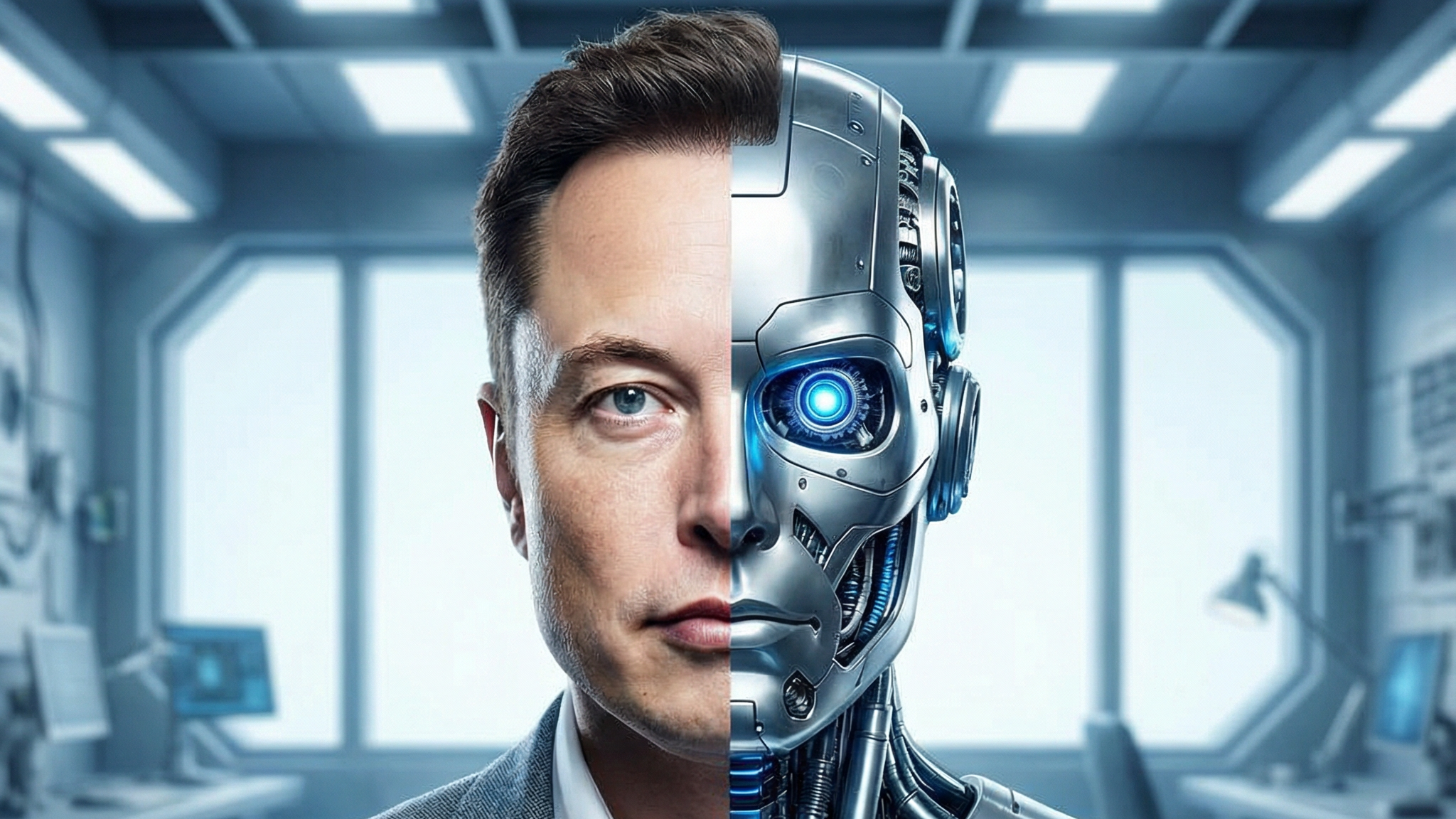
Tesla Bot Gen 3 Finally Cooks A Meal & Cleans | 100 Tasks Everyday: The race to build practical humanoid robots has entered an exciting new era. For years, robotics companies showcased impressive demonstrations featuring robots performing backflips, dancing, and running obstacle courses. While these displays highlighted engineering excellence, they rarely answered one important question:
Can a humanoid robot actually help people in everyday life?
Tesla believes the answer lies in utility rather than entertainment.
With the upcoming Tesla Optimus Gen 3, Elon Musk aims to introduce the company’s first truly production-ready humanoid robot capable of performing up to 100 different tasks every single day. Unlike previous humanoid robots that focused on laboratory demonstrations, Optimus Gen 3 is designed to become a useful assistant in factories, warehouses, restaurants, offices, and eventually millions of homes.
Imagine a robot that can cook breakfast, vacuum floors, fold laundry, carry heavy boxes, organize shelves, wash dishes, and even learn new skills through software updates.
That vision is exactly what Tesla is working toward.
In this article, we’ll explore everything about Tesla Bot Gen 3, including its revolutionary AI system, robotic hands, production plans, pricing expectations, competitors, and why many experts believe it could transform the global labor market.
Tesla’s Journey From Prototype to Production
Tesla’s humanoid robot has evolved at an incredibly fast pace over the past few years.
The first Optimus prototype looked like an early engineering project with exposed wiring, bulky joints, and limited mobility. However, Tesla improved the robot dramatically through multiple hardware revisions.
Tesla Optimus Version 2
Version 2 introduced significant improvements including:
- Better balance
- Faster walking
- Lower weight
- Improved battery efficiency
- More natural body movements
The robot became noticeably smoother during demonstrations and started performing practical factory tasks.
Tesla Optimus Version 2.5
Version 2.5 acted as the bridge toward Gen 3.
Major upgrades included:
Cleaner Human-Friendly Design
Tesla redesigned the robot with:
- Hidden wiring
- Smooth body panels
- Enclosed joints
- Consumer-friendly appearance
Instead of looking like industrial machinery, Optimus began resembling a futuristic household assistant.
Integration with Grok AI
Tesla integrated Grok, xAI’s conversational AI, allowing the robot to:
- Understand voice commands
- Answer questions
- Guide users
- Interpret natural language
Although conversations still showed slight delays, the robot demonstrated genuine semantic understanding rather than simply executing pre-programmed responses.
Tesla Optimus Gen 3: The Biggest Leap Yet
According to Elon Musk, Gen 3 is expected to become Tesla’s first mass-production humanoid robot.
Rather than another experimental platform, this version is designed for large-scale manufacturing.
Tesla reportedly targets production volumes approaching:
- 1 million robots annually
That would make Optimus one of the largest robotics production programs in history.
Why Tesla Focuses on Utility Instead of Gymnastics
Many robotics companies impress audiences by making robots:
- Dance
- Backflip
- Box
- Sprint
- Perform martial arts
These demonstrations generate millions of views online.
However, Tesla believes these skills have very little commercial value.
The Real Challenge
Picking up an egg without breaking it is actually harder than performing a backflip.
Cooking breakfast requires the robot to:
- Open the refrigerator
- Identify ingredients
- Hold fragile objects
- Use kitchen tools
- Operate appliances safely
- Clean the workspace afterward
These tasks require intelligence, precision, planning, and adaptability.
Tesla’s philosophy centers around solving real-world problems, particularly the famous Three Ds:
1. Dirty Jobs
Examples include:
- Cleaning bathrooms
- Washing dishes
- Taking out trash
- Factory cleanup
2. Dull Jobs
Examples include:
- Stocking shelves
- Sorting inventory
- Packaging products
- Folding clothes
3. Dangerous Jobs
Examples include:
- Heavy lifting
- Hazardous manufacturing
- Chemical handling
- Industrial inspections
Instead of replacing humans entirely, Tesla wants Optimus to eliminate repetitive and physically demanding work.
The Revolutionary 22 Degrees of Freedom Hand
Perhaps the biggest innovation inside Optimus Gen 3 is its completely redesigned robotic hand.
Why Hands Matter
Walking is relatively easy compared to manipulating objects.
Humans perform thousands of delicate hand movements every day without thinking.
Examples include:
- Buttoning shirts
- Opening jars
- Writing
- Typing
- Cooking
- Folding laundry
Replicating these movements in robotics is incredibly difficult.
22 Degrees of Freedom
Tesla’s new robotic hand features:
22 Degrees of Freedom (22-DoF)
This allows:
- Independent finger motion
- Natural thumb movement
- Wrist flexibility
- Human-like grip patterns
The result is significantly better dexterity than traditional robotic grippers.
Custom Mechanical Muscles
Instead of using generic robotic motors, Tesla designs specialized actuators for different body parts.
Hip Actuators
These provide:
- High torque
- Stable walking
- Better balance
- Heavy payload support
Shoulder Actuators
Optimized for:
- Smooth motion
- Wide range of movement
- Natural arm positioning
Wrist Actuators
Allow:
- Multi-axis rotation
- Fine positioning
- Precision handling
Finger Actuators
Perhaps the most impressive component.
Tesla engineered miniature mechanical muscles capable of controlling extremely small amounts of force.
That means the robot could potentially:
- Lift cast iron cookware
- Pick up tomatoes
- Hold laboratory glassware
- Carry eggs without cracking them
Manufacturing millions of these precise robotic hands at affordable prices may become one of Tesla’s greatest engineering achievements.
AI5: The Brain Behind Tesla Bot Gen 3
Powerful hardware means little without intelligent software.
That’s why Tesla developed the new AI5 onboard computer.
Why Local Processing Matters
Imagine Optimus carrying hot soup.
Suddenly:
- A child runs across the room.
- A dog jumps in front of the robot.
Waiting for cloud servers to respond would be too slow.
Instead, Optimus performs all critical calculations locally.
This enables:
- Instant reactions
- Faster decision-making
- Greater safety
- Reduced internet dependence
Humanoid Robots Need More Intelligence Than Self-Driving Cars
Tesla’s Full Self-Driving system mainly focuses on:
- Roads
- Traffic
- Signs
- Vehicles
- Pedestrians
Humanoid robots must solve additional challenges.
They need to calculate:
- Weight distribution
- Friction
- Grip pressure
- Object shape
- Balance
- Hand-eye coordination
Every movement involves continuous adjustments.
That makes Optimus one of Tesla’s most computationally demanding AI projects.
Optimus Academy: Every Robot Learns Together
Perhaps Tesla’s greatest competitive advantage isn’t hardware.
It’s shared learning.
Fleet Learning
Tesla plans to deploy between:
10,000–30,000 Optimus robots
inside:
- Gigafactories
- Warehouses
- Tesla Diners
- Distribution centers
- Supercharger facilities
Each robot continuously collects experience.
Whenever one robot discovers a better method for completing a task, that knowledge gets uploaded into Tesla’s centralized training system known as the Optimus Academy.
The improved behavior then becomes part of future software updates.
Over-the-Air Updates
Just like Tesla vehicles receive software improvements, Optimus robots will receive:
- New skills
- Better efficiency
- Improved safety
- Smarter behaviors
This means your robot becomes more capable over time.
Tesla’s Three-Phase Commercial Strategy
Tesla isn’t launching Optimus into homes immediately.
Instead, the rollout follows three logical stages.
Phase 1: Tesla Factories
Initial deployment focuses on:
- Material transport
- Assembly assistance
- Logistics
- Inventory movement
Factories provide controlled environments ideal for learning.
Phase 2: Commercial Businesses
Next comes:
- Warehouses
- Retail logistics
- Shipping companies
- Manufacturing plants
These environments remain relatively structured while expanding real-world experience.
Phase 3: Consumer Homes
Eventually Optimus could handle:
- Cooking
- Cleaning
- Laundry
- Grocery organization
- Pet assistance
- Elder care support
- Household maintenance
This represents Tesla’s long-term vision.
Tesla Optimus vs Boston Dynamics Atlas
Boston Dynamics remains one of Tesla’s strongest competitors.
Atlas Highlights
- Approximately 6.2 feet tall
- Around 198 pounds
- 56 Degrees of Freedom
- Industrial-grade durability
- Weather resistant
- Heavy payload capacity
Atlas excels in industrial environments.
However, its complexity and cost make it less suitable for household use.
Tesla Optimus vs Unitree G1
Chinese robotics company Unitree has disrupted the industry with aggressive pricing.
Unitree G1
Features include:
- Around 4.3 feet tall
- Approximately 77 pounds
- 23–43 Degrees of Freedom
- Roughly two-hour battery life
More importantly, Unitree’s pricing shocked the robotics market.
Some models reportedly begin below $15,000, while the entry-level R1 generated attention with an even lower starting price.
Although these robots currently lack Tesla’s expected AI capabilities, they demonstrate that consumer-priced humanoids are becoming possible.
Expected Tesla Optimus Gen 3 Price
Elon Musk has repeatedly stated that Optimus should eventually cost roughly:
$20,000–$30,000
Achieving this price depends on Tesla’s manufacturing advantages.
These include:
- Battery production
- Vertical integration
- Automated factories
- Supply chain efficiency
- Large-scale casting technologies
If Tesla reaches these costs, Optimus could become affordable for businesses and eventually households.
Potential Real-World Applications
The possibilities extend far beyond factories.
Household Tasks
Optimus could eventually:
- Cook meals
- Vacuum floors
- Fold clothes
- Wash dishes
- Organize rooms
- Carry groceries
- Clean kitchens
Industrial Work
Factories could use Optimus for:
- Material handling
- Equipment transport
- Quality inspections
- Assembly assistance
Healthcare
Future applications may include:
- Patient assistance
- Hospital logistics
- Elderly support
- Mobility assistance
Retail
Stores may use humanoid robots for:
- Shelf stocking
- Inventory counting
- Customer assistance
- Warehouse operations
Why Tesla Could Dominate Humanoid Robotics
Tesla possesses several advantages that competitors struggle to match.
Massive Manufacturing Experience
Tesla already produces millions of complex products every year.
AI Leadership
Years of Full Self-Driving development created one of the world’s largest visual AI datasets.
Battery Expertise
Efficient batteries remain essential for humanoid robots.
Tesla already manufactures advanced battery systems at scale.
Software Ecosystem
Tesla continuously improves products through:
- OTA updates
- Fleet learning
- Neural network training
- AI optimization
This ecosystem may become the defining factor in robotics.
Challenges Tesla Still Faces
Despite impressive progress, several obstacles remain.
These include:
- Long battery life
- Reliable household navigation
- Affordable manufacturing
- Safety certification
- Consumer trust
- Regulatory approval
Building a robot is difficult.
Building millions of affordable, reliable robots is an entirely different challenge.
The Future of Human-Robot Collaboration
Rather than replacing people, Tesla envisions Optimus working alongside humans.
Workers could delegate repetitive tasks while focusing on creativity, decision-making, and higher-value responsibilities.
As AI continues improving, humanoid robots may become as common as smartphones are today.
If Tesla successfully executes its vision, Optimus Gen 3 could mark the beginning of an entirely new labor economy powered by intelligent machines.
Final Thoughts
Tesla Optimus Gen 3 represents far more than another robotics demonstration. It signals Tesla’s ambition to become a leader in artificial intelligence, manufacturing, and humanoid robotics.
With its 22-DoF robotic hands, AI5 onboard processor, shared fleet learning, and goal of performing 100 everyday tasks, Optimus aims to bridge the gap between futuristic concepts and practical real-world assistance.
While competitors continue showcasing athletic robots capable of impressive stunts, Tesla is betting that consumers and businesses care more about robots that can actually cook meals, clean homes, organize workplaces, and safely assist people every day.
If Tesla succeeds in delivering Optimus at its targeted price while maintaining reliability and intelligence, Gen 3 could become one of the most important technology products of the decade—transforming industries, homes, and the future of work itself.
FAQs
1. What is Tesla Bot Gen 3?
Tesla Bot Gen 3, also known as Tesla Optimus Gen 3, is Tesla’s next-generation humanoid robot designed to perform up to 100 everyday tasks, including cooking, cleaning, lifting, organizing, and assisting in factories and homes.
2. What tasks can Tesla Optimus Gen 3 perform?
Tesla Optimus Gen 3 is expected to handle a wide range of tasks such as cooking meals, vacuuming, folding laundry, washing dishes, carrying heavy objects, organizing shelves, sorting inventory, and assisting with warehouse operations.
3. How many tasks can Tesla Bot Gen 3 perform daily?
According to Tesla’s vision, Optimus Gen 3 can perform up to 100 different tasks every day, making it one of the most versatile humanoid robots ever developed.
4. What makes Tesla Optimus Gen 3 different from previous versions?
Gen 3 introduces several major upgrades, including a 22-degree-of-freedom (22-DoF) robotic hand, the new AI5 onboard computer, improved walking capabilities, enhanced dexterity, better balance, and a production-ready design.
5. What is the 22-DoF robotic hand in Tesla Optimus?
The 22 Degrees of Freedom (22-DoF) hand allows Optimus Gen 3 to move its fingers and wrist much like a human hand. This enables delicate tasks such as holding eggs, cooking, opening jars, and folding clothes with greater precision.
6. Does Tesla Bot Gen 3 use artificial intelligence?
Yes. Tesla Bot Gen 3 uses advanced AI, powered by Tesla’s proprietary AI5 computer, enabling real-time decision-making, object recognition, voice interaction, and autonomous task execution without relying heavily on cloud computing.
7. Will Tesla Bot Gen 3 work without an internet connection?
Many of the robot’s critical functions are expected to run locally on the AI5 processor, allowing it to make instant safety decisions even without a stable internet connection.
8. What is the expected price of Tesla Optimus Gen 3?
Elon Musk has indicated that Tesla aims to eventually price Optimus between $20,000 and $30,000, although the final commercial price has not been officially confirmed.
9. When will Tesla Bot Gen 3 be available?
Tesla plans to first deploy Optimus robots inside its own factories before expanding to commercial businesses and eventually offering them to consumers. An official public release date has not yet been announced.
10. How does Tesla Optimus learn new skills?
Tesla plans to use an Optimus Academy system where robots continuously collect real-world data. New skills learned by one robot can be shared across the entire fleet through Over-the-Air (OTA) software updates.
11. Can Tesla Bot Gen 3 replace human workers?
Tesla’s goal is not to replace humans entirely but to assist with dull, dirty, and dangerous tasks. Optimus is designed to work alongside people, improving productivity and reducing repetitive physical labor.
12. How does Tesla Optimus compare with Boston Dynamics Atlas?
While Boston Dynamics Atlas excels in industrial mobility and athletic performance, Tesla Optimus Gen 3 focuses on affordability, practical household tasks, AI-driven learning, and large-scale manufacturing.
13. What industries can benefit from Tesla Optimus Gen 3?
Industries that could benefit include manufacturing, logistics, warehousing, retail, hospitality, healthcare, construction, and home services, where repetitive or physically demanding tasks are common.
14. Is Tesla Optimus Gen 3 safe to use around people?
Tesla is designing Optimus with advanced sensors, AI-powered perception, force control, and real-time obstacle detection to safely operate around people, pets, and everyday household environments.
15. Why is Tesla Optimus Gen 3 considered a breakthrough in robotics?
Tesla Optimus Gen 3 combines advanced AI, human-like dexterity, local computing, mass-production capability, and continuous fleet learning into one platform, making it one of the most promising humanoid robots for real-world applications.
Read More:
- One of Tesla’s biggest threats just got banned in the U.S.
- Tesla looks keen to bring larger Model Y L to the U.S.
- New $20,748 Tesla Model 2 Senior Edition: 65+ Control, 8 Key Buttons & Easy Entry
- SpaceX just Made History after 1st Starfall Reentry Capsule Launch Demo! S40’s Fire test in Hours
- Tesla plans production boost at Giga Berlin following rebound in Europe